What are Supremo and Excelso Grades? An Introduction to Colombian Green Coffee Bean Grading Standards
Colombian green coffee is graded on two things: defect rate and bean size. The markings you see most often on bags in the market are "Supremo" and "Excelso," yet many drinkers cannot tell them apart or explain what they actually mean. This article unpacks Colombia's green coffee grading standards.

What Does "Excelso" on the Bag Mean?
Look closely at green coffee bags exported from Colombia and you will see every one of them printed with "Excelso-Café de Colombia." Whatever the bean size, any bag that meets Colombian export standards carries the "Excelso" mark, and the most common grades under it are UGQ, EP and Supremo.
In other words, most Colombian green coffee exported worldwide today must bear the Excelso grade designation. UGQ belongs to the Excelso grade, EP belongs to the Excelso grade, and Supremo also belongs to the Excelso grade.
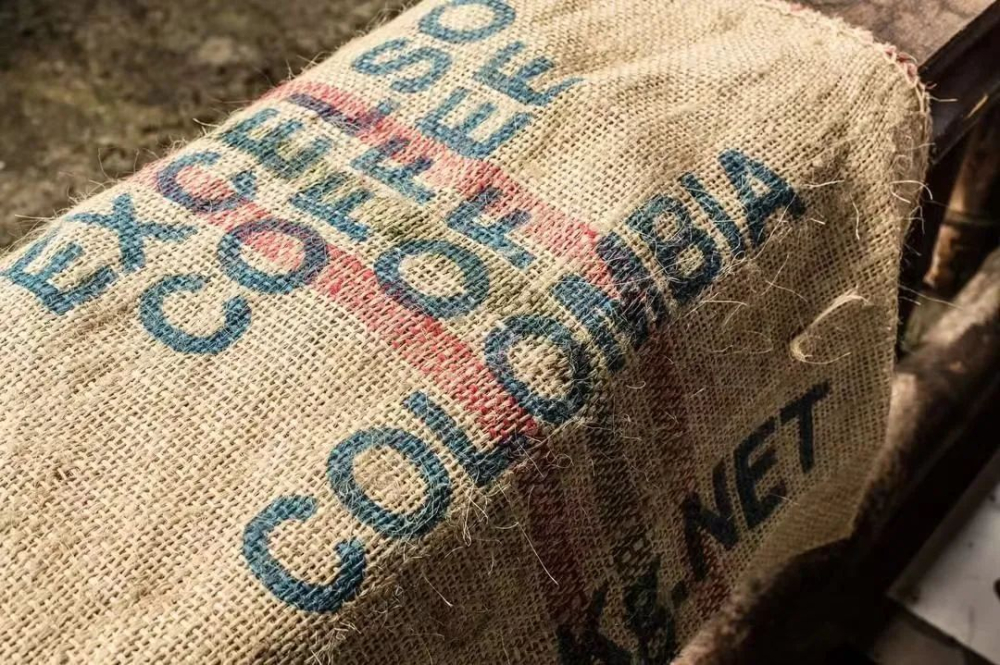
Excelso is the export standard most widely adopted by the Colombian Coffee Growers Federation (FNC), and it is the optimal grade for Colombian green coffee exports. So when a bag is printed with "Excelso," it means those beans meet Colombia's green coffee export requirements and hold a quality certificate issued by the FNC.
Coffee at the Excelso grade must meet the following requirements: in a 500-gram sample of green beans, the size must be above 14 mesh, and no more than 5% of the beans may fall between 12 and 14 mesh. Overall, at least 50% of the beans must be larger than 15 mesh. The beans must be free of pests, uniform in color, free of off-flavors and clean in the cup. Moisture content may not exceed 12.5%, and accumulated defects may not exceed the 24-point limit.
Defect Classification Standards
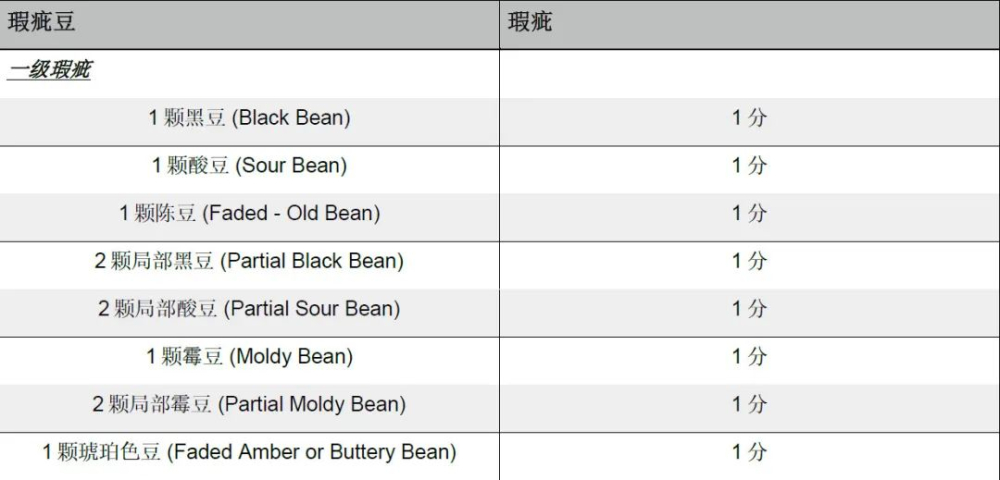
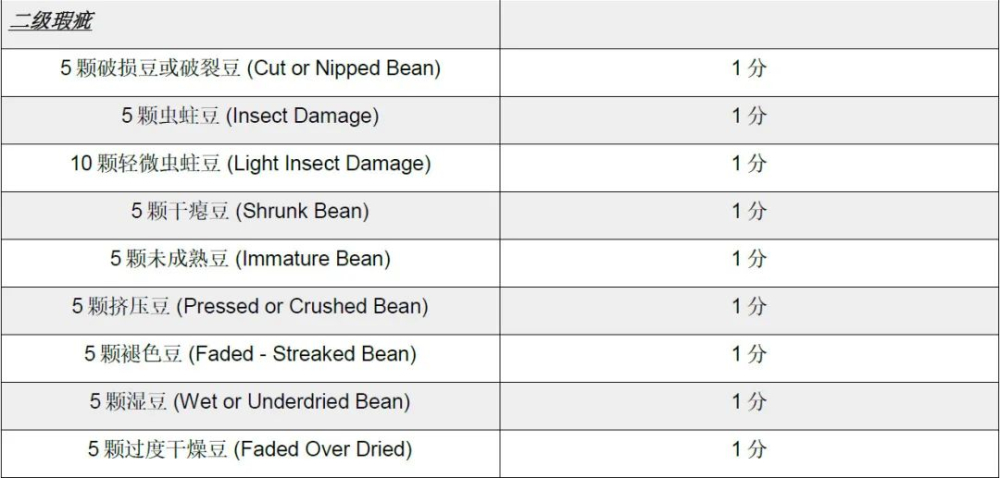
Colombia's National Coffee Committee sets strict rules: green bean defects are divided into two types (shown in the figure below), and the defect grade is assessed with a scoring system. The commonly exported Colombian grade Supremo 12*60 (5%), for example, means that in a 500-gram green bean sample, a maximum of 12 first-grade defective beans and 60 second-grade defective beans are allowed.
Size Classification Standards
Though bean size is not the primary standard for judging coffee quality and flavor, many producing regions hold that plump, uniform, large beans indicate the coffee has reached full maturity, can develop better aromatic profiles, and roast more evenly, which in turn produces consistent flavors.
Colombian green beans are graded by size with screens of fixed dimensions, each specification corresponding to a different hole size. At a mesh of 17, for instance, any bean larger than that size cannot pass through the screen. The larger the screen number, the larger the beans that remain on top. Today the three grades the FNC exports most frequently are Excelso UGQ 12*60 (1.5%), Excelso EP 12*60 (10%) and Excelso Supremo 12*60 (5%).
Excelso UGQ 12*60 (1.5%): UGQ stands for Usual Good Quality. Bean size is above 14 mesh, allowing 1.5% of beans to fall between 12 and 14 mesh, provided they are above 12 mesh, and over 50% must be larger than 15 mesh.
Excelso EP 12*60 (10%): EP stands for European Preparation. Bean size is above 15 mesh, allowing 10% of beans to be smaller than 15 mesh, provided they are above 14 mesh.
Excelso Supremo 12*60 (5%): Bean size is above 17 mesh, allowing 5% of beans to be smaller than 17 mesh, provided they are above 14 mesh.
In other words, what people commonly call "Supremo" is in fact a size classification grade.
Colombia also has beans above 16 mesh called Extra, beans larger than Supremo at 18 mesh called Premium, and nearly uniformly sized beans at 15 mesh called Minama, among others. Colombia also produces beans that do not meet the Excelso export standard; these are known locally as "Product of Colombia" and are generally used for commercial-grade instant coffee.
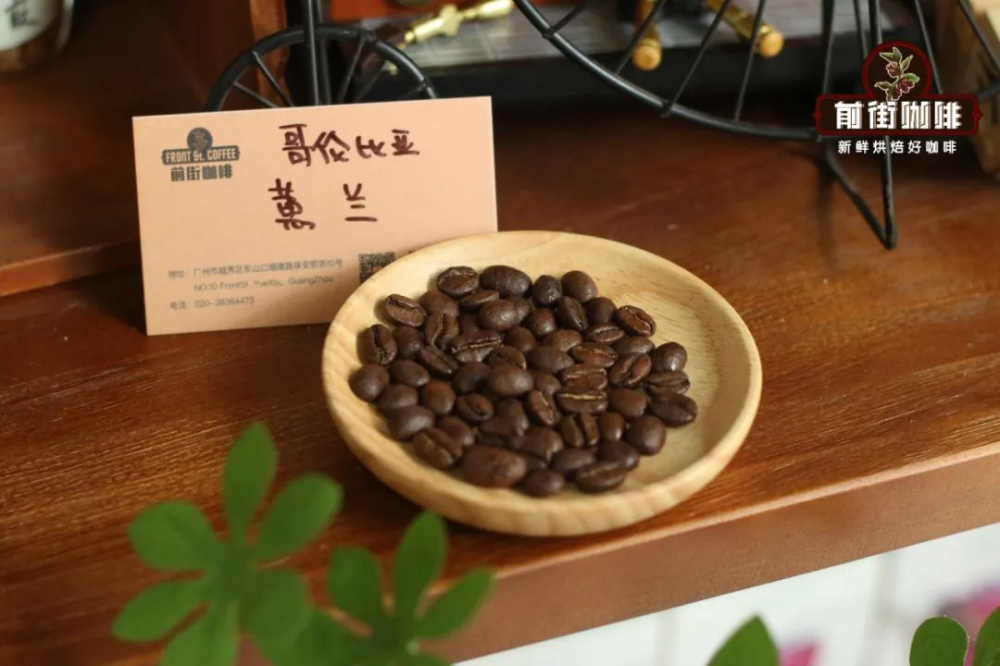
In Colombia, every farmer reports a number and registers green bean information, which makes traceability possible later. Exported Colombian green coffee is typically named as country + region + grade + other information. One example is the green beans behind FrontStreet Coffee's Huila daily bean: Colombia Huila Supremo SC17/18 FNC.
Disclaimer: Some images in this article are sourced from the internet. For some content on the website, such as images, we will respect the original copyright and indicate the source. However, due to the large volume, some images and text may not have been attributed in time, and we ask for your understanding. If any original creator has any disputes, they can contact the website for handling. Once verified, we will immediately correct them. This article is compiled and edited by "Coffee Review vdailycom." Please indicate the source when reprinting. This article is intended to spread coffee culture. If there is any infringement, please inform us for deletion. Thank you~!
FrontStreet Coffee Recommendation
Colombian coffee is used across a wide range of brewing: it works in espresso blends and as a pour-over single origin, offering fruity-acid profiles, full-bodied cups and aroma-forward styles — something for every taste, and a good fit for most drinkers.
FrontStreet Colombia Huila comes from Huila in the southern Central Cordillera, the country's most famous specialty coffee region. Ringed by mountains, it sits at growing altitudes above 1,500 meters, and Colombia's most important rivers converge there, bringing abundant water and humidity. It is a medium-dark roast, so it emphasizes black chocolate and sweet nuts, with moderate crema and a full body. It suits pour-over and French press, and it also handles moka pot and espresso machine extraction — Americanos and lattes included.
FrontStreet Colombia Finca La Divisa is an anaerobic-natural single origin. Colombian coffee was long washed, but recent years have seen a wave of innovative processing. Anaerobic fermentation — sometimes called carbonic maceration — is fermentation in a low-oxygen or oxygen-free environment, usually in a pressure-resistant stainless steel tank where temperature, time, pH and other data can be controlled. After oxygen-free fermentation the beans develop more tropical-fruit aroma, and at a medium-light roast it delivers complex, intense notes of passion fruit, grape, apricot and dried fruit in pour-over, cold brew, drip bags and moka pot alike.
For those with a home espresso machine or a moka pot, FrontStreet Specialty Blend is a strong recommendation. Designed for opening a coffee shop, it combines the creamy nut aroma of Brazilian coffee with the dark chocolate bittersweetness of Colombian coffee. Extraction reveals a fine golden crema, and it pairs beautifully with milk for a rich, smooth latte. It is very beginner-friendly and also works as the base for Americanos, cappuccinos, mochas and other standard espresso drinks.
Important Notice :
FrontStreet Coffee is a long-established specialty coffee roaster in Guangzhou China, selling freshly roasted beans from its own farm in Yunnan as well as dozens of carefully selected single-origin beans from around the world for both pour-over and espresso. The products deliver consistently excellent quality and great value, with shipping within 24 hours. Guangzhou's FrontStreet Coffee shop is recommended by many coffee lovers, and the beans are now available online at the Tmall 。
FrontStreet Coffee has moved to a new address:
FrontStreet Coffee Address: 315,Donghua East Road,GuangZhou
Tel:020 38364473
 Scan and follow the En Gafei WeChat official account. Please indicate that the reprint comes from "En Gafei".