Introduction to Honduran Coffee Regions in the Americas
Honduras Coffee Regions
Honduras sits in the northern part of Central America, with the Pacific Ocean to its south and the Caribbean Sea to its north. It shares borders with Nicaragua and El Salvador to the east and south, and Guatemala to the west. Mountainous terrain dominates the country, covering roughly 80% of its land.
That rugged topography, combined with a varied climate, moderate temperatures, and plentiful rainfall, makes Honduras remarkably well suited to growing coffee. The crop matters enormously to the national economy: in 2020, Honduras ranked sixth in total coffee production worldwide and second in Arabica production.
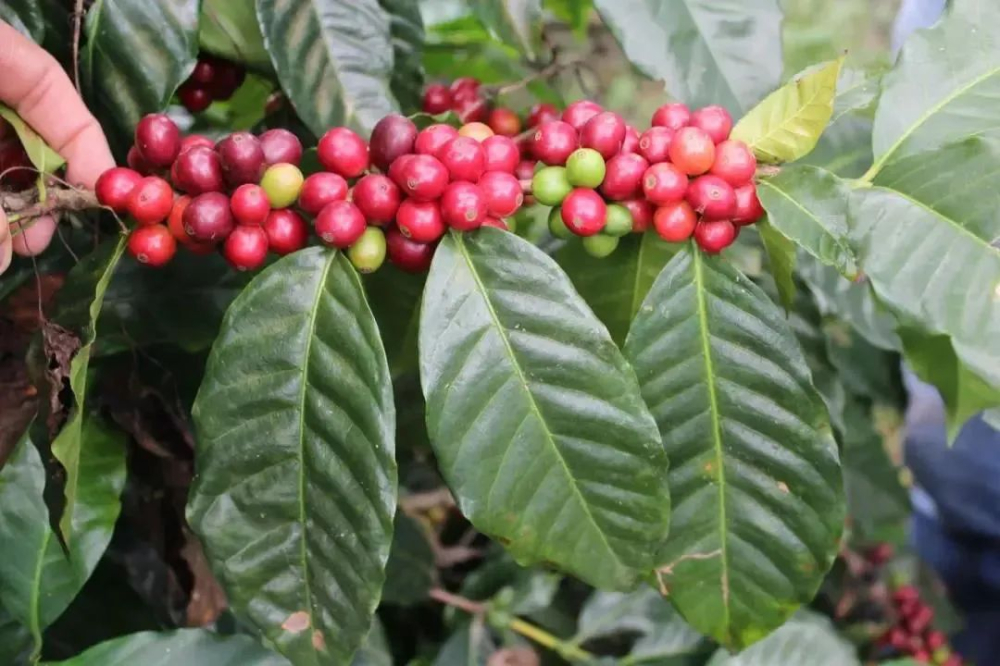
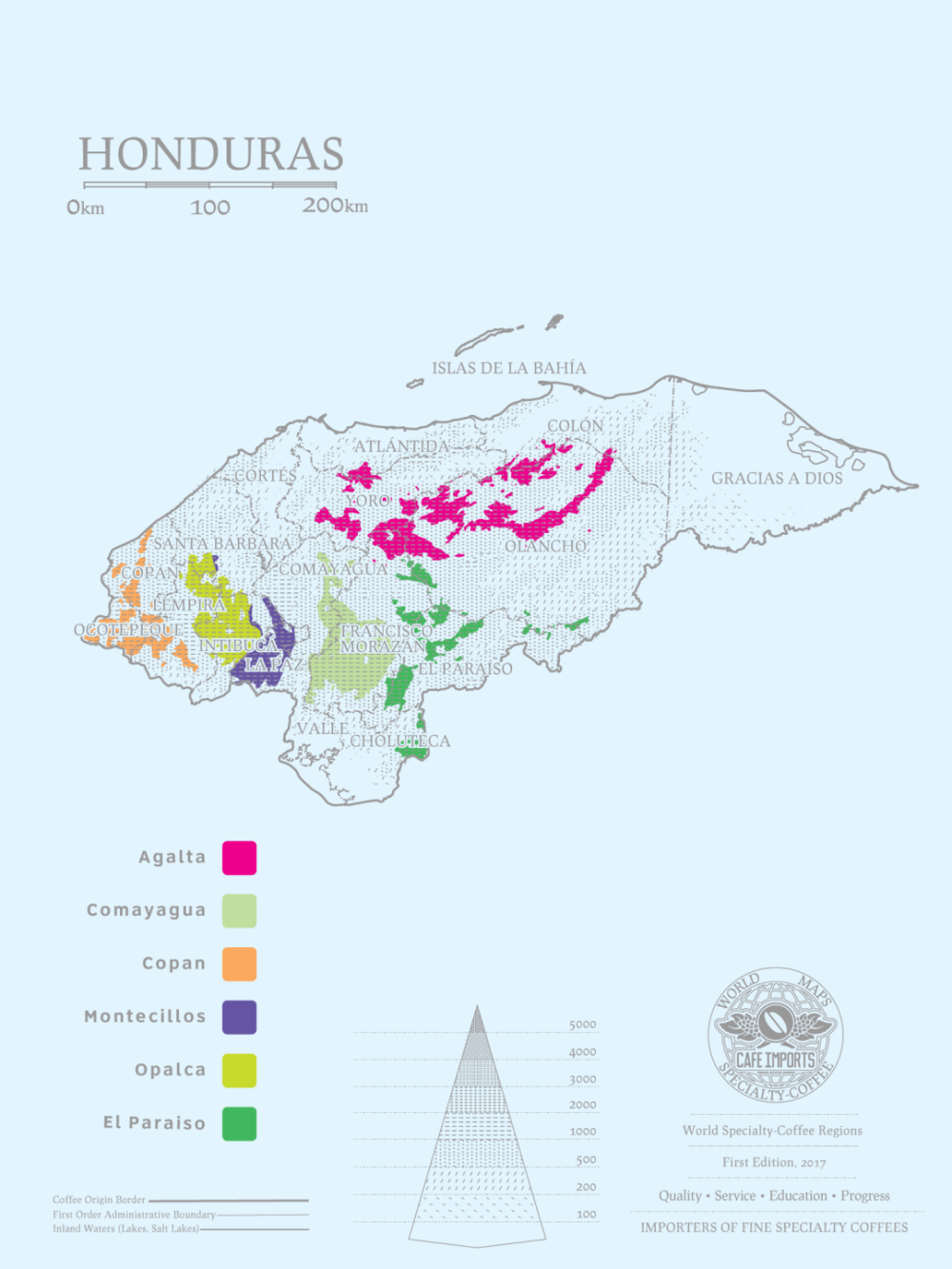
The country has around 280,000 hectares of coffee plantations, most of them small family farms of less than 3.5 hectares. In 1970, the Honduran Coffee Institute (IHCAFE) was founded to raise overall coffee quality. It mapped out six distinct coffee-growing regions and established coffee laboratories to support local producers.
Those six major regions are Copán, Opalaca, Montecillos, Comayagua, Agalta Tropical, and El Paraíso, with average elevations of around 1,100 meters.
Copán
Copán lies at 1,000–1,500 meters, in western Honduras near the city of Copán, right next to the Guatemalan border.
Opalaca
Named after the Opalaca mountain range that runs through the entire region, this area sits between 1,100 and 1,500 meters. It covers the coffee-growing zones in the southern part of Santa Barbara province as well as Intibucá and Lempira.
Comayagua
Found in central-western Honduras, Comayagua is blanketed in dense tropical rainforest and sits at 1,100–1,500 meters.
Agalta Tropical
Ranging from 1,000 to 1,400 meters, this region is located in northern Honduras and consists largely of forest reserves.
El Paraíso
Sitting between 1,000 and 1,400 meters, El Paraíso is also the oldest and largest coffee-growing region in Honduras.
Montecillos
Montecillos reaches the highest elevations of the six, from 1,200 to 1,600 meters. It is home to many outstanding sub-regions, most notably Masaguara.
FrontStreet Coffee's Selection
FrontStreet Coffee sources its whiskey barrel-fermented Sherry beans from Moca Estate in the Masaguara area. The beans are processed using the refined washed whiskey barrel fermentation method, and the varieties are Caturra, Catuaí, and Pacas. Honduras's barrel fermentation draws inspiration from wine-making: during fermentation, the barrels let tiny amounts of air seep through the wood, gently oxidizing the beans. That measured exposure to oxygen speeds up fermentation, smooths out the tannins, and slowly transforms fresh fruit aromas into rich, layered, mature wine-like notes.
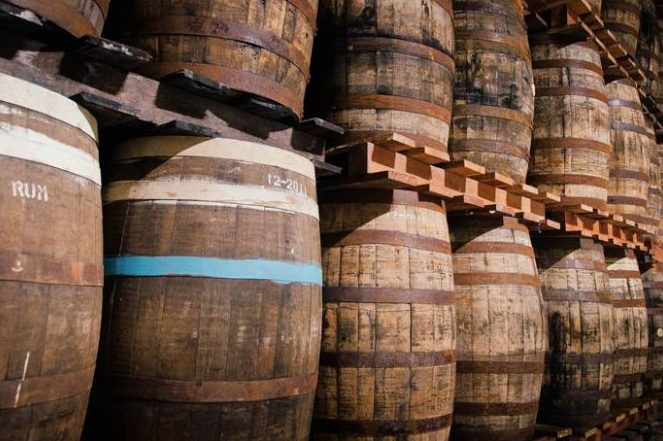
Once brewed, the cup opens with vanilla and cream aromas, followed by flavors of whiskey, berries, almonds, and dark chocolate, finishing with a maple-like sweetness on the aftertaste.
FrontStreet Coffee Recommendation
Arabica is by far the most diverse and celebrated of the three great coffee species, and Honduras's high-altitude regions like Montecillos produce exactly the kind of complex, refined Arabica that specialty drinkers love. If you enjoy the barrel-fermented Sherry beans above, FrontStreet Coffee's Panama Boquete Red-Label Geisha from the famous Esmeralda Estate is another superb choice, with elegant florals, citrus, peach, and a silky, oolong-like sweet finish from volcanic soil and misty highlands.
For a more classic take, FrontStreet Coffee's Jamaica Blue Mountain No.1, grown from Typica that has thrived in the Blue Mountains for over 200 years, offers a famously balanced, mild, and smooth cup. And if you want bright fruit character at an accessible price, the FrontStreet Huakui (Boji) natural-processed Sidamo delivers strawberry cream, mango, citrus, and blueberry notes that earned first place in that year's TOH green bean competition.
Important Notice :
FrontStreet Coffee is a long-established specialty coffee roaster in Guangzhou China, selling freshly roasted beans from its own farm in Yunnan as well as dozens of carefully selected single-origin beans from around the world for both pour-over and espresso. The products deliver consistently excellent quality and great value, with shipping within 24 hours. Guangzhou's FrontStreet Coffee shop is recommended by many coffee lovers, and the beans are now available online at the Tmall 。
FrontStreet Coffee has moved to a new address:
FrontStreet Coffee Address: 315,Donghua East Road,GuangZhou
Tel:020 38364473
 Scan and follow the En Gafei WeChat official account. Please indicate that the reprint comes from "En Gafei".