
What are the Cupping Scoring Standards for Coffee? What Does the SCAA Form Include?
Coffee cupping began as a tool for vetting the quality of beans entering the trade. Over time, as the specialty coffee movement took shape, a formal scoring system built around cupping emerged.
Under that system, beans scoring below 80 points are classified as commercial coffee, while anything scoring 80 or above qualifies as specialty coffee — and the higher the score, the better the cup.
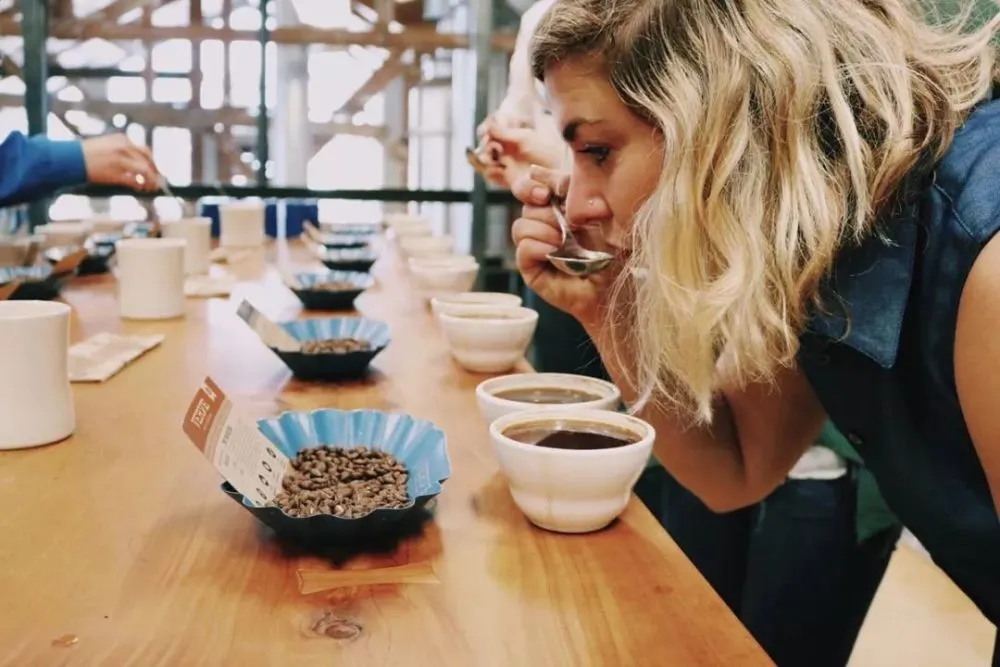
Two scoring systems currently carry the most authority: those of the SCAA (Specialty Coffee Association of America) and COE (Cup of Excellence). Here, we'll walk through the SCAA system.
The SCAA Cupping Scoring System
SCAA cupping evaluates eleven criteria: Fragrance/Aroma, Flavor, Aftertaste, Acidity, Sweetness, Body, Uniformity, Balance, Clean Cup, Overall, and Defects.
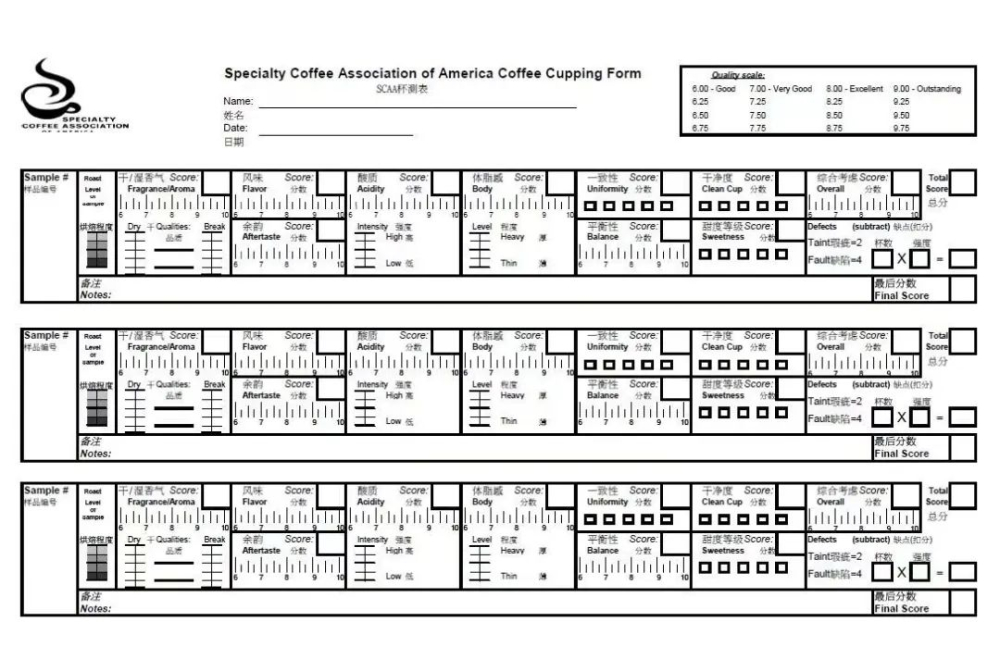
For each sample, five cups are prepared to check for consistency, stability, and objectivity. Since every bean entering SCAA evaluation is already commercial grade or better, each category (except defect deductions) is scored from 6 to 10 points in 0.25-point increments — sixteen scoring intervals in total.
The Criteria in Detail
Fragrance/Aroma
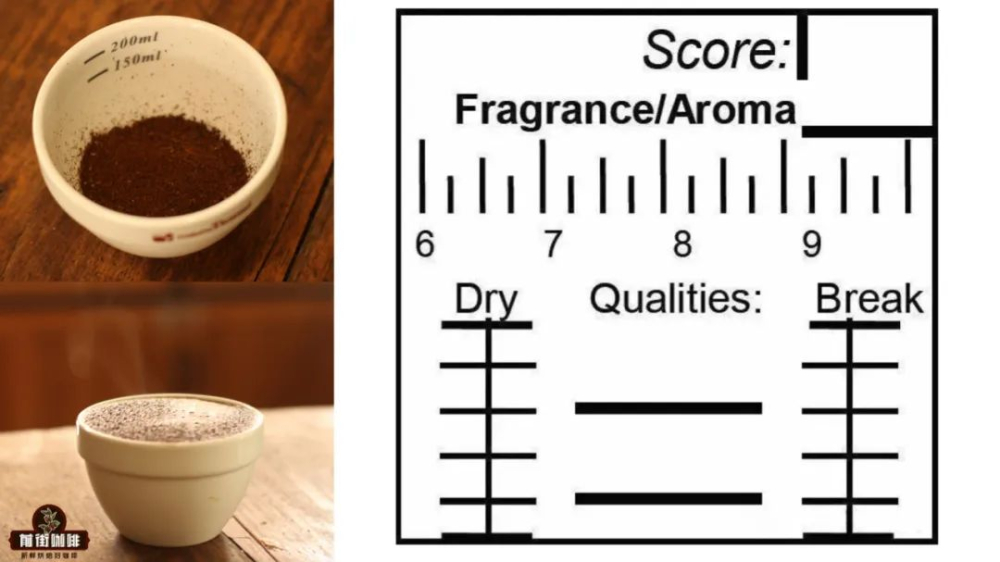
The aroma released when the beans are ground is the "dry fragrance"; the aroma that rises when the grounds meet hot water is the "wet aroma." On the scoring form, vertical tick marks record the intensity of the dry and wet aromas, horizontal marks evaluate their quality, and the two horizontal lines in between are for describing what you actually perceive.
Acidity
Coffee acidity can be positive or negative. Good acidity enhances complexity, moderate and gentle — round, bright acidity is a pleasure. Sharp, harsh acidity is negative, and tasting it might earn a grimace.
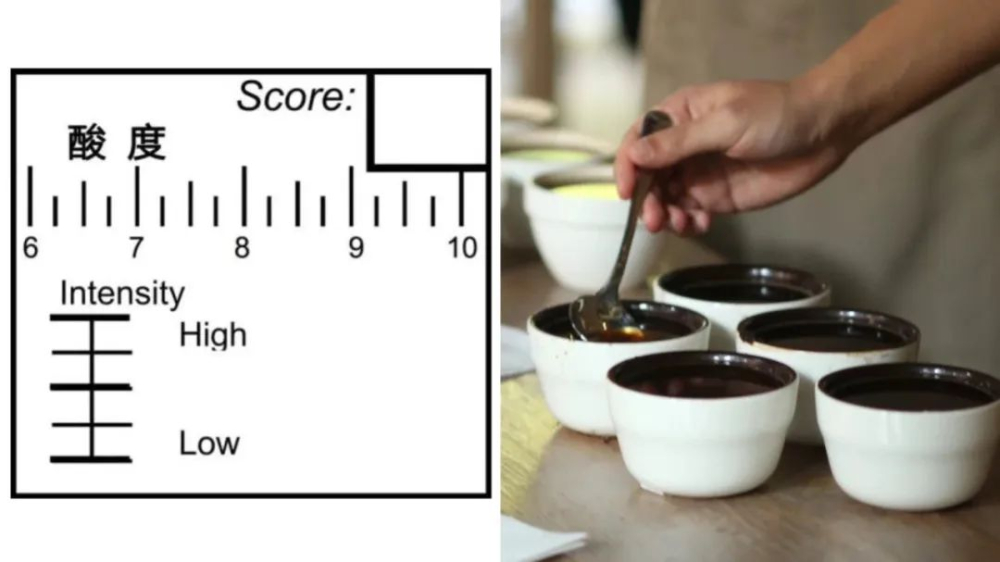
(As with the other charts, the horizontal axis is the score level; the vertical axis is intensity.)
Sweetness
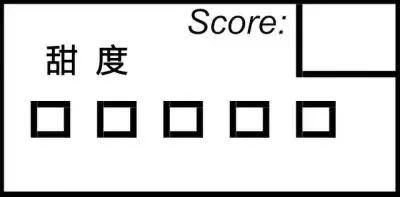
Sweetness is the sweet sensation in the cup, usually brought out by the interplay of acidity and bitterness; a few beans are so low in both that sweetness dominates on its own. Uniquely among the categories, sweetness is scored on grids representing the five sample cups, each worth up to 2 points, for a total of 10.
Flavor
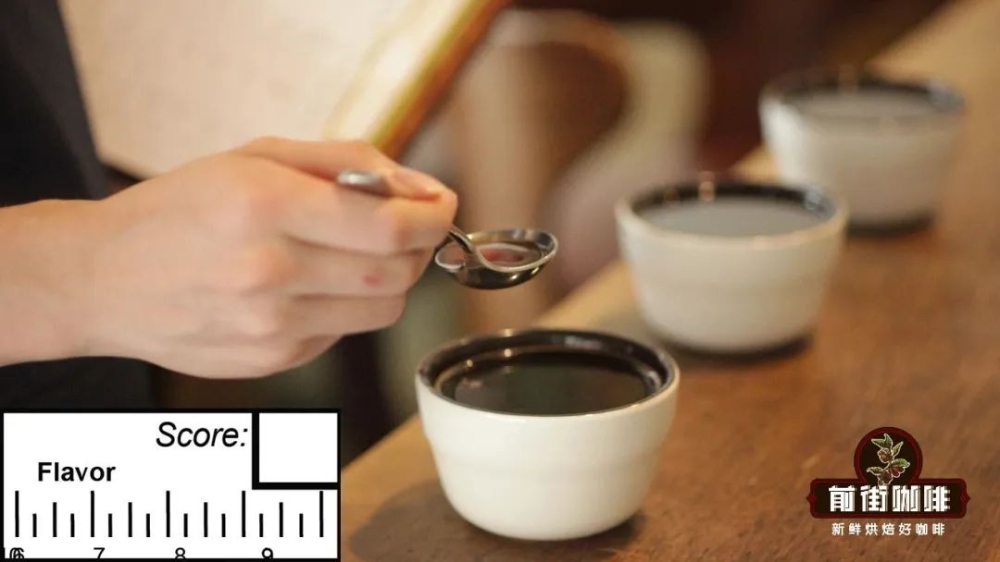
Flavor is straightforward: what does this cup actually taste like? High-quality flavors score high; obvious negative flavors pull the score down.
Body
Body describes how the liquid feels in the mouth — the mouthfeel, the texture. Common descriptors include full, viscous, smooth, and thin.
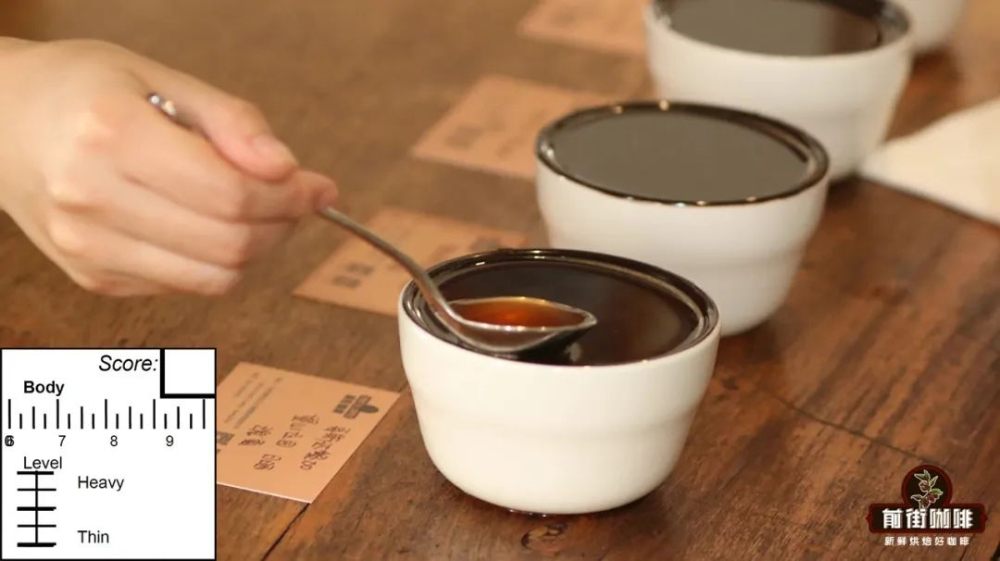
(Again: horizontal axis for score, vertical axis for intensity.)
Aftertaste
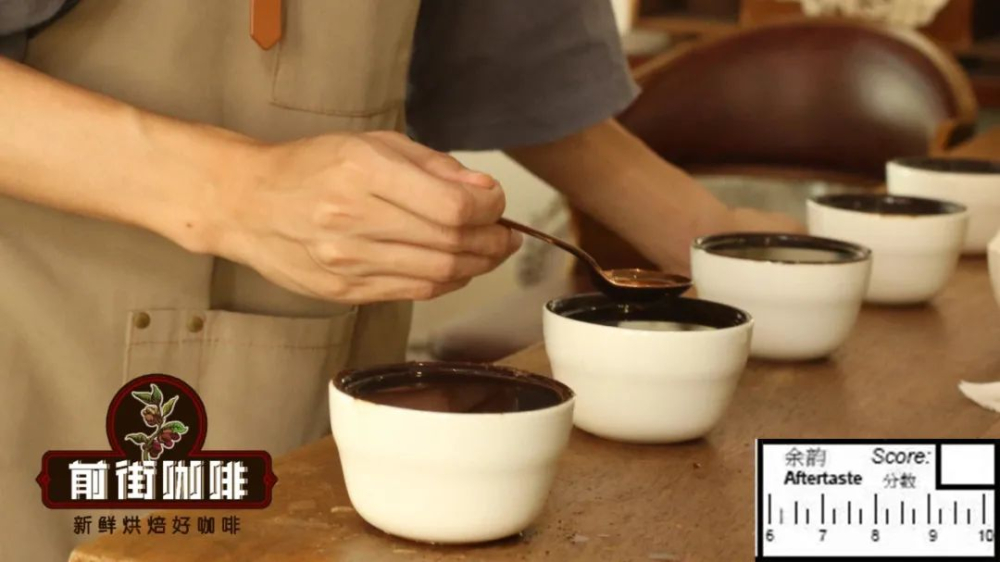
Aftertaste is the aroma perceived from the throat to the nasal cavity after swallowing. It's judged on two axes: whether the lingering flavor is positive or negative, and how long it persists. Short, absent, or negative aftertastes score low; long, positive ones score high.
Clean Cup
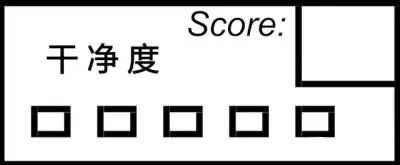
Clean cup means no off-flavors or throat-catching sensations from the first sip to the swallow. Like sweetness, it's scored on five grids — one per sample cup — each worth up to 2 points, totaling 10.
Balance
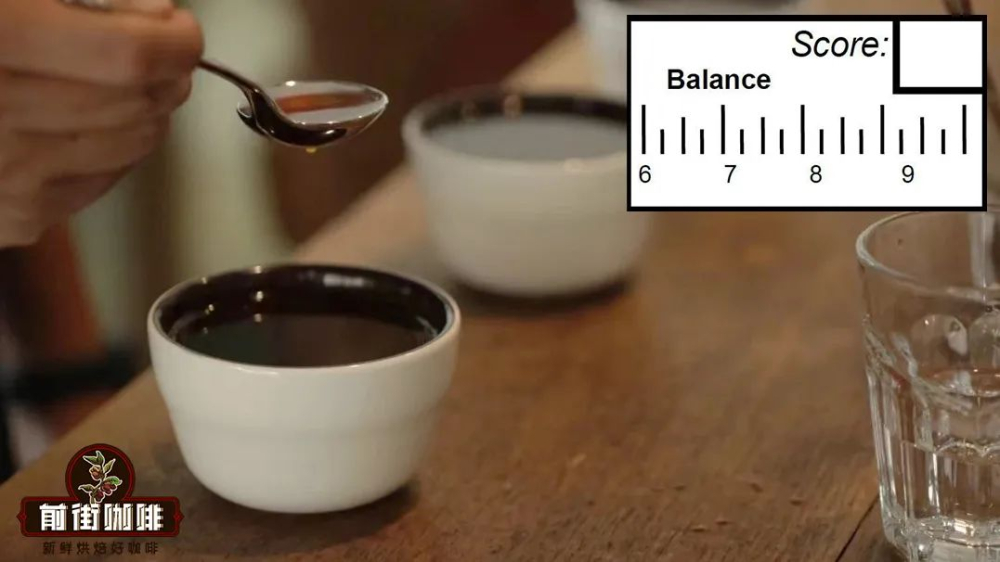
Balance asks whether all the sensations above are proportioned well in the mouth. When one element is too weak or too dominant, points come off for disturbing the overall harmony.
Uniformity
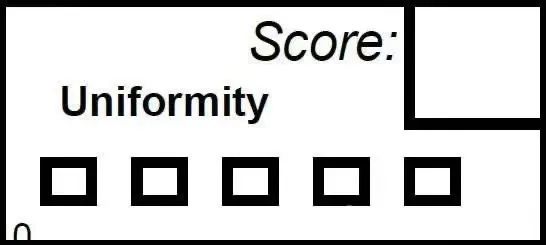
Uniformity measures how similar the five sample cups taste to one another — the more consistent, the higher the score. Five grids again, up to 2 points each, 10 in total.
Overall
The most subjective category. If the cup's overall performance matches the cupper's preferences, it earns a higher score here.

Defects
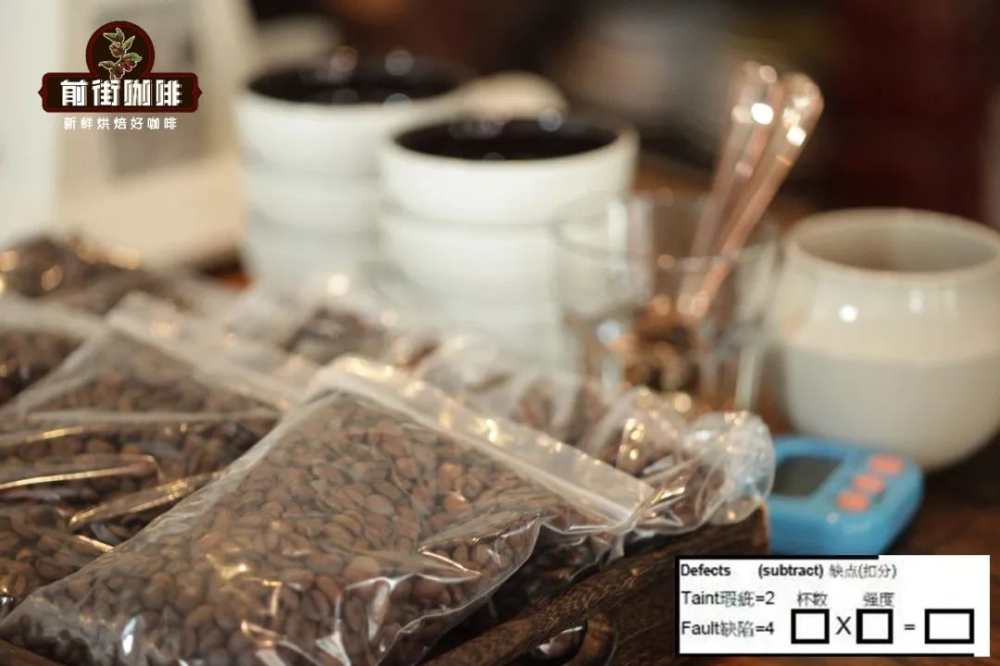
The only category built on deductions. When cupping reveals significant negative defects — weak aroma, off-flavors, or very prominent negative notes — each cup is docked 2 points for a defect or 4 points for a fault. The formula: number of defective cups × defect score = points deducted.
Sum the first ten categories, subtract the defect points, and you have the final score. Below 80: commercial coffee, not specialty grade. 80–84.99: Very Good. 85–89.99: Excellent. 90–100: Outstanding.

FrontStreet Coffee Recommendation
Want to taste what high-scoring coffee actually means? Light roasts showcase the attributes the SCAA form rewards most — bright, gentle acidity, sweetness, and a clean cup. FrontStreet Coffee's Kenya Cherry Tomato is a washed lot from Thika, grown at 1550–1750 meters on SL28 and SL34 and processed with the local 72-hour double-fermentation wash. Light roasted, it bursts with cherry tomato and dried dark plum over juicy, well-balanced acidity, with snow pear, black plum, yellow sugar sweetness, and a whisper of green tea in the finish — outstanding by any rubric.
For a softer, fruit-forward option, FrontStreet Coffee's Ethiopia Guoji (Huakui) delivers knockout tropical aromas — strawberry, passion fruit, jackfruit, even lychee — with pronounced sweetness and almost no bitterness, often described as "the coffee that doesn't taste like coffee." And FrontStreet Coffee's Ethiopia Kafa Forest, wild-harvested from the birthplace of arabica at 1400–2100 meters in the UNESCO-recognized Kafa Biosphere Reserve, offers jasmine, citrus, and wild berry over a delicate, lively cup.
Important Notice :
FrontStreet Coffee is a long-established specialty coffee roaster in Guangzhou China, selling freshly roasted beans from its own farm in Yunnan as well as dozens of carefully selected single-origin beans from around the world for both pour-over and espresso. The products deliver consistently excellent quality and great value, with shipping within 24 hours. Guangzhou's FrontStreet Coffee shop is recommended by many coffee lovers, and the beans are now available online at the Tmall 。
FrontStreet Coffee has moved to a new address:
FrontStreet Coffee Address: 315,Donghua East Road,GuangZhou
Tel:020 38364473
 Scan and follow the En Gafei WeChat official account. Please indicate that the reprint comes from "En Gafei".

