
What Are the Characteristics of Coffee Brewed with a Flat-Bottom Dripper?
Why Must Dripper Bottoms Be Points or Lines?
Whether conical or fan-shaped, every dripper's bottom comes down to either a single hole or a row of slits — a point or a line! Which begs the question: "Why must a dripper's bottom be a point or a line? Can't it be a flat 'surface'?"
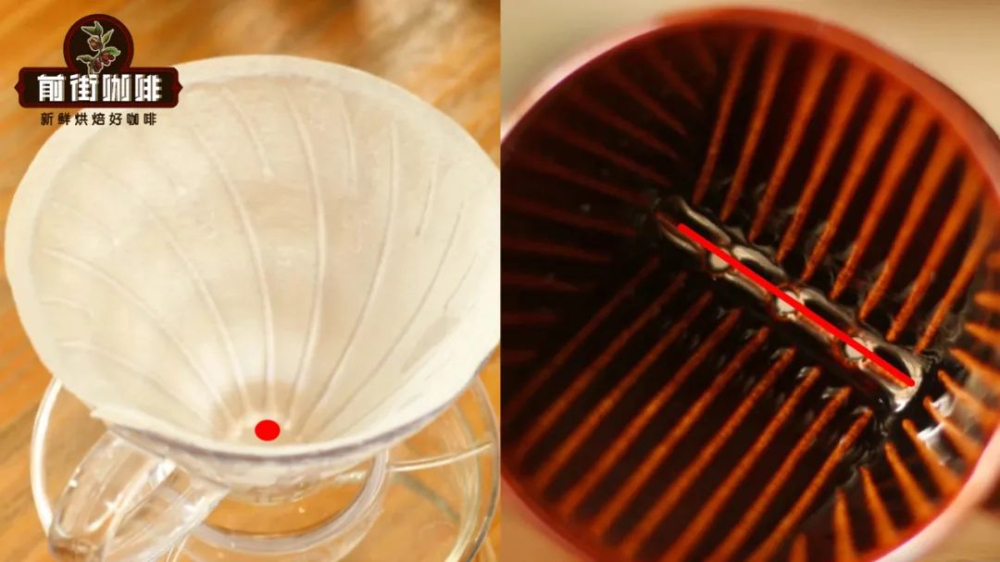
The Birth of the Flat-Bottom Dripper
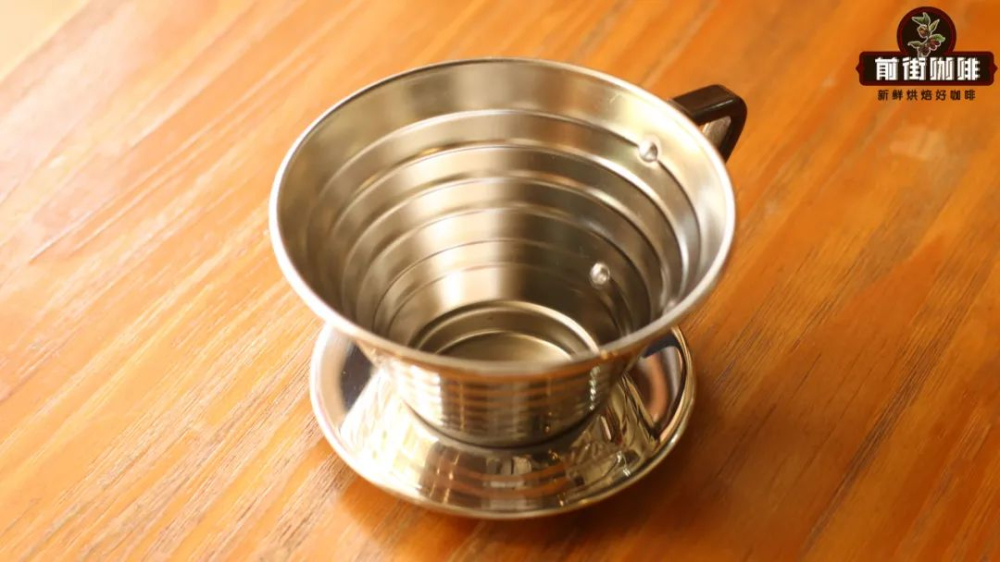
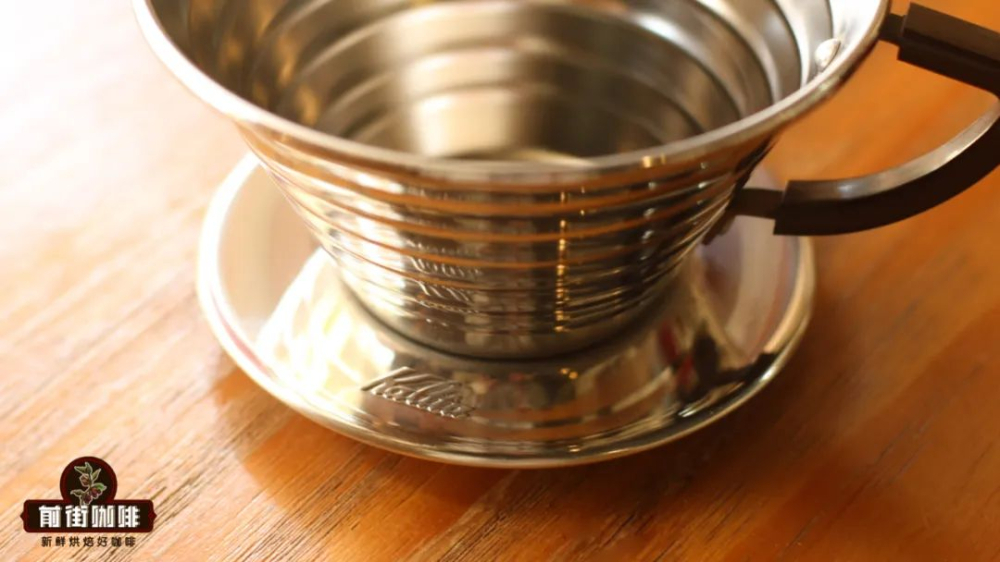
As it happens, Kalita wondered the same thing. Some time ago we mentioned that Kalita "borrowed" its way to a three-hole fan-shaped dripper in 1959 — only for the V60, which stormed the market on release, to capture most of it. Kalita clearly needed a more competitive dripper to go up against that "overpowered protagonist." So in 2010, Kalita launched the "Wave" series of flat-bottom drippers. They weren't the first, though: Melitta's dripper, on the market since 1936, already used a flat bottom. Add Kalita's earlier "borrowing" of Melitta's fan-shaped dripper, and you could say Melitta is Kalita's standard template in every sense.
The Advantages of Flat-Bottom Drippers
(Kalita Wave series flat-bottom dripper) Conical drippers led by the V60 are built to highlight a coffee's characteristics, producing distinct, full-flavored cups. But they share a common weakness: grounds tend to pile up in the center of the cone, so improper blooming or an excess of fines creates extraction trouble. That's precisely why the "Lily Drip" — an accessory for conical drippers — was born: it helps spread the middle coffee layer out toward the edges, easing those brewing problems. Flat-bottom drippers have no such worry. With a flat base, the grounds spread evenly into every corner, and because the space is larger, the coffee layer sits much thinner than in a conical dripper — letting hot water reach every particle of coffee.

Design Features of Flat-Bottom Drippers
The flow ribs of flat-bottom drippers are interesting, too. On the familiar V60 — and on the fan-shaped drippers we covered recently — the ribs run along the dripper wall. On flat-bottom drippers, some of the ribs sit on the bottom itself.
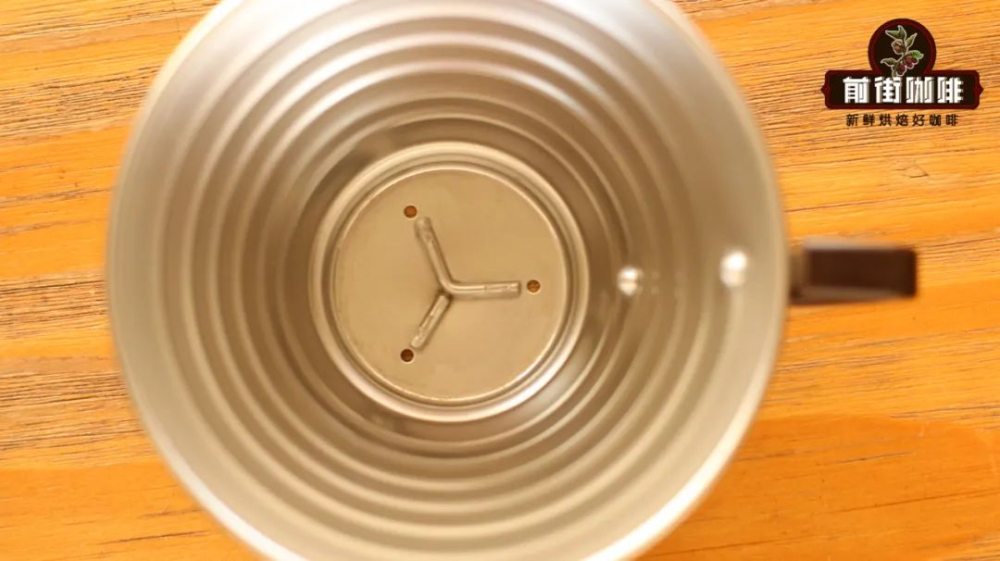
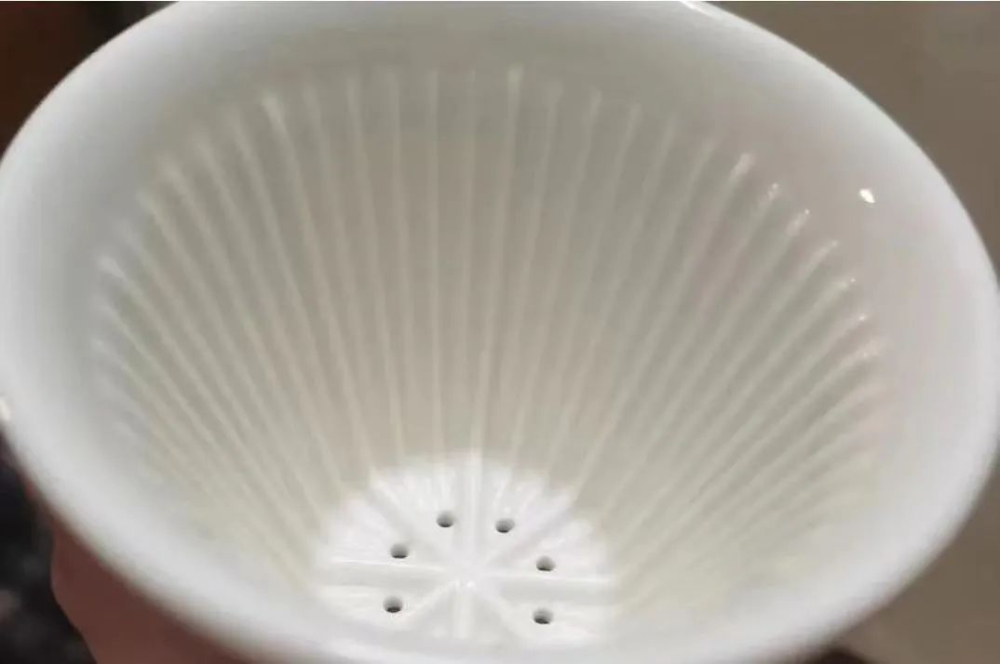
If the bottom were perfectly flat, the hot water would pool on a plane, and which hole it seeped from would be left entirely to fate — with very slow drainage. With ribs on the bottom, the water is guided toward the lower-lying holes, and the drainage speed improves accordingly. Flat-bottom drippers use cake-style filter paper (hence the nickname "cake drippers"). Since that paper can't sit snugly against the dripper wall, the wall ribs don't do much — which is why Kalita's flat-bottom walls use simple ring-shaped ribs instead. The flat-bottom dripper with working flow ribs that you can find online is, once again, the 1936 Melitta we mentioned at the start.
Brewing Guide for Flat-Bottom Drippers
Since flat-bottom dripper walls carry no flow ribs, drainage runs slower — so we grind coarser to compensate. This time the coffee is Colombia Frontera Geisha, with sweet-and-sour notes of purple grape and passion fruit. Let's see how this Geisha performs through a flat-bottom dripper.
Brewing Parameters:
- Beans: Colombia Frontera Geisha
- Dose: 15g
- Grind: EK43 setting 10, 80% pass rate on the #20 sieve
- Coffee-to-water ratio: 1:15 (225ml hot water)
- Water temperature: 92°C
- Method: three-stage pour, flat-bottom dripper
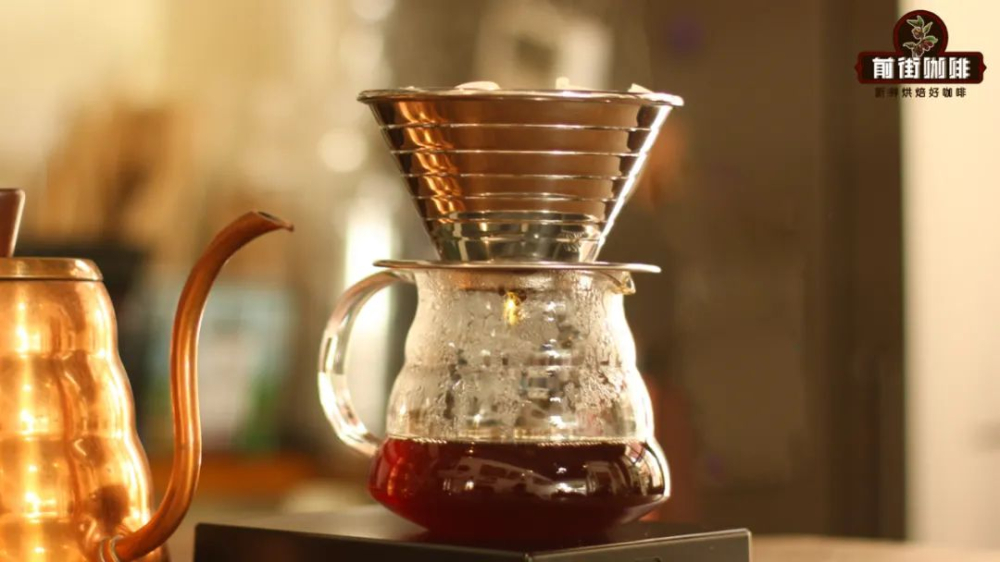
First, inject twice the weight of the coffee (30ml) and bloom for 30 seconds. Then start pouring from the center, circling gradually outward, and slowly add 120ml of hot water from the outside in. When the water level is about to bottom out, add the remaining 75ml the same way, and wait for the drip to finish.
Tasting Notes
Total brew time was 2 minutes 5 seconds, versus roughly 1 minute 50 seconds for the same Geisha through a V60. The tasting surprised FrontStreet Coffee a little: flat-bottom drippers are usually described as producing balanced, even cups — but compared with the balanced profile we remembered, this coffee came across more prominent, with the flavors clearly expressed and a noticeably rich mouthfeel. Unexpectedly delicious, frankly. If you have time, give it a try at home.
- END -
FrontStreet Coffee Recommendation
Whether you brew through a V60 or a flat-bottom Wave, the bean matters just as much as the dripper. For light-roast fans chasing floral-and-fruit cups like that Frontera Geisha, FrontStreet Coffee's Yirgacheffe Guodingding is a dependable choice — distinct citrus, berry, and floral aromatics with a green-tea-like sweetness that rewards careful pouring. FrontStreet Coffee's Ethiopia Huakui goes louder still, with tropical fruit aromas of strawberry, passion fruit, jackfruit, and lychee, a smooth juice-like body, and almost no bitterness — often called "the coffee that tastes least like coffee."
If bright acidity isn't your thing, dial toward medium-dark: FrontStreet Coffee's PWN Indonesia Golden Mandheling brews into a long, mellow cup full of herbs and dark chocolate, and the FrontStreet Coffee Brazil Queen Estate stays low in acidity and beautifully balanced with nut, cocoa, and caramel sweetness — comfortable through any dripper you put it in.

Important Notice :
FrontStreet Coffee is a long-established specialty coffee roaster in Guangzhou China, selling freshly roasted beans from its own farm in Yunnan as well as dozens of carefully selected single-origin beans from around the world for both pour-over and espresso. The products deliver consistently excellent quality and great value, with shipping within 24 hours. Guangzhou's FrontStreet Coffee shop is recommended by many coffee lovers, and the beans are now available online at the Tmall 。
FrontStreet Coffee has moved to a new address:
FrontStreet Coffee Address: 315,Donghua East Road,GuangZhou
Tel:020 38364473
 Scan and follow the En Gafei WeChat official account. Please indicate that the reprint comes from "En Gafei".

