
Coffee Knowledge: The Development Journey of Arabica Typica
The Journey of Typica: From Ethiopia to the World
Arabica accounts for roughly 70% of total world coffee production, and most of today's Arabica varieties trace their lineage back to two ancient landraces: Typica and Bourbon. Here is a brief chronological look at how one of those founders, Typica, traveled from its Ethiopian birthplace to coffee fields around the globe!
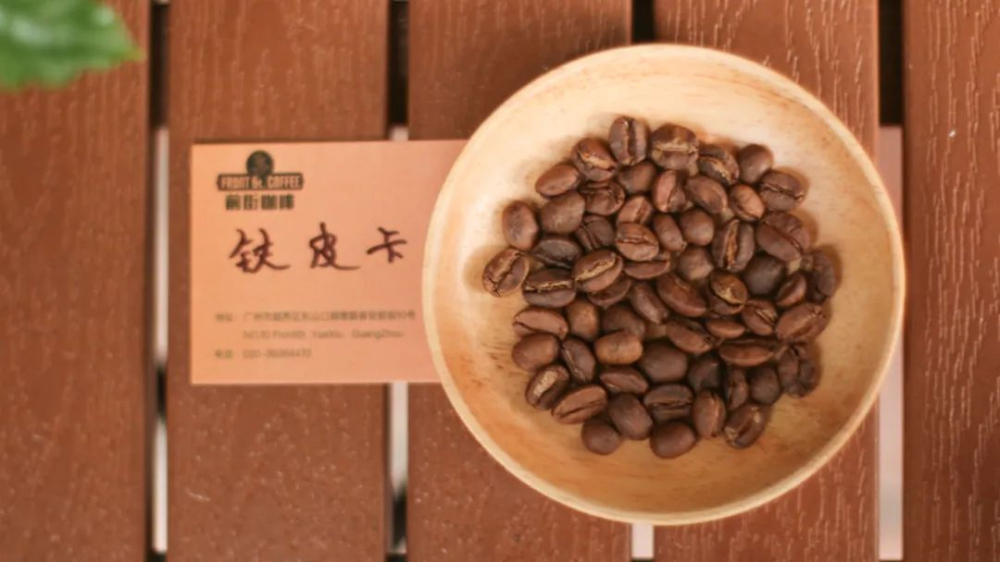
Like so many native varieties, Typica was born in Ethiopia. When people picture an Arabica bean, they are usually picturing a Typica: flat, plump, and slender, with a classic oval shape. Its first stop outside Africa was Yemen, just across the Red Sea!
From Yemen to India
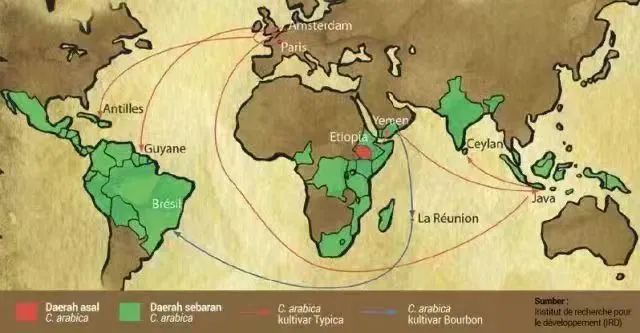
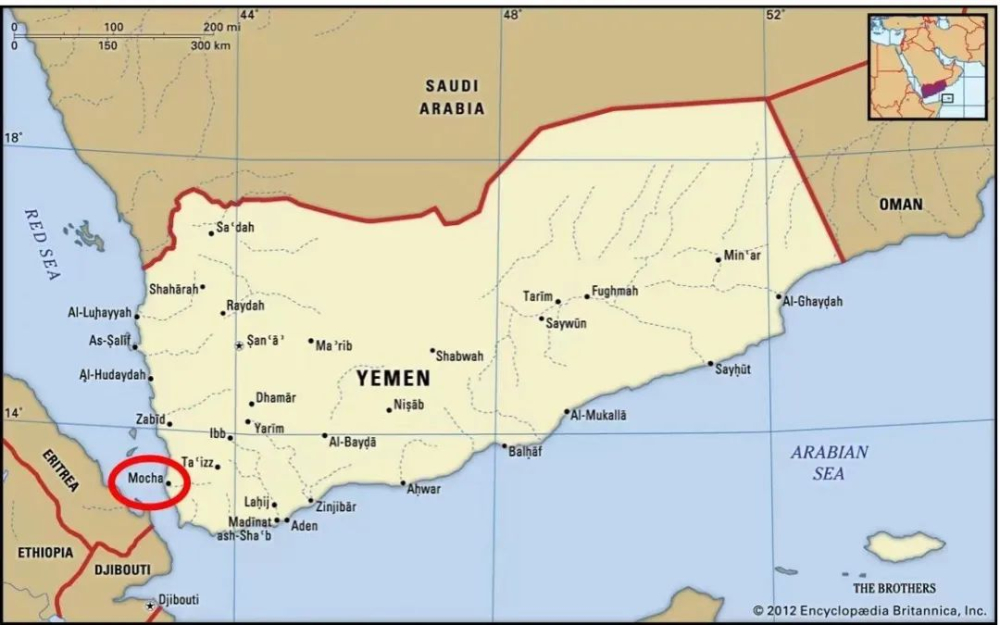
(The image above shows Typica's spread route.) Coffee first arrived in Yemen as medicine rather than as a daily drink. It was only around 1500 that a craze took hold in the Yemeni ports of Aden and Mocha: crushing dried coffee cherries and steeping them in water. With that trend, the medicine turned into a fashionable beverage, spread across the country, and Yemen began exporting coffee beans for promotion and sale. Before shipping anything out, however, Yemenis would either pre-roast the beans or boil them so they could no longer germinate, keeping coffee seeds from leaking abroad. That is why, from the 15th to the 18th centuries, Yemen effectively monopolized the global coffee trade - partly thanks to its ports, but above all because coffee existed nowhere else!
It was not until 1670 that a devout Muslim pilgrim named Baba Budan fell in love with coffee and wanted to keep drinking it back home - a country with no coffee of its own, in an era when Yemen refused to share seeds. So, after completing his pilgrimage and setting out for India, he smuggled seven seeds away by hiding them in his beard and brought them home intact. He planted them on Chandragiri Hill in Karnataka, in southwestern India, where they thrived and multiplied; in his honor, the hill was later renamed Baba Budan Hill. A little earlier, coffee had already reached Europe via Yemen and caused a sensation there. The Dutch, the great seafaring merchants of the age, smelled a huge opportunity.

From Europe to the Americas
When the Dutch occupied southwestern India in the early 17th century, they seized Typica trees from Yemen and planted them on the island of Java in Indonesia - an instant success that launched Indonesia's coffee industry. Then, in 1706, they shipped a single Typica plant from Java back to the Netherlands. The plant arrived in Amsterdam, where the Dutch built a dedicated greenhouse for it, keeping it comfortable under the care of botanists. Remarkably, the offspring of that one plant would go on to found the coffee industries of Central and South America, and it became known to history as the "European mother plant." In 1708, France's attempt to grow coffee trees smuggled from Mocha failed, so the mayor of Amsterdam seized the moment and in 1714 gifted a Typica seedling to King Louis XIV of France. The French, following the Dutch example, built a greenhouse and tended it with meticulous care.
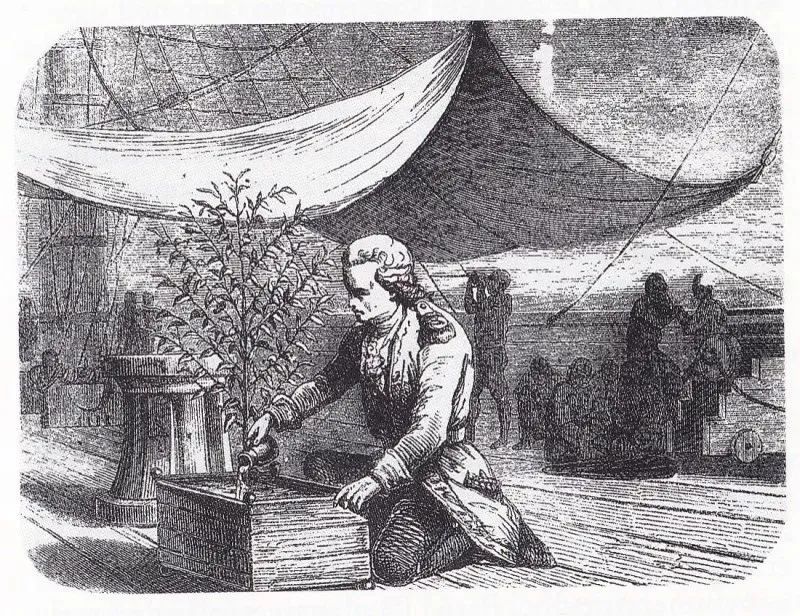
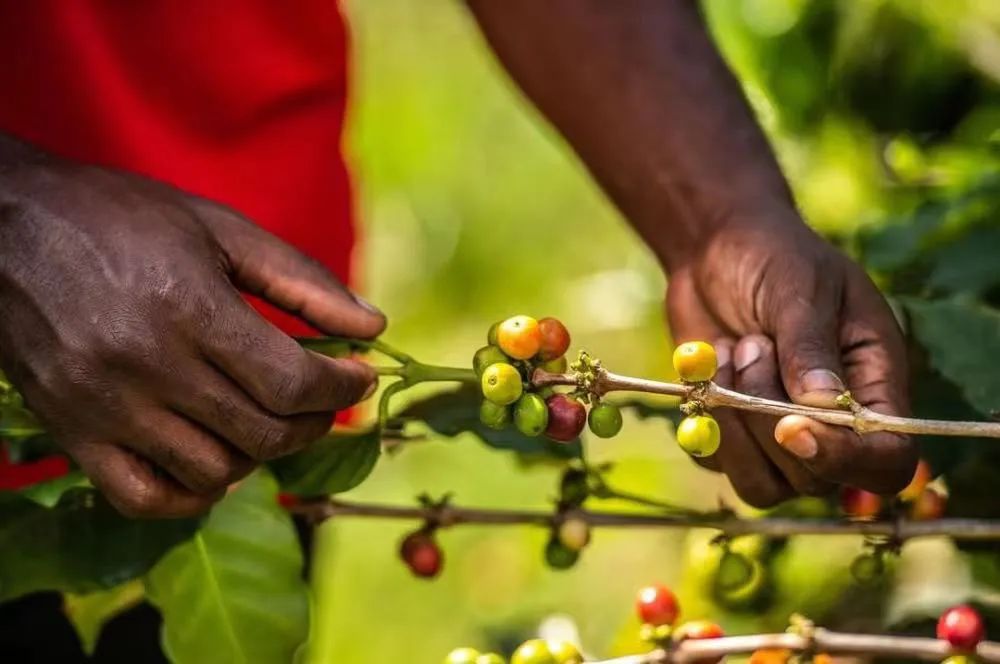
In 1720, a French naval officer named de Clieu took a Typica seedling from the Palace of Versailles and carried it across the Atlantic. After a three-year voyage he finally reached the French colony of Martinique in the Caribbean, and the island's coffee industry was born. The seedling's offspring spread to neighboring islands, including Jamaica - the island that produces the "king of coffee."
South American Expansion
In 1727, a territorial dispute broke out between Dutch Suriname and French Guiana. Francisco de Melo Palheta, a Brazilian diplomat, was rewarded for successfully mediating the conflict - and among the gifts from the wife of the French Guiana governor were Typica seedlings. Palheta resigned his post, carried the seedlings back to Brazil, and planted them in the northern state of Pará, officially launching Brazil's coffee industry. Brazil later distributed seeds descended from that same Typica stock to countries such as Paraguay and Peru.

Global Spread and Conclusion
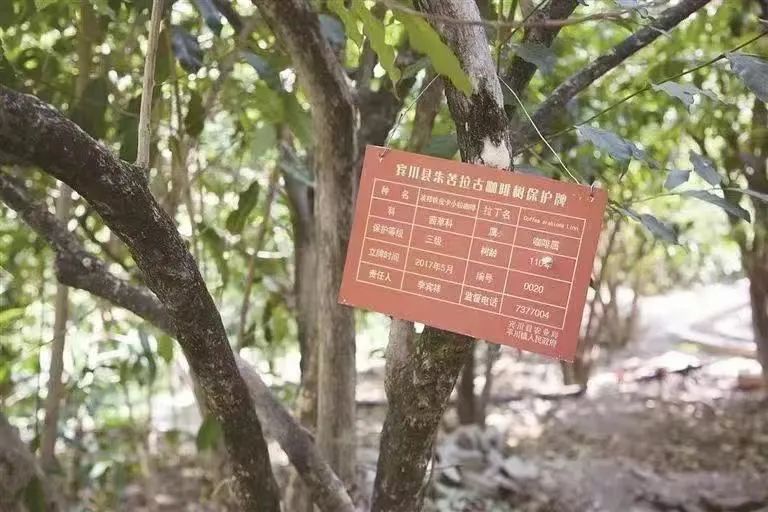
Colombia, Guatemala, Costa Rica, and other countries introduced Typica for cultivation around the late 18th century. By the late 19th century, a French missionary had carried Typica trees to Zhugula Village in Yunnan Province, China - no large-scale cultivation followed in the short term, but it planted the first seed of China's coffee story.
FrontStreet Coffee Recommendation
If this journey has you curious about Ethiopian Typica's homeland, FrontStreet Coffee suggests starting with these beans:
- FrontStreet Washed Yirgacheffe - the classic gateway to Ethiopian specialty coffee. Clean jasmine florals and bright citrus acidity, light and elegant with a tea-like finish, like a refreshing lemon tea. Ideal for pour-over beginners exploring floral, fruity cups.
- FrontStreet Guodingding Cooperative Coffee - from the Worka area at the southeastern edge of Yirgacheffe. Pulped before drying to keep its character clear and transparent, it offers citrus and lemon notes over a delicate white-floral aroma; bright, refined, and perfect for slow, focused brewing sessions.
- FrontStreet Natural Huakui (Hongmei) Coffee - from the Hambella region of Guji, Sidamo, where ripe cherries are sun-dried for 21 days on raised beds and turned and hand-sorted throughout. Medium-light roasted, it shows a light fermented wine note, florals, citrus, and mango with a thick, honeyed body - a great pick for drinkers who love bold, fruity natural-process cups.

Important Notice :
FrontStreet Coffee is a long-established specialty coffee roaster in Guangzhou China, selling freshly roasted beans from its own farm in Yunnan as well as dozens of carefully selected single-origin beans from around the world for both pour-over and espresso. The products deliver consistently excellent quality and great value, with shipping within 24 hours. Guangzhou's FrontStreet Coffee shop is recommended by many coffee lovers, and the beans are now available online at the Tmall 。
FrontStreet Coffee has moved to a new address:
FrontStreet Coffee Address: 315,Donghua East Road,GuangZhou
Tel:020 38364473
 Scan and follow the En Gafei WeChat official account. Please indicate that the reprint comes from "En Gafei".

