
What are the F1 and H1 coffee varieties in Costa Rica's Musician Series?
FrontStreet Coffee's Costa Rican Musician Series
The coffees in FrontStreet Coffee's Costa Rican Musician Series have remarkably distinctive flavors—rare purple-floral notes alongside unusual spice tones. Around 2020, the beans behind this series shifted from the traditional Caturra and Catuai to the rarer F1 and H1 varieties.
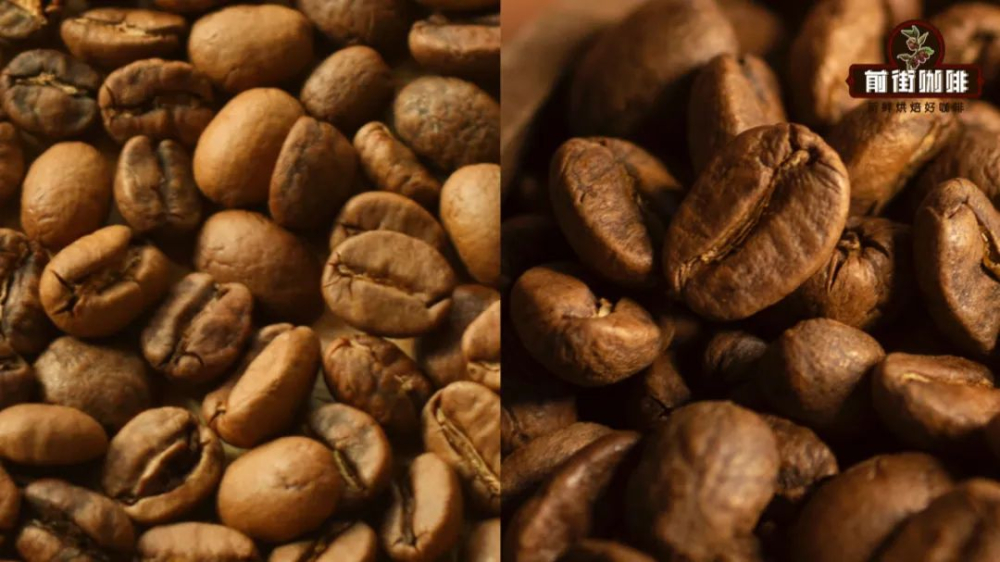
Letter-plus-number names like F1 and H1 will look familiar if you know Kenya's SL28 and SL34, which pair the abbreviation SL (Scott Laboratories) with an experiment number. So what do the F1 and H1 designations actually mean?
F1: Born of the Coffee Leaf Rust Crisis
In 1970, Hemileia vastatrix—the fungus behind coffee leaf rust—swept across the American continent for the first time. Coffee cultivation there was overwhelmingly Arabica, and Arabica's genetic uniformity left it defenseless against the disease. Wherever leaf rust spread, Arabica trees simply did not survive!
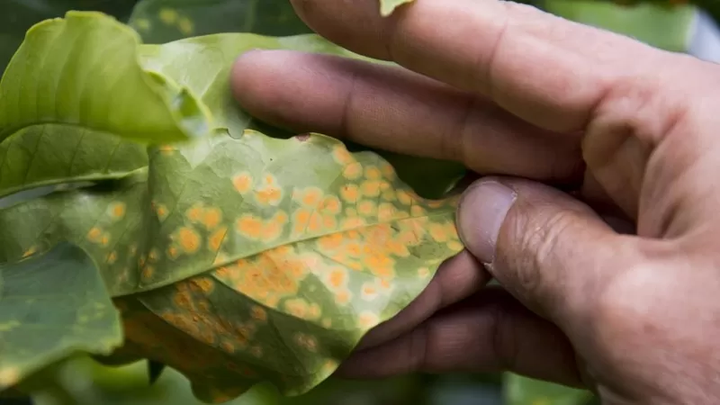
To stop the ongoing losses this disaster was inflicting on the coffee industry, the French Agricultural Research for Development Centre (CIRAD) and the Central American Coffee Organization (ROMECAFE) launched the F1 Project, with Costa Rica's Tropical Agricultural Research and Higher Education Center (CATIE) assisting in execution. The consensus was that the varieties widely cultivated across South America lacked the disease resistance to survive the crisis—so the plan was to use hybridization to create a new generation of varieties combining excellent cup quality with real vigor.

Unlike ordinary hybrids, an F1 demands parent varieties that are genetically distant, which is what makes the desired traits possible at all. From hundreds of coffee types, CATIE selected four main varieties—Caturra, Catuai, Catimor, and Sarchimor—along with several wild varieties, and let them cross-pollinate. That was the core of the F1 Project. Over the following five years the project produced 100 different F1 varieties, from which 20 outstanding lines were selected for propagation. These first-generation F1 varieties showed extremely strong disease resistance, drought tolerance, and higher yields. Thanks to that work, as of May 2021 there were just 9 precious F1 varieties in the world—and H1 is one of them.
H1: The Centroamericano Hybrid
H1's full name is Centroamericano H1, developed as a continuation of this research by Nicaragua's Sebaco laboratory. It is a cross between Rume Sudan and Sarchimor T-5296.
Rume Sudan is worth noting: an ancient Arabica variety found in the Rume valley of Sudan's Boma Plateau, which is where it takes its name. Its cup character and variety traits are excellent, but its disease resistance is weak—which is why it was crossed with Sarchimor T-5296 (itself a Villa Sarchi × Catimor hybrid). The result, H1, combines outstanding flavor with high adaptability and very strong disease resistance.

Conclusion
In short, F1 is the designation for first-generation hybrids bred from genetically distant parents to fight leaf rust, and H1 is one of the few F1 varieties released worldwide—a cross of Rume Sudan and Sarchimor T-5296 that pairs Sudanese flavor heritage with hybrid vigor. That's what gives the Musician Series its distinctive purple floral and spice notes.
- END -
FrontStreet Coffee

FrontStreet Coffee Recommendation
If you enjoyed learning about Arabica variety genetics, these classic varieties from our menu are well worth tasting side by side:
FrontStreet Jamaica Blue Mountain No.1 — Typica, one of the founding Arabica varieties, grown in Jamaica's Blue Mountains where it has spent over 200 years developing better disease resistance than typical Typica. Exceptionally balanced, mild and smooth, with full, pure aromatics and no sharp edges.
FrontStreet Panama Red Label Geisha — Geisha from the famous Esmeralda estate in Boquete, Chiriquí, where volcanic soil, old forest and year-round mist create superb growing conditions. Expect layered floral fragrance, citrus, peach and complex fruit acidity, a creamy body, and an oolong-tea sweetness on the finish.
FrontStreet Brazil Fazenda Rainha — Yellow Bourbon, a natural mutation of the old Bourbon variety, offering cream, peanut, toast and sugarcane notes—rich, mellow and sweet. Versatile enough for pour-over, moka pot, or espresso.
Important Notice :
FrontStreet Coffee is a long-established specialty coffee roaster in Guangzhou China, selling freshly roasted beans from its own farm in Yunnan as well as dozens of carefully selected single-origin beans from around the world for both pour-over and espresso. The products deliver consistently excellent quality and great value, with shipping within 24 hours. Guangzhou's FrontStreet Coffee shop is recommended by many coffee lovers, and the beans are now available online at the Tmall 。
FrontStreet Coffee has moved to a new address:
FrontStreet Coffee Address: 315,Donghua East Road,GuangZhou
Tel:020 38364473
 Scan and follow the En Gafei WeChat official account. Please indicate that the reprint comes from "En Gafei".

