
What's the difference between siphon coffee and pour-over coffee?
Have you noticed it too? More and more coffee shops are adding siphon coffee to their menus—almost unimaginable in this fast-food era, considering how demanding the siphon process is.

Pour-over, by contrast, is dramatically more convenient and quick. So is the siphon's comeback driven by truly exceptional flavor, or is it just a renaissance of nostalgia? Let's dig into the secrets with FrontStreet Coffee.
The History of Siphon Coffee
The siphon, also called a "vacuum pot," has several claimed origin stories. The most famous traces to the 1840s, when an Englishman named Loeff built the prototype—a vacuum coffee pot—out of laboratory glass test tubes. Two years later, in 1842, Madame Vassieux of France refined it into the first upright siphon with convection between upper and lower chambers! For a long while after, though, the siphon made little impression in France; its road to fame began only when it reached Japan.
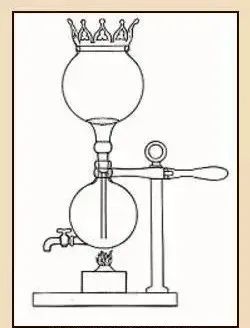
In 1924, the renowned equipment maker Kono brought out its upright siphon. It was a perfect match: a device that demands meticulous, unhurried operation to produce rich coffee met a people steeped in the spirit of craftsmanship, and the siphon rapidly became one of Japan's most popular brewers. The trend spread from Japan to Hong Kong and Taiwan, then onward to mainland China, staying hot for a long stretch. But once specialty coffee took hold, drinkers no longer confined themselves to traditional dark roasts and developed a taste for the sweet-tart brightness of lighter roasts. The siphon, champion of dark-roast brewing, faded into the background—displaced by quick, convenient pour-over.
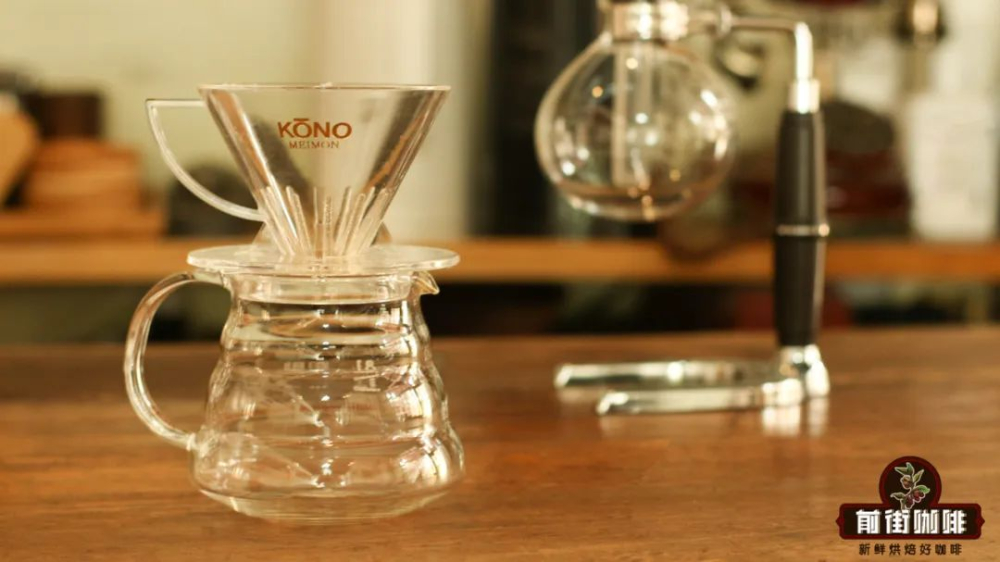
Now that siphons are reappearing on menus, the obvious question is what actually differs between siphon coffee and pour-over. So let's brew the same beans both ways and compare.
Brewing Experiment
The bean for this experiment: Jamaica Blue Mountain No. 1. Since siphon brewing historically favors dark roasts, we picked the coffee king of that era—Blue Mountain No. 1—as our comparison bean.
Pour-Over Brewing Parameters
Bean amount: 20g, coffee-to-water ratio: 1:15 (300ml hot water), water temperature: 88°C, grind: Ek43 setting 10.5 with 75% pass-through rate on a #20 sieve, dripper: Kono, brewing method: three-stage pour.
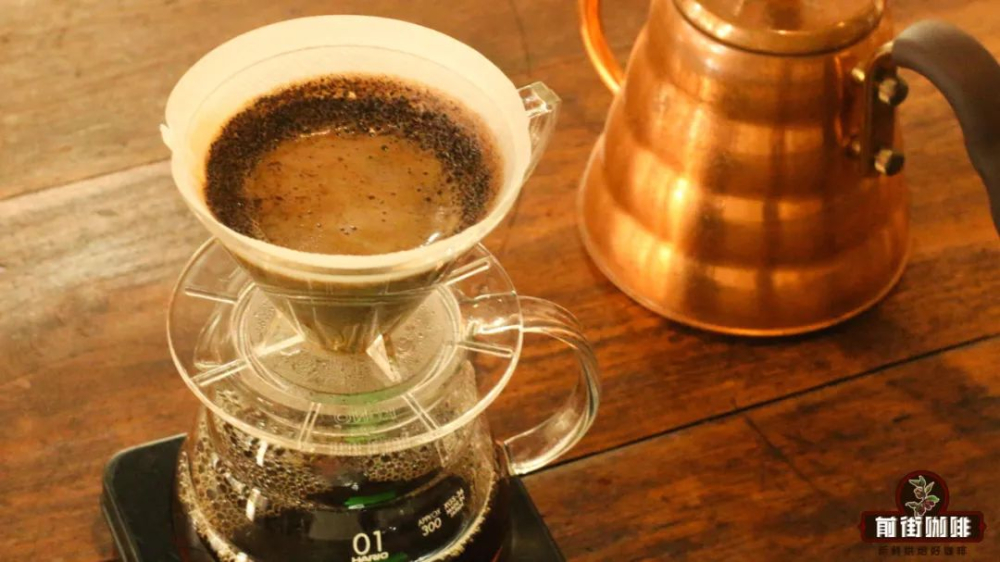
Start with a bloom of twice the bean weight (40ml) for 30 seconds, then slowly pour 140ml of hot water in large circles. Just before the water level exposes the grounds, pour the remaining 120ml in small circles and wait for the bed to drain fully.
Siphon Brewing Parameters
Bean amount: 20g, coffee-to-water ratio: 1:12 (240ml hot water), grind: Ek43 setting 9 with 90% pass-through rate on a #20 sieve, stirring method: cross-stir technique.
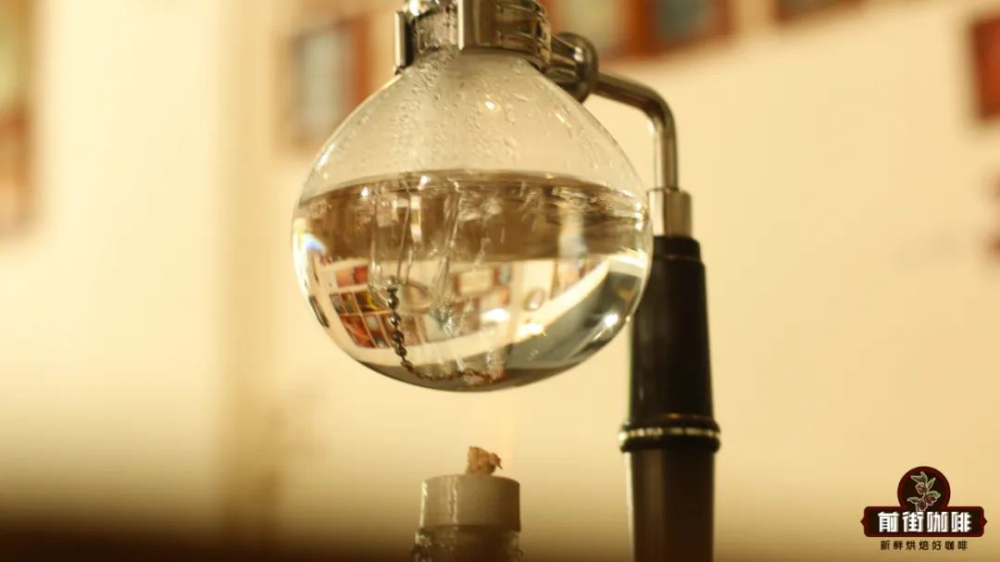
Once all the hot water has risen into the upper chamber, add the coffee grounds. Press them under with the stirrer and steep for 25 seconds, then stir for 7 seconds. At 55 seconds on the timer, cut the heat, give a final 5-second stir, and wait for the coffee to draw back down. For the full walkthrough, see our article "Analysis of Siphon Coffee Operation."
Tasting Time
The pour-over Blue Mountain showed a very balanced profile—nuts, cream, chocolate, a long aftertaste, and rich body. The siphon Blue Mountain matched it on flavor, with deep chocolate, nut, and spice notes and an equally lasting finish. The clearest difference: the pour-over leaned toward balance, while the siphon cup was smoother in the mouth. Each has its own advantages.
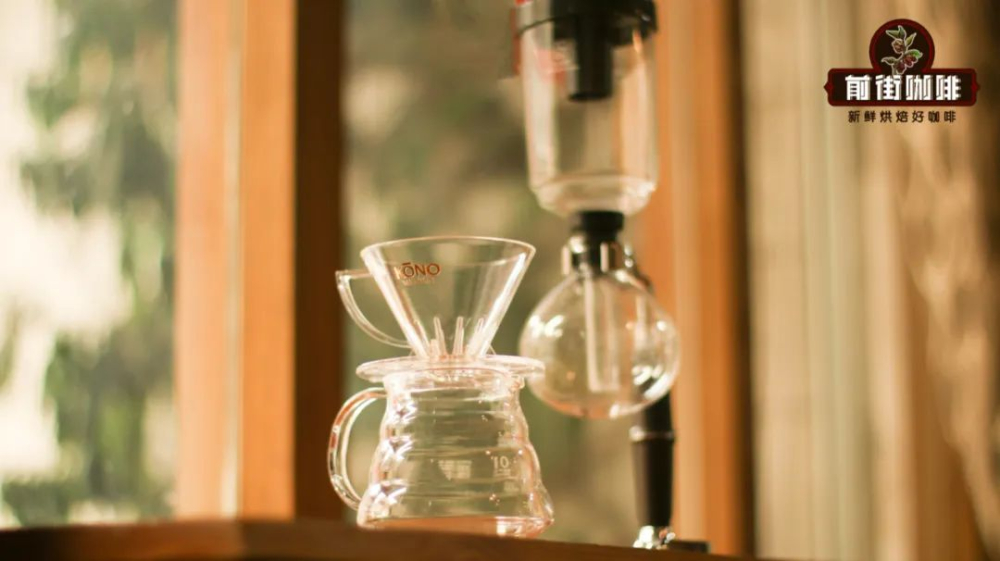
On top of that, the siphon offers an experience beyond the taste buds—a visual performance in itself. Those are real reasons for its comeback. Though one imagines that for high-volume shops, washing all those pots would be quite the chore.

FrontStreet Coffee Recommendation
Want to run your own pour-over versus siphon showdown? Beans from the FrontStreet Coffee shelf that shine in both:
FrontStreet Jamaica Blue Mountain No.1 — The exact bean from our experiment, and a masterclass in balance: certified beans from the historic Clifton Estate, medium-dark roasted so that nuts, dark chocolate, cream caramel, and soft sweetness unfold layer by layer, with acidity, sweetness, bitterness, and aroma in perfect accord. Smooth in a siphon, poised in a pour-over.
FrontStreet Yirgacheffe Guodingding — If you lean pour-over, this is the classic first stop: vivid citrus, berry, and florals with a green-tea-like sweet finish and soft, fruit-like acidity—easy to love and endlessly repeatable.
FrontStreet Ethiopia Huakui — For showing off what a V60 can do: intense tropical fruit—strawberry, passion fruit, jackfruit, lychee—pronounced sweetness, barely any bitterness, silky and juice-filled. A light roast with aromatics so layered that every pour style tells a slightly different story.
Important Notice :
FrontStreet Coffee is a long-established specialty coffee roaster in Guangzhou China, selling freshly roasted beans from its own farm in Yunnan as well as dozens of carefully selected single-origin beans from around the world for both pour-over and espresso. The products deliver consistently excellent quality and great value, with shipping within 24 hours. Guangzhou's FrontStreet Coffee shop is recommended by many coffee lovers, and the beans are now available online at the Tmall 。
FrontStreet Coffee has moved to a new address:
FrontStreet Coffee Address: 315,Donghua East Road,GuangZhou
Tel:020 38364473
 Scan and follow the En Gafei WeChat official account. Please indicate that the reprint comes from "En Gafei".

