
Panama Geisha Blend Mariposa: How Big is the Difference Between Natural and Washed Processing?

Fans of FrontStreet Coffee's Panama Butterfly will know it is a "Geisha blend" composed of several varieties—and that its excellent value makes it a worthy stand-in for pure Geisha.
A "Geisha blend," as the name implies, is a coffee that contains Geisha alongside other varieties. On FrontStreet Coffee's bean list, the Panama Washed Butterfly and the Costa Rica Strawberry Sugar are well-known representatives. And as one of the few large estates in Ethiopia, Gesha Village's mixed-lot offering—FrontStreet Coffee's CHAKA—blends two Ethiopian Geisha varieties, Gesha 1931 and Gori Gesha, making it another kind of Geisha blend.

The Composition of FrontStreet Coffee's Butterfly
FrontStreet Coffee's Butterfly comes from Panama's Boquete region—the very place where Geisha made its name—and is composed of three varieties: Geisha, Caturra, and Catuai. The largest share, about 70%, is the most renowned and highest-quality washed Geisha. Boquete's excellent growing environment plus that 70% Geisha content give the coffee both the rich aroma of high-altitude Panama coffee and outstanding citrus-honey notes across body, acidity, and florals on the cupping table.
Mixed varieties like this are common across growing regions. Take familiar Ethiopia: whether trees in farmers' backyards or coffee growing wild in forests, beans are generally not identified or categorized by variety—hardly distinguished at all. Coffee trees are interplanted with other cash crops, harvested only when ripe, processed, and exported as "Heirloom." A single batch may combine the same-season harvests of dozens of small farmers and span dozens or even hundreds of undifferentiated varieties, yet it is still sold as single-origin coffee.

In the same way, FrontStreet Coffee's Panama Butterfly—marketed as a "Geisha blend"—does contain three different varieties, but all from Boquete town in Chiriquí Province, Panama, and all washed processed, giving it the fresh character of washed Panama Geisha. By any reasonable definition, it remains a single-origin bean.
Introducing FrontStreet Coffee's Natural Butterfly
Recently, FrontStreet Coffee received the Natural Butterfly from the factory—time to cup it and see what separates the natural version from the washed Butterfly!
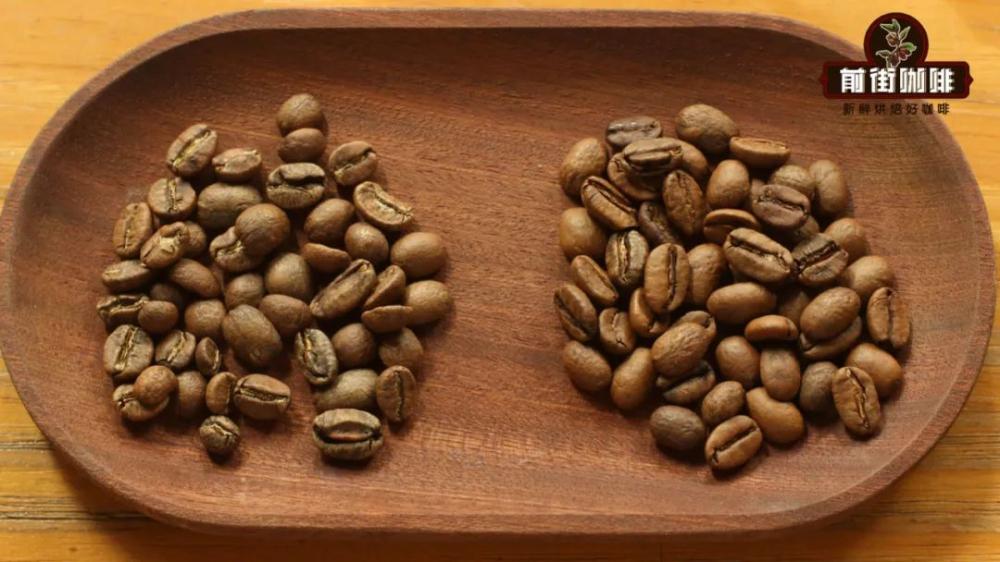
(Left: Washed Butterfly; Right: Natural Butterfly)
FrontStreet Coffee's Panama Boquete Butterfly uses 70% Geisha combined with 30% Caturra and Catuai! Mixed-variety harvesting happens everywhere. In Ethiopia, with its countless native varieties, farmers simply cannot tell them apart, so at harvest they strip everything together and send it to the processing plant—variety mixing by natural cause. Our protagonist today, though, is variety mixing by human design.

The Origin of FrontStreet Coffee's Butterfly
Early farmers, chasing bigger yields, planted Geisha alongside other varieties to avoid wasting land. At harvest, though, picking single varieties separately cost enormous manpower, resources, and time—so they stripped everything together, Ethiopian-style. And that is how the Geisha blend called FrontStreet Coffee's Panama Butterfly was born.
It is not pure Geisha, but it grows in celebrated Boquete and carries most of Geisha's character. Best of all, the price is very reasonable: regular Panama Geisha costs at least twice as much as FrontStreet Coffee's Panama Butterfly. Hence its reputation as the affordable Geisha alternative. So—what do the two processing versions of the same bean actually taste like?
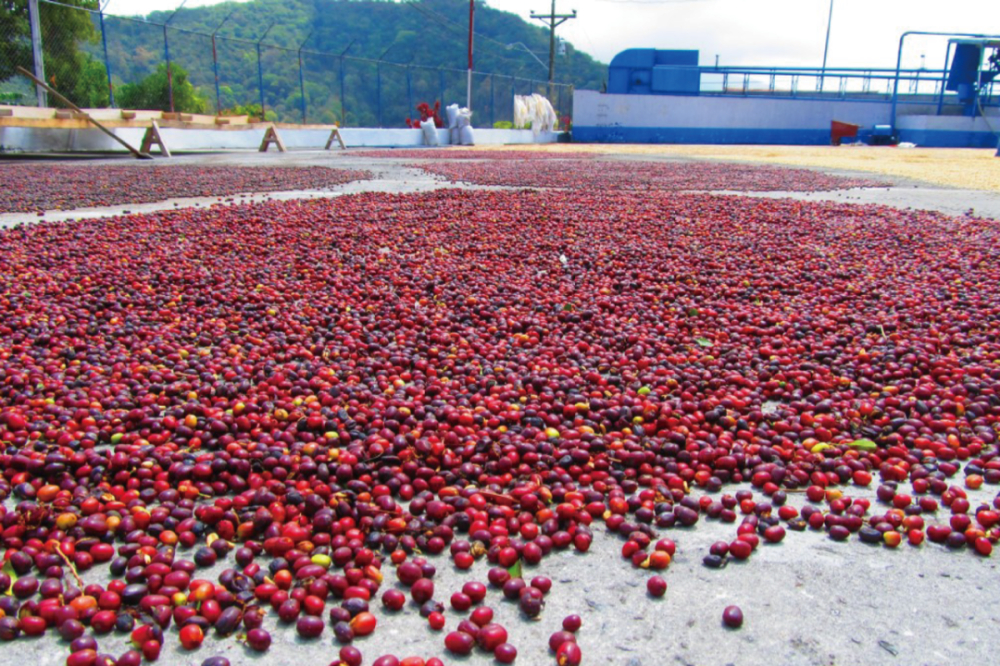
Natural vs. Washed Processing
Natural processing—"Natural"—is the non-technological method. From the time coffee was discovered in Ethiopia in the 6th century AD, natural drying was the only processing technology for coffee circulation in the Arab world. Traditional natural processing needs no water at all, and seed extraction is simple: dry the whole coffee fruit thoroughly, then machine-crush and hull it to free the bean. All it takes is a sunny spot. The drawbacks, however, are serious: heavy dependence on weather and up to a month of drying, during which a single spell of wind or rain can undo everything. That is why this ancient method clusters in tropical countries with distinct dry and wet seasons.
Washed processing uses water to treat the fruit. The typical steps: flotation, pulp removal, soaking and fermentation to strip the mucilage, washing or further soaking, then hulling after drying to obtain the green bean.

Compared with natural processing, washed requires depulpers, washing pools, and a steady supply of fresh water—not feasible everywhere, but common in places like Colombia, Costa Rica, Panama, and Kenya. Its advantages are real: a lower defect rate that stabilizes quality, and much shorter drying times that make production more efficient. Plus, of course, the "washed flavor" we are here to discuss.
Brewing Experiment and Tasting Notes
Beans used: FrontStreet Coffee's Panama Natural Butterfly and Panama Washed Butterfly
Bean amount: 15g
Ratio: 1:15
Water temperature: 92°C
Grind: Ek43 setting 10 (80% pass-through on #20 sieve)
Method: three-stage pour
Dripper: V60
Bloom with twice the coffee weight (30ml). After 30 seconds, slowly pour 120ml of hot water in large circles; just before the water level exposes the bed, pour the remaining 75ml in small, slow circles, and let the drip finish.
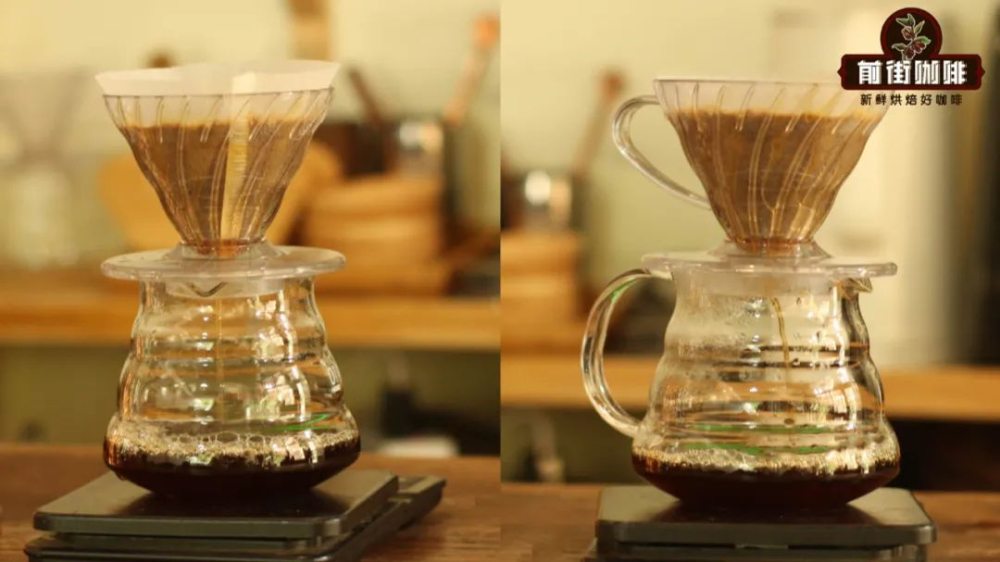
The Washed Butterfly drained in 2 minutes 10 seconds, showing white florals, black tea, and soft, rounded citrus acidity that drinks like juice—cleanliness was very high.
The Natural Butterfly finished at exactly 2 minutes, tasting closer to a red wine made of tropical fruits—citrus and pineapple—over delicate white florals. It was not quite as clean as the washed version.

Conclusion: What Processing Changes
Same bean, very different cups. Washed processing removes the skin and pulp before fermentation, so only a little residual pulp and mucilage ferments alongside the bean—giving the washed Butterfly its cleaner, fresher flavors.
Natural processing ferments the whole fruit. All that pulp and mucilage deepens fermentation, which is exactly why the natural Butterfly bursts with tropical character.
FrontStreet Coffee Recommendation
Hooked on Geisha after tasting the Butterfly? Here is where to go next, from the FrontStreet Coffee shelf:
FrontStreet Boquete Geisha — The best first taste of the legendary "Geisha flavor": an entry-level Panama Geisha at an approachable price, delivering the classic orange-blossom honeyed sweetness, an oolong-tea texture with fine fruit acidity, and clearly delineated layers.
FrontStreet Esmeralda Red Label Geisha — The pinnacle. Grown at 1,600–1,800 meters, each "Esmeralda Special" lot must cup above 90 points, carries its own lot number, and comes entirely from a single plot—FrontStreet's Red Label comes from the Jaramillo plot—so buyers can choose batches by subtle flavor differences. Hand-drip it and prepare to be entranced.
FrontStreet Strawberry Candy Geisha Blend — The budget-friendly Geisha alternative: Costa Rican honey-processed coffee blended with Panama Geisha for delicate florals plus sweet fruit. It works as pour-over, espresso or moka pot brew, or cold brew—steep 30g at a 1:12 ratio, refrigerate 8 hours, filter, rest 3 more, and enjoy grape juice, rose, sweet orange, and fruit-wine notes.
Important Notice :
FrontStreet Coffee is a long-established specialty coffee roaster in Guangzhou China, selling freshly roasted beans from its own farm in Yunnan as well as dozens of carefully selected single-origin beans from around the world for both pour-over and espresso. The products deliver consistently excellent quality and great value, with shipping within 24 hours. Guangzhou's FrontStreet Coffee shop is recommended by many coffee lovers, and the beans are now available online at the Tmall 。
FrontStreet Coffee has moved to a new address:
FrontStreet Coffee Address: 315,Donghua East Road,GuangZhou
Tel:020 38364473
 Scan and follow the En Gafei WeChat official account. Please indicate that the reprint comes from "En Gafei".

