
Why Do Pour-Over Coffee Techniques Involve Circular Pouring? Why Not Fixed-Point Pouring or Stirring?
Why Pour Water in Circles When Brewing Pour-Over Coffee?
There are all sorts of ways to brew pour-over coffee today, but whatever the method, most of them use a circular pour. So do you know why we pour water in circles when making pour-over coffee?
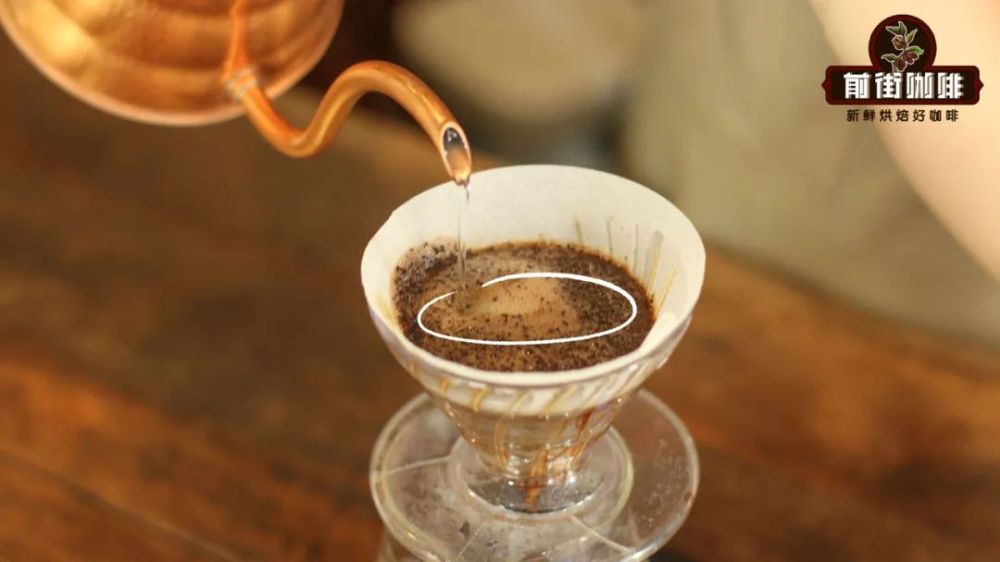
You can probably think of an answer right away, but FrontStreet Coffee will ask again: why circles? Why not pour up and down or left and right, the way a stirring method would? Take a guess, because today we are going to dig into exactly this: why pour water in circles.
The Benefits of Circular Pouring
The first benefit circular pouring brings is a higher extraction rate. That is probably the first thing that comes to mind. But why must we pour in circles rather than use the fixed-point pouring seen in some Japanese methods?
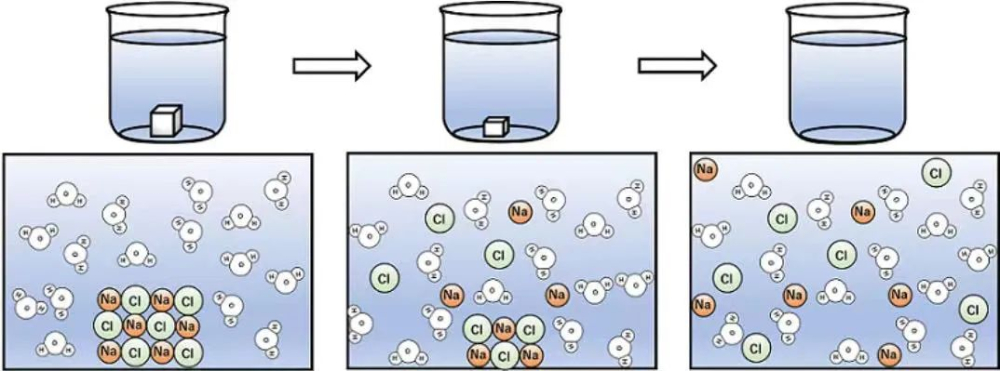
An Analogy: Instant Drink Powders
Think of the Banlangen granules you might take for heatiness, or any instant powder you drink when you have a cold. If you simply soak them in hot water, two things happen. First, you get a rather unusual layering as you drink, with the liquid on top extremely weak and the liquid at the bottom extremely strong, an uneven concentration that makes either layer hard to drink. Second, once you finish, you find plenty of undissolved granules sitting at the bottom of the cup. That is why we normally use a spoon or chopsticks to stir them, so the clumped granules dissolve fully and spread evenly through every drop.
The Coffee Powder Bed Experiment
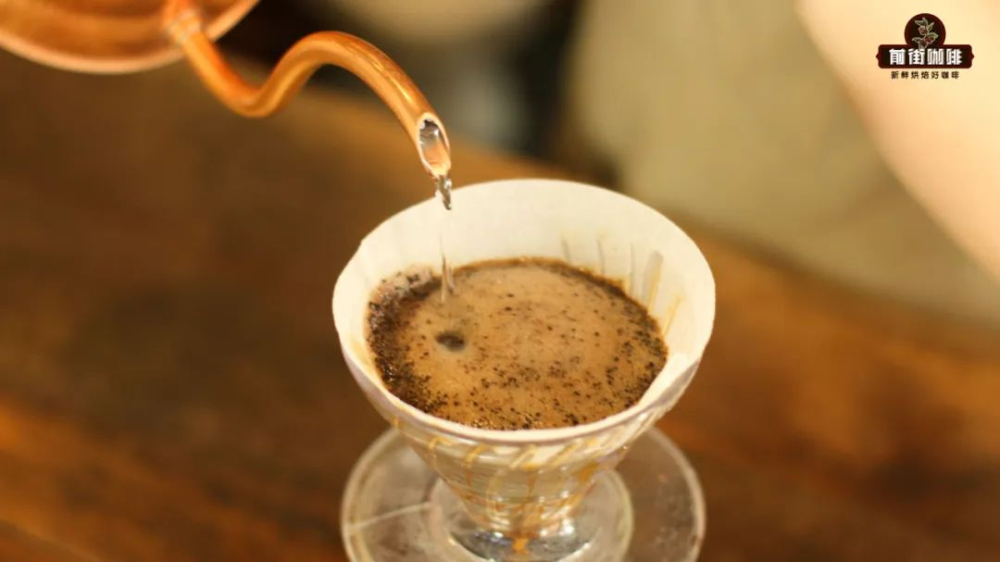
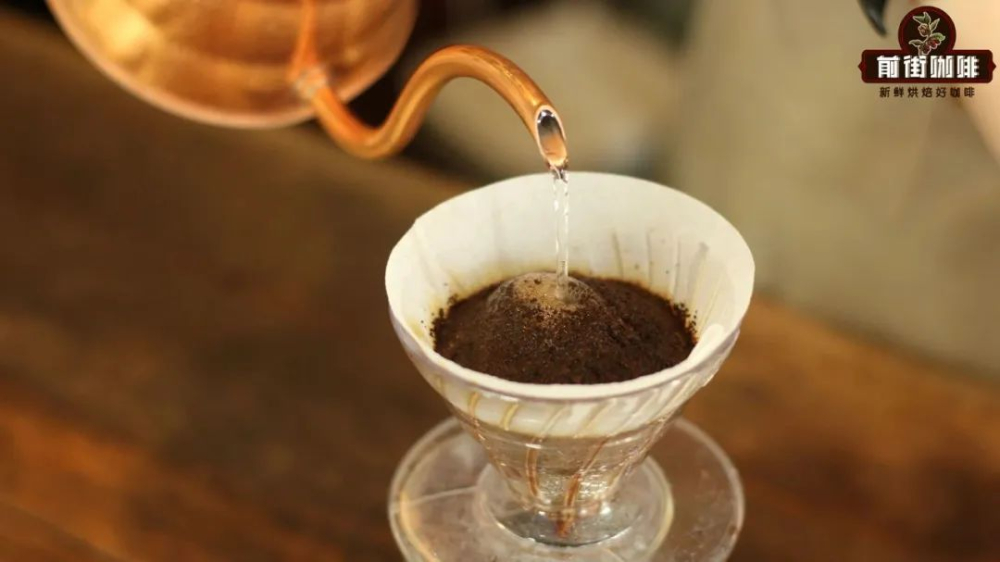
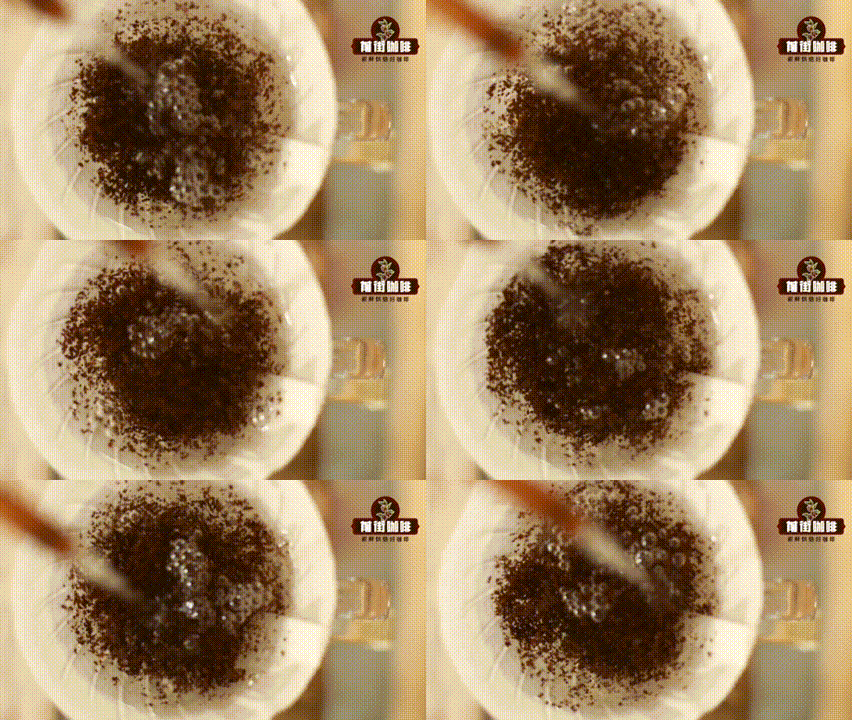
Pour-over coffee works on the same principle. FrontStreet Coffee used a Kono dripper to make the effect easy to see, so we could watch what happens to the coffee bed over three fixed-point pours.

As you can see, only the spot the water hit directly produced much foam; everywhere the stream did not touch produced just a little foam. Those areas barely moved at all until the brew was nearly finished. It shows that because they were never brushed by water, almost nothing happened there, so very little substance was released.
Why Circular Pouring Instead of Other Methods?
That is why we generally avoid fixed-point pouring for the whole brew. The aim is to make sure grounds in every direction get agitated, so they release what is inside them. But that only covers stirring versus not stirring. Some people use a Z-shaped pour with conical drippers, for example, or stir with a rod in a siphon, drawing cross or figure-eight patterns. If it is all agitation anyway, why not use other kinds of pours?
1. Avoiding Turbulence
With other approaches, irregular agitation stirs up turbulence more often, and that affects the final extraction. Under normal circumstances, we pour in circles to keep the error small.
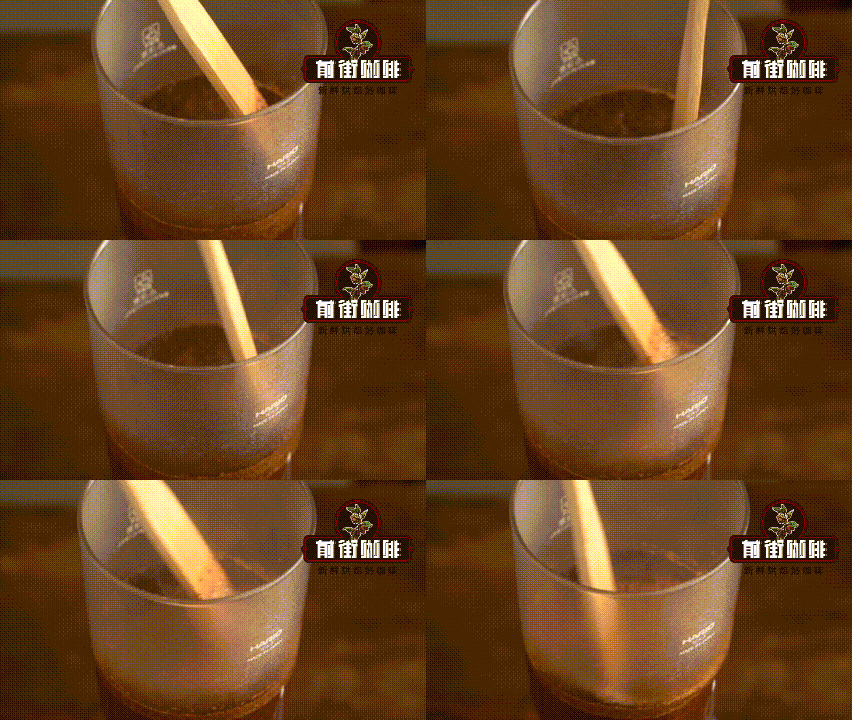
Besides, we do not want every particle in the coffee to be released. With instant powder, if you want everything to dissolve quickly, you just stir harder. But coffee holds not only pleasant compounds like acidity and sweetness, but also unpleasant over-extracted ones like bitterness. If you used a violent method such as stirring throughout, you would end up with coffee as bitter as traditional Chinese medicine. That is why stirring suits brewing methods built for quick extraction, such as the siphon.
2. The Perfect Balance
Our circular pour extracts all the grounds while steering clear of over-extraction. For everyday brewing, then, circular pouring is the simplest, most practical and most forgiving method there is.
FrontStreet Coffee

FrontStreet Coffee Recommendation
Since circular pouring is about drawing flavor evenly from every part of the bed, it shines with coffees that have layered, aromatic character. FrontStreet Yirgacheffe Gudingding carries the classic Yirgacheffe profile of citrus, berry and white florals with a green-tea finish, and its soft, bright acidity is easy to enjoy even for beginners.
If you prefer a sweeter, more fruit-driven cup, FrontStreet Ethiopia Huakui leads with tropical aromas such as strawberry, passion fruit and jackfruit, low in bitterness and full of juice, while FrontStreet Strawberry Sugar brings a Geisha-style cup with rose, citrus, grape and dried blueberry, and a strawberry-candy sweetness once milk is added. For something with a raisin-like depth, FrontStreet Mozart rounds out the fruit with a dried-grape richness that circular pouring can bring forward evenly.
Important Notice :
FrontStreet Coffee is a long-established specialty coffee roaster in Guangzhou China, selling freshly roasted beans from its own farm in Yunnan as well as dozens of carefully selected single-origin beans from around the world for both pour-over and espresso. The products deliver consistently excellent quality and great value, with shipping within 24 hours. Guangzhou's FrontStreet Coffee shop is recommended by many coffee lovers, and the beans are now available online at the Tmall 。
FrontStreet Coffee has moved to a new address:
FrontStreet Coffee Address: 315,Donghua East Road,GuangZhou
Tel:020 38364473
 Scan and follow the En Gafei WeChat official account. Please indicate that the reprint comes from "En Gafei".

