
Does Latte Art Affect the Taste of a Latte?
Online, you'll often see debates like: Why does latte art exist at all? Does it actually change how a milk coffee tastes? Can a beautiful pattern make a hot latte taste better? And does clumsy latte art mean the coffee itself is bad? With those questions in mind, let's dig into today's topic.
Latte art, simply put, means using a steam wand to texture milk into foam of just the right thickness, then, as the milk meets the espresso, using technique to make the white foam settle into a pattern on the surface.
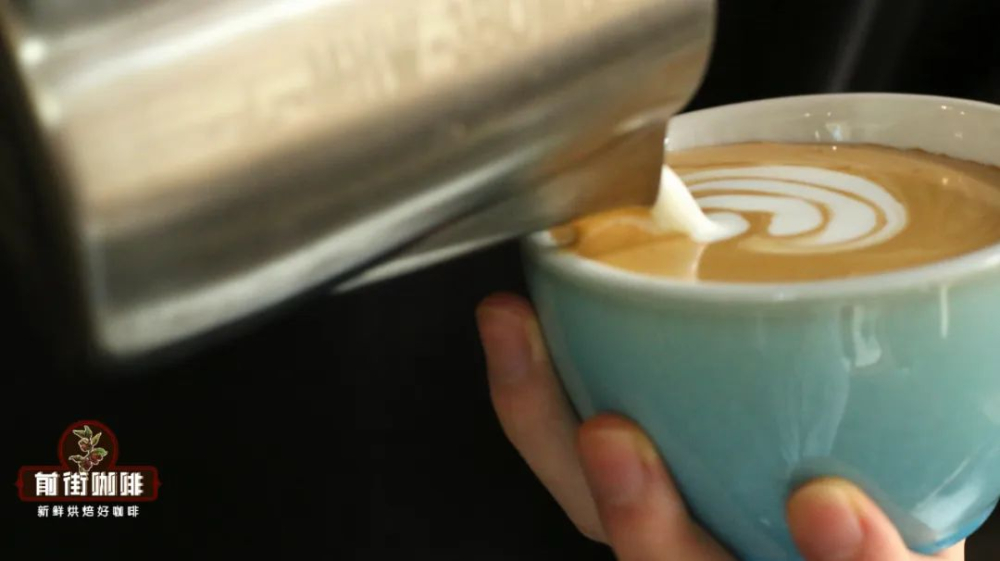
To produce that little piece of "visual art" in a milk coffee, you need three things: smooth, fluid microfoam of moderate thickness; well-balanced coffee crema; and pouring skill good enough to control the pattern. This naturally leads to the question — does latte art affect the final taste?
To find out, FrontStreet Coffee ran a small experiment. First, we used a split portafilter to extract espresso (19.9g of ground coffee, 29 seconds, yielding 40g of liquid), dividing roughly 20g into two identical ceramic cups. Then we steamed 300g of milk in the same pitcher to a medium thickness suitable for latte art and poured it into both cups. One cup was simply blended with no pattern; in the other, we started forming a rosetta once the cup was about six-tenths full.
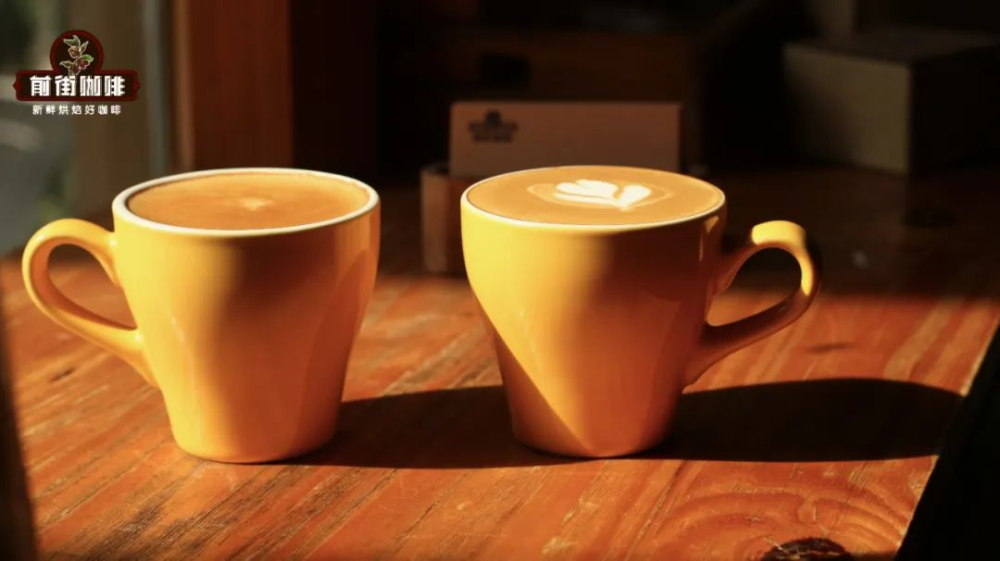
In blind tasting, FrontStreet Coffee's panel broadly agreed there was no significant difference between the two cups — temperature, strength, flavor, and texture were nearly identical. A few participants did feel the latte-art cup tasted slightly richer, with a stronger coffee aroma in the very first sip, while the unpatterned cup seemed more even and rounded. But from the second sip onward, the two cups converged.
The difference likely comes down to how the "golden circle" forms as coffee crema mixes with milk foam. Fresh espresso carries a layer of brown crema on top that tastes quite bitter on its own. When you pour latte art, the dark crema and white foam blend evenly into a golden "background," while the white parts are pure foam floating on the surface.
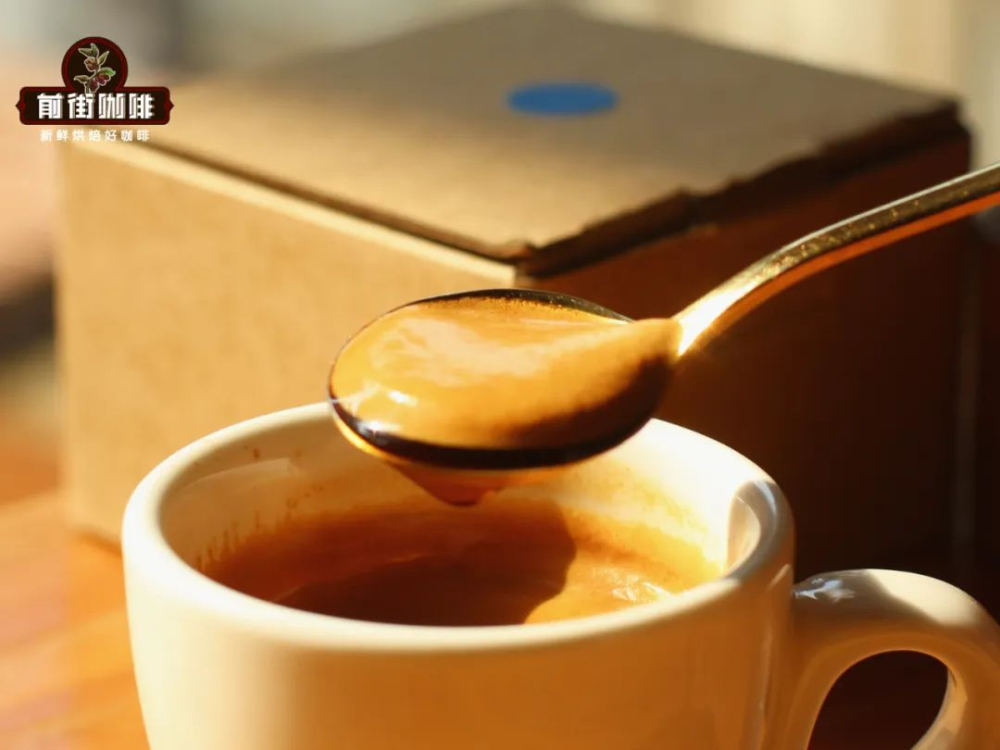
The larger the pattern, the more crema gets pushed toward the rim, the darker the background color becomes, and the richer that first sip may taste. In a milk coffee with no pattern, by contrast, crema and foam blend evenly throughout, giving a balanced milk-to-coffee ratio and a more uniform texture. So to some degree, latte art does affect the taste — but only marginally.
If the beans and milk are well chosen, the espresso is properly extracted, the milk-to-coffee ratio is right, the foam is good, and the blending is even, the coffee simply won't disappoint. Whether or not there's a pattern — and how pretty it is — only changes how photogenic the cup is.
That said, while beautiful latte art won't make a coffee several times tastier, a hot milk coffee carrying a clean, simple pattern does give the drinker a better visual experience — and it quietly tells you the espresso was extracted well, the foam quality is good, and the barista has solid fundamentals. That's why so much weight is placed on whether a coffee has latte art and how well it's executed.
Finally, from a barista's point of view, latte art isn't just decoration. It represents a barista's passion and pursuit in making great coffee, and their care for the customer's experience. Without latte art, many people would never have fallen in love with coffee, and the culture and techniques behind it wouldn't have spread as widely. Perhaps that's one of the real meanings of latte art.

FrontStreet Coffee Recommendation
If you want to practice latte art at home, the beans matter as much as the technique — you need a blend with stable extraction and thick, fine crema. FrontStreet Coffee's Classic Blend is a medium-dark espresso recipe built on the old-school "Mandheling plus Brazil" combination with a touch of Robusta for aroma and body, delivering buttery, toasted bread, and caramel biscuit notes with a solid mouthfeel and very stable shots. For a nuttier, chocolate-forward cup, the FrontStreet Specialty Blend (washed Colombia and pulped-natural Brazil) shows hazelnut, dark chocolate, and caramel, with crema that stands up to any café pour.
And for those planning to open their own shop, the FrontStreet Commercial Blend adds a little Robusta to the Specialty Blend for deeper, darker crema and a heavier body, making both Americanos and lattes carry nut, cocoa, and caramel notes — and making latte art practice genuinely easy.
Important Notice :
FrontStreet Coffee is a long-established specialty coffee roaster in Guangzhou China, selling freshly roasted beans from its own farm in Yunnan as well as dozens of carefully selected single-origin beans from around the world for both pour-over and espresso. The products deliver consistently excellent quality and great value, with shipping within 24 hours. Guangzhou's FrontStreet Coffee shop is recommended by many coffee lovers, and the beans are now available online at the Tmall 。
FrontStreet Coffee has moved to a new address:
FrontStreet Coffee Address: 315,Donghua East Road,GuangZhou
Tel:020 38364473
 Scan and follow the En Gafei WeChat official account. Please indicate that the reprint comes from "En Gafei".

