Why are Coffee Beans Light Roasted? Why Did Light Roast Coffee Emerge?
Why Yirgacheffe Coffee Is Light Roasted
While many people still picture coffee as something that needs sugar and milk, Yirgacheffe has quietly reached specialty coffee shops even in small towns — proof of just how fast specialty coffee has grown. So why did Yirgacheffe, with its delicate fruit acidity, become a flagbearer of this movement? And why must it be light roasted?
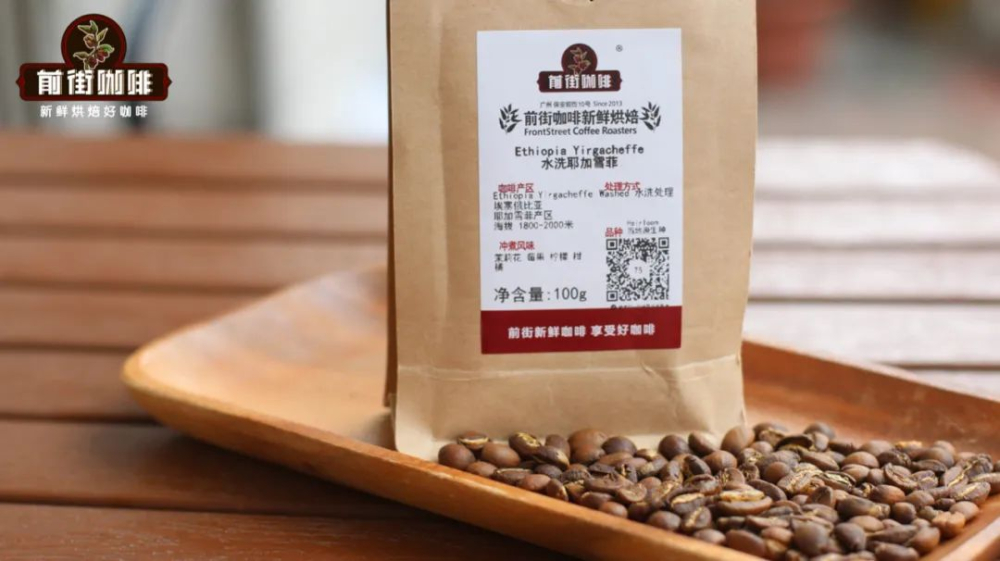
We most often describe Yirgacheffe's flavor as lemon and citrus — with grapefruit being the once-trendy descriptor — and that's typical of most medium-light roasted beans. Light roasted coffee carries higher levels of decanol, n-hexanol, vinyl formate, isoprenol, and other compounds responsible for those citrus notes.
The Rise of Fruit Acidity
Fruit acidity in coffee rose partly out of our craving for change after decades of bitter coffee — especially once flavors began to be catalogued by origin, giving acidic coffees a legitimate place at the table. For someone who has been drinking Mandheling for decades, Yirgacheffe might taste unpleasantly sour; for younger drinkers, it's a beverage that completely upends their idea of what coffee is.

Beans aren't light roasted in order to express citrus — rather, when beans are roasted lightly, citrus is what they naturally express. Beyond terroir, roasting largely determines the basic framework of coffee flavor.

The Science of Coffee Roasting
Anyone who has studied roasting a little knows first crack and second crack. Machines vary slightly, but taking FrontStreet Coffee's roaster as an example: beans hit first crack at around 183°C. For most beans, a discharge temperature of 191°C defines a medium-light roast; at 193-195°C it becomes medium; and after another 20-30 seconds of development, the beans enter second crack at 197-202°C.
Different machines and different beans absorb heat differently, so discharge temperatures shift a bit — that variation comes from the beans' own heat conduction. But broadly, first and second crack serve as the benchmarks of roast maturity. The gap between light and medium roast is a mere 10-20 seconds, or 2-3 degrees at discharge. Small as it sounds, the heat conduction inside the beans turns it into a huge flavor difference. As roast level deepens, flavors unfold in a fixed sequence: acidity, then aroma, then body, then bitterness. In other words, if you want pronounced acidity, the beans cannot — and must not — be roasted dark.

The Challenge of Roasting Ethiopian Coffee
Green beans must be evaluated comprehensively: size, shape, density, moisture content, plus flavor goals. Bigger beans, higher altitude, higher density, and higher moisture all demand more roasting energy. Shape matters too — the more uniform the beans, the more uniform the results.
Ethiopian beans, thanks to their origin characteristics, mostly belong to "Heirloom" native varieties, and the local varieties and grading system mean this origin yields both large and small beans of uneven shape. Smaller beans obviously handle heat less well; if the heat isn't controlled, the large beans get roasted just as the small ones burn. Setting aside the finer points of development, and judging simply by unripe, ripe, and burnt — for beans of mixed sizes, the safest, most conservative strategy is to roast fast and discharge as soon as they're done.

Some might ask: isn't good roasting supposed to produce perfectly uniform beans? For Mandheling, Colombia, Brazil, or Blue Mountain — where individual bean differences are small and medium-dark roasting dominates — yes. With little variation between beans, every one needs the same heat to reach the same roast degree.
Yirgacheffe can also be "slow roasted" for more uniformity. Anyone who makes soup knows the trick: once the water boils, turn the heat way down — what Cantonese cooks call "old fire soup." The trade-off? Simmer too long and the ingredients turn tasteless.
The Roasting Trade-off
So: gain some body and a uniform appearance, or use the Nordic-style rapid temperature rise and quick discharge to capture distinctly acidic flavors? Roasting is always a trade-off. Many people also like Ethiopian coffee as a blend base, in which case it's usually paired with beans of fuller, more body-forward character.
Because fruit acidity and florals have become the signature of medium-light roasts, some larger American beans have also come to be labeled "light roast." In reality, a bean merchant's "medium-light" American beans very likely need to be roasted darker than Ethiopian ones — that's simply a matter of description, because larger beans naturally need more heat and temperature to roast through.

Why Light Roasting Is Necessary
Higher altitude, slower growth, richer internal character, and harder beans all call for deeper roasting — in the early Maillard reaction, more raw material inside the bean yields more aromatic compounds under caramelization, and more abundant aromas. That's what roasting pursues, so why not go for it? Light roasting, then, is really a choice born of necessity.

FrontStreet Coffee Recommendation
Since we've been talking Yirgacheffe, here's how to taste it properly. FrontStreet Coffee's washed Yirgacheffe is the definitive everyday expression of the region: white jasmine florals, bright citrus and lemon acidity, and a clean tea-like finish — the very flavors that light roasting is designed to protect, at a price that makes it the perfect first specialty bean.
Want to hear the same terroir speak with a natural accent? FrontStreet Coffee's Yirgacheffe Natural Red Cherry dries whole, fully ripe cherries on raised beds, stirring them every 2-3 hours for three to five weeks — the result: citrus acidity, a juicy berry mouthfeel, honeyed sweetness, and cream-smooth body. Both are roasted medium-light at FrontStreet, keeping every drop of that delicate fruit character intact.
Important Notice :
FrontStreet Coffee is a long-established specialty coffee roaster in Guangzhou China, selling freshly roasted beans from its own farm in Yunnan as well as dozens of carefully selected single-origin beans from around the world for both pour-over and espresso. The products deliver consistently excellent quality and great value, with shipping within 24 hours. Guangzhou's FrontStreet Coffee shop is recommended by many coffee lovers, and the beans are now available online at the Tmall 。
FrontStreet Coffee has moved to a new address:
FrontStreet Coffee Address: 315,Donghua East Road,GuangZhou
Tel:020 38364473
 Scan and follow the En Gafei WeChat official account. Please indicate that the reprint comes from "En Gafei".