
What Exactly is Golden Cup Extraction in Coffee?
What is Golden Cup Extraction?
In FrontStreet Coffee's articles, we often refer to the concept of "Golden Cup Extraction," and some readers have asked us in the comments what it actually means.

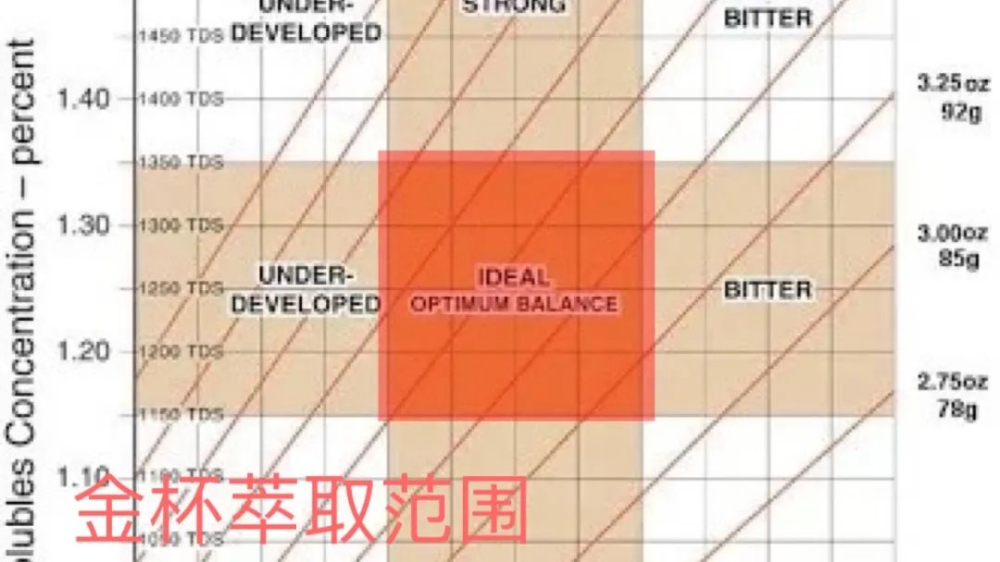
Golden Cup Extraction means using a coffee's concentration and extraction rate as reference points to judge whether the coffee has been properly extracted. The current Golden Cup standard defines an extraction rate between 18%-22% and a concentration between 1.15%-1.35%.
The Origin of Golden Cup Extraction
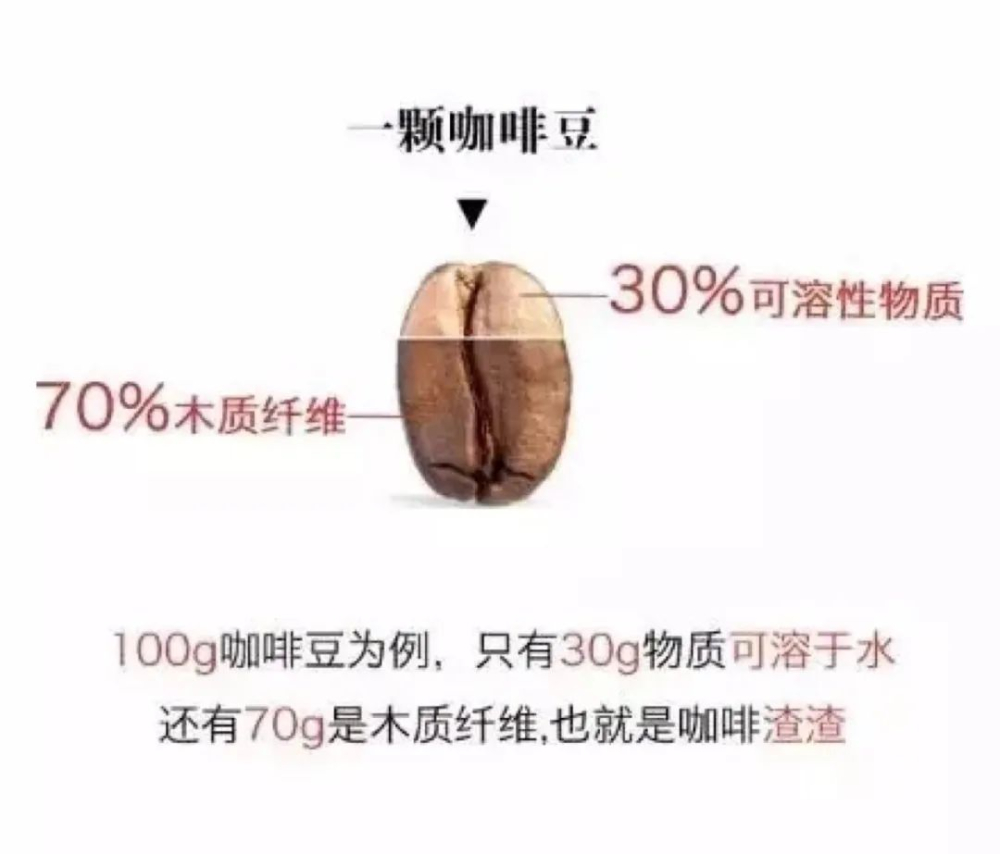
The concept dates back to 1952 in America, when the American Coffee Association teamed up with Dr. Lockhart, a chemistry PhD from the Massachusetts Institute of Technology, to research and advance the coffee industry. For this purpose they formed a dedicated Brewing Committee. Professor Lockhart's team studied the structure and chemical composition of coffee beans and ultimately discovered that beans contain 30% soluble substances and 70% insoluble fiber.
Armed with that discovery, they surveyed random American consumers about their coffee preferences. The research found that people preferred an extraction rate of 17.5%-21.2% and a concentration of 1.04%-1.39%, which formed the original Golden Cup Extraction range. But since pour-over coffee wasn't popular in America at the time, the test brews used coarse grinds and relatively high water temperatures, with extraction times stretching from 4 to 8 minutes. As you can see, there were significant unstable variables - in both the people and the coffee.

Refinement of Golden Cup Standards
Later, professional organizations ran multiple rigorous studies and expert tastings to tighten the Golden Cup range. The extraction rate was adjusted upward to 18%-22%, and concentration was set between 1.15%-1.35%. This refined standard was adopted by the Specialty Coffee Association of America (SCAA) and has been in use ever since. Some readers might ask: what exactly are concentration and extraction rate?
Understanding the Golden Cup Extraction Chart
The Golden Cup Extraction chart below makes the theory much easier to grasp.
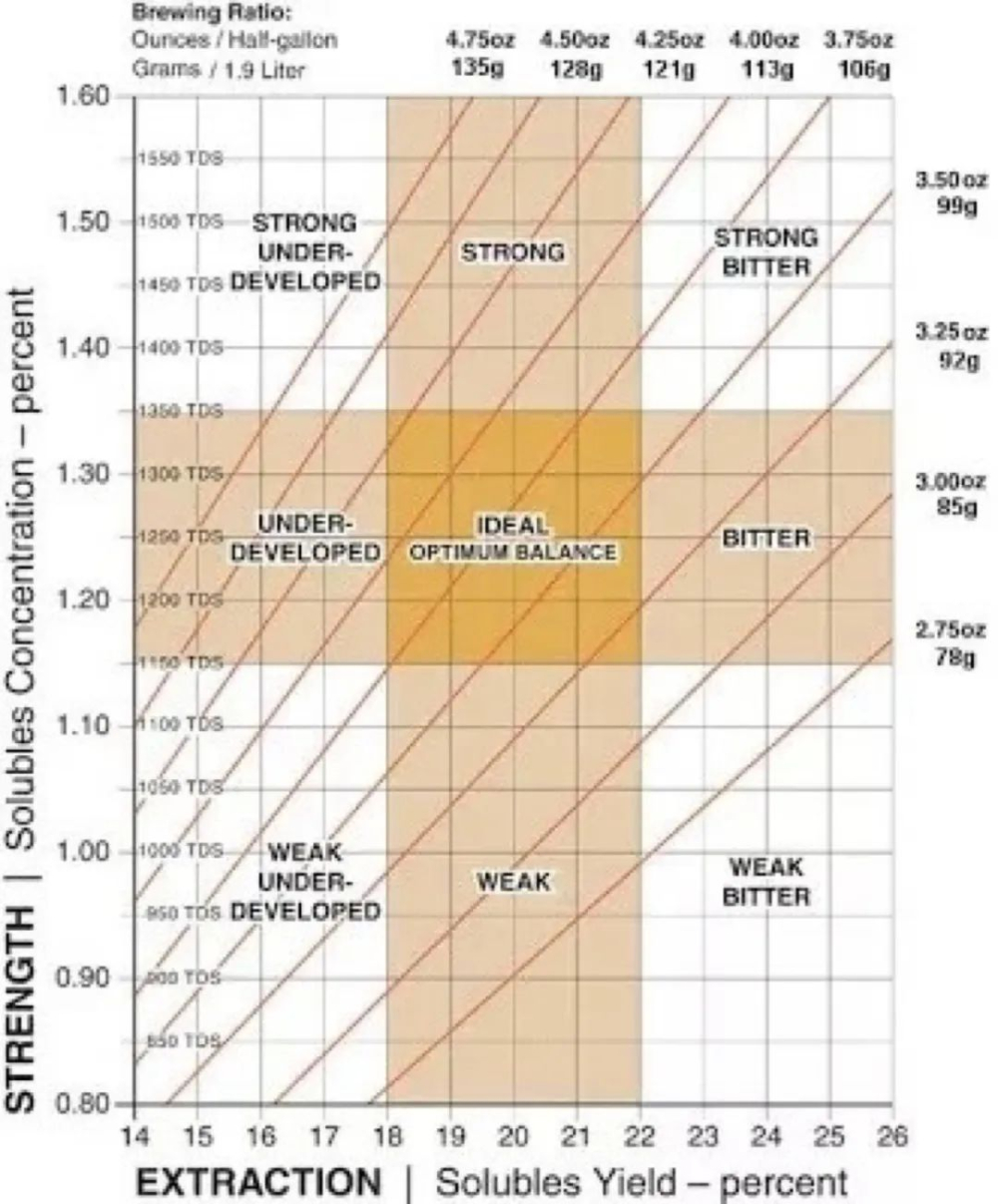
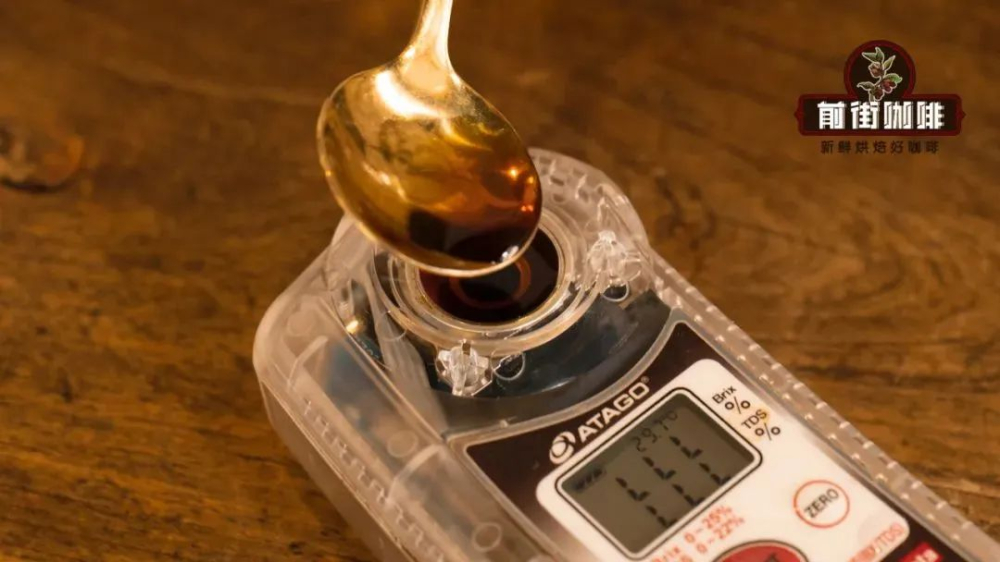
The horizontal axis is extraction rate; the vertical axis is concentration. Concentration tells you how much dissolved coffee material is in the cup - the more, the stronger; the less, the weaker. Extraction rate is the proportion of soluble substances you've drawn out of the grounds relative to the total amount of grounds used. You can read concentration directly from a coffee refractometer, then calculate extraction rate using the formula: coffee liquid volume × coffee concentration ÷ coffee grounds amount.
A side note: the diagonal lines on the chart represent coffee-to-water ratios - the proportion of grounds to hot water for a given cup. The English text in the upper left corner essentially explains that each diagonal line assumes 1.9 liters of water paired with the amount of grounds marked opposite it.
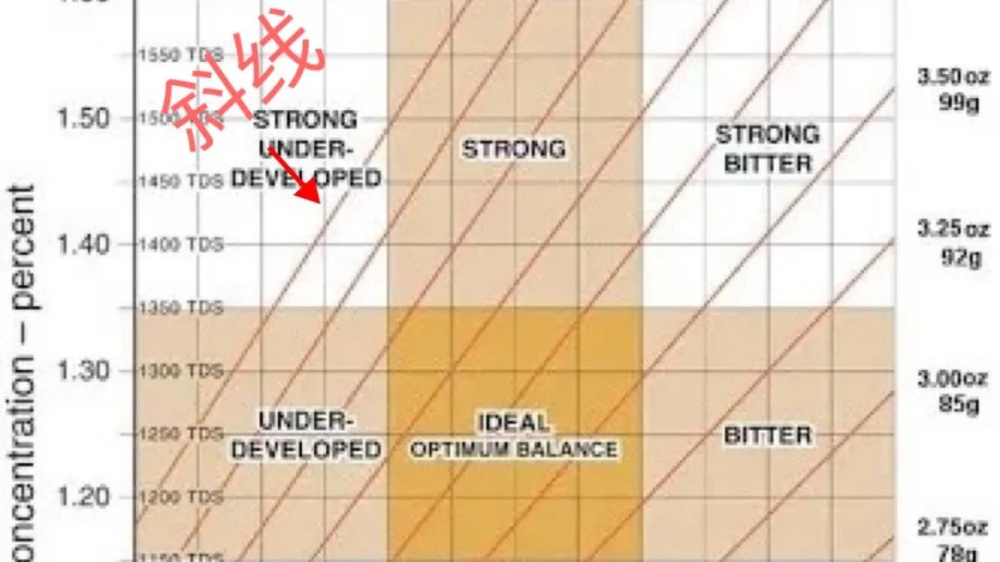
So a quick calculation: 1900ml ÷ 135g = 14.07, meaning the first diagonal corresponds to a 1:14.07 ratio - and so on down the chart until the third diagonal, which just enters the dark zone.
The Ideal Extraction Zone
That dark area represents the ideal extraction zone for a cup of coffee - the Golden Cup Extraction range, with an extraction rate between 18%-22% and a concentration between 1.15%-1.35%. Coffee above this range is over-extracted; coffee below it is under-extracted.
Misconceptions About Golden Cup Extraction
That said, the chart invites one common misunderstanding: that as long as you pick a coffee-to-water ratio whose diagonal passes through the Golden Cup zone, you're guaranteed a delicious "Golden Cup coffee."
That isn't the case. Ratios that reach the Golden Cup zone on the chart don't guarantee great-tasting coffee - they're simply a data reference. What they tell you is that with that ratio, you're more likely to brew inside the Golden Cup range.
We learn Golden Cup theory because it helps us understand extraction, correct flawed brewing variables, and brew the flavors we want. So don't treat it as a rigid formula or box yourself into a single "golden" ratio.
FrontStreet Coffee Recommendation
Of course, hitting the Golden Cup range starts with the right beans for your brewer. If you're brewing on a V60, the cone shape and 60-degree angle extend the contact between water and coffee, pulling out layered aromatics and lively acidity. That makes floral, fruit-forward light roasts the natural fit - FrontStreet Coffee's Ethiopia Yirgacheffe Guodingding brings bright citrus, berry, and floral notes with a green-tea-like finish, while the Ethiopia Huakui bursts with tropical fruit - strawberry, passion fruit, even lychee - and hardly any bitterness.
If you prefer a fuller, sweeter cup, FrontStreet Coffee's Strawberry Sugar Gesha Blend (a Costa Rica honey process married with washed Panama Gesha) delivers orange blossom and rounded sweetness, while the PWN Indonesia Golden Mandheling, dark roasted, offers low acidity, herbal and dark chocolate depth, and a long, syrupy body - proof that the Golden Cup has room for every style, as long as the extraction is balanced.
Important Notice :
FrontStreet Coffee is a long-established specialty coffee roaster in Guangzhou China, selling freshly roasted beans from its own farm in Yunnan as well as dozens of carefully selected single-origin beans from around the world for both pour-over and espresso. The products deliver consistently excellent quality and great value, with shipping within 24 hours. Guangzhou's FrontStreet Coffee shop is recommended by many coffee lovers, and the beans are now available online at the Tmall 。
FrontStreet Coffee has moved to a new address:
FrontStreet Coffee Address: 315,Donghua East Road,GuangZhou
Tel:020 38364473
 Scan and follow the En Gafei WeChat official account. Please indicate that the reprint comes from "En Gafei".

