
How Many Coffee Beans Are in 15g or 20g? How to Count Coffee Beans Without a Scale
When brewing pour-over coffee, how can you roughly judge how much 15 g of coffee beans is without a scale? Today, FrontStreet Coffee shares a rather unconventional method: counting beans.
Have you ever been curious how many individual beans make up the 15 grams you use for brewing? Different growing regions produce beans of different sizes. Today, FrontStreet Coffee counted how many beans are in 15 grams across several common varieties we regularly encounter.

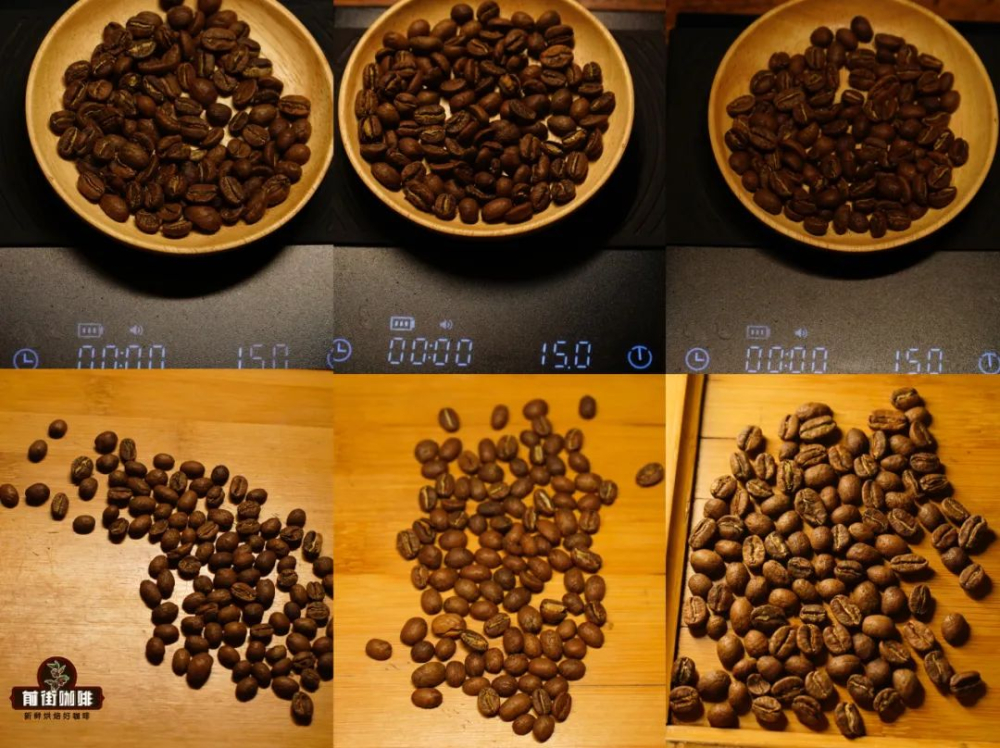
Ethiopia Yirgacheffe Daily Bean - Washed Process - Heirloom Varieties
As the "homeland" of coffee, Ethiopia typically describes its varieties as "local heirloom." Local grading does not distinguish by size, only removing defects, so the beans are not uniform in size. Among three different samples from the same growing region, the approximate bean counts were as follows:
Sample A: 112 beans
Sample B: 108 beans
Sample C: 110 beans
Jamaica Blue Mountain No. 1 - Washed Process - Typica Variety
Blue Mountain coffee needs little introduction — the "king" of the last century. It grows one of the world's recognized finest specialty varieties, Typica, and uses only washed processing for its green beans. Only raw beans grown in specific regions designated by the CIB, sized at 17-18 mesh, and with a defect rate below 3% can be called "Blue Mountain No. 1." Sample A and Sample C differed by just one bean.
Sample A: 97 beans
Sample B: 93 beans
Sample C: 96 beans

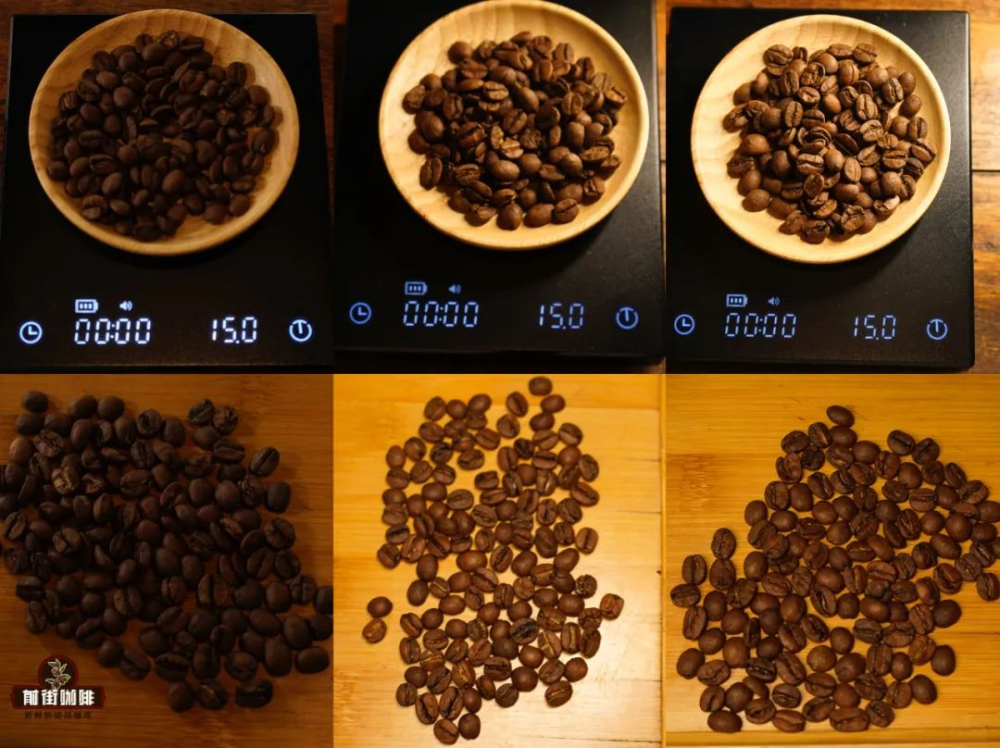
Brazil Queen Farm - Natural Process - Yellow Bourbon Variety
Having covered the representative of Typica, we must mention the other half of the specialty world: the Bourbon family. For this experiment, FrontStreet Coffee chose Yellow Bourbon from Brazil's Queen Farm. Brazil's green coffee standards are based on defect count, bean size and flavor evaluation, so these beans are relatively uniform in size.
Sample A: 114 beans
Sample B: 115 beans
Sample C: 117 beans
Panama Hacienda La Esmeralda Green Label - Washed Process - Gesha Variety
After the "king" of the last century comes today's "pinnacle" of coffee varieties: Gesha. This variety was first discovered and popularized by Panama's Hacienda La Esmeralda, sparking a worldwide rush to plant it. That is why FrontStreet Coffee chose Panama La Esmeralda Green Label for weighing and counting. Compared with most daily coffee beans, Panama Gesha has a distinctive long, narrow appearance that makes it easy to tell apart from other varieties — no need to worry about other beans being passed off as Panama Gesha.
Sample A: 84 beans
Sample B: 85 beans
Sample C: 86 beans
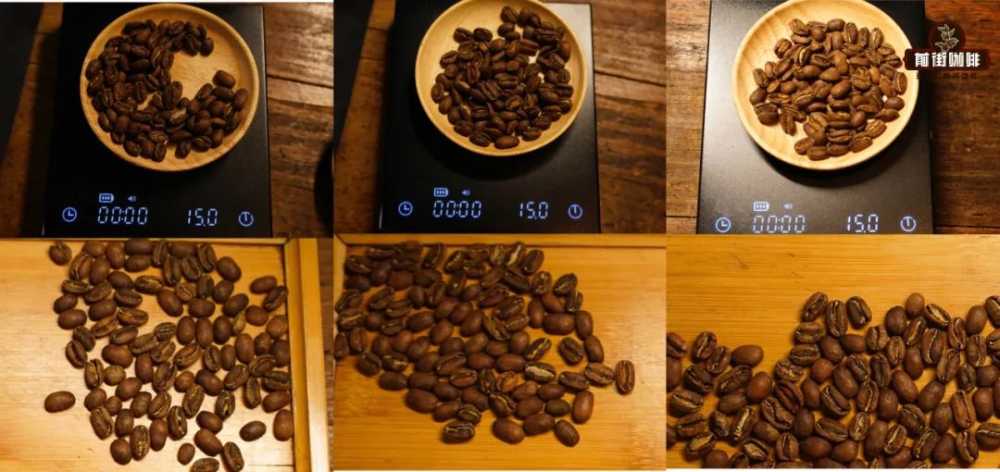
Panama's daily coffee grading is based on green bean hardness, with the highest grade being SHB (Strictly Hard Bean), meaning altitude of 1400 m or more. Under Hacienda La Esmeralda's own grading system, the Green Label grows at altitudes between 1600 and 1800 meters — far above Panama's official highest standard — which makes the beans exceptionally full and plump.
Indonesia Golden Mandheling - Wet-Hulled Process - Ateng Variety
After counting authentic Arabica beans, FrontStreet Coffee wanted to see how many beans are in 15 grams of Indonesian coffee, which carries some Robusta genes. We selected PWN Golden Mandheling for the count. It uses the Ateng variety, and after strict selection the Golden Mandheling specification is 18 mesh or larger, with fewer than 3 defective beans per 300 g green bean sample, placing it in the highest G1 grade. The beans are dark green and uniform in flat shape.
Sample 1: 72 beans
Sample 2: 75 beans
Sample 3: 77 beans

Finally, a small behind-the-scenes note: writing each of these articles exhausts one of our baristas.


FrontStreet Coffee Recommendation
For a first taste of Ethiopian specialty coffee, start with entry-level FrontStreet Washed Yirgacheffe, where you can catch clear jasmine florals and a bright citrus acidity. Yirgacheffe is a small town in southern Ethiopia, cool and misty all year, where thousands of coffee trees flourish and produce a cup that blends florals and fruity acidity, light and elegant with a tea-like quality — like a clean, refreshing lemon tea.
Ethiopian coffee is mostly garden-grown: each smallholder sends the harvested cherries to a village-based processing station, and the coffee is sold under the production team's name, which is why cooperative coffees come in so many sizes — FrontStreet Gutingding, FrontStreet Worka, FrontStreet Konga and more. Gutingding sits at the southeastern edge of Yirgacheffe, in the Worka region; it was originally part of the Worka cooperative under the Yirgacheffe Coffee Farmers' Cooperative Union (YCFCU). As demand for traceability grew, independent single-origin lots were uncovered one by one, and in 2012 Gutingding, with about 300 member farmers, became its own cooperative. Because the fruit is stripped before drying, the coffee's inherent aromas come through more clearly, showing citrus and lemon notes and elegant white florals, bright and delicate overall.
Unlike the washed process, natural processing starts by removing damaged or moldy cherries, then drying the fruit in the sun for two weeks so the sugar and essence of the fruit seep into the bean. Once moisture drops to 12%, the hardened fruit, mucilage and parchment are scraped away; the beans then go through density and color testing, defective beans are culled, and workers hand-sort the stragglers. FrontStreet Yirgacheffe Sun-dried Red Cherry uses the fully red cherry approach: only fully ripe, sound cherries are picked, screened on arrival, then laid out on raised beds. During the first days they are turned every 2-3 hours to prevent uneven heating and over-fermentation, and after three to five weeks of drying the fruit is machine-scraped and sent to storage. Because the cherries dry with the fruit still on, the beans keep the classic Yirgacheffe character while gaining the tropical fruit of a natural process — citrus acidity, berry-juice body, honeyed sweetness and a creamy smoothness.
To brew Yirgacheffe by pour-over, FrontStreet suggests a V60, water at 90-91°C, 15 g of coffee, a 1:15 ratio, and a fine-sugar grind (EK43s setting 10, or 80% through a #20 sieve). For the pour, bloom with 30 g of water for 30 seconds; pour to 95 g (about 125 g on the scale), finishing in about a minute; when the water level drops to two-thirds of the bed, add the remaining 100 g (about 225 g on the scale), finishing at about 1 minute 35 seconds. Total drip time is 2 to 2 minutes 10 seconds.
Important Notice :
FrontStreet Coffee is a long-established specialty coffee roaster in Guangzhou China, selling freshly roasted beans from its own farm in Yunnan as well as dozens of carefully selected single-origin beans from around the world for both pour-over and espresso. The products deliver consistently excellent quality and great value, with shipping within 24 hours. Guangzhou's FrontStreet Coffee shop is recommended by many coffee lovers, and the beans are now available online at the Tmall 。
FrontStreet Coffee has moved to a new address:
FrontStreet Coffee Address: 315,Donghua East Road,GuangZhou
Tel:020 38364473
 Scan and follow the En Gafei WeChat official account. Please indicate that the reprint comes from "En Gafei".

