What Makes Yunnan Small Beans Different? How Do Past and Present Yunnan Small Beans Compare? Is Catimor an Arabica?
With the steady improvement of Yunnan coffee bean quality, most specialty coffee shop menus now include Yunnan options, generally labeled "Yunnan Xiaoli" — Yunnan small beans. Which naturally raises the question: what exactly is "small bean coffee," and what is Yunnan small bean coffee?

What is small bean coffee?
"Small bean coffee" is another name for Arabica. The name comes from the fact that, among the three original coffee species, Arabica produces the smallest fruit (note: this refers to the size of the coffee fruit, not the bean inside it).

So you now roughly understand that Yunnan small bean coffee means Arabica coffee grown in Yunnan, right?

Yes! But there are real differences between the Yunnan small beans of the past and those of today.
Different Yunnan Small Bean Coffee
In the early 20th century, coffee entered China's Yunnan province by two separate routes. One came with French missionaries from Vietnam, planted in Zhukula Village, Binchuan County, where they taught villagers to grind and brew coffee. The other was brought by Jingpo border residents into Nongxian Village, Ruili County. Because the trees' red cherries were pleasing to the eye, coffee was planted in household courtyards as an ornamental plant. In this period, coffee had little recognition in China, and the planted area was small.
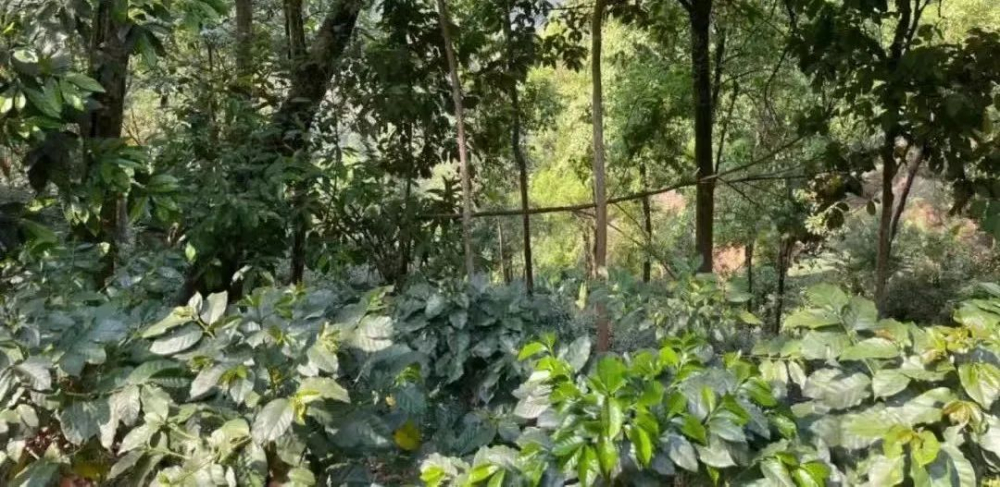
It wasn't until early 1952 that experts conducting social research identified the red cherries growing in farmers' courtyards as "small bean coffee," a crop produced mainly in South America. They promptly purchased a large quantity of fresh fruit and brought it back to Lujiangba, Baoshan City, to begin breeding and cultivation — establishing China's first small bean coffee plantation base there.
Thanks to Yunnan's favorable geography and climate, small bean coffee cultivation succeeded spectacularly, developing a unique flavor described as "rich but not strong, fragrant but not bitter, with a hint of fruitiness," which was well received on the international market. During the planned-economy era after the founding of the People's Republic of China, China served as a coffee supplier to the Soviet Union and Eastern Europe (with Cuba supplying sugar), which spurred Baoshan coffee's development — cultivated area reached over 50,000 mu. This was when Yunnan small bean coffee made its name, and in this era "Yunnan small beans" meant Arabica varieties like Typica and Bourbon grown in Yunnan.

But the prosperity didn't last. With the deterioration of Sino-Soviet relations in the 1960s and 1970s, China's role as a coffee supplier to the Soviet Union evaporated, and Yunnan's coffee industry gradually faded. The term "Yunnan small bean coffee" traces back to this period.
Even today, the "old varieties" of Yunnan coffee are rarely seen on the market, replaced by "new varieties" that have inherited the "Yunnan small bean coffee" title.
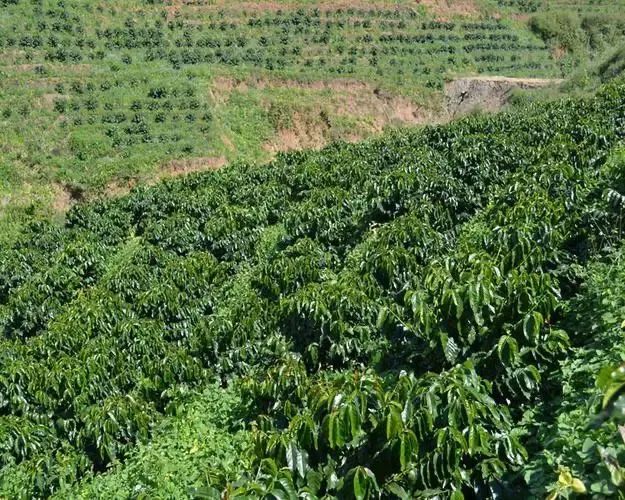
In the 1980s, the global coffee industry suffered large-scale production losses to coffee leaf rust, and major consuming countries needed to develop new origins. In 1988, Nestle — looking to buy a batch of cheap beans as raw material for instant coffee — vigorously promoted Yunnan's coffee agriculture. They introduced Catimor 7963 from the Coffee Rust Research Center (CIFC) in Portugal for trial planting, and in the following years kept introducing other Catimor varieties, though none matched the original 7963's yield.
These Catimor varieties were bred for disease resistance and instant-coffee raw material, with little attention to flavor. So flavor descriptions almost always circle around less-than-ideal terms: low acidity, nuts, cocoa, earthy notes. In exchange they offered extremely high yields and strong disease resistance. Under the same management, Typica yields only about one-third of Catimor's — which is why Typica and Bourbon beans command higher prices.

Catimor is a hybrid of Caturra and Timor. Caturra is pure Arabica, while Timor is a natural hybrid of Arabica and Robusta. Genetically speaking, then, Catimor — with 3/4 Arabica bloodline — does belong to the Arabica species. It's precisely its 1/4 Robusta genes that make it more productive, easier to cultivate, and more disease-resistant than typical Arabica. The drawback is equally clear: as the book "Specialty Coffee Association" notes, coffees from some Asian origins carry a hint of "devil's aftertaste" — this is the reason.
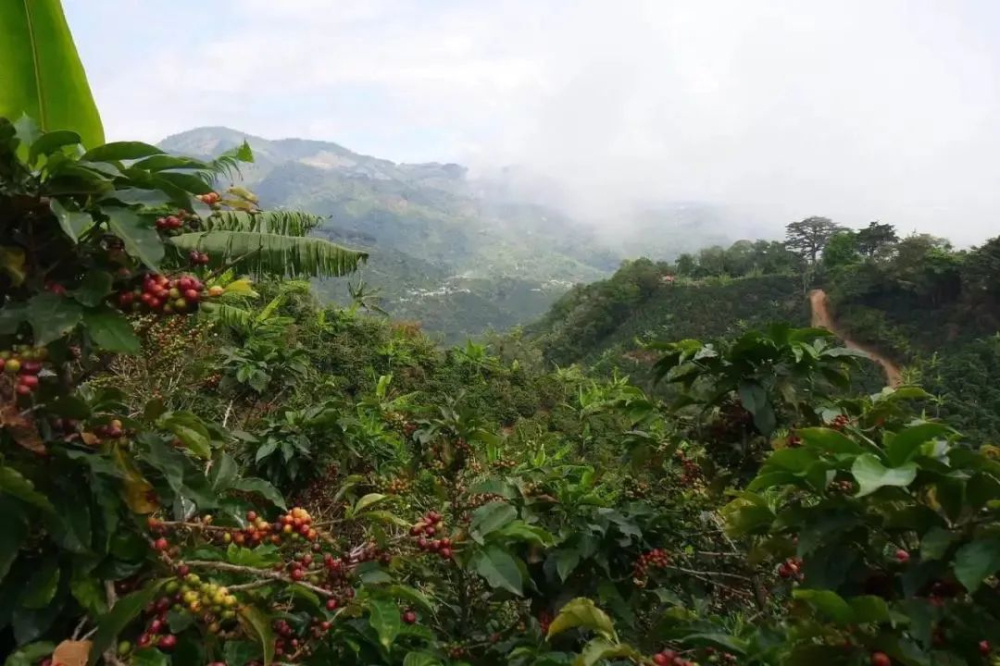
This variety replacement peaked between 2010-2011, when Brazilian coffee bean prices hit their highest point. Yunnan coffee beans reached their historical price peak during this period, then quickly faded. Today, Catimor accounts for 95% of Yunnan's total production. The current "Yunnan small beans" have completely inherited the name from the old Yunnan Arabica varieties, becoming synonymous with Yunnan Catimor. The farmers who still grow "old varieties" like Typica and Bourbon mostly do so thanks to chance survivals from that variety transition.
- END -
FrontStreet Coffee Recommendation
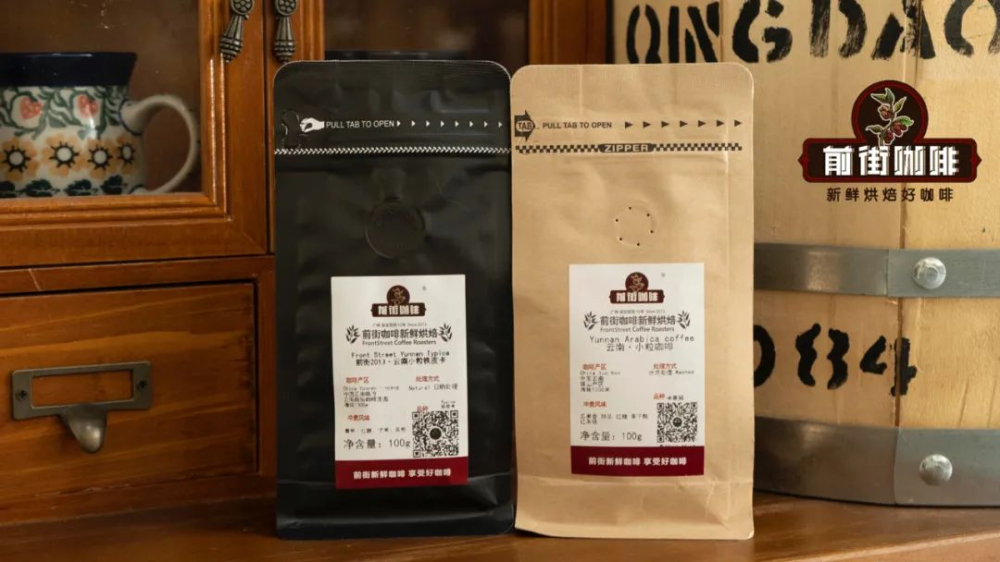
Want to taste both eras of Yunnan coffee? Start with FrontStreet Coffee's Yunnan Small Bean from Baoshan — washed-processed and roasted medium, with a gentle caramel sweetness alongside bright acidity, faithfully expressing the region's terroir. Washing removes the mucilage layer through fermentation and rinsing before drying, which is what gives the bean its distinct regional character.
For a clearer, more refined Yunnan expression, choose FrontStreet Coffee's 2013 Yunnan Typica, grown on our own plantation and processed with the oldest and most traditional method: natural sun-drying. Typica is among the oldest and purest Arabica varieties; natural processing gives it a fuller body and more pronounced sweet-sour balance, with citrus and berry tones, a whisper of fermented wine aroma, caramel sweetness, and a creamy finish.

Important Notice :
FrontStreet Coffee is a long-established specialty coffee roaster in Guangzhou China, selling freshly roasted beans from its own farm in Yunnan as well as dozens of carefully selected single-origin beans from around the world for both pour-over and espresso. The products deliver consistently excellent quality and great value, with shipping within 24 hours. Guangzhou's FrontStreet Coffee shop is recommended by many coffee lovers, and the beans are now available online at the Tmall 。
FrontStreet Coffee has moved to a new address:
FrontStreet Coffee Address: 315,Donghua East Road,GuangZhou
Tel:020 38364473
 Scan and follow the En Gafei WeChat official account. Please indicate that the reprint comes from "En Gafei".