
What are the differences between pour-over coffee drippers: V60, Kalita, and Wave? Does the pouring technique need to change?
What Are the Differences Between Pour-Over Drippers: V60, Kalita, and Wave? Does the Pouring Technique Need to Change?
Pouring Circle Techniques for Different Filter Cups
Recently, FrontStreet Coffee published a piece on brewing with an attractive coffee bed, and newcomers flooded our inbox with questions: "Should the pouring route for a trapezoidal dripper also be circular?" and "What should I watch out for when pouring into a trapezoidal cup?"
To help friends just starting out who may not know the various drippers, FrontStreet Coffee walks through the exact circular pouring patterns for each type.
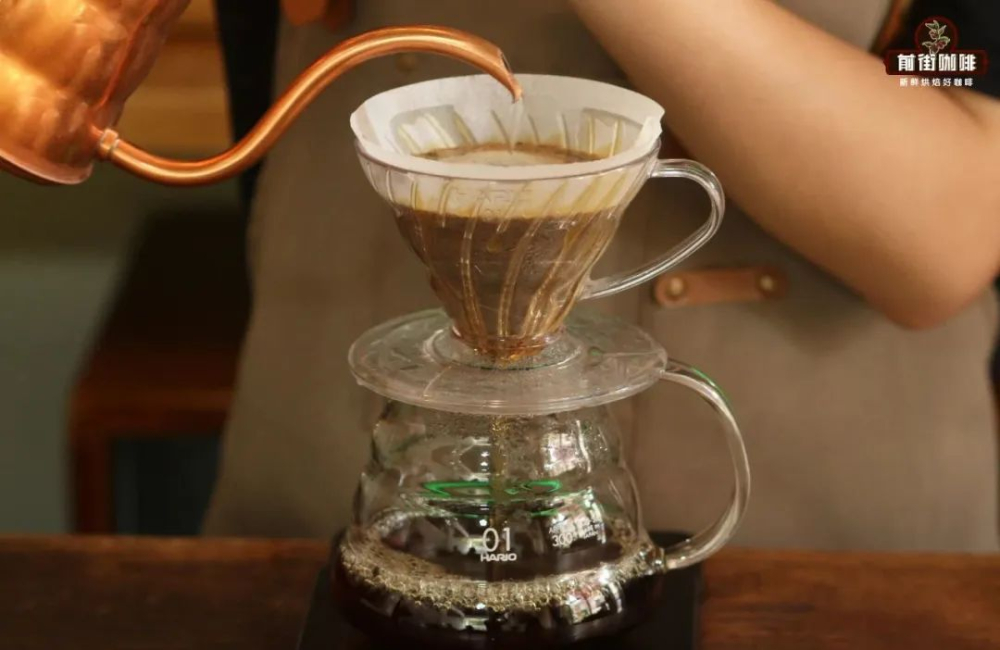
Why Pour in Circles?
Circular pouring exists to agitate and scour the coffee bed with the water stream, helping the water extract flavor compounds and — ultimately — achieve even extraction across the bed. The key point: uniform extraction is the whole purpose of pouring in circles.
The market currently offers three main dripper shapes: cone, trapezoid, and flat-bottom. Today FrontStreet Coffee demonstrates with the V60 (cone), the Kalita (trapezoid), and the Wave (flat-bottom).
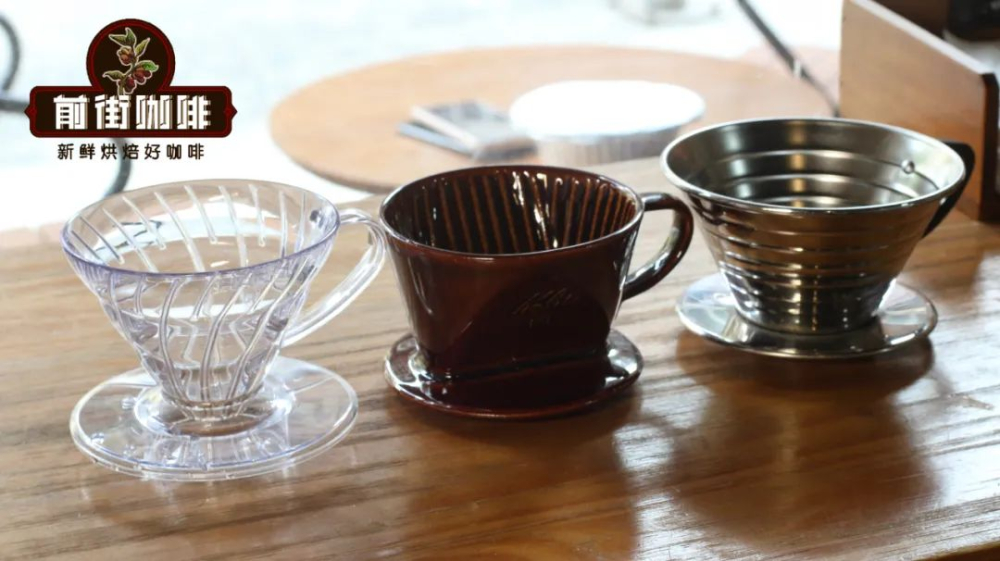
1. The V60 Cone Dripper
As the representative of cone drippers, the V60 needs little introduction. Viewed from the side, the coffee bed in a cone cup forms a triangle — thickest near the central hole, thinnest at the edges.
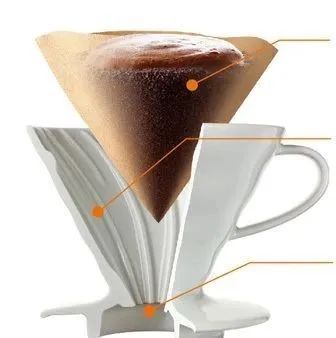
So when pouring circles in a cone dripper, start at the center, spiral outward in a slow "mosquito coil" pattern, and once you reach the outermost ring, spiral gently back toward the center — repeating the cycle for even extraction.
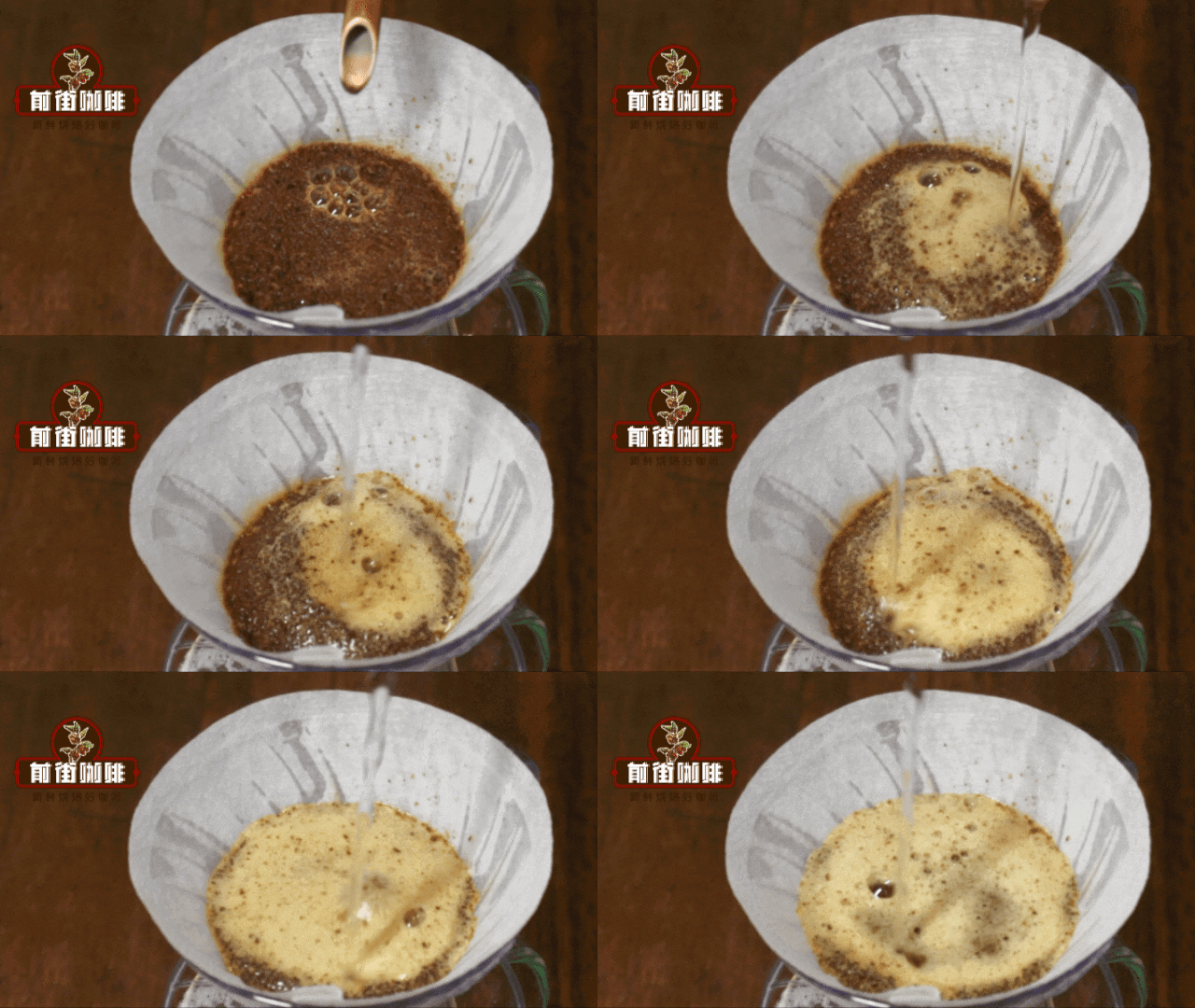
2. The Kalita Trapezoidal Dripper
The Kalita is the classic three-hole trapezoidal dripper. From the side it's wide at the top and narrow at the bottom. This shape funnels and concentrates the water flow, while the elliptical opening provides a wider surface so grounds distribute more evenly with less stacking — unlike cone cups, where bed thickness varies dramatically.
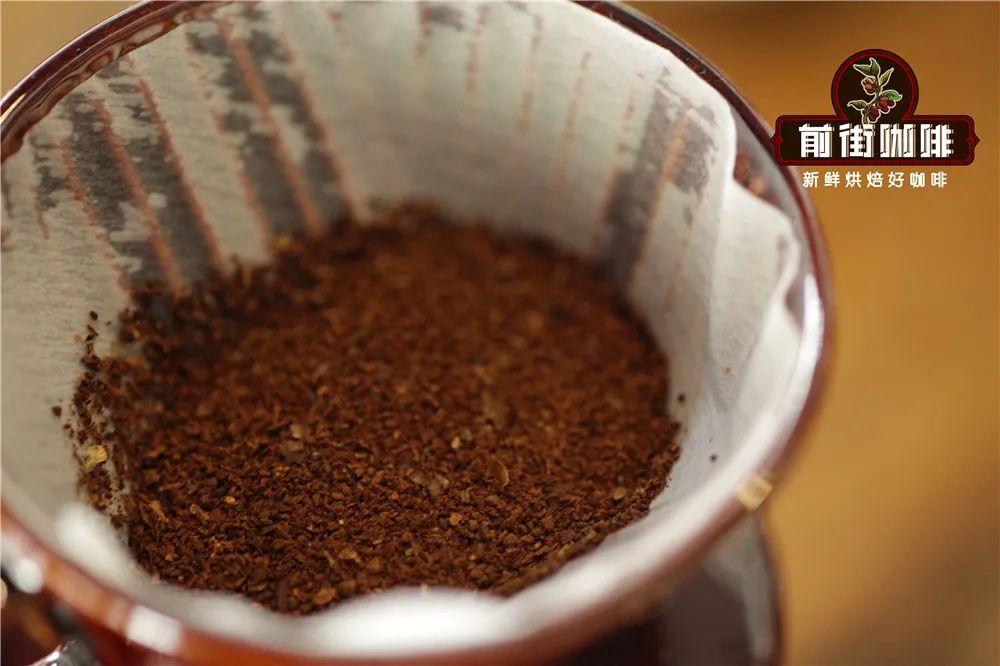
Because the trapezoidal opening is elliptical, even pouring is harder here than in a cone. Your circles should follow an "elliptical mosquito coil": again starting from the center, but with the spiral route stretched from circular to elliptical.
3. The Wave Dripper (Flat-Bottom)
The Wave can be considered the originator of flat-bottom (cake) drippers, first designed and released by Kalita (slightly later than their trapezoidal cup). It keeps the circular opening of a cone dripper but adds a flat bottom, so the coffee bed is far more uniform in depth from edge to edge.

Flat-bottom drippers require their own filter paper. Because the shape resembles a paper cupcake liner, these are also called cake drippers. That special paper shape mutes the influence of the dripper's flow channels, which raises the bar for your pouring: the stream must never touch the creased filter paper, or you'll collapse the grounds wall.
Like with a cone, pour from the center and spiral outward in circles — but the maximum route stops at the inner crease of the cake paper, then slowly winds back to the center.
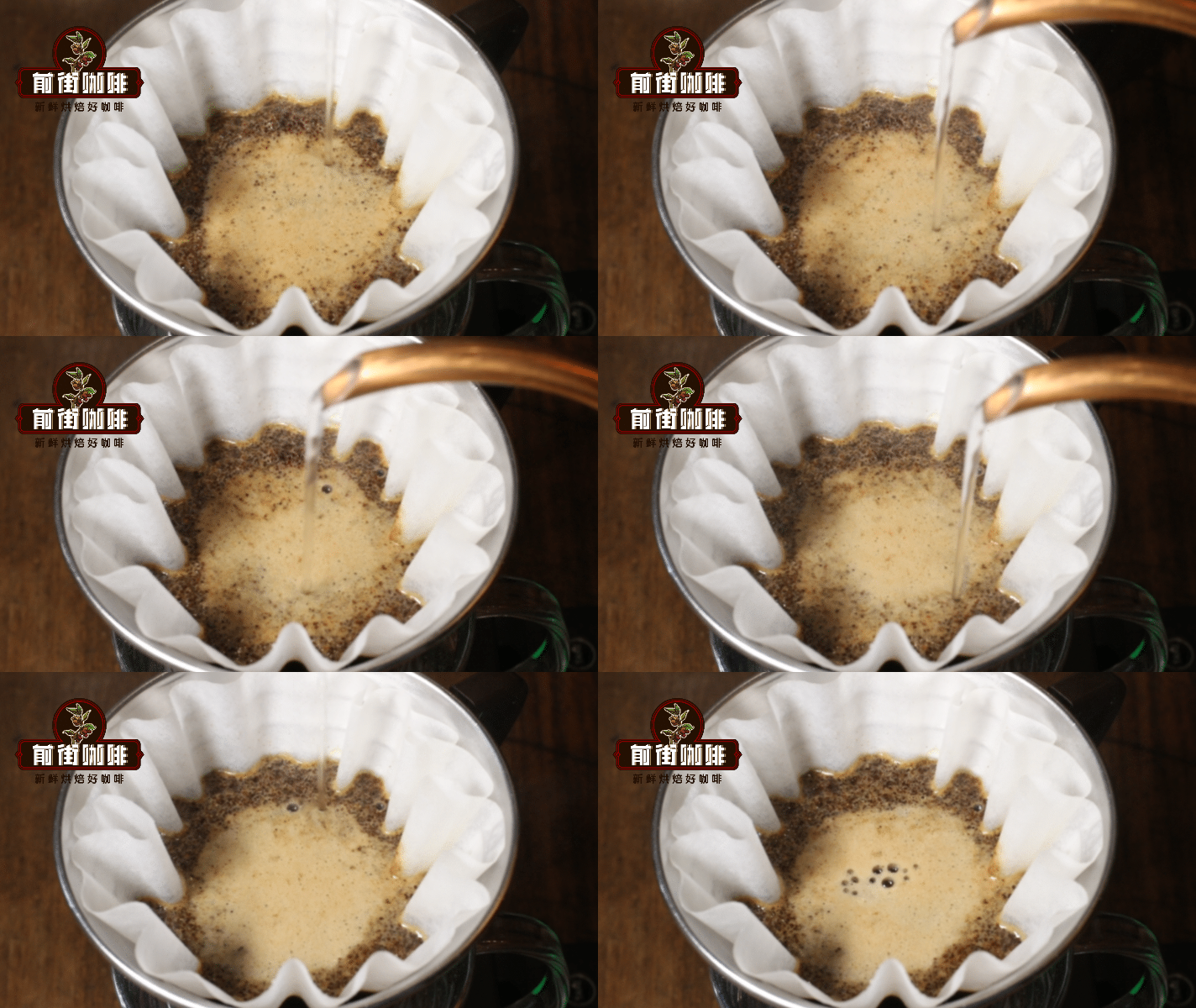
What If Your Hands Are Unsteady and the Flow Inconsistent?
Newcomers shouldn't feel bad about imperfect flow control. To reduce the impact of technique on extraction, you can switch to fixed center pouring after the bloom. The water extracts by diffusion and immersion, so all you need to manage is the flow size — no worrying that wobbly circles are stirring the bed unevenly.
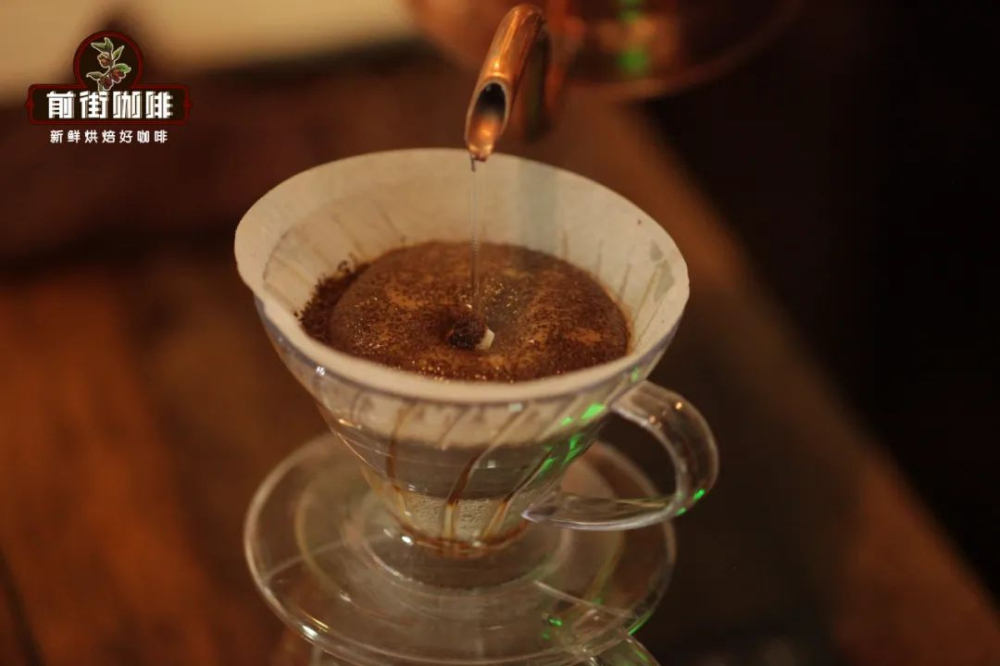
The pouring routes FrontStreet Coffee described here are mainly meant to help beginners get to know their drippers faster. In practice, drippers vary enormously in model and material. Once your flow control becomes stable and deliberate, branch out: try more drippers with different techniques, compare the differences, and build your own understanding of each cup.

Finally, FrontStreet Coffee believes there are a thousand ways to brew a delicious cup. Study more, practice more, and mastering every dripper and technique is well within reach.
FrontStreet Coffee Recommendation
A dripper is only half the equation — here are the beans FrontStreet Coffee suggests for these brewing styles:
FrontStreet Coffee Yirgacheffe Guodingding (Ethiopia) — Citrus, berries, and florals with a green-tea sweet finish. Its gentle, bright acidity is the perfect partner for the V60's fast, high-clarity extraction and makes an ideal first bean for beginners.
FrontStreet Coffee Ethiopia Huakui (Hambela) — Tropical fruit galore: strawberry, passion fruit, jackfruit, lychee, with pronounced sweetness and almost no bitterness. Wonderful in either the cone or the forgiving flat-bottom Wave, which highlights its smooth, juicy character.
FrontStreet Coffee PWN Indonesia Golden Mandheling — Deep roast, low acidity, velvet body, herbal and dark chocolate notes. A great match for center-pour immersion-leaning brewing in the Kalita or Wave when you want a heavy, comforting cup.
FrontStreet Coffee

Important Notice :
FrontStreet Coffee is a long-established specialty coffee roaster in Guangzhou China, selling freshly roasted beans from its own farm in Yunnan as well as dozens of carefully selected single-origin beans from around the world for both pour-over and espresso. The products deliver consistently excellent quality and great value, with shipping within 24 hours. Guangzhou's FrontStreet Coffee shop is recommended by many coffee lovers, and the beans are now available online at the Tmall 。
FrontStreet Coffee has moved to a new address:
FrontStreet Coffee Address: 315,Donghua East Road,GuangZhou
Tel:020 38364473
 Scan and follow the En Gafei WeChat official account. Please indicate that the reprint comes from "En Gafei".

