The Difference Between Honey Process and Natural/Washed Processing: What is Raisin Honey Process?
The Difference Between Honey Process and Natural/Washed Processing: What Is Raisin Honey Process?

Before you truly understood "honey process," did you assume the beans were fermented with actual honey?

In fact, honey processing sits between natural and washed processing. And once honey process caught on, a further refinement appeared: "raisin honey process." Today FrontStreet Coffee unpacks both.
Origins
Most honey-processed coffee you'll encounter today comes from Costa Rica, the birthplace of the method. It spread there not in pursuit of any particular flavor, but because of the major earthquake in 2008: power outages and water shortages meant hulling machines couldn't run and coffee couldn't be washed. Honey processing naturally became the default option for the mills. The industry later carried the method from Costa Rica to the rest of the world, opening a new chapter in coffee processing.
How the Processes Differ
In traditional natural processing, the mill sorts and rinses the cherries, then dries and ferments them whole — on the ground or on raised beds. In washed processing, after soaking to skim off floaters, the pulp is removed and the beans go into fermentation tanks where microbes break down the residual pectin, followed by drying (sun or mechanical).
Honey processing is different: cherries are sorted by flotation, the pulp — and some pectin — is removed mechanically, and the beans go straight onto raised beds to dry with no water contact at all. Some pulp and pectin remain stuck to the beans, and that sticky, viscous layer looks like honey, hence the name.
A Hundred "Honeys" Bloom
Costa Rican farmers found that the less pectin removed, the shorter the fermentation and sun exposure needed — and the longer the drying, the darker the parchment and the stronger the fermented character. Remove more pectin, and the color lightens and fermentation softens. With the precision pulping machine developed by Colombia's Penagos company, Costa Rican farmers dialed in different pectin levels, creating the black, red, yellow, and white honey derivatives. (PS: the parchment's final color is actually governed chiefly by the sugar content of the fresh cherries, plus drying conditions such as turning frequency and humidity.)
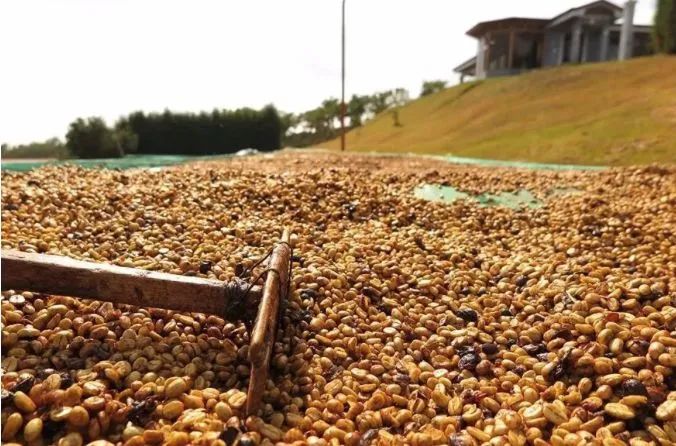
White Honey: Nearly all pectin removed; dries fastest. The parchment comes out whitish, close to a washed lot.
Yellow Honey: More pectin left on than white honey, slower drying; the parchment is yellow, with more fermented character than white honey.
Red Honey: Thicker pectin than yellow honey, slower still; reddish-brown parchment with even more fermented depth.
Black Honey: The thickest pectin layer, the hardest to dry, the longest drying time, and the most intense fermentation — dark brown parchment. It's the toughest to control: manage the winey fermentation well and the flavor is rich and full, closest in profile to a natural.
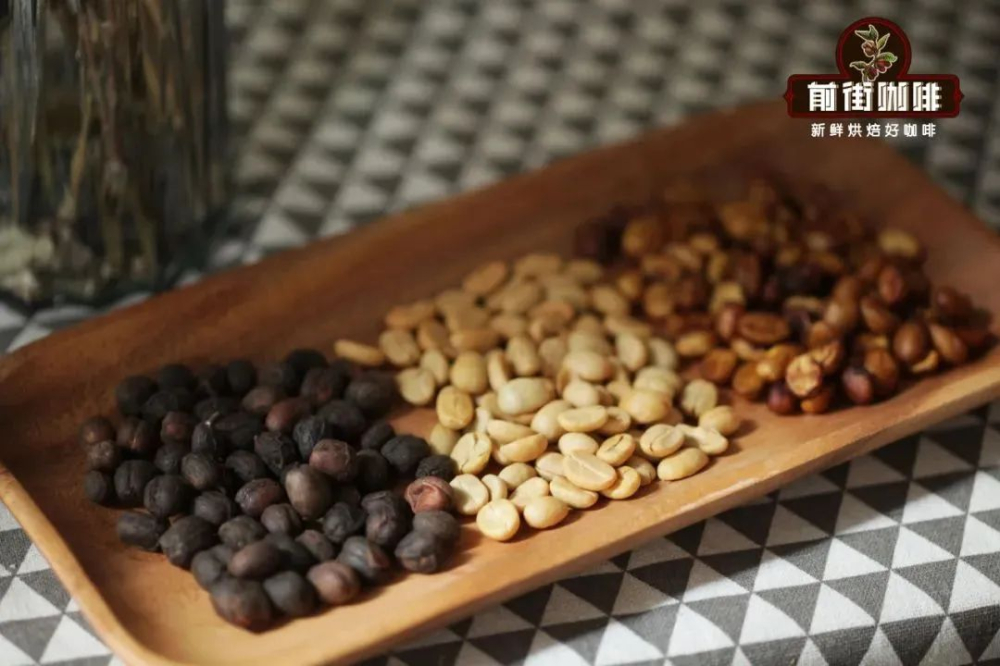
Raisin Honey Processing
"Raisin honey processing" stepped into the spotlight at the 2017 Brazil Cup of Excellence, where champion Gabriel Alves Nunes entered a yellow bourbon processed by the "raisin method." Scoring 92.33 with international judges and selling at a record-breaking $124.5 per pound, this once-obscure method suddenly became the talk of the industry.
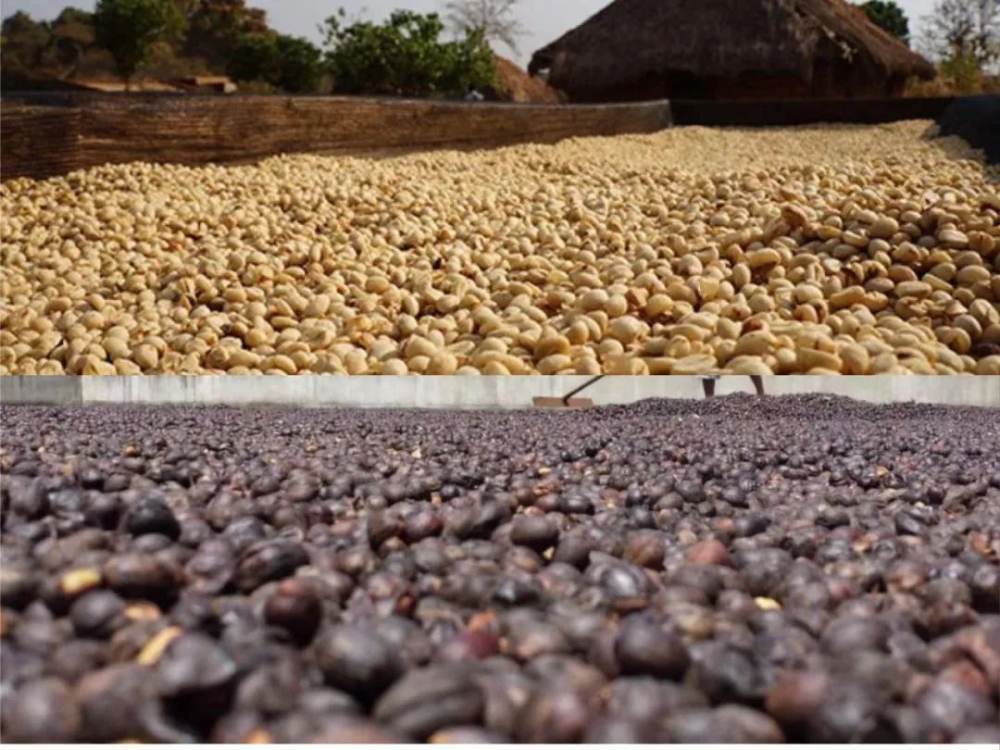
The two methods differ. Brazil's "raisin process" leaves the fresh cherries unharvested on the tree until they over-ripen — the skin shriveling to a dark purple that resembles raisins — which concentrates the flavors.
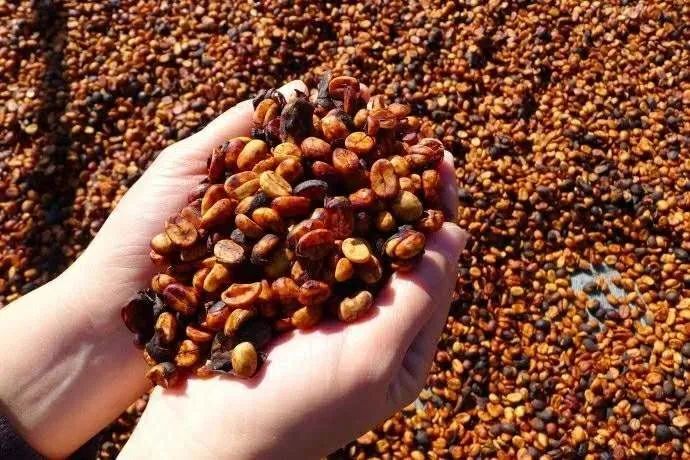
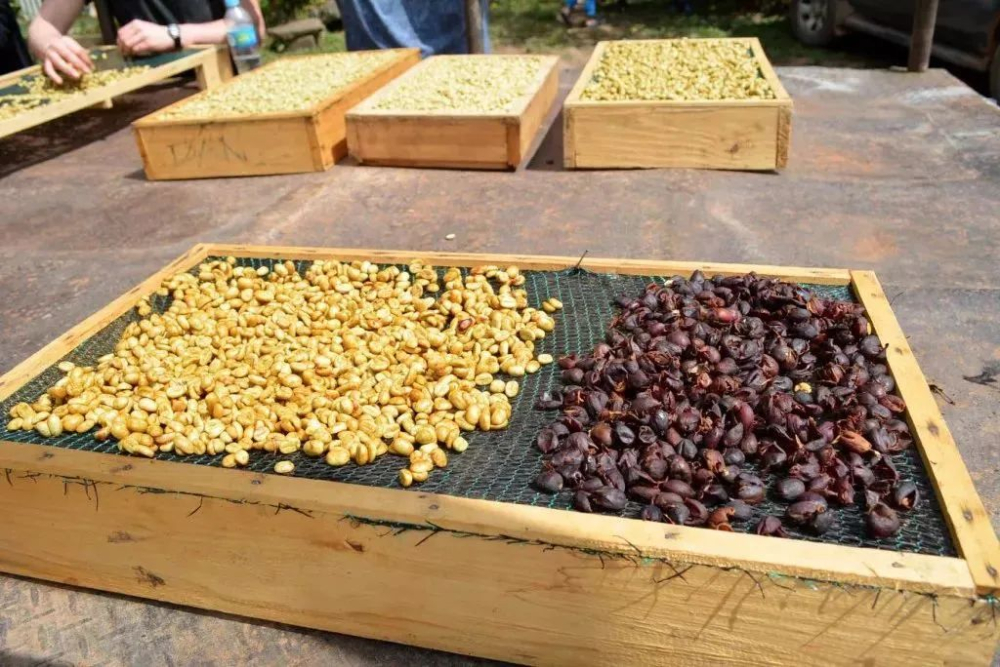
The "raisin honey process" practiced in Costa Rica is more refined. Fully ripe red cherries are hand-picked and float-sorted, then spread flat to dry for 2-3 days until the skin wrinkles like raisins. Only then are skin and pulp removed, leaving the semi-dry pectin intact for the honey stage. The coffee thus ferments twice — as whole fruit, then as honey-processed beans — making the whole process complex and labor-intensive.
In both, the fresh cherries are first fermented to a raisin-like state before further processing; Costa Rican farmers simply borrowed the Brazilian name to distinguish it from conventional honey processing.
FrontStreet Coffee Recommendation
Curious to taste what these methods do in the cup? Try these honey-processed picks from FrontStreet Coffee's shelf:
FrontStreet Coffee Costa Rica Blackberry (Black Honey) — A black-honey lot with almost no pectin removed, dried for at least two weeks under shade covers and turned regularly to prevent uneven fermentation. Roasted medium-light, it opens with rich floral aromas and pours out grape, berry, and ripe blackberry flavors.
FrontStreet Coffee Strawberry Sugar Geisha Blend — A blend marrying Panama Geisha with raisin-honey-processed Costa Rican coffee (100% pectin retained, zero water). Geisha lends its classic orange-blossom honeyed note, while the raisin honey process adds dried grape and blueberry aromatics, gentle acidity, an almond finish, and clear sweetness — floral tea elegance meets fruit sweetness.
FrontStreet Coffee Costa Rica Mozart (Raisin Honey) — Pre-dried at least three days on raised beds before pulping, with 100% pectin retained — a method FrontStreet Coffee finds even harder to manage than black honey. It rewards the effort with lush dried-fruit sweetness: osmanthus, pineapple, and raisin notes whether you brew it as pour-over, cold brew, or moka pot.
- END -
Important Notice :
FrontStreet Coffee is a long-established specialty coffee roaster in Guangzhou China, selling freshly roasted beans from its own farm in Yunnan as well as dozens of carefully selected single-origin beans from around the world for both pour-over and espresso. The products deliver consistently excellent quality and great value, with shipping within 24 hours. Guangzhou's FrontStreet Coffee shop is recommended by many coffee lovers, and the beans are now available online at the Tmall 。
FrontStreet Coffee has moved to a new address:
FrontStreet Coffee Address: 315,Donghua East Road,GuangZhou
Tel:020 38364473
 Scan and follow the En Gafei WeChat official account. Please indicate that the reprint comes from "En Gafei".