
Why doesn't the coffee bed form a "hamburger" shape during pour-over blooming? Detailed guide to blooming water pouring techniques
When brewing freshly roasted coffee, few things delight pour-over enthusiasts more than watching the coffee grounds swell into a round, domed "hamburger" as hot water hits them and trapped gas escapes. But when the bed fails to rise during the bloom — or even sinks — it's natural to wonder whether something has gone wrong and whether the cup will still taste good.
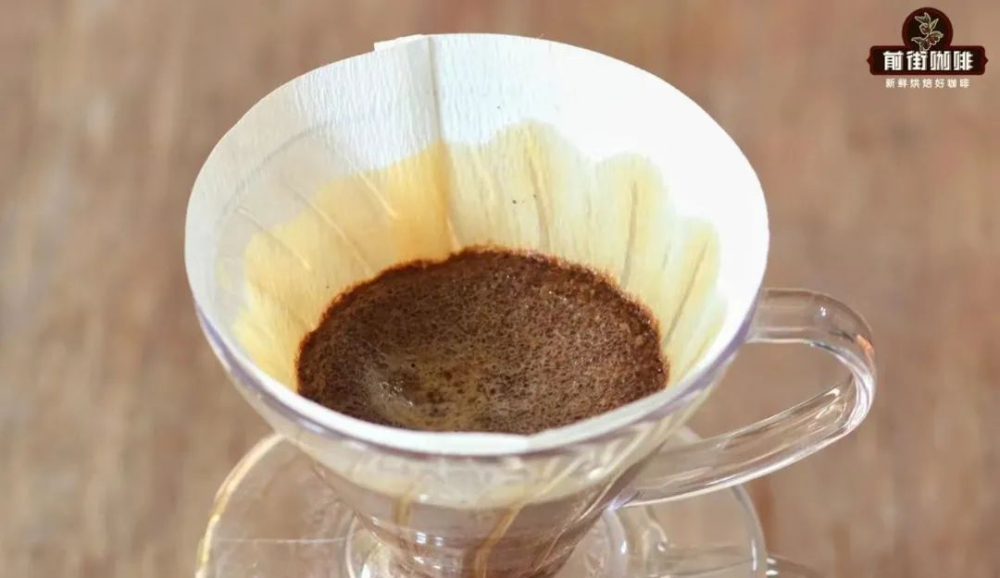
Why Does Coffee Form a Dome During Blooming?
Roasting feeds a tremendous amount of thermal energy into coffee beans, causing their internal structure to expand. This opens the pores in the cell walls, and the beans store a large amount of carbon dioxide. Once roasting ends and the beans cool back to room temperature, that CO2 begins to escape gradually.
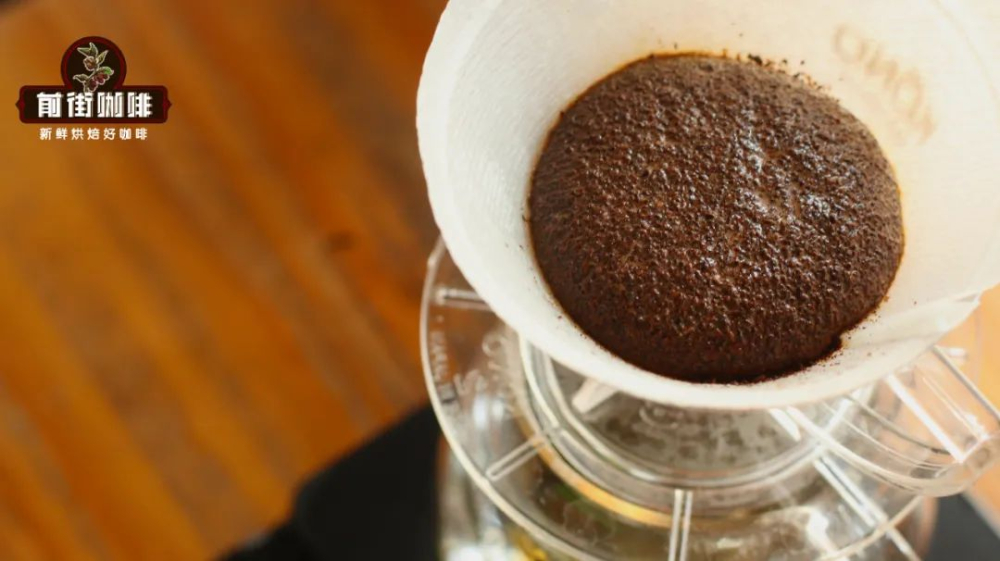
The main purpose of blooming is to let the grounds release most of this carbon dioxide while "waking up" the soluble compounds, so the aromatic flavors can be extracted more effectively in the main pour. The dome you see is simply the gas escaping from within the grounds — the taller and longer-lasting the dome, the more vigorous the degassing.
Why Might a Dome Fail to Form?
1. The beans aren't fresh
From an extraction standpoint, carbon dioxide in coffee is a double-edged sword. While beans sit in storage, the abundant gas inside unground coffee actually slows the loss of aromatic compounds. But during brewing, gas that "bursts" on contact with water interferes with extracting those aromatics — which is exactly what blooming is designed to fix.
Under normal storage conditions, coffee beans will have released most of their carbon dioxide within forty to fifty days of roasting. Once the gas is gone, no dome forms during the bloom, and the aromatics — having lost their protective barrier — dissipate along with it. The resulting cup is noticeably diminished.
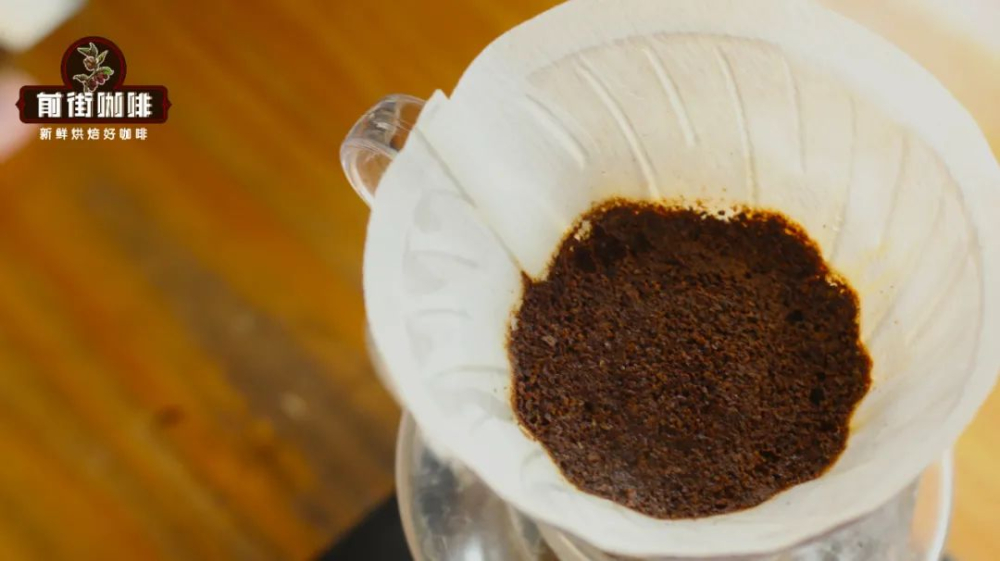
2. The grind is too coarse
When the grind is too coarse, the gaps between particles widen. Under gravity, hot water flows straight through into the server before it can fully penetrate the grounds. With nothing to support the particles, gas escapes along the broken channels and the whole coffee bed collapses.
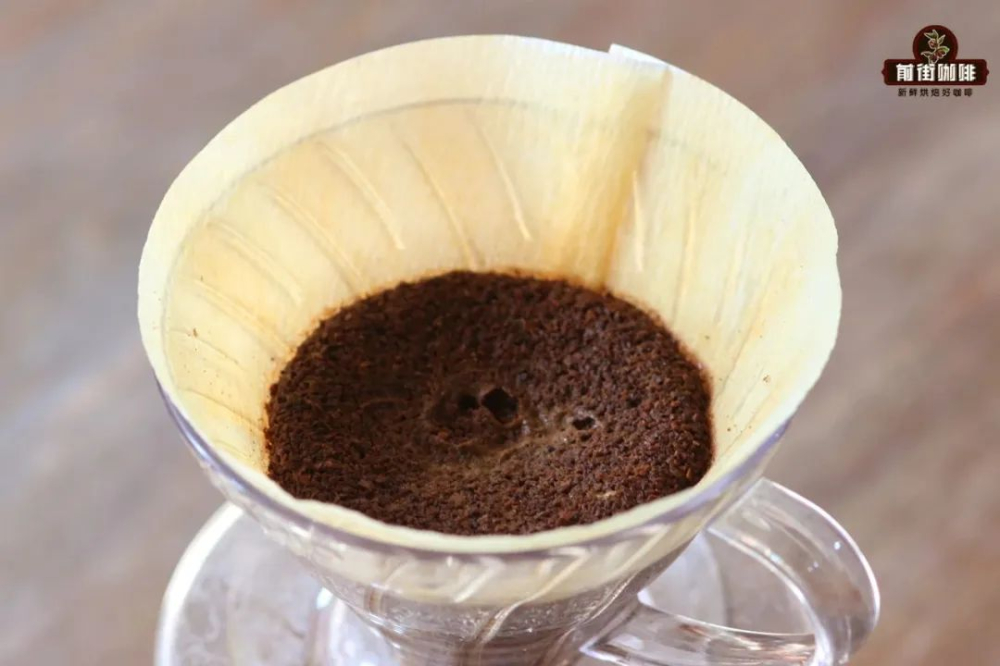
This often happens when you switch to new beans. Say your previous grind setting was dialed in for medium-dark roasts, and you move to an anaerobic fermented coffee (whose structure is much fluffier than conventionally processed beans at a similar roast level) — the now-too-coarse grind will keep a dome from forming. If your brew shows no dome, tastes thin or "watery," and finishes in under 1 minute 55 seconds, FrontStreet Coffee suggests nudging the grind finer (about the texture of raw sugar) to balance the extraction rate.
3. Not all the grounds get saturated
Some brewers focus so much on the water amount and timing of the bloom that their pouring control suffers. After the initial bloom pour, patches of grounds stay dry, so the swelling bed leans to one side and can't form a stable dome. The bloom is incomplete, and the cup likely suffers from uneven extraction. If you can't saturate all the grounds with water at twice the coffee's weight, simply add a little more (about 5 grams) so every particle gets soaked and degasses properly.
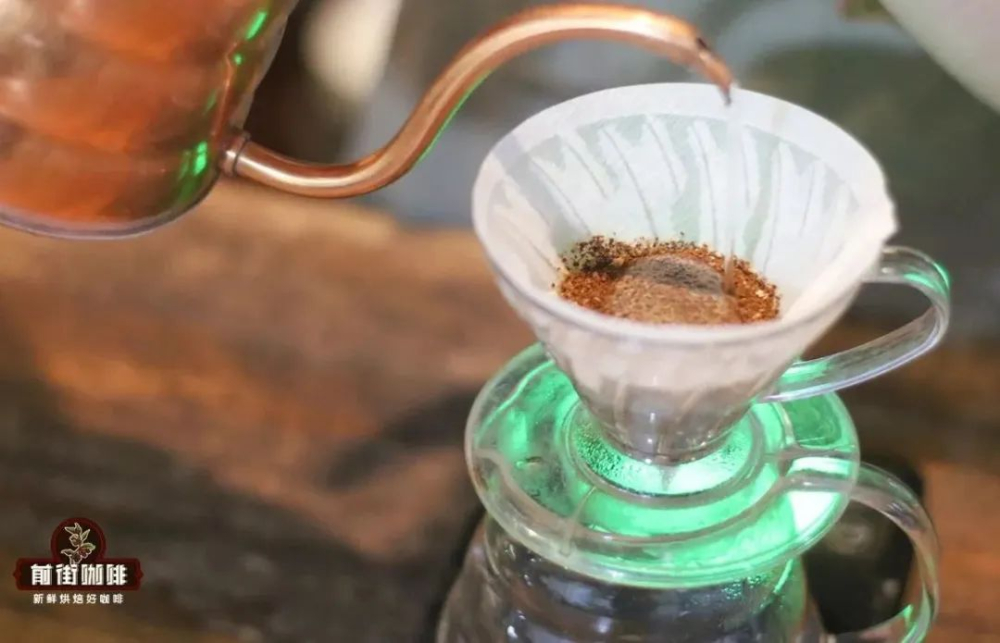
4. Too much water, or too heavy a pour
When developing brew recipes, we typically use a bloom formula of "water at twice the coffee weight, for 30 seconds" — also a safe default for unfamiliar beans. But once the kettle is in hand, flow control can drift off plan. The most common slip is over-pouring. Grounds can only absorb roughly twice their weight in liquid, so excess water runs down the walls of the dripper and into the server, collapsing the dome.
FrontStreet Coffee has compared this experimentally: as long as the bloom water is well controlled and the bed is evenly saturated, the direction of your circular pour and the flow size have little impact on the extraction. But if you pour too forcefully and the water column pounds a spot on the bed, gas release becomes lopsided — more on one side, less on the other — and without a stable supporting surface, the bed naturally caves in.
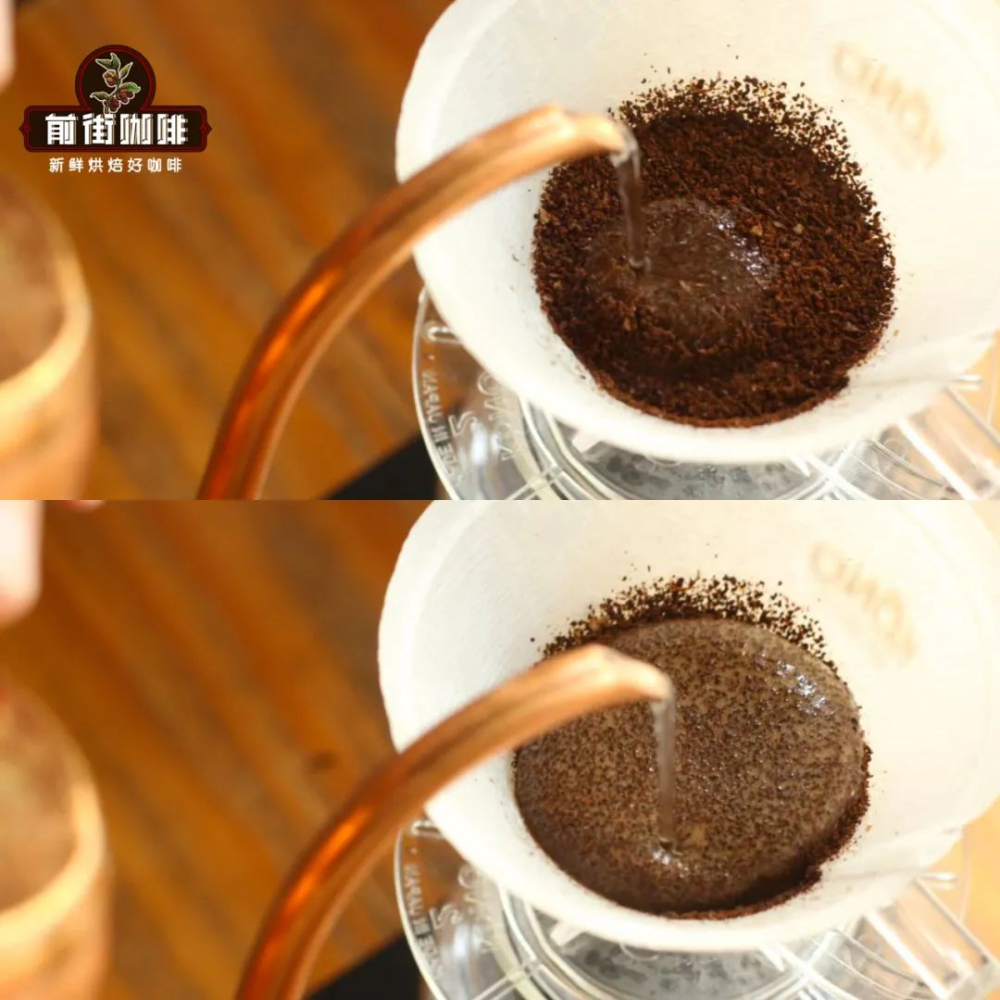
So for an ideal bloom dome, FrontStreet Coffee recommends a small amount of water (for 15g of coffee, keep the bloom water within 35g), poured gently and evenly in circles from the center outward. That way the grounds saturate uniformly and rise into a rounded dome.
5. A very light roast can blur the dome
Very lightly roasted beans have had a shorter development time, so their structure stays hard and their gas content is lower. During the bloom they barely expand, behaving much like stale coffee, and the golden foam that appears in later pours will be thin. This doesn't hurt the flavor, though — many light-roast coffees show only a slight swell during blooming, which is perfectly normal.

FrontStreet Coffee Recommendation
Watching a healthy bloom depends first on fresh, well-roasted beans. If you're brewing on a V60 dripper, FrontStreet Coffee suggests floral-and-fruit-forward light roasts that suit its fast, layered extraction: our Yirgacheffe Guodingding with its bright citrus, berry, and floral notes and a green-tea-like finish, or the Ethiopia Huakui, famous for tropical fruit aromas of strawberry, passion fruit, jackfruit, and lychee, with pronounced sweetness and almost no bitterness.
If your tastes lean toward the classic, deeper side that a slower brew highlights, the FrontStreet PWN Golden Mandheling — low in acidity with a long, syrupy body, herbal and dark chocolate notes — and the FrontStreet Jamaica Blue Mountain No.1, prized for its near-perfect balance of cream, caramel, chocolate, and nut, are both dependable picks.
Important Notice :
FrontStreet Coffee is a long-established specialty coffee roaster in Guangzhou China, selling freshly roasted beans from its own farm in Yunnan as well as dozens of carefully selected single-origin beans from around the world for both pour-over and espresso. The products deliver consistently excellent quality and great value, with shipping within 24 hours. Guangzhou's FrontStreet Coffee shop is recommended by many coffee lovers, and the beans are now available online at the Tmall 。
FrontStreet Coffee has moved to a new address:
FrontStreet Coffee Address: 315,Donghua East Road,GuangZhou
Tel:020 38364473
 Scan and follow the En Gafei WeChat official account. Please indicate that the reprint comes from "En Gafei".

