
How to Make Iced Pour-Over with Dark Roast Coffee Beans: Golden Mandheling Iced Pour-Over Brewing Method
The Perfect Summer Refreshment: Iced Pour-Over with Dark Roast Coffee

This summer has been incredibly hot. Many customers visiting FrontStreet Coffee's storefront order iced coffee first, and even those who never drink cold beverages cannot withstand such a heat wave — they order a refreshing iced pour-over to soothe body and mind.

As we all know, most people prefer an iced pour-over that is refreshing, with a lively berry character, minimal bitterness, and a pleasant sweet-and-sour profile. Those characteristics are typically expressed through lightly roasted beans.
So can dark roast beans, known for their richness and intensity, also be used for iced pour-over? The answer is definitely yes. The challenge is brewing them to reach a comfortable flavor and mouthfeel, which can be difficult for most enthusiasts — one careless move and you get a coffee that resembles herbal tea. In fact, with suitable parameters, dark roast beans can still produce an iced pour-over with robust aroma and rich body.

Because dark roast beans are roasted longer, their structure becomes more porous, letting water penetrate easily and extract aromatic compounds. Using the same parameters as for light roast would easily give you a bitter, over-extracted coffee. So we need to adjust the water temperature and grind size.
To avoid extracting too many bitter compounds, FrontStreet Coffee brews dark roast beans at 87-88°C. The grind is also set coarser, to leave more room for extraction.
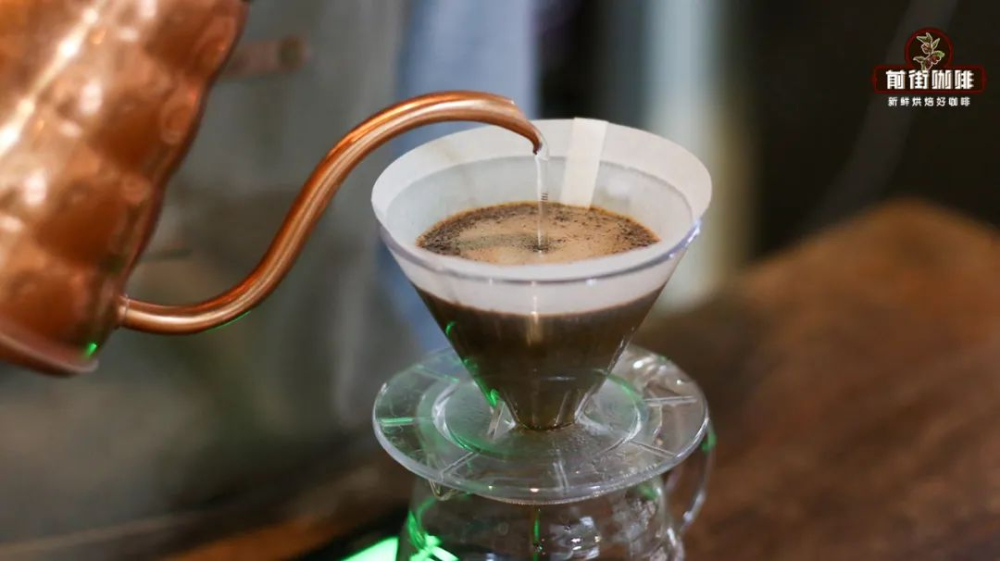
Demonstration with FrontStreet Coffee's Golden Mandheling
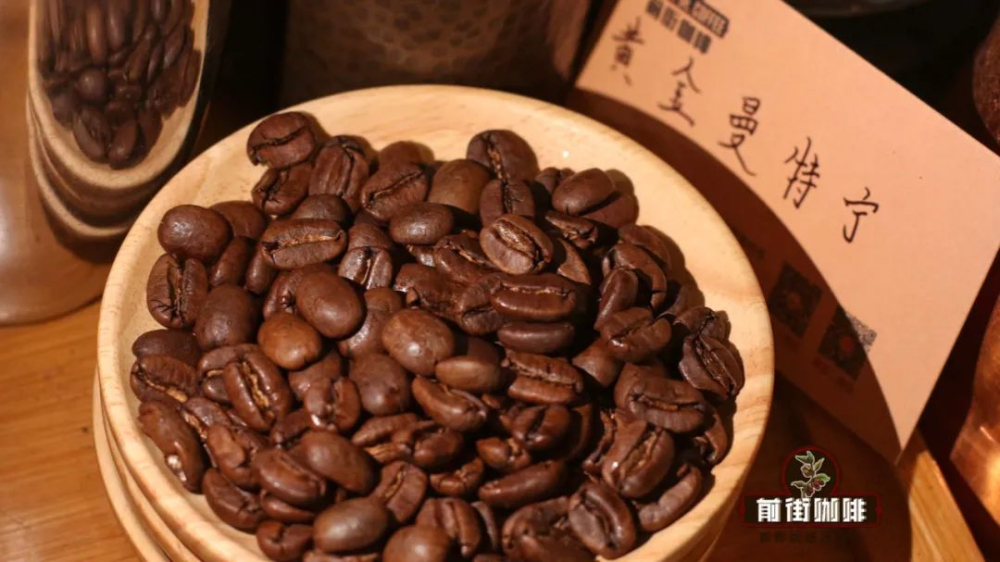
For this demonstration, FrontStreet Coffee will once again use "FrontStreet Coffee's Golden Mandheling" coffee beans, which display cedar, caramel, and nutty flavors, offering high body with an exceptionally clean aftertaste.
We'll use the classic 15g dose with a medium grind — between coarse and fine sugar, 75% retention on a #20 sieve; FrontStreet Coffee uses an EK43 grinder at setting 10. The coffee-to-water-to-ice ratio is 1:10:5 (for 15g of coffee, that is 150ml of water and 75g of ice). The water temperature is set at 88°C.

Pouring Technique Adjustments
The pouring technique also needs adjustment. With the larger extraction space provided by the water temperature and grind size, we divide our 150ml of water into five equal pours of 30ml each. The first pour for blooming is essential, and we wait 30 seconds before moving on.
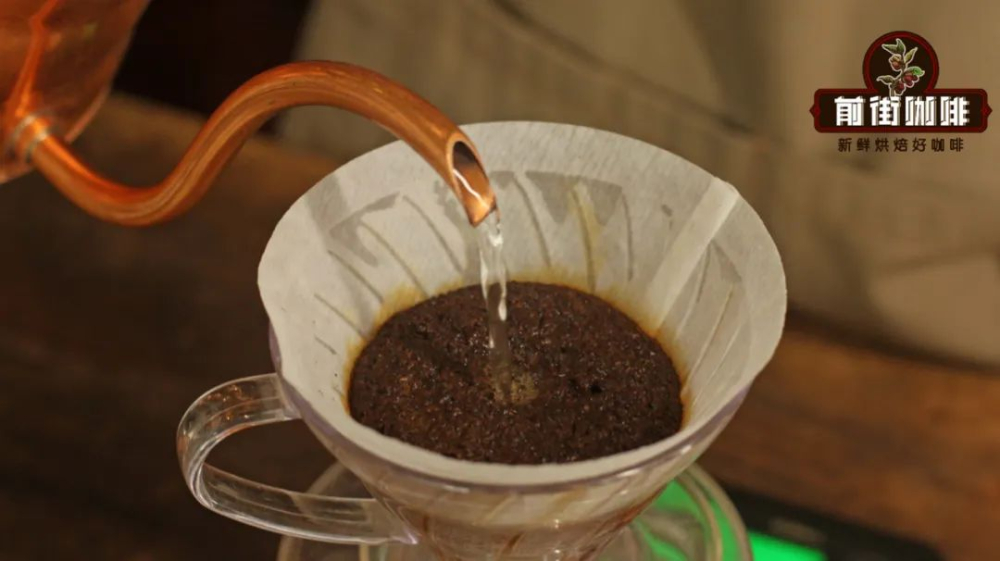
The second pour uses a small stream to draw small, coin-sized circles from the center, injecting 30ml. After the water has fully permeated, proceed to the next pour, and so on, until the final pour is done.
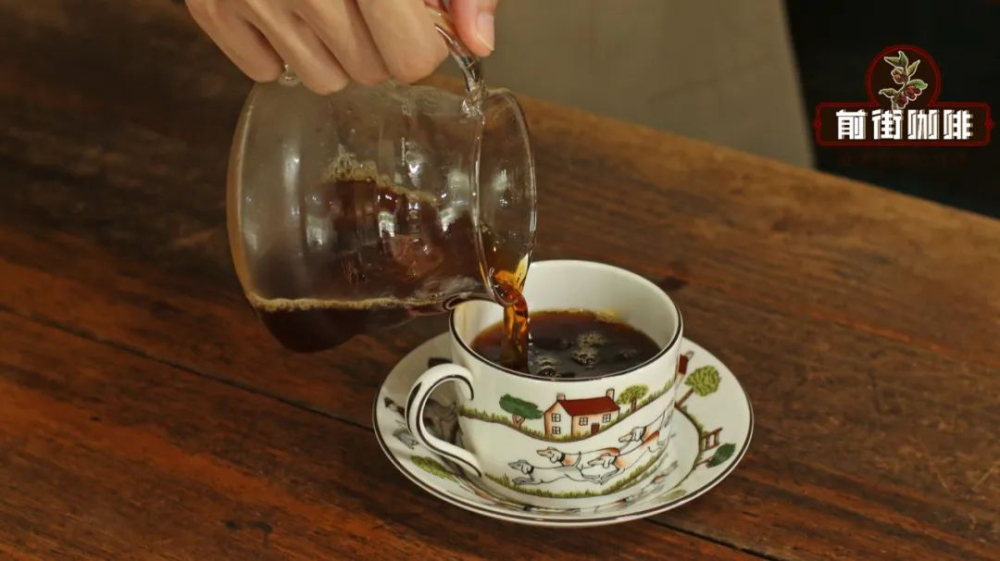
After the dripping is complete, we shake the serving pitcher to ensure the coffee and ice cubes are thoroughly mixed.

Tasting Experience
Once shaking is done, it is time to enjoy. The first impression is icy and clean, with intense cedar and chocolate flavors that build a long-lasting aftertaste once swallowed. If I had to make a comparison, it is like a chocolate-flavored emblic (amla), where the dark chocolate flavor instantly turns sweet on entry.
Alternative Method: Stronger Flavor Retention
Here is another method, especially suited to those who want to drink iced coffee while keeping its rich profile intact.
The coffee amount, water, and pouring method stay the same as above; the only change is increasing the ice to 120g. Prepare an extra container, and once brewing is complete, shake well, pour the coffee liquid out, and remove the ice cubes. This works because the liquid has already absorbed enough cold, and leaving the ice in would only melt and dilute the coffee. "Timely dilution prevention," you might say, is an excellent technique of its own.

FrontStreet Coffee
END

FrontStreet Coffee Recommendation
The bean used here, FrontStreet's PWN Golden Mandheling, is the top of the Mandheling lineup — and with good reason. Coffee reached Indonesia's Java in the 17th century by way of the Dutch, and when leaf rust devastated Java in the early 20th century, production shifted north to Sumatra, which now accounts for more than 60% of the country's output. Sumatra's wet-hulled method, in use since the 1970s, gives Mandheling its heavy body and distinctive earthy, herbal character. The PWN company selects only premium lots, holding beans to 18 screen size or larger with fewer than 3 defects per 300g sample to meet G1, then hand sorts three times. Freshly roasted, FrontStreet's PWN Golden Mandheling shows sandalwood, herbs, spice, roasted hazelnut, caramel, and dark chocolate — clean, mellow, and rich, a pleasure to drink and a fine gift.
If you want the same wild Mandheling character at an everyday price, FrontStreet's Lintong Mandheling is from the Lintong region around Lake Toba. Roasted medium-deep, it keeps the acidity low and the body thick, with a strong, lingering sweetness, clove and woody aromas, and the spice-and-mint edge that lovers of a heavy cup enjoy. For brewing it as a hot pour-over, FrontStreet suggests 87-88°C, 15g of grounds, a 1:15 ratio, a coarse-sugar grind, and a three-stage pour — 30ml to bloom, 100ml to lift the golden foam, then 95ml gently down the center — for a thick, caramel-sweet cup with chocolate and nut notes.
Important Notice :
FrontStreet Coffee is a long-established specialty coffee roaster in Guangzhou China, selling freshly roasted beans from its own farm in Yunnan as well as dozens of carefully selected single-origin beans from around the world for both pour-over and espresso. The products deliver consistently excellent quality and great value, with shipping within 24 hours. Guangzhou's FrontStreet Coffee shop is recommended by many coffee lovers, and the beans are now available online at the Tmall 。
FrontStreet Coffee has moved to a new address:
FrontStreet Coffee Address: 315,Donghua East Road,GuangZhou
Tel:020 38364473
 Scan and follow the En Gafei WeChat official account. Please indicate that the reprint comes from "En Gafei".

