
Espresso Grinder Adjustment: How to Calibrate Parameters and Optimize Your Espresso Machine

Ever felt frustrated after splurging on an expensive espresso grinder and machine, only to struggle with dialing in your shots? Whether you're chasing a delicious Americano or a milk-based drink, getting stuck at the extraction step is discouraging. Either the espresso "gushes" out or barely drips - and the result is either sharply sour or unpleasantly bitter and hard to swallow. So how exactly should you adjust your espresso? Today, FrontStreet Coffee focuses on grinder calibration for espresso.
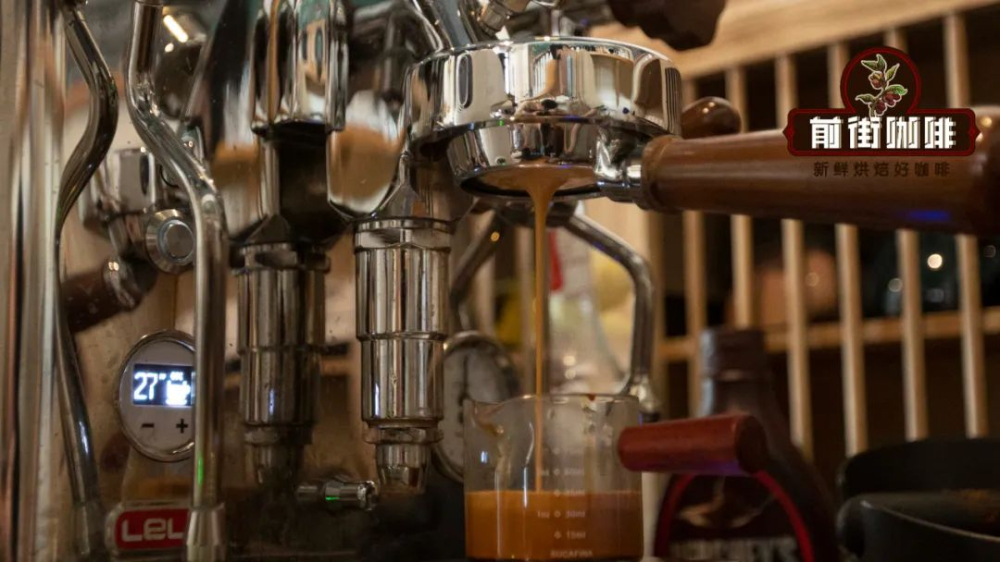
Espresso grinders aren't like those used for pour-over, cold drip, and other drip methods. Drip coffee tolerates coarser particles, which you can check with a flour sifter and adjust using the grinder's built-in settings. Espresso, by contrast, is a pressurized rapid extraction that releases most of its aromatic compounds in just 20-30 seconds - every characteristic is amplified. That means the smallest grinder adjustments produce noticeably different flavors, so relying on preset numbers alone is unrealistic. You need to read the extraction itself to judge whether the grind falls in the right range.
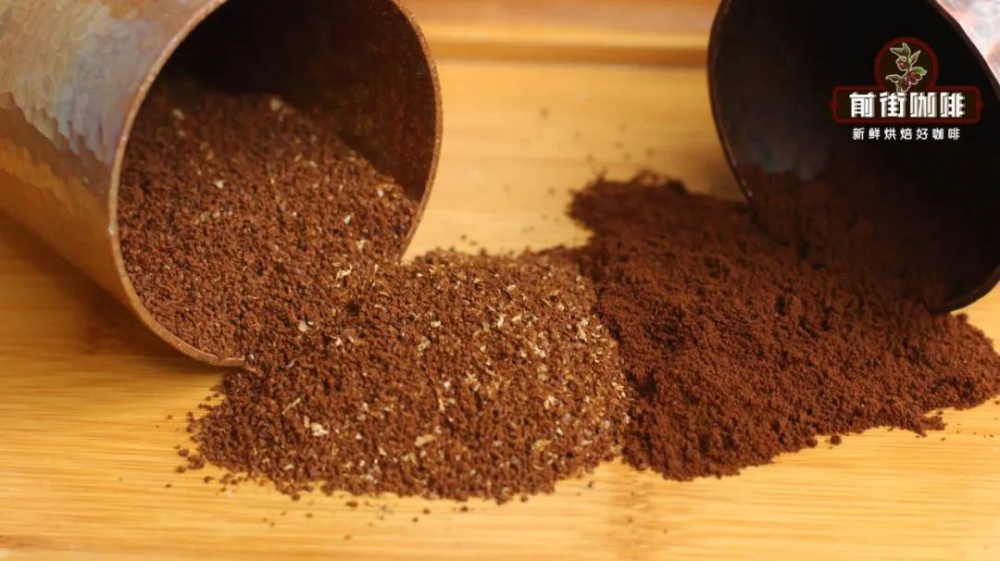
Pour-over grind is often described as "fine sugar" in texture, while espresso grinding - both to the touch and to the eye - is better described as "flour-like." Generally, the higher the number on the adjustment knob, the coarser the particles; the lower the number, the finer. Once the grounds feel soft, with none of the gritty sensation of sand, you can begin applying the espresso extraction formula for fine-tuning.
Extraction Formula Principles
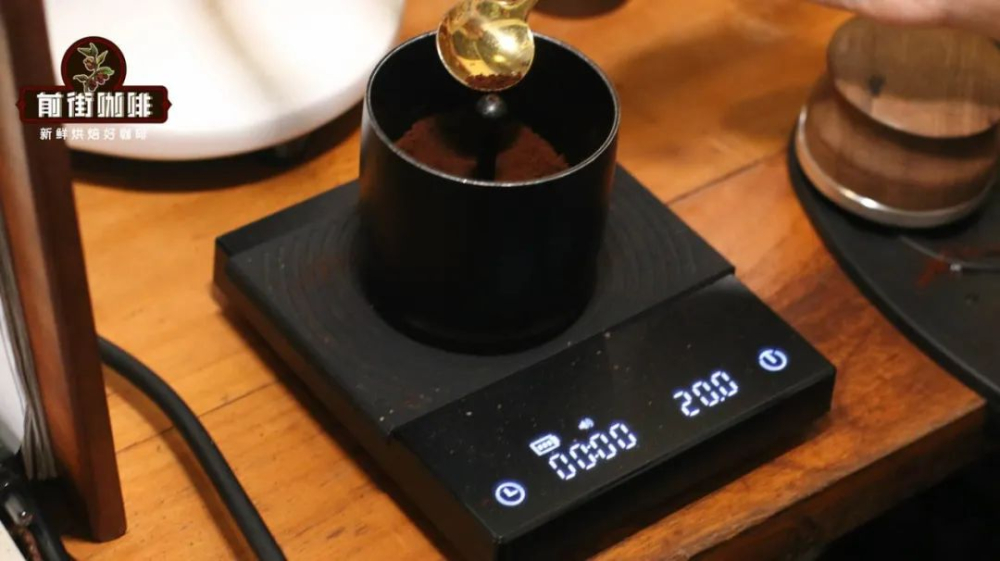
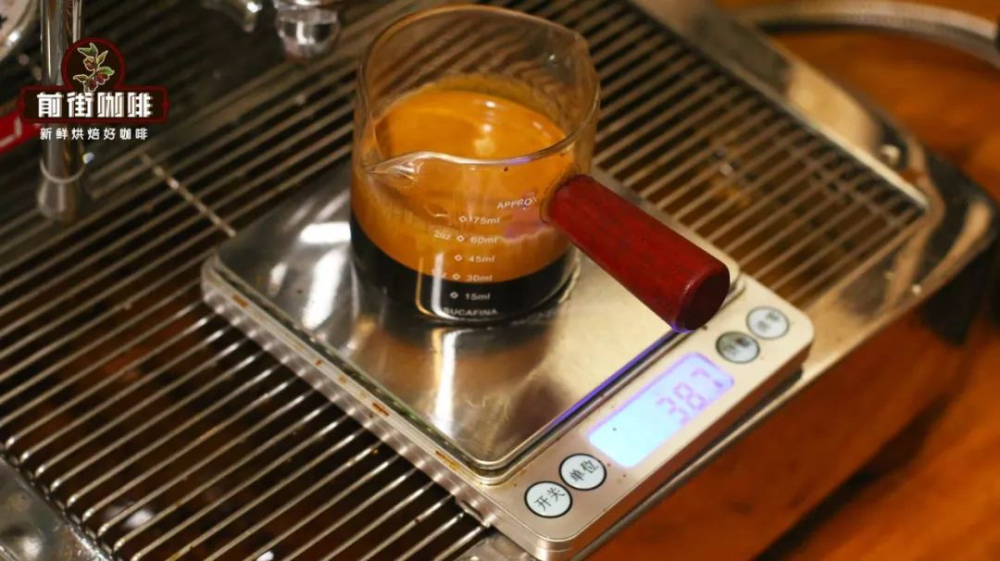
For daily dialing-in, FrontStreet Coffee follows a formula based on dose, extracted liquid weight, and extraction time. The coffee-to-liquid ratio is generally 1:2, with extraction times between 25-30 seconds. For example, our daily production uses a 20g basket - 20g of grounds yielding 40g of liquid. If extraction finishes in under 25 seconds, the flow is too fast and the grind too coarse; if it runs past 30 seconds, the flow is too slow and the grind too fine. Extraction time, in short, is your direct reference for whether the grind is right.
When the flow runs too fast (under 25 seconds), water and grounds barely have time to interact - the shot tastes sour or thin, and the crema is sparse and pale. Here you need a finer grind. If the extraction time is off by more than five seconds, confidently turn the adjustment knob by 0.5-1 increments; if it's within five seconds, only a minor nudge of roughly 0.1 is needed. The whole point is to slow the flow until extraction sits within the controllable 25-30 second window. Conversely, when the flow is too slow (over 30 seconds) and the coffee tastes strong, bitter, and dry, adjust coarser.
Applying the formula isn't about nailing the perfect grind in one shot - it's about quickly finding the stable extraction range for that particular bean. To bring your espresso closer to the flavor notes on the bag, you'll still need fine adjustments based on the bean's character, its resting state, and the drink you're making.
Fine-Tuning Based on Taste
If the extraction time already sits within 25-30 seconds but the shot carries a slightly bitter aftertaste you don't enjoy - while the concentration feels right - simply cut the final portion of the liquid. When FrontStreet Coffee runs into this kind of undesirable finish, we extract only until the liquid weight reaches 37-38g.
If the shot shows obvious bitter impurities, try a slightly coarser grind (just enough to feel a click in the mechanism) paired with a slightly higher dose (0.1-0.3g) to balance the flow - this reduces the release of excess bitter compounds. If the espresso is too sour and weak with pale crema, go slightly finer (again, one click) and reduce the dose (0.1-0.3g) to lengthen the water-to-coffee contact and draw out more flavor and aroma.
Understanding Extraction Time Variations
At this point you might ask: with the same coffee-to-liquid ratio, would a five-second difference in extraction time really change the taste much?
Yes - a five-second gap will definitely taste different. But if you're not drinking the espresso straight, and instead adding ice, milk, or water for milk drinks or Americanos, the flavor difference between the two parameters shrinks considerably. So unless you're doing academic research, an espresso with no negative flavors that still expresses the bean's main characteristics is perfectly good for daily drinking.
FrontStreet Coffee Recommendation
A well-dialed grinder deserves well-chosen beans. For straight espresso, dark roasts are forgiving and rewarding: FrontStreet Coffee's PWN Indonesia Golden Mandheling, a classic medium-dark roast, is loaded with dark chocolate, cocoa, and toast aromas over a thick, low-acid body - and remarkably, it even shines in slow extractions like ice drip, where after 24 hours in the fridge and a splash of ice it turns sweet and translucent with just a whisper of chocolate bitterness.
If you run lighter roasts through your machine, expect brighter, fruitier shots - FrontStreet Coffee's Costa Rica Mozart, an anaerobic honey process with a distinctive raisin aroma, carries blueberry, black grape, and winey fermentation notes, while the Kenya Little Tomato (72-hour washed, SL28 and SL34) offers crisp cherry tomato and grapefruit acidity. Just remember: every change of bean means re-dialing your grind, and the 1:2 / 25-30 second formula is always your starting point.
Important Notice :
FrontStreet Coffee is a long-established specialty coffee roaster in Guangzhou China, selling freshly roasted beans from its own farm in Yunnan as well as dozens of carefully selected single-origin beans from around the world for both pour-over and espresso. The products deliver consistently excellent quality and great value, with shipping within 24 hours. Guangzhou's FrontStreet Coffee shop is recommended by many coffee lovers, and the beans are now available online at the Tmall 。
FrontStreet Coffee has moved to a new address:
FrontStreet Coffee Address: 315,Donghua East Road,GuangZhou
Tel:020 38364473
 Scan and follow the En Gafei WeChat official account. Please indicate that the reprint comes from "En Gafei".

