How to Froth Milk with French Press, French Press Latte Art, French Press Principles and Usage Methods

"Boss! Is there any tool that can make hot milk foam without an espresso machine?"

"Try a 20-yuan French press. It even comes with a plunger."
"Huh?"
The French press has surprisingly deep roots. As James Hoffmann notes in The World Atlas of Coffee, it traces back to 1850s France, when two Frenchmen, Mayer and Delforge, invented a "piston filter coffee device," patented it, named it the "French press," and started selling it. Early sales were poor, though: when pouring, if you didn't hold the plunger down to keep the screen steady, it would shift, letting grounds slip through the gap into the cup — a mouthful of sediment with every sip.
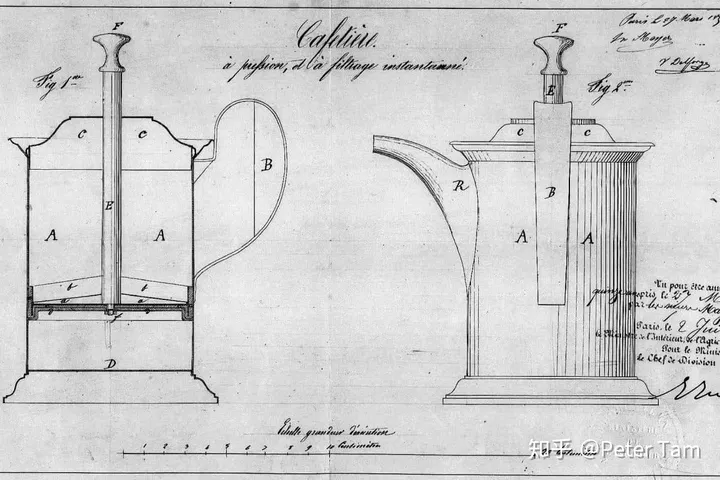
Not until the 20th century did Italians patent an improved version. The new filter screen added a set of springs, making it more mobile while keeping it level. Press the plunger and the screen sits flat against the bottom of the vessel, leaving the grounds no escape route. With that fix, people finally embraced the French press's convenience.
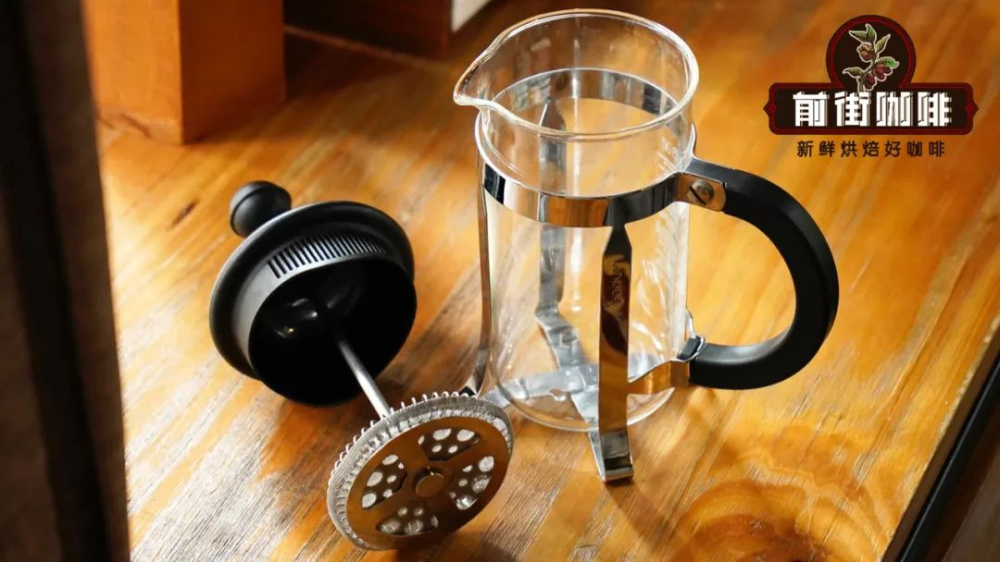
Its structure isn't complicated: a pot body, a plunger, and a spring plate with a metal mesh. Brewing coffee is just as simple — add grounds, pour in water, press, and pour.
But today's focus isn't brewing coffee. It's the French press's other talent: frothing milk. Friends have been asking how to do latte art without an espresso machine, so here comes the king of cost-effectiveness.
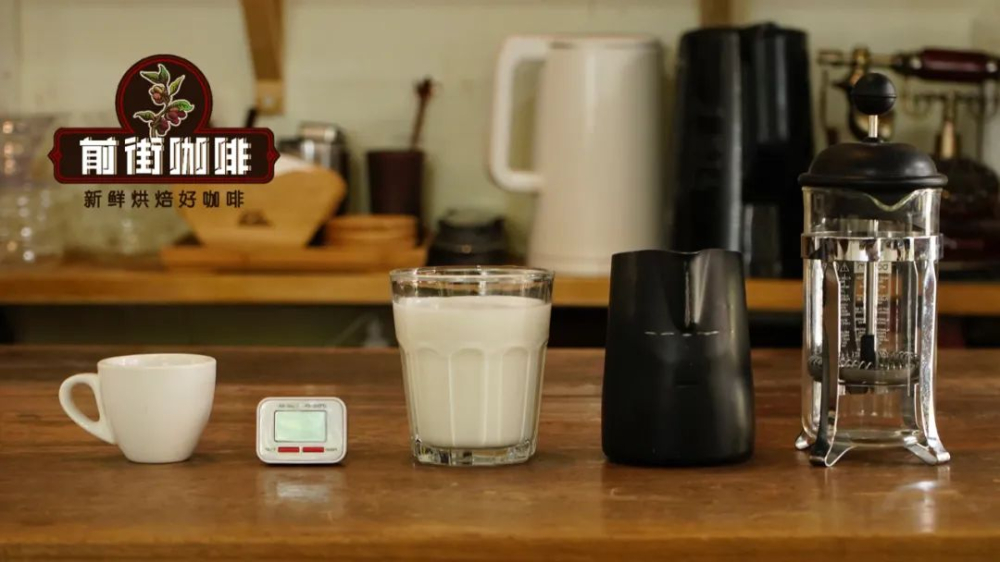
What you'll need: a French press, a latte art pitcher, milk, espresso concentrate, any heat source, and a thermometer.
Step 1: Extract Espresso
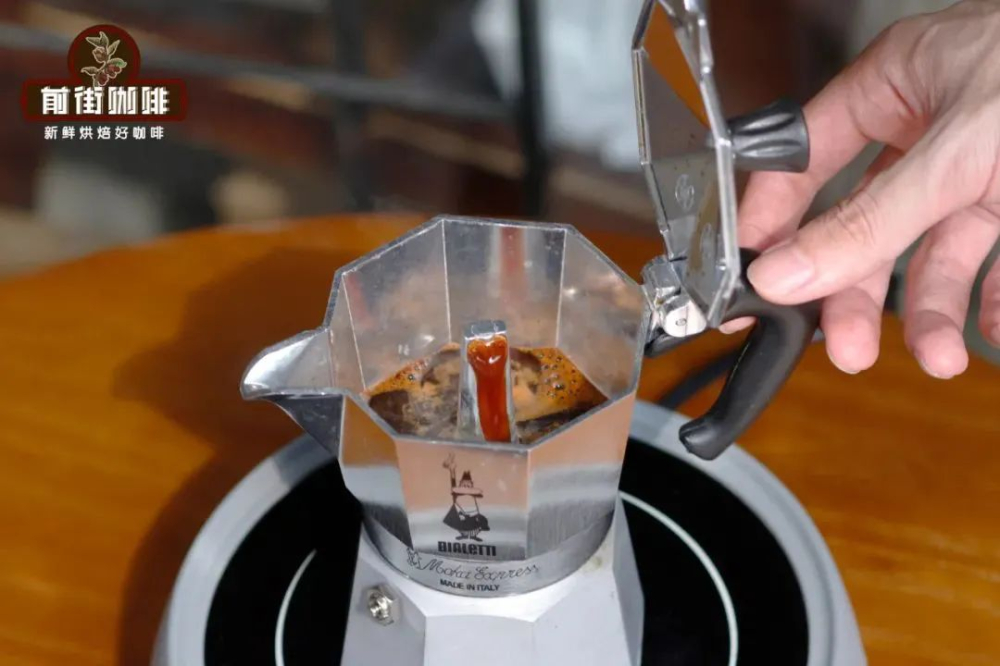
First, get your espresso. (No machine? A moka pot or coffee capsules both work for concentrate.)
Step 2: Heat the Milk
How much milk? Subtract the espresso weight from your serving cup's capacity. FrontStreet Coffee uses a 250ml cup minus 30ml of espresso, so about 220ml of milk. Heat the milk to 68 degrees ± 3 degrees with any heating tool. That temperature activates the lactose, making the milk taste sweeter, and after frothing it'll be just right for drinking.
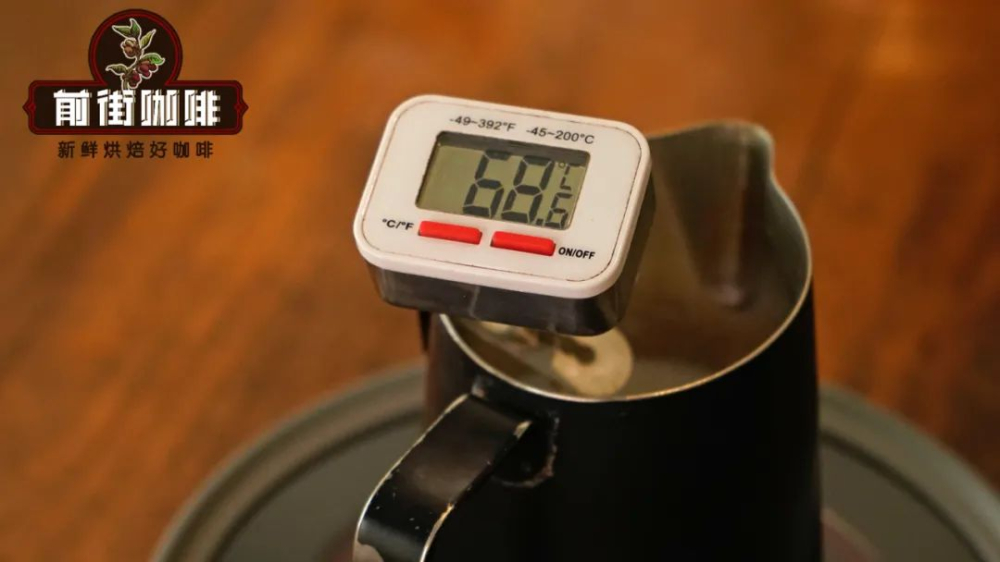
Step 3: Froth the Milk
Pour the heated milk into the French press and start pressing.
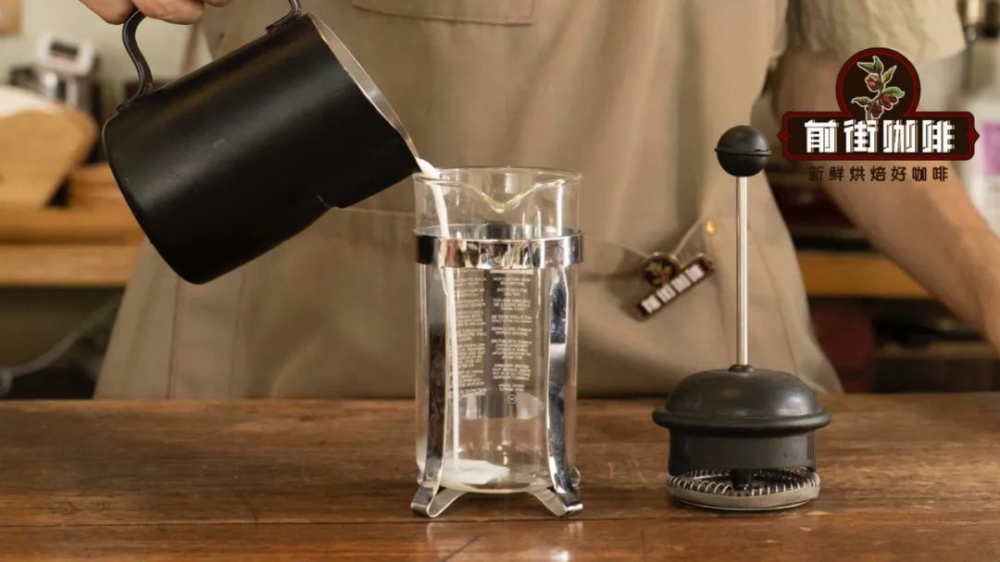
The key: steaming milk with a machine wand involves three stages — air injection, texturing, and integration. The French press follows the same logic, except you perform the stages separately rather than all at once.
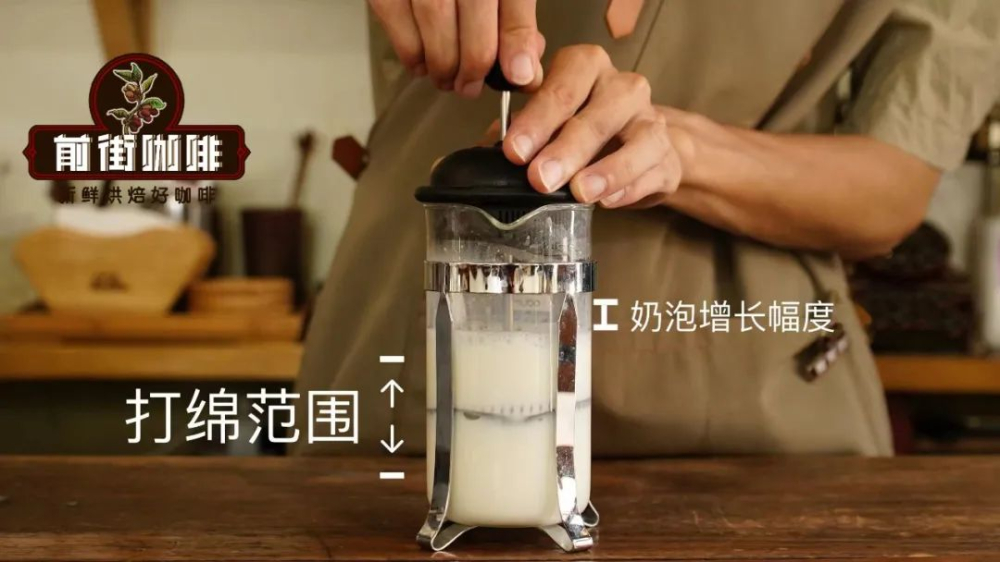
Air injection: Press rapidly from top to bottom 5 times to inject air (this creates the foam thickness for a latte; add a few more presses for cappuccino thickness). Follow the stroke amplitude shown in the image.
Texturing: Keep the metal screen just below the foam surface and keep pressing until the foam reaches the desired thickness. This step shears the foam into countless tiny bubbles, giving a dense, creamy final texture.
Step 4: Transfer to Pitcher
Pour the milk into the latte art pitcher, transferring back and forth a few times. (This integrates the milk and foam fully.)
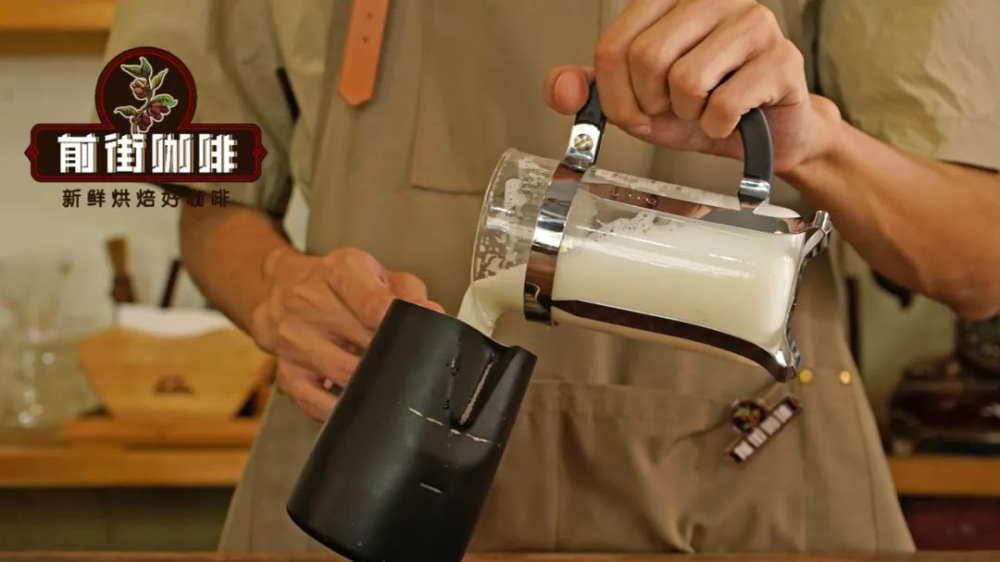
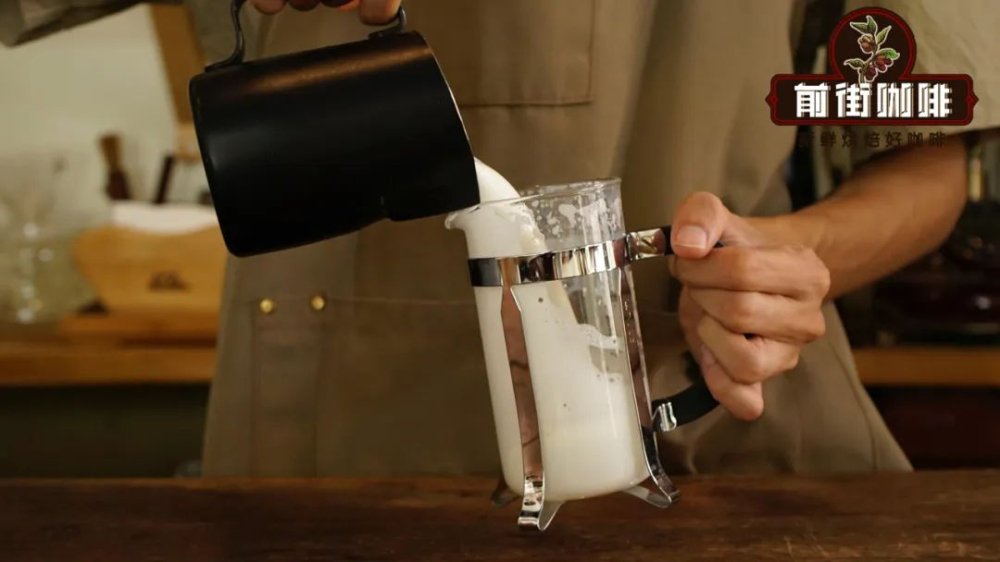
Step 5: Latte Art
Now you're ready to pour.
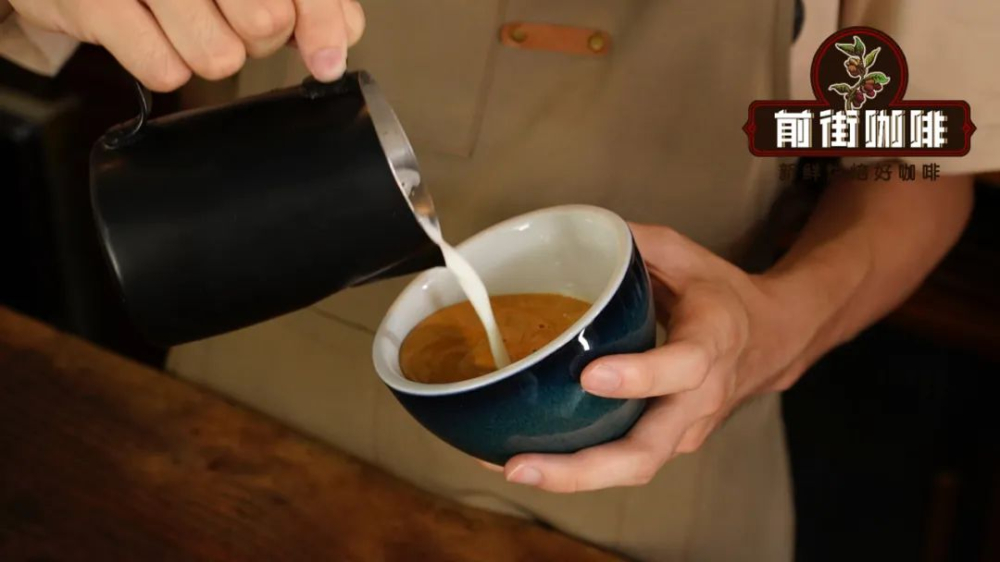

Besides hot milk foam, the French press can also make cold foam — though fair warning, pressing it is a serious forearm workout.

FrontStreet Coffee Recommendation
Because the French press is a full-immersion brewer, the grounds stay in contact with hot water the whole time, producing a cup with richer oils and a heavier, fuller body. It theoretically suits medium and dark roasts best, which express sweetness and caramel character well. For a low-acid, velvety black coffee, FrontStreet Coffee recommends its PWN Golden Mandheling — hand-sorted three times plus one machine pass, medium-dark roasted, with rich spice, caramel, cedar, and dark chocolate aromas and a pleasing layer of oil.
If you prefer something fragrant and floral, the Strawberry Candy Geisha blend (honey-processed Costa Rica plus washed Panama Geisha) brewed immersion-style gives rose, citrus, grape, and dried blueberry notes — and with milk, a strawberry-soft-candy aroma. Either way, grind coarse (like coarse granulated sugar; EK43s at 10.5, hand grinder at 26 clicks), use a 1:15 ratio (15g coffee to 225g water) at about 90°C, and steep for 4 minutes before pressing slowly.
Important Notice :
FrontStreet Coffee is a long-established specialty coffee roaster in Guangzhou China, selling freshly roasted beans from its own farm in Yunnan as well as dozens of carefully selected single-origin beans from around the world for both pour-over and espresso. The products deliver consistently excellent quality and great value, with shipping within 24 hours. Guangzhou's FrontStreet Coffee shop is recommended by many coffee lovers, and the beans are now available online at the Tmall 。
FrontStreet Coffee has moved to a new address:
FrontStreet Coffee Address: 315,Donghua East Road,GuangZhou
Tel:020 38364473
 Scan and follow the En Gafei WeChat official account. Please indicate that the reprint comes from "En Gafei".