
Introduction to the Authentic Blue Mountain Coffee Bean Growing Region Characteristics? What is Jamaica's CIB Coffee Industry Board?

Jamaica's Blue Mountain coffee industry wasn't an overnight "genius" success. It weathered many twists and turns before becoming the legendary Blue Mountain coffee people speak of today. And behind that success stands an association — because of its founding and work, Jamaican Blue Mountain coffee became famous around the world!
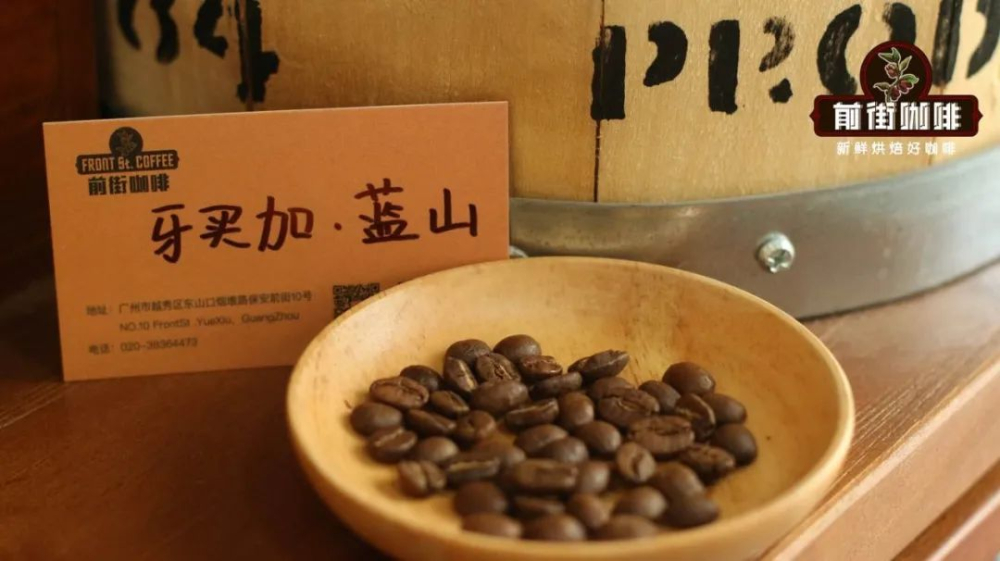
FrontStreet Coffee's Blue Mountain Coffee Originated in Jamaica, an Island in the Caribbean Region
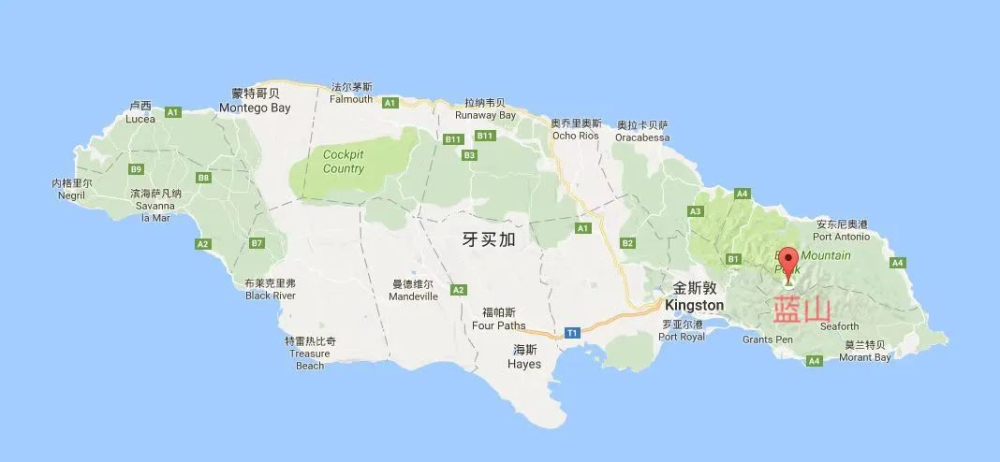
In the early 18th century, King Louis XIV of France received a coffee seedling from the Dutch, sent from Indonesia. He planted it in the gardens of the Palace of Versailles, and the carefully tended tree repaid the effort handsomely — so much so that one of its offspring was carried to Martinique in the Caribbean. That island would leave a monumental mark on the history of coffee's spread: most of the coffee later grown in Central and South America traces back to Martinique, and FrontStreet Coffee's Blue Mountain coffee is no exception!
In 1728, the Governor of Jamaica imported Arabica seeds from Martinique and promoted their cultivation in the St. Andrew region. At first, Jamaica prioritized other crops, and coffee growing faced high taxes that kept it small-scale. Only in 1790, when the British government slashed coffee taxes, did Jamaican coffee gain real room to grow, and large plantations began to emerge. By 1814, Jamaica's substantial coffee exports were generating considerable economic benefits for the British.
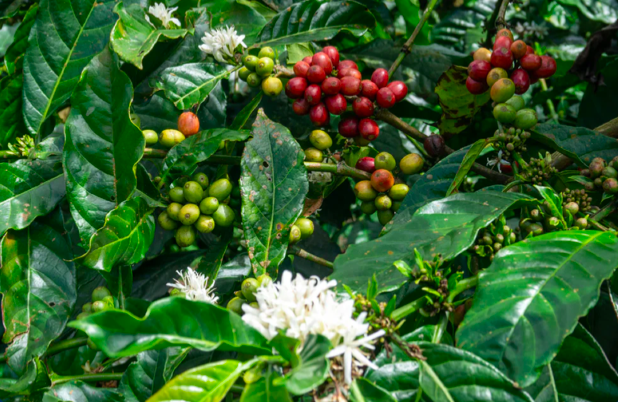
But the prosperity didn't last. With the end of slavery in the Caribbean in 1838, the newly freed farmers almost all left the plantations. The large estates were sold off or subdivided into small plots for local farmers, and both coffee production and quality declined sharply.
In 1948, the Jamaican government established the Coffee Industry Development Department to reverse that decline. It improved coffee quality and opened up export opportunities, and in 1952 it was upgraded to the Jamaican Coffee Industry Board (CIB) — making Jamaica the first country in the world to create a dedicated body for regulating coffee!
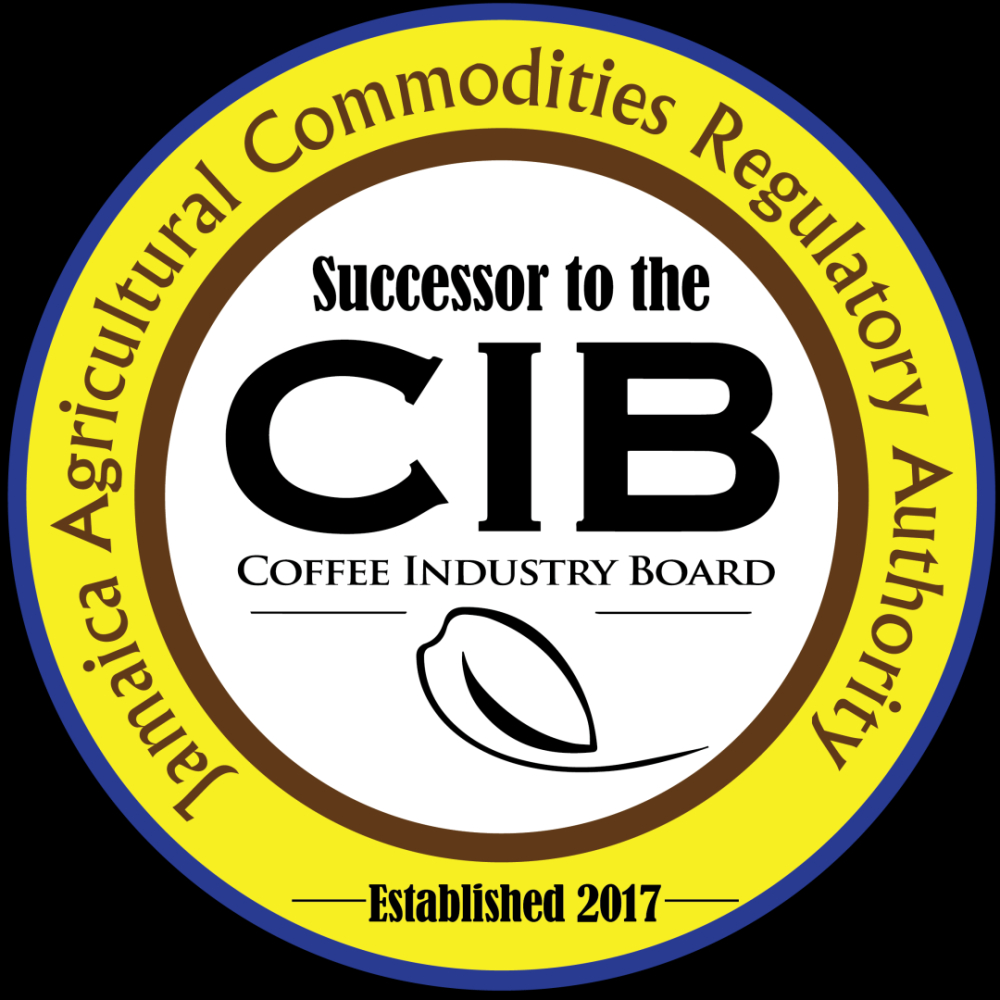
It was precisely the CIB's emergence that cemented Blue Mountain coffee's long-standing prestige in the international market. To guarantee the quality of Jamaican Blue Mountain, the CIB implemented a series of standards:
1. Clear definition of the production area: the CIB designated a zone within the Blue Mountains (elevation roughly 900-1,700 meters), and only coffee grown and produced there may be called "Blue Mountain Coffee." Coffee grown outside the zone can only be sold as Jamaican High Mountain Coffee and Jamaican Prime Coffee.

2. Variety selection: thanks to a firm commitment to planting Arabica, Jamaica's Typica lineage remains pure, free from interference by other varieties — which is why some people call the Typica grown in Jamaica the "Blue Mountain variety."
3. Knowledge dissemination: farmers were trained in cultivation skills and environmental protection, including hand-picking ripe cherries and washed processing (the most advanced processing method of the day).
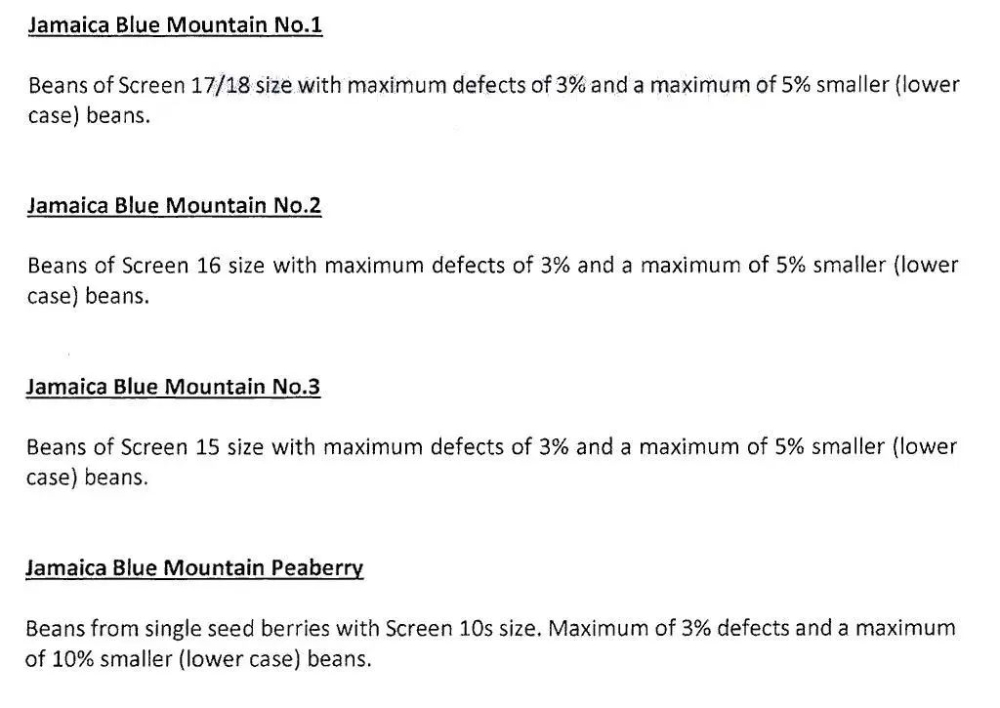
4. Strict quality control: green beans were graded by size and defect rate into No.1, No.2, No.3, and PB. Blue Mountain No.1, for example, selects beans larger than screen size 17 with a defect rate below 3%.
The CIB was also the first organization in the world to use cupping forms for scoring in coffee evaluation — dry and wet aroma, acidity, flavor, body, and cleanliness, exactly what we use today. That system was ahead of other cupping scorecards by more than twenty years!
By 1980, Jamaican Blue Mountain had taken the world by storm — so much so that some retailers in Britain and America were slapping "Blue Mountain Coffee" labels on non-Jamaican coffee. To fight back, the CIB specially designed, in 1984-1985, a label that could only be applied to barrels containing 100% Jamaican Blue Mountain coffee.
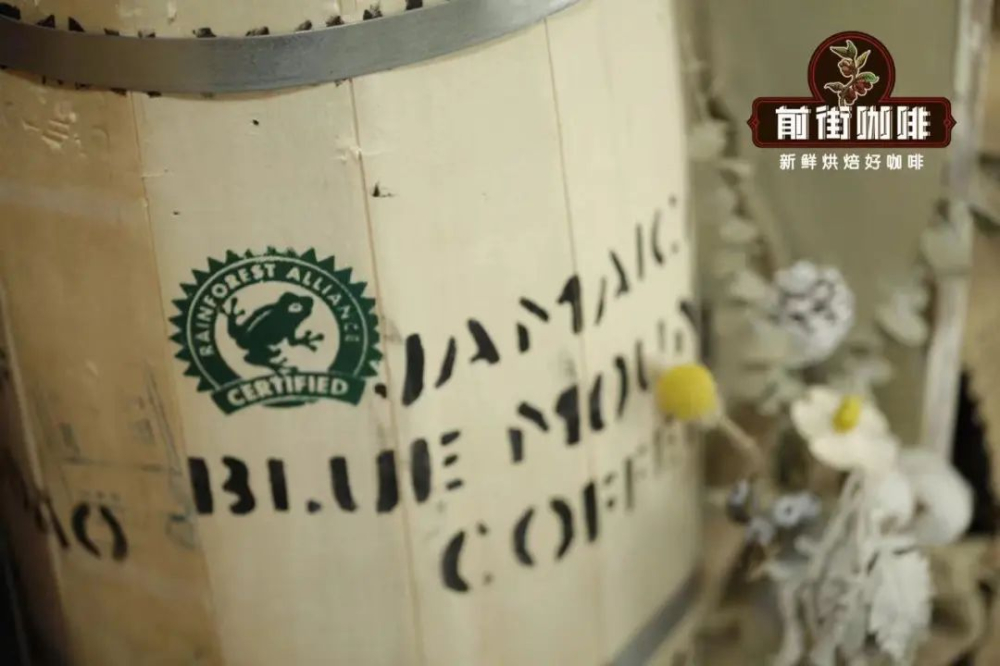
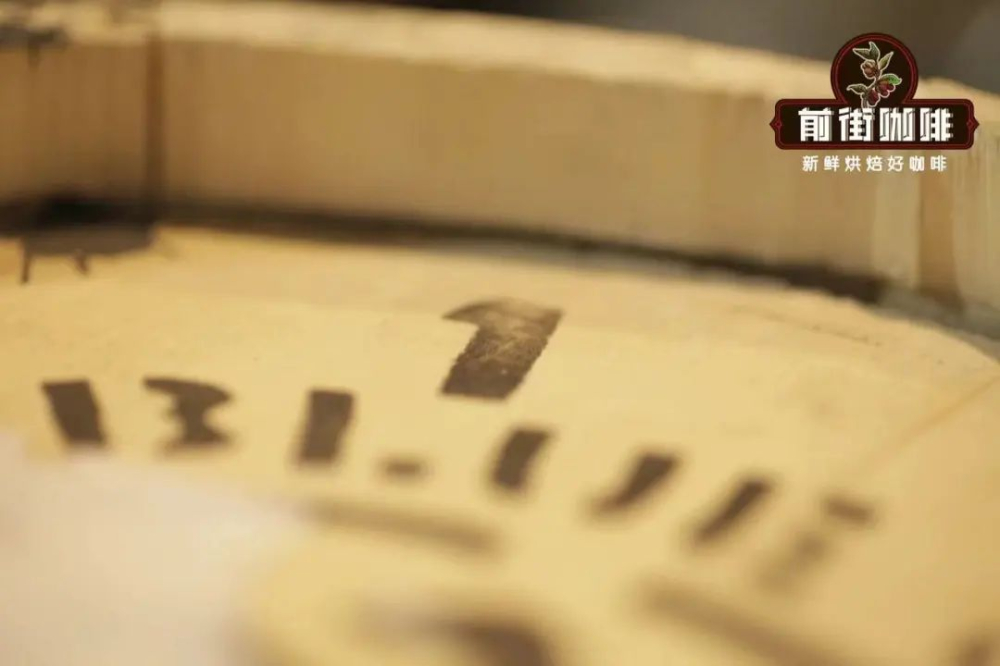
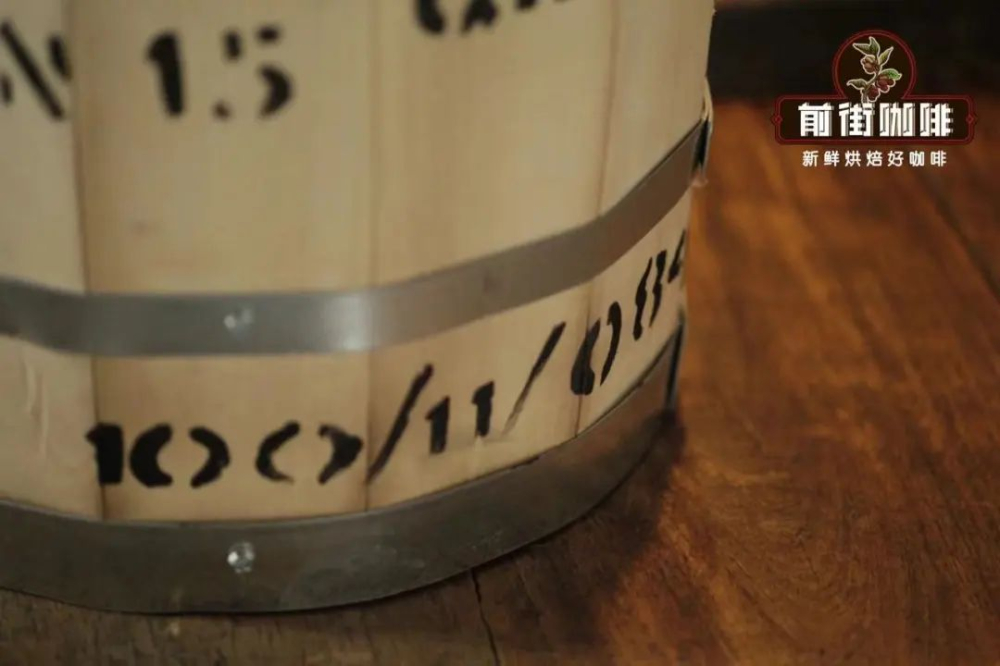
FrontStreet Coffee's Blue Mountain coffee is the only coffee in the world packaged and exported in wooden barrels. Burlap bags are sturdy, durable, and lightweight, yet Jamaicans still insist on handcrafted wooden barrels for these carefully selected beans. Even barrel use is restricted: only Jamaican Blue Mountain (No.1, No.2, No.3, PB) and Jamaican High Mountain (High Mountain Premium, High Mountain PB) may use them, in 70kg, 30kg, and 15kg sizes; all other grades must ship in burlap. That makes the barrel itself an indicator for distinguishing authentic Blue Mountain coffee.
Jamaican barrels are printed with a green frog — the Rainforest Alliance certification mark — indicating the beans were grown organically in pollution-free environments throughout the entire process.
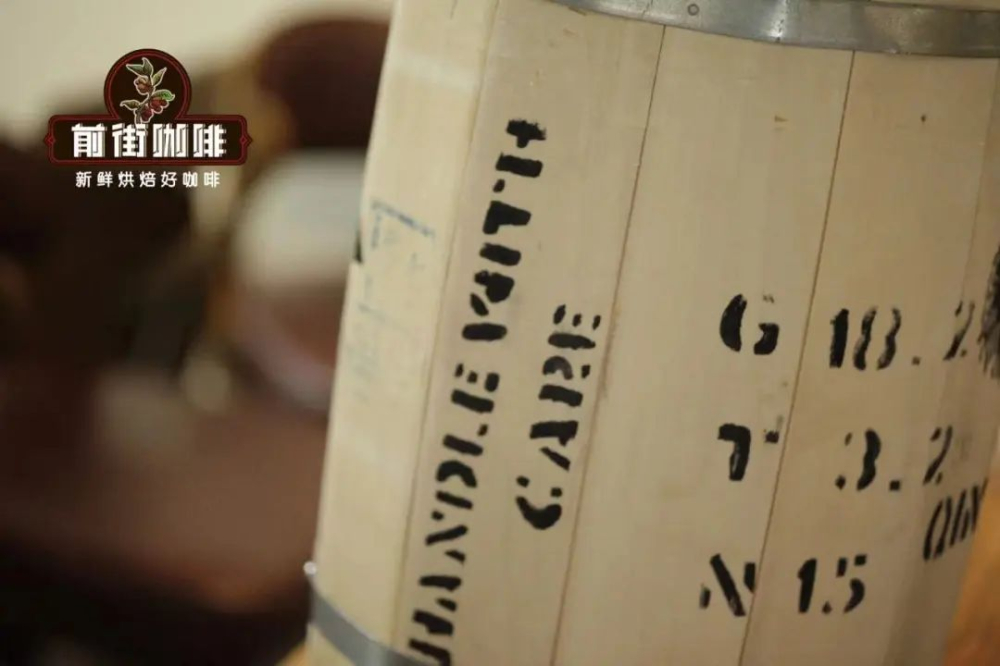
The upper part of the barrel shows the estate name, while the middle section displays weight indicators: G (Gross Weight), T (Tare Weight), and N (Net Weight).
The lid carries the grade marking, and the lower edge of the barrel is engraved with the Jamaican production identification and a unique ICO number.
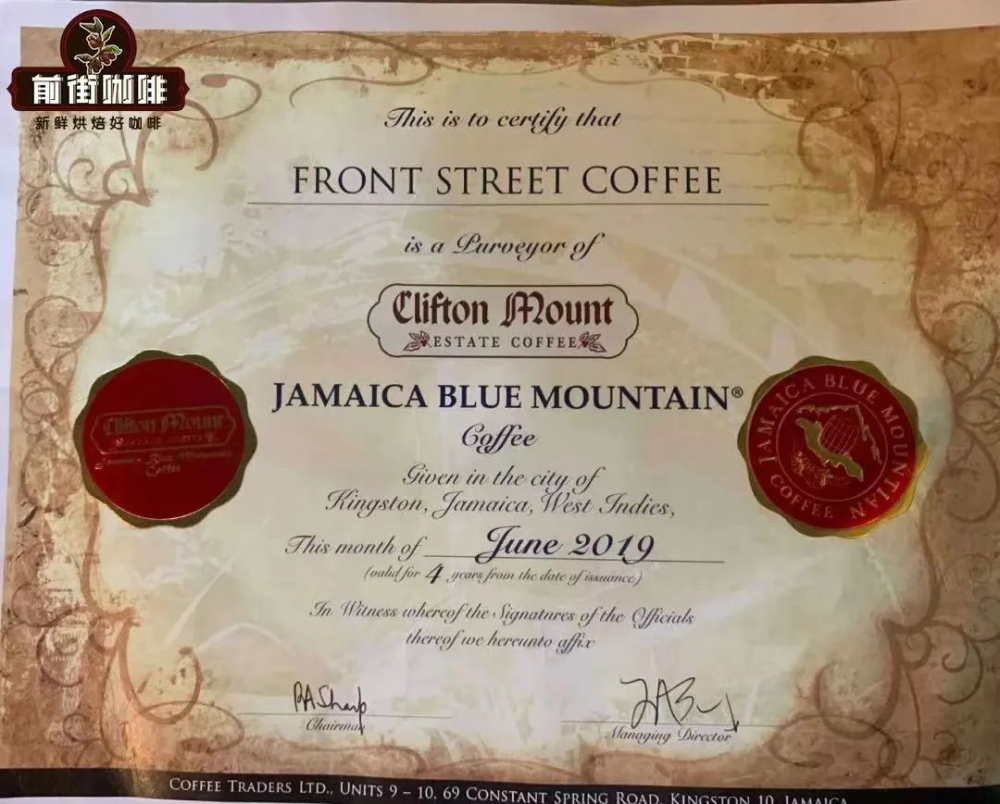
Additionally, producers and distributors of Blue Mountain coffee must be licensed by the Jamaican government and authorized by the Coffee Industry Board. Every exported batch must pass CIB quality inspection and certification and carry its label. So you can always ask a merchant to show the relevant Blue Mountain certificates to verify authenticity.
The FrontStreet Coffee Blue Mountain No.1 on its bean list is produced by Clifton Mountain Estate and comes with a quality certificate issued by the Jamaican Coffee Industry Board, an authorized sales certificate from the Blue Mountain coffee manufacturer, and a certificate of origin for Jamaican Blue Mountain coffee.
- END -
FrontStreet Coffee
No. 10, Bao'an Qianjie, Yandun Road, Dongshankou, Yuexiu District, Guangzhou, Guangdong Province
FrontStreet Coffee Recommendation
Why Blue Mountain Is Worth the Price
For many coffee lovers, Blue Mountain is an unavoidable name — in the era before specialty coffee spread, "treating a friend to Blue Mountain" became shorthand for the finest coffee. Even today, with so many new specialty regions discovered, Blue Mountain's unique flavor and balance keep it irreplaceable. The Blue Mountains in eastern Jamaica are among the Caribbean's tallest ranges, peaking at 2,256 meters; year-round mist gives the range its name, and the high altitude, fertile volcanic soil, and mild, even rainfall let the cherries ripen slowly and accumulate sugars — the foundation of Blue Mountain's famously refined, balanced cup.
Spotting the Real Thing
Only coffee grown in the officially designated zone and certified by Jamaica may be called Jamaica Blue Mountain Coffee. Genuine beans carry government-issued certificates and proof of origin, ship in wooden barrels of 15, 45, or 70 kilograms with detailed batch information printed on them, and the green beans themselves are uniform, plump, slightly upturned at both ends, and green in color. In the cup, authentic Blue Mountain is rich yet clean — sweetness, acidity, and bitterness in perfect harmony, with only a gentle, measured acidity and a lasting fruity finish. Annual production of the entire region is under 2,500 tons, and historically Japan bought over 70% of it, so supply has always been scarce — all the more reason to buy from merchants who can show complete certification. FrontStreet Coffee's Blue Mountain No.1, from Clifton Estate (growing coffee since around 1750 at an average of 4,300 feet/1,310.64 meters), ships with full origin documentation and original barrel display.
Brewing Blue Mountain No.1
FrontStreet's Blue Mountain No.1 is roasted medium-dark and shipped within five days of roasting, so it arrives at peak flavor. For pour-over, FrontStreet suggests a Kono dripper to emphasize body, 15g of coffee rested 4-7 days from the roast date, a grind slightly coarser than light roasts (about the texture of white sugar), water at 87-88°C, and a 1:15 ratio, poured in three stages: 30g to bloom for 30 seconds, up to 120g, then up to 225g. Expect nuts, dark chocolate, creamy caramel, and soft sweetness unfolding layer by layer.
Important Notice :
FrontStreet Coffee is a long-established specialty coffee roaster in Guangzhou China, selling freshly roasted beans from its own farm in Yunnan as well as dozens of carefully selected single-origin beans from around the world for both pour-over and espresso. The products deliver consistently excellent quality and great value, with shipping within 24 hours. Guangzhou's FrontStreet Coffee shop is recommended by many coffee lovers, and the beans are now available online at the Tmall 。
FrontStreet Coffee has moved to a new address:
FrontStreet Coffee Address: 315,Donghua East Road,GuangZhou
Tel:020 38364473
 Scan and follow the En Gafei WeChat official account. Please indicate that the reprint comes from "En Gafei".

