Should You Stir Pour-Over Coffee? What Are the Techniques for Proper Stirring?

Recently, while browsing online, FrontStreet Coffee noticed that many pour-over enthusiasts like to work a stir into their brew, hoping to coax out certain flavors, sweetness above all. Does stirring really deliver? And what should you watch out for when you use it?
Today FrontStreet Coffee looks at this auxiliary technique in pour-over brewing: stirring.
Where Did Stirring Come From?
To trace the rise of stirring, we have to mention Matt Perger, the 2012 World Brewers Cup champion, along with the other industry figures who later adopted the method.
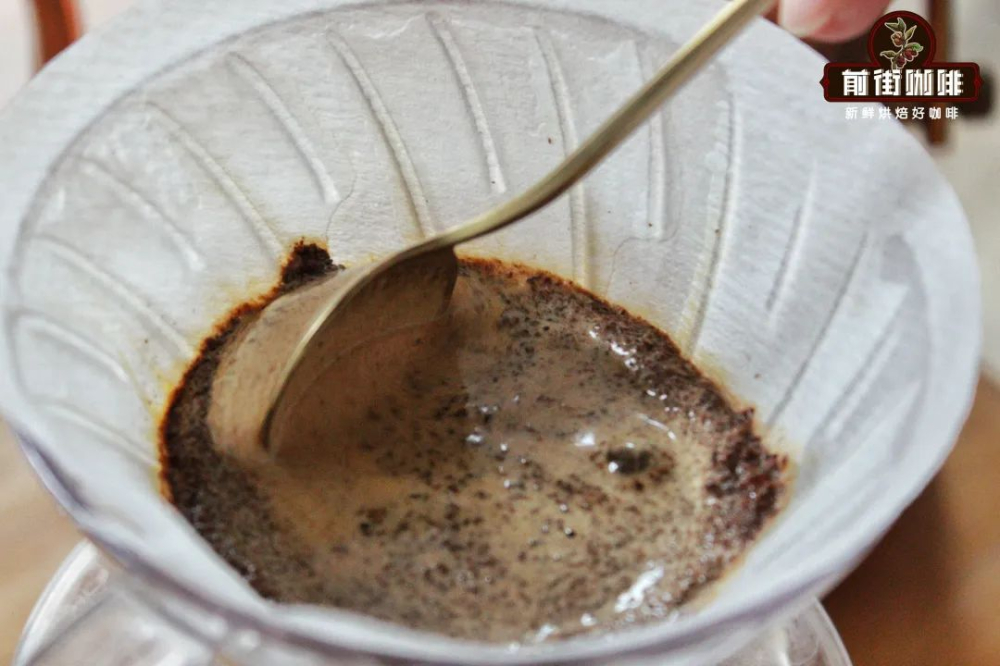
Matt posted a V60 brewing video on a video-sharing site in which he used what he called a "Stir like a Bandit" technique. During the bloom, he stirred with a wooden stick in a cross pattern, first up and down, then left and right, then up and down again, agitating the slurry quickly and forcefully.
Tim Wendelboe, the Norwegian roaster regarded as the father of Nordic roasting, also stirred during the bloom in a V60 tutorial posted to his personal YouTube channel. Tim described the point of it: "I like to stir the coffee during blooming to ensure all grounds are thoroughly wet."
Beyond these two masters from Northern Europe and Australia, American roasting authority Scott Rao and 2017 World Barista Champion James Hoffmann also endorse this auxiliary technique. And there is a barista from Taiwan named Amis who represents the extreme application of stirring.

What Is Stirring For?
The benchmark for coffee extraction is uniformity. When stirring in pour-over brewing, you typically use a spoon or wooden stick to apply a degree of agitation and disturbance to the coffee bed. The goal is to increase how much the grounds tumble through the water, so the water contacts every particle more evenly and extraction becomes thorough.
Looked at through the lens of staged extraction, stirring can be applied at two points: the bloom and the main pour. As for when to stir, how vigorously, at what angle, in which direction, and for how long, all of that comes back to the original question: why stir at all?
How Does Stirring at Different Stages Change Extraction?
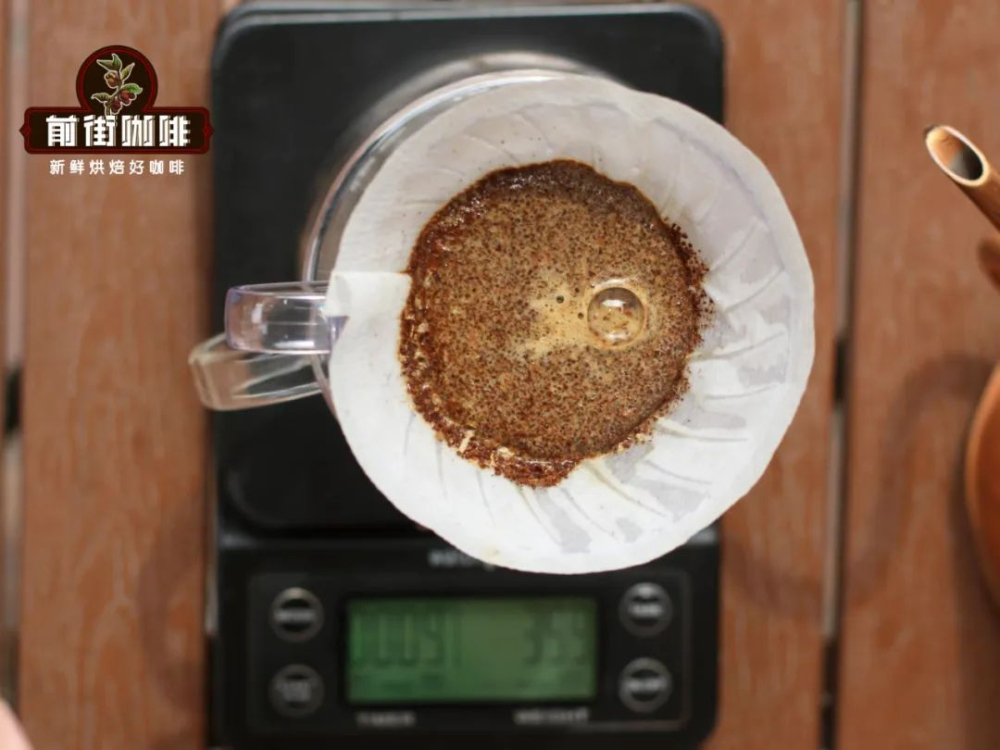
FrontStreet Coffee has said many times that pouring water itself can accomplish some stirring, but only if there is enough of it. During the bloom, with just a few dozen grams of water, that is hard to achieve. If the brewer's pouring control is weak, evenly wetting and tumbling dry grounds becomes even harder. That is why so many brewing masters recommend using a tool to stir the bed during the bloom.
Stirring during the bloom, whatever the force or direction, is meant to ensure that grounds at every level of the dripper are saturated, which narrows the concentration differences and lays a foundation for flavor extraction later on.
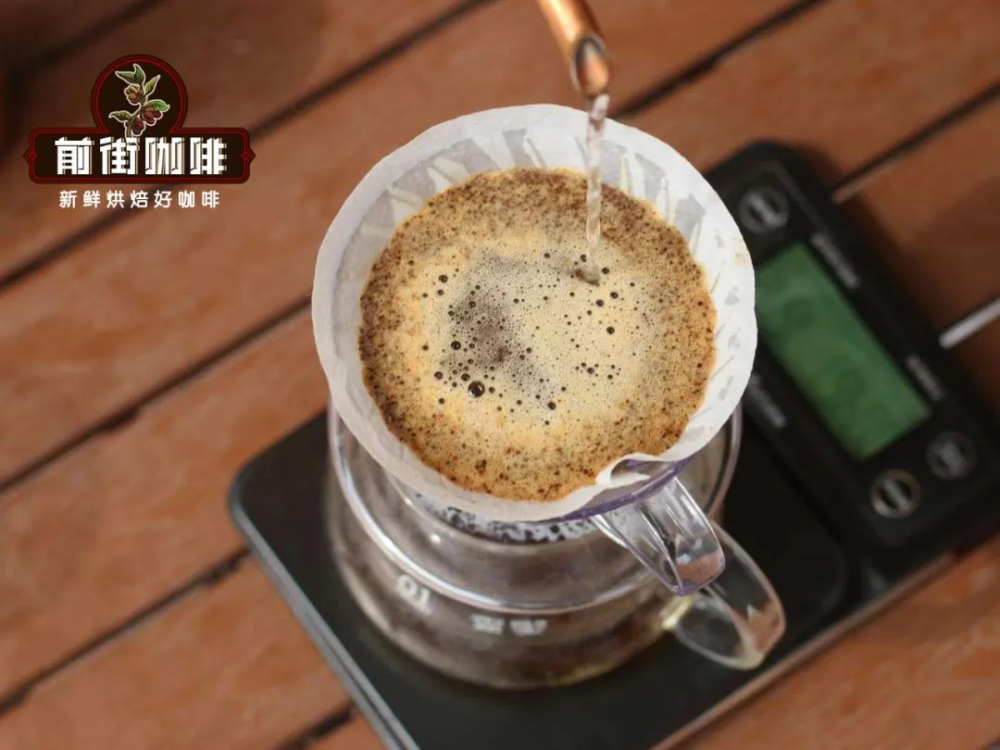
For the main extraction after the bloom, the water volume is enough to create turbulence and the grounds have more chances to take on water, so there is little need to lean on stirring. When stirring is done after the bloom, it usually happens after the second pour, where it helps degas the coffee and lift extraction efficiency.
To test all of this, FrontStreet Coffee ran a comparison, extracting the same beans three ways: no stirring, stirring during the bloom, and stirring after the first pour. We chose the Gotiti Cooperative coffee, using 15g of grounds, a 1:15 coffee-to-water ratio, 91°C water, and a grind size of 10 on the EK43s.
No stirring: total extraction time was 2 minutes 5 seconds, with prominent citrus in the flavor, an uplifting acidity, and a finish of light honey sweetness.

Stirring during the bloom: after the bloom pour, the slurry was stirred once with a small spoon in a cross pattern, first up and down, then left and right. The coffee finished dripping in 2 minutes 10 seconds. The flavor showed berries, lemon, and green tea, with faint white florals and clear sweetness.
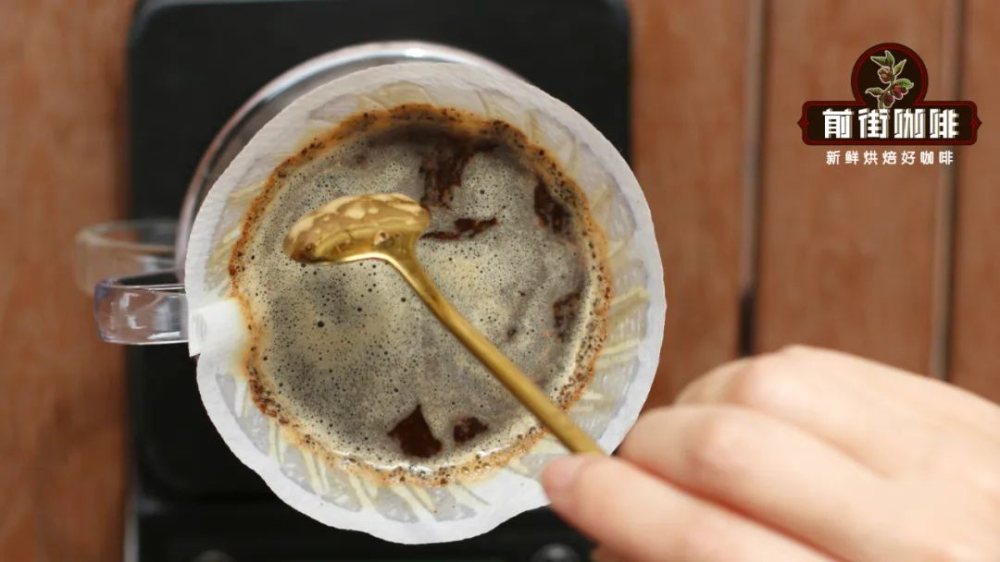
Stirring after the first pour: after the first pour, the slurry was likewise stirred once with a small spoon in a cross pattern. Drip filtration completed in 2 minutes 13 seconds. The flavor again showed fruity acidity with citrus notes, but the aroma was weaker and the finish carried a hint of licorice, slightly over-extracted. Here the stirring did not help.
What Should You Watch Out For?
The biggest problem with stirring is fine-particle blockage. The more the slurry is agitated, the greater the chance that fines migrate down to the bottom of the dripper and clog the filter holes. Excessive stirring therefore not only drags out the brew time but also raises the risk of over-extraction.
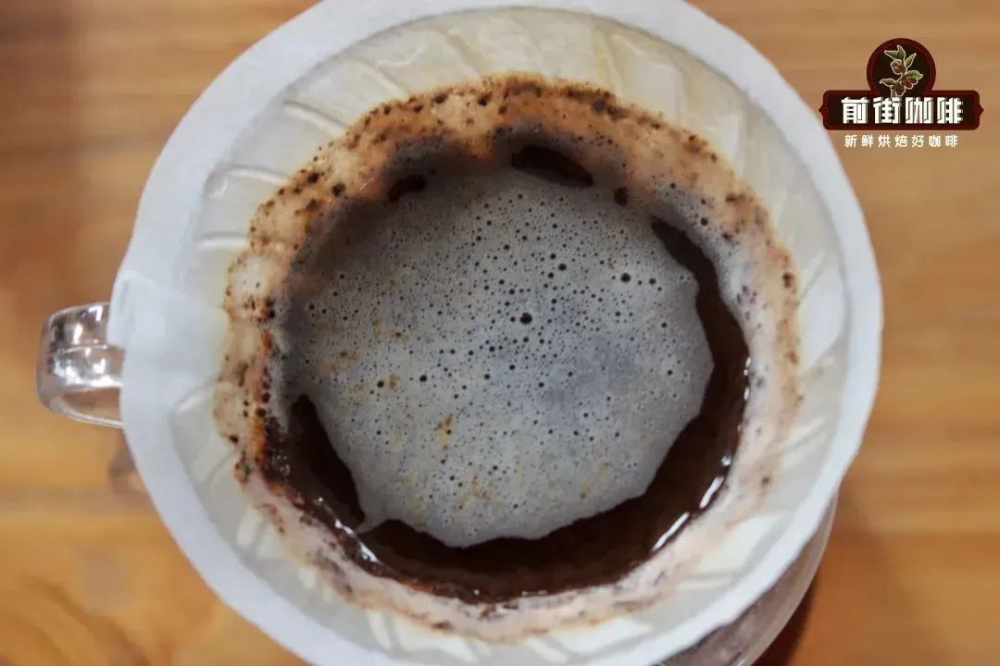
Because stirring forces flavor out of the coffee, it places high demands on bean quality. With inferior beans, off-flavors are easily amplified. For stirring to genuinely help, it must be paired with a sound technique and with demanding conditions such as a finer grind, higher water temperature, and a fast brew.
Stirring also lacks a unified standard and is hard to measure with precise data, so technique varies from person to person. Applied to different equipment and beans, results diverge widely, and the method naturally lacks universality. FrontStreet Coffee believes you should first understand the character of your beans and the design of your dripper, and only then decide whether to stir and how.
- END -

FrontStreet Coffee Recommendation
Stirring is really a question of even extraction, and the V60 rewards brewers who control the pour. Hario, the company behind the V60, was founded in Tokyo in 1921 as a maker of heat-resistant glassware for research institutions, and it also produces the glass sharing carafes that pair so often with pour-over setups. In 2004 Hario redesigned the V60's prototype closer to the form we know today, naming it for its distinctive 60-degree cone and V shape, and released it in 2005.
For the beans, FrontStreet recommends light-roasted, fruit-forward coffees that let the V60's fast, even extraction shine. FrontStreet Ethiopia Huakui offers ripe tropical fruit, FrontStreet Strawberry Candy brings a Geisha-like floral and berry character with a raisin note, and FrontStreet Mozart leans into raisin sweetness; all of them suit this dripper. If you prefer something classic, FrontStreet PWN Golden Mandheling, FrontStreet Brazil Queen's Estate, and FrontStreet Jamaica Blue Mountain No. 1 extract beautifully here too.
A good starting recipe is 15g of coffee at a 1:15 ratio with 90 to 91°C water and a grind of 10 on the EK43s, roughly fine-table-sugar size. For the pour, add 30g of water for a 30-second bloom, then pour to about 125g within a minute, wait until the water level drops to two-thirds of the bed, and add the remaining 100g to reach about 225g in 1 minute 35 seconds, finishing the drip in 2 to 2 minutes 10 seconds.
Important Notice :
FrontStreet Coffee is a long-established specialty coffee roaster in Guangzhou China, selling freshly roasted beans from its own farm in Yunnan as well as dozens of carefully selected single-origin beans from around the world for both pour-over and espresso. The products deliver consistently excellent quality and great value, with shipping within 24 hours. Guangzhou's FrontStreet Coffee shop is recommended by many coffee lovers, and the beans are now available online at the Tmall 。
FrontStreet Coffee has moved to a new address:
FrontStreet Coffee Address: 315,Donghua East Road,GuangZhou
Tel:020 38364473
 Scan and follow the En Gafei WeChat official account. Please indicate that the reprint comes from "En Gafei".