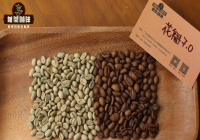
What Determines the Roast Level of Coffee Beans? How Does Roast Degree Affect Coffee Flavor?

Coffee flavor comes from three main sources: 60% from the green beans, 30% from roasting, and 10% from brewing. Clearly, many factors shape what ends up in your cup. So how does a roaster decide how far to take a batch of beans? Today FrontStreet Coffee looks at how roasting styles are determined.
Two points are worth keeping in mind. First, every roaster reads a green bean differently, so roasting choices vary. There is rarely an absolute right or wrong here, only different ways of expressing flavor; this is not a universal standard. Second, roasting degree itself has no strictly standardized measurement.
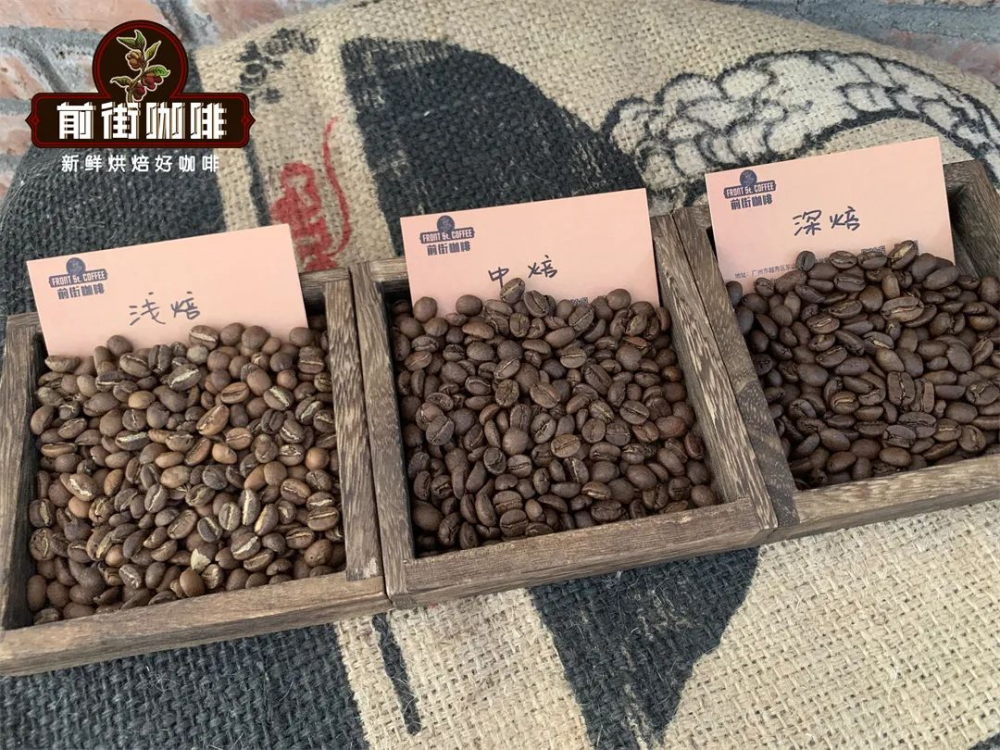
Roasting degree is usually named after bean color, measured against a standard color wheel. The familiar textbook terms, cinnamon, city, Vienna, French, and dark French, all come from that system. This is only general international terminology, and in real roasting practice exceptions are common. Some origins simply do not take on color easily, and pushing them further would produce bitter, scorched flavors, so the roaster has to stop even though the beans still look light, because the target flavor has already developed. Beans from other origins may look darker after roasting simply because they contain more caramel. In these cases, color value is only a reference point.
Some roasters use drop temperature, or ending temperature, as the measure of roast degree, but in practice machines and technical approaches differ between brands. Compare drop temperatures across roasters and the spread is significant, which is why Japanese roasting curves so often finish at 230-240°C.
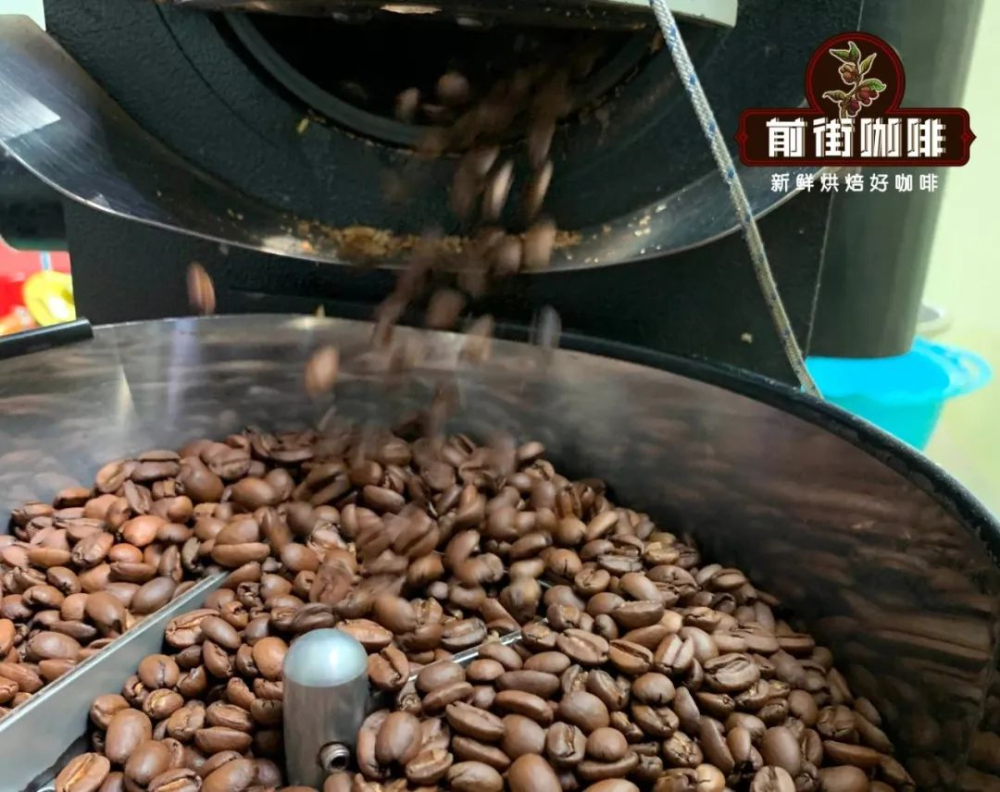
The Roasting Process
Roasting transforms the chemical and physical properties of green coffee into a roasted product. The process runs ten to fifteen minutes at temperatures above 200°C, driving a series of chemical changes, producing first and second crack, the popping sounds so similar to popcorn, while moisture is driven off. The beans expand and their color, texture, aroma, and density all shift. During the roast, chlorogenic acid gradually disappears and pleasant fruit acids such as acetic acid, citric acid, and malic acid, the same acids found in wine, are released. A well-managed roast presents these desirable acids in moderation, and that is what creates coffee's distinctive flavor profile.
In theory, any suitable moment after first crack could be the drop point. To avoid risk, though, roasters usually do not drop the beans the instant first crack starts; they prefer to develop the batch a few degrees further so the aroma fully opens up. That means the window runs from roughly 2°C after first crack to just past second crack, a total span of only about 10°C. Within that narrow band we loosely simplify things into three styles: light, medium, and dark. Note how little their drop temperatures actually differ, sometimes by only 2-3°C, yet the beans look strikingly different. This is why we describe roast degree using color, form, and flavor together.
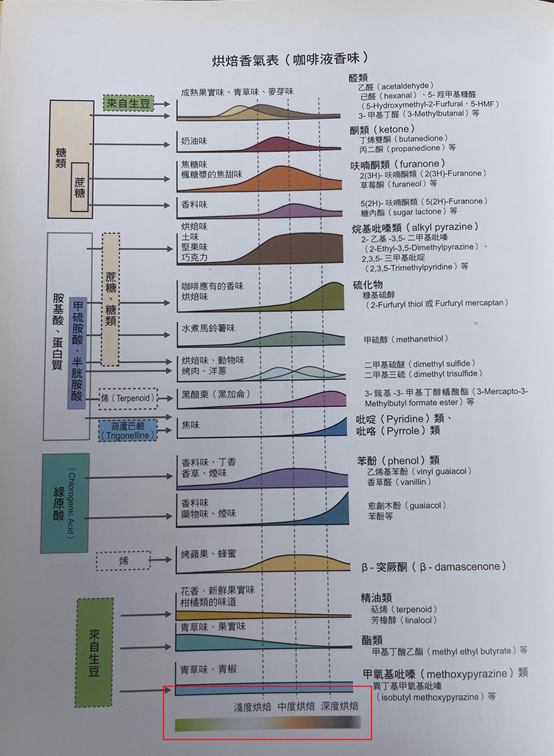
Roasting Styles from Different Perspectives
From a roasting perspective:
As FrontStreet Coffee has noted in its barista assessments, a light roast refers to beans dropped during the middle to late stages of first crack, marked by enzymatic activity and early Maillard reactions. The organic acids have not fully broken down, so acidity is prominent and bitterness minimal, ideal for anyone who loves a bright, acidic cup.
A medium roast typically means beans dropped between the end of first crack and the start of second crack. At this stage caramelization takes hold alongside more Maillard reactions. Acidic aromas are still present but noticeably softer than in a light roast. The balance between acidity and bitterness brings sweetness forward, giving an exceptionally smooth cup with caramel and chocolate as the leading notes. This is the degree at which specialty coffee most often shows its best characteristics, and it is the roast level FrontStreet Coffee uses most often.

A dark roast usually means beans dropped after second crack. Caramelization approaches completion and Maillard reactions dominate, generating resinous, spicy, and carbonized aromas.
How We Determine Different Roasting Degrees
So how do we settle on a particular roast degree?
The first basis is history. In the past, consumers had few expectations about coffee flavor and cared more about its functional role. Over that long period, roast levels stayed remarkably consistent: dark. The styles that major producing regions developed over the centuries therefore emphasized richness and body, as with Mandheling, Brazilian, Colombian, or Blue Mountain. Blue Mountain, notably, delivers richness without a harsh scorched bitterness, which may well have helped it earn its reputation as the king of coffee in earlier eras. That influence still runs deep today: the habit some consumers have of asking for sugar and milk with their coffee traces back to this tradition.

So when we choose a roast profile, we try to return beans from these classic origins to their historical era and preserve those classic rich flavor profiles.
Take Mandheling. Its unique heavy profile gives a satisfying, unrestrained impression in the cup, long enjoyed by many men and now increasingly popular among women as well. Indonesia is the world's largest archipelagic nation, known as the country of a thousand islands. Its high altitudes, volcanic ash soils, and climate give Arabica trees excellent growing conditions. Sumatra has long been known as the spice island, where coffee trees in the mountains grow alongside wildlife, cloves, cardamom, and pepper. Combined with the distinctive three-stage drying method known as wet hulling, this produces Mandheling's signature flavor: unusual herbal notes, a woody incense aroma, moderate acidity, a mellow yet bittersweet complexity that mirrors life itself, and a long finish.

Mandheling beans are relatively large and dense. To bring out their famous richness, low acidity, and local herbal character, FrontStreet Coffee uses a dark roast. Roasted light or medium, Mandheling would likely lose the richness people love, and its acidity would push forward, so it would no longer be the Mandheling everyone knows. Of course, anyone who prefers an acidic Mandheling could try a medium roast, but without Mandheling's characteristic flavor, is it still Mandheling?
The second basis is the bean's physical form and characteristics. Yirgacheffe beans, for instance, are typically chosen for a light roast. This is not because the origin naturally shows good acidity. Quite the opposite: it is the extremely light roast that brings its acidity forward.
With Ethiopian Yirgacheffe, farmers generally do not grade beans by size for marketing, unlike traditional origins such as Brazil, Mandheling, and Colombia. Ethiopian coffee comes in a wide range of sizes, and only defective beans that would introduce off-flavors are removed. This variation in bean size is usually indicated by labeling the coffee as Heirloom varieties.

FrontStreet Coffee often points out that Ethiopian beans vary in size. During roasting, to roast the larger beans properly without scorching the smaller ones, the safer approach is to drop the batch as quickly as possible. Some might ask whether a skilled roaster cannot simply roast evenly. But the inherent woody structure of a coffee bean conducts heat slowly. When the size difference between large and small beans is significant, that low conductivity cannot deliver even heat transfer. You could reduce heat after the drying phase and stretch the roast out slowly, and this slow-boil approach may make the beans look uniform in color, but the aromatic character inevitably turns flat from the extended roast time. That is another kind of trade-off. For the floral and fruity acidity of Ethiopian beans, FrontStreet Coffee, like most roasters, chooses a light roast.

Geisha is another good example. Its floral and fruity character sets it apart from most other varieties, and many reviewers credit a light-to-medium roast for that. Geisha has a characteristic elongated shape that gives it more volume than some varieties, especially when compared with Ethiopian beans, which are already considered light-roasted material. Two or three small Ethiopian beans might barely match the size of a single Geisha bean. Whatever the preference, Geisha needs more time in the roaster. From another roasting principle, roasting as far as possible without creating scorched bitterness yields more aromatic qualities and greater flavor complexity, and that is the pursuit of roasting.
For roasters and drinkers alike, everyone brings a different understanding and perspective to coffee. Sometimes there is no entirely standard answer, only different choices.
- END -
FrontStreet Coffee Recommendation
Three things have to be managed during roasting for the final flavor to land right: acidity, sweetness, and bitterness. The darker the roast, the more bitter and full-bodied the cup; the lighter the roast, the more acidic and delicate. If balance is what you are after, medium-roasted beans are the place to start. FrontStreet Brazil Queen's Estate is a good example: grown in Brazil, the world's largest coffee-producing country, it is a distinctive Yellow Bourbon that drinks clean and sweet, and at a medium roast it shows cream peanut, chocolate, toasted bread, and sugarcane notes. It works just as well in a pour-over as it does in a moka pot or an espresso machine.
If you want a sweeter medium roast, FrontStreet Strawberry Candy is a natural pick, known for its fruit-forward character. What makes it unusual is that it combines two well-known growing regions in Central and South America: a honey-processed coffee from Costa Rica and a washed Gesha from Panama. To draw out the best of both, FrontStreet roasts it to a medium level, so it delivers both orange-blossom honey notes and a round sweetness, and it suits cold brew, pour-over, and espresso alike. FrontStreet Jamaica Blue Mountain No.1 is another medium roast worth trying: grown in Jamaica from the Typica variety, it blends acidity, bitterness, sweetness, and body into one elegant, inviting cup, with chocolate, roasted nuts, cream, and caramel arriving right at the first sip.
Important Notice :
FrontStreet Coffee is a long-established specialty coffee roaster in Guangzhou China, selling freshly roasted beans from its own farm in Yunnan as well as dozens of carefully selected single-origin beans from around the world for both pour-over and espresso. The products deliver consistently excellent quality and great value, with shipping within 24 hours. Guangzhou's FrontStreet Coffee shop is recommended by many coffee lovers, and the beans are now available online at the Tmall 。
FrontStreet Coffee has moved to a new address:
FrontStreet Coffee Address: 315,Donghua East Road,GuangZhou
Tel:020 38364473
 Scan and follow the En Gafei WeChat official account. Please indicate that the reprint comes from "En Gafei".