What's the Difference Between G1 and G2 Grade Yirgacheffe? Ethiopian Coffee Bean Grading System

Coffee bean grading systems are usually shaped by the realities of each producing country. Some origins sort by bean size, as Kenya does; some by altitude, like Blue Mountain; and others by defect rate, which is the path Ethiopia takes.
As the genetic reservoir of Arabica, Ethiopia holds countless coffee varieties that are hard to tell apart. To keep these unidentified varieties from being over-hunted by coffee professionals worldwide, the government decided to group them all under the single label "Heirloom." Raw beans sold as heirloom varieties look small, vary in shape and size, and tend to have a relatively round appearance.
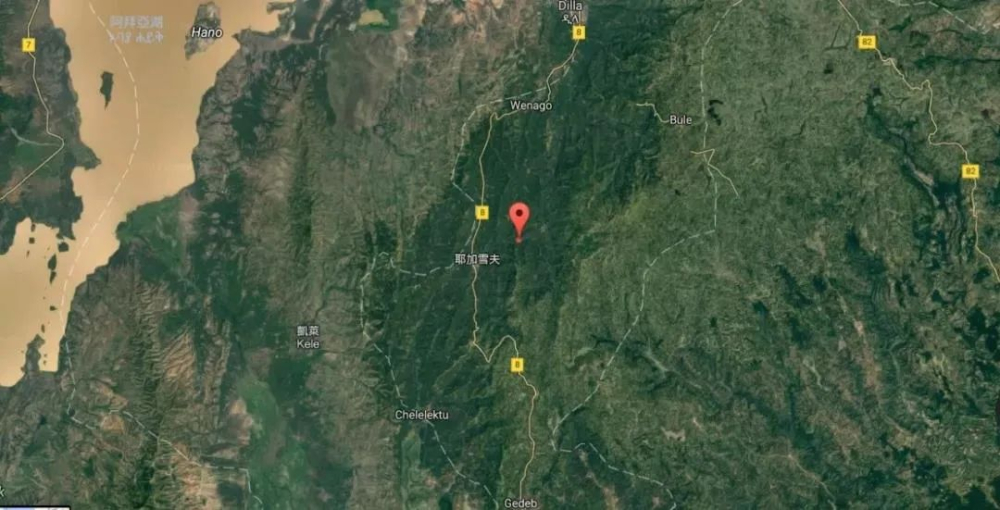
In Ethiopia, coffee trees mostly grow in a wild or semi-wild state. During harvest season, you can see coffee cherries ripening in succession across fields, backyards, and forests. It is common to find dozens of different varieties mixed together inside a single coffee forest. Farmers do not deliberately separate these varieties; they harvest them as a "mixed" lot and send the cherries to nearby processing plants for unified processing. This "non-rigorous" approach to production and harvesting is exactly why Ethiopian beans so often look uneven in size and varied in shape.
Given that reality, grading Ethiopian coffee by raw bean size at export, the way Kenya does, is impractical. So the Ethiopian government chose to classify the beans by defect rate instead.
Ethiopia's Old Grading System (Based Simply on Bean Defect Rate)
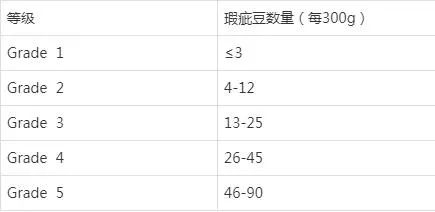
Ethiopia's earlier grading system rested purely on the number of defects in the beans. Before 2009, prior to the founding of the Ethiopia Commodity Exchange (ECX), export grades were set by the CLU (Cupping and Liquoring Unit) under the Ministry of Agriculture, which divided beans into five grades. Only washed processing could reach G1 and G2, and only G1 and G2 counted as specialty coffee. Before 2009, every washed bean Ethiopia exported was G2; G1 washed beans were extremely rare and generally hard to find.
Traditional natural processing was too crude. Each farmer could process coffee in a small courtyard of their own, drying it directly on roofs or on the ground. Such rough methods easily introduced unpleasant flavors and even mixed in stones and branches, producing inconsistent quality. In the 1970s, Ethiopia introduced the washed processing method from Central and South America. Compared with natural processing, washing added a "floating selection" step that removes immature beans and impurities floating on the water's surface, yielding more stable quality. At the time, washing was regarded as the more advanced method. Only washed beans could reach G1 or G2, while naturally processed beans usually fell below G3.
Grade 1, or G1, means washed beans containing 0-3 defective beans per 300g;
Grade 2, or G2, means washed beans containing 4-12 defective beans per 300g.
ECX's New Grading Method (Defect Rate Combined with Cupping Scores)
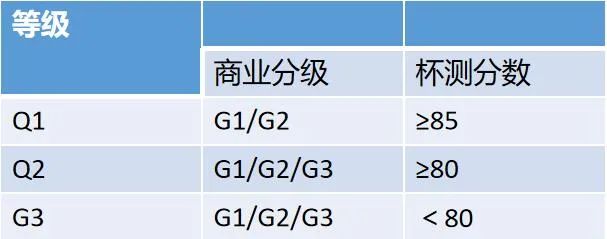
In October 2009, with the endorsement and witness of the Specialty Coffee Association of America and the Specialty Coffee Association of Europe, Ethiopia officially launched the new grading system of the Ethiopia Commodity Exchange (ECX). Building on the original defect-rate grading, cupping scores now had to be combined for a comprehensive rating. Naturally processed beans were no longer confined to G3, G4, and G5. As long as natural beans were evaluated by ECX cuppers, high-quality naturals could also earn Grade 1 and Grade 2, breaking the half-century "convention" that natural beans had no first or second grades. Today, natural Ethiopian lots labeled G1 and G2 are common, while G3 has gradually become less frequent.
ECX defines all coffees, by processing method, into natural and washed, and then into three types:
1. Specialty coffee: few defective beans, high cupping flavor quality;
2. Commercial coffee: not reaching specialty grade but above domestic coffee consumption grade;
3. Domestic coffee: many defective beans (unripe), off-season, and poorly stored, resulting in relatively poor flavor.
Overall Summary:
1. All coffees are first classified by processing method: natural, washed;
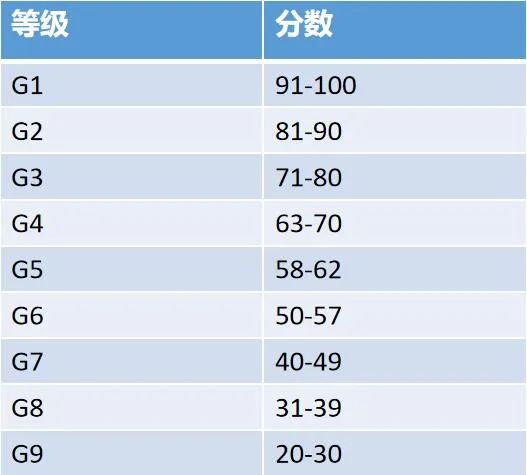
2. Each is rated into 9 grades, G1-G9, according to physical characteristics and basic cupping quality scores;
3. G1-G3 among them are cupped again following SCAA standards to assess their flavor attributes more carefully. G1 and G2 scoring not less than 85 points are rated Q1 grade;
4. G1, G2, G3 scoring between 80 and 85 are rated Q2 grade, while all G1, G2, G3 scoring below 80 are rated G3 grade;
5. Q1 and Q2 are classified as Specialty Grade for export. G4-G9 keep their original grading unchanged and are classified as Commercial Grade for export along with G3.
What's the difference between G1 and G2 grade washed Yirgacheffe?

Here, FrontStreet Coffee uses Yirgacheffe as an example, observing and comparing Kochere beans (G1) with washed Yirgacheffe everyday beans (G2) to see how wide the gap between the two grades really is.
Looking at the unroasted raw beans, G1 beans are generally more uniform in size, more consistent in color, and obviously lower in defects; G2 raw beans are somewhat uneven in size with more defective particles. Judged by raw-bean defect rate, G1 is clearly better than G2, because fewer defects mean better bean quality, and the price naturally runs higher. Think of buying apples: between uniformly sized ones and uneven ones, even if they taste the same, we still judge the uniform ones as prettier, tastier, and of course more expensive.

FrontStreet Coffee notes that Yirgacheffe is usually light roasted, and light-roasted beans are relatively hard, requiring hotter water to brew. FrontStreet Coffee uses a V60 with 91°C water, a grind size of 80% pass-through on a #20 sieve, and a 1:15 ratio.
G1 washed Kochere flavor: jasmine, bright lemon acidity, clean entry, smooth black tea feel, low bitterness, long aftertaste.
G2 washed Yirgacheffe flavor: white floral notes, lemon, citrus, tea-like sensation.

Since both lots belong to washed Yirgacheffe and have gone through selection at both the raw and roasted stages, their flavor profiles are not too far apart, both presenting bright acidity and floral notes. But after direct comparison, the mouthfeel of G1 is clearly cleaner than G2, and the aroma is more refined and richer.
- END -
FrontStreet Coffee Recommendation
If the G1-versus-G2 distinction has you curious, the most direct way to taste the difference is to try FrontStreet Coffee's washed Yirgacheffe beside a higher-grade lot. FrontStreet's washed Yirgacheffe daily-drinker is the classic introduction to the region: expect white jasmine, bright citrus and lemon acidity, and a clean tea-like body, which is why it became the first specialty bean so many drinkers fell in love with. Yirgacheffe sits at roughly 1700-2100 meters, and the trees here are planted above 1800 meters, part of the reason the cup feels so clean and aromatic.
For a step up in grade, FrontStreet Gedeb Cooperative comes from the Worka area at the southeastern edge of Yirgacheffe and follows a traditional washed process, the same style that earned Ethiopia's highest grades, with no harsh bitter notes and a crisp citrus and lemon acidity wrapped in jasmine fragrance. To brew either lot, FrontStreet suggests a V60 with 90-91°C water, 15 grams of coffee, a 1:15 ratio, and a grind size around fine sugar, about 80% pass-through on a #20 sieve. Pour 30 grams for a 30-second bloom, add water to about 125 grams by around one minute, then finish at roughly 225 grams when the bed drops to two-thirds, completing the drawdown in 2:00-2:10. Grinding fresh just before brewing keeps the floral aromatics intact.
Important Notice :
FrontStreet Coffee is a long-established specialty coffee roaster in Guangzhou China, selling freshly roasted beans from its own farm in Yunnan as well as dozens of carefully selected single-origin beans from around the world for both pour-over and espresso. The products deliver consistently excellent quality and great value, with shipping within 24 hours. Guangzhou's FrontStreet Coffee shop is recommended by many coffee lovers, and the beans are now available online at the Tmall 。
FrontStreet Coffee has moved to a new address:
FrontStreet Coffee Address: 315,Donghua East Road,GuangZhou
Tel:020 38364473
 Scan and follow the En Gafei WeChat official account. Please indicate that the reprint comes from "En Gafei".