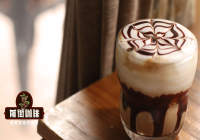
How to Enhance Sweetness Extraction in Iced Pour-Over Coffee?
How to Enhance Sweetness Extraction in Iced Pour-Over Coffee?
The Art of Iced Pour-Over: Chasing Richness and Sweetness

Compared with hot pour-over, iced pour-over brews a more concentrated coffee by cutting the coffee-to-water ratio, then cools and dilutes it with ice. To make up for the extraction lost with less water, the grind should be slightly finer than for a hot brew.
Even with those adjustments, iced pour-over skips the tail end of a hot brew's extraction — in other words, it runs "under-extracted." That's why the same bean brewed hot usually wins on body, sweetness, complexity, and aftertaste.

The Challenge: Rich, Sweet Iced Coffee
Some readers asked FrontStreet Coffee: is there a way to make iced coffee that's properly concentrated, genuinely sweet, and still avoids over-extraction? The requirements are demanding, but it's a question worth exploring.
We've noted many times that sour, sweet, and bitter compounds release at different moments, with sweet substances dominating the middle and late stages. With less water and a shorter brew, the sweets may never fully dissolve before extraction ends. Capturing sweetness means extracting more of them — finding ways to give them more time to dissolve, and so raising their share in the cup.
Coffee Selection: Costa Rica Strawberry Candy
For the demonstration, FrontStreet Coffee chose Costa Rica Strawberry Candy. It carries strawberry candy, ripe tropical fruit, and raisin flavors, with a highly distinctive sweetness that makes it a perfect summer iced pour-over bean.

Experimenting with Grind Size
The first attempt was to stretch the extraction time with a finer grind — EK43 at setting 8.5, versus the usual 9.5 for daily service. Finer grounds slow the water down, lengthening the brew. But the particles were too fine and over-extracted: after ice dilution, aroma and sweetness hadn't improved, and a slight bitter aftertaste crept in. Too fine a grind, then, is a dead end.

A Multi-Stage Pour
The next approach: more pours. Beyond the bloom, more segments at the same ratio mean more agitation, a longer total extraction, and more compounds released at each stage. The trade-off is less water per pour and trickier handling, so FrontStreet Coffee loosened the ratio to 1:12 to give the pours more room. But more water means lower concentration, and straight ice dilution would leave the coffee watery — so we turned to a more indulgent rapid-chill method: pouring the coffee directly over ice.
Experimental Parameters
Parameters: 91°C water, 15g of coffee, 180g total water, EK43 at setting 9, four pours: 30g + 50g + 50g + 50g.
Flow control mattered too. Bloom with 30g of water for 30 seconds. First pour to 80g total, using a small flow in coin-sized circles from the center to break up the bubbling bed;

second pour to 130g total, again with a small flow spiraling outward to rinse all the grounds; final pour with a raised flow at the center up to 180g total. Stop pouring at 1 minute 35 seconds; the drawdown finished at 2 minutes 05 seconds.

Rapid Cooling
Pour the hot coffee over a generous amount of hard ice, repeating until the temperature falls to around 5-10°C — yielding roughly 200g of iced coffee.

Results and Serving
Then serve it in a glass chilled in the refrigerator to hold the cool edge. The resulting Strawberry Candy showed a full, vivid flavor profile: a smooth texture, clear dried-fruit sweetness, a winey fermented aroma laced with florals, and a long-lasting finish.

Conclusion: The Philosophy of Pour-Over
What we tried here is simply one result, built on FrontStreet Coffee's extraction logic and this particular bean's character — it is not an absolute answer. FrontStreet Coffee believes there is no universal brewing formula. The joy of pour-over is trying a new approach each time, gaining fresh perspectives on extraction, and discovering just how varied coffee's flavors can be.
FrontStreet Coffee Recommendation
Beans that shine in iced pour-over, straight from FrontStreet Coffee's shelf:
FrontStreet Coffee Costa Rica Strawberry Sugar Geisha Blend — The star of today's experiment. Panama Geisha provides its classic orange-blossom honeyed note, while raisin-honey-processed Costa Rican coffee adds dried grape and blueberry aromatics, gentle acidity, an almond finish, and obvious sweetness — a natural for ice-diluted brewing.
FrontStreet Coffee Ethiopia Huakui (Hambela) — Strawberry, passion fruit, jackfruit, and lychee in a natural-process cup with low bitterness and juice-like smoothness. Chilled over ice, its tropical character becomes even more pronounced.
FrontStreet Coffee Costa Rica Mozart — A raisin honey process preserving 100% of the pectin, delivering osmanthus, pineapple, and raisin aromatics with rich dried-fruit sweetness — equally rewarding in pour-over, cold brew, or moka pot.
- END -
Important Notice :
FrontStreet Coffee is a long-established specialty coffee roaster in Guangzhou China, selling freshly roasted beans from its own farm in Yunnan as well as dozens of carefully selected single-origin beans from around the world for both pour-over and espresso. The products deliver consistently excellent quality and great value, with shipping within 24 hours. Guangzhou's FrontStreet Coffee shop is recommended by many coffee lovers, and the beans are now available online at the Tmall 。
FrontStreet Coffee has moved to a new address:
FrontStreet Coffee Address: 315,Donghua East Road,GuangZhou
Tel:020 38364473
 Scan and follow the En Gafei WeChat official account. Please indicate that the reprint comes from "En Gafei".