Moka Pot Espresso Making Process: Step-by-Step Guide and Tips for Brewing Coffee with a Moka Pot
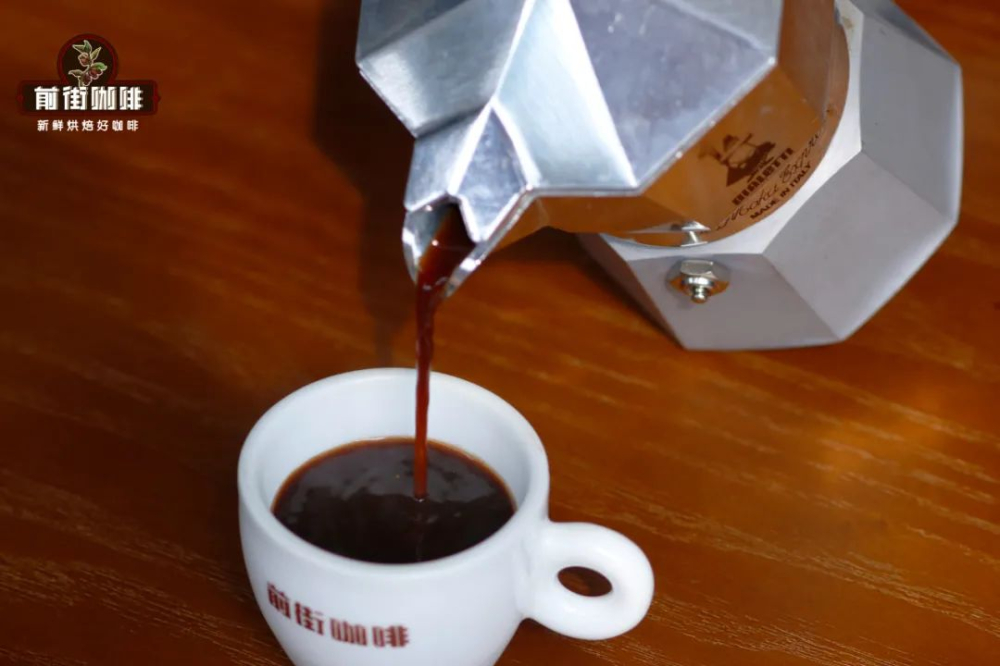
Many people have a handy Moka pot at home and hope to brew a rich cup of coffee in their spare time, only to run into various problems in the process and come to ask FrontStreet Coffee. So here FrontStreet Coffee talks about the origin of the Moka pot and the extraction process.
The Origin of the Moka Pot
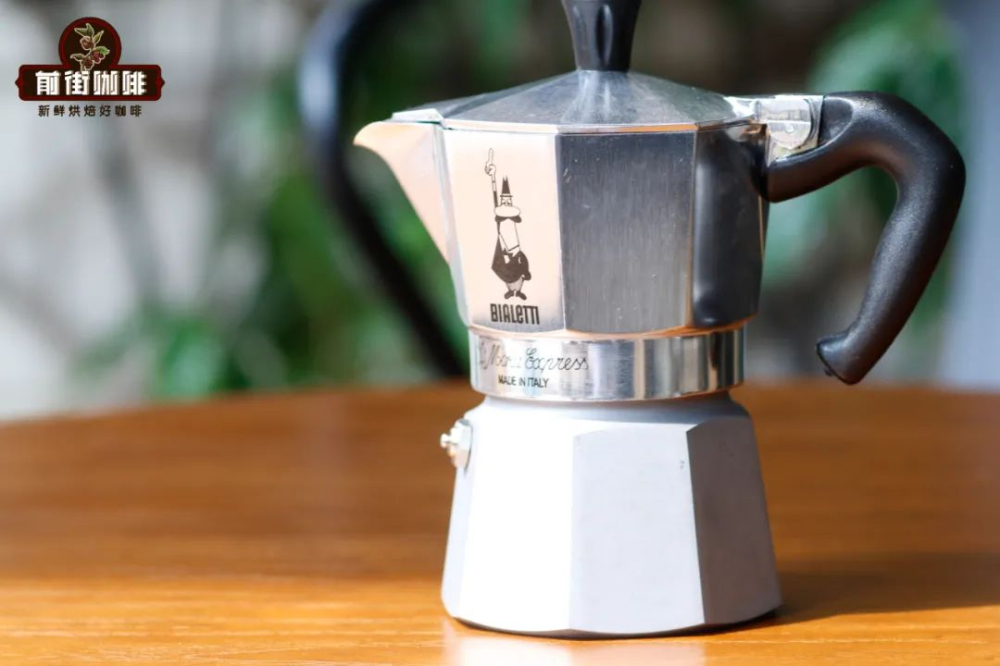
Italians invented the world's first pressure-type espresso machine and kept improving and promoting it, and espresso quickly became popular on Italian streets. Because espresso machines at the time were bulky and complicated to operate, enjoying a fragrant cup meant going to a café. In 1933, Alfonso Bialetti, who worked in the metal industry, invented a small machine that could make espresso, and the Moka pot was born, named Moka Express.
At trade shows, Bialetti promoted it with the slogan, "Drink an espresso at home, just like in a café." From then on espresso was no longer a "luxury" reserved for cafés. The compact Bialetti Moka pot, affordable and easy to use, became the daily brewing tool in countless Italian households, and was soon carried around the world by Italians living abroad.
Moka Pot Extraction Principle
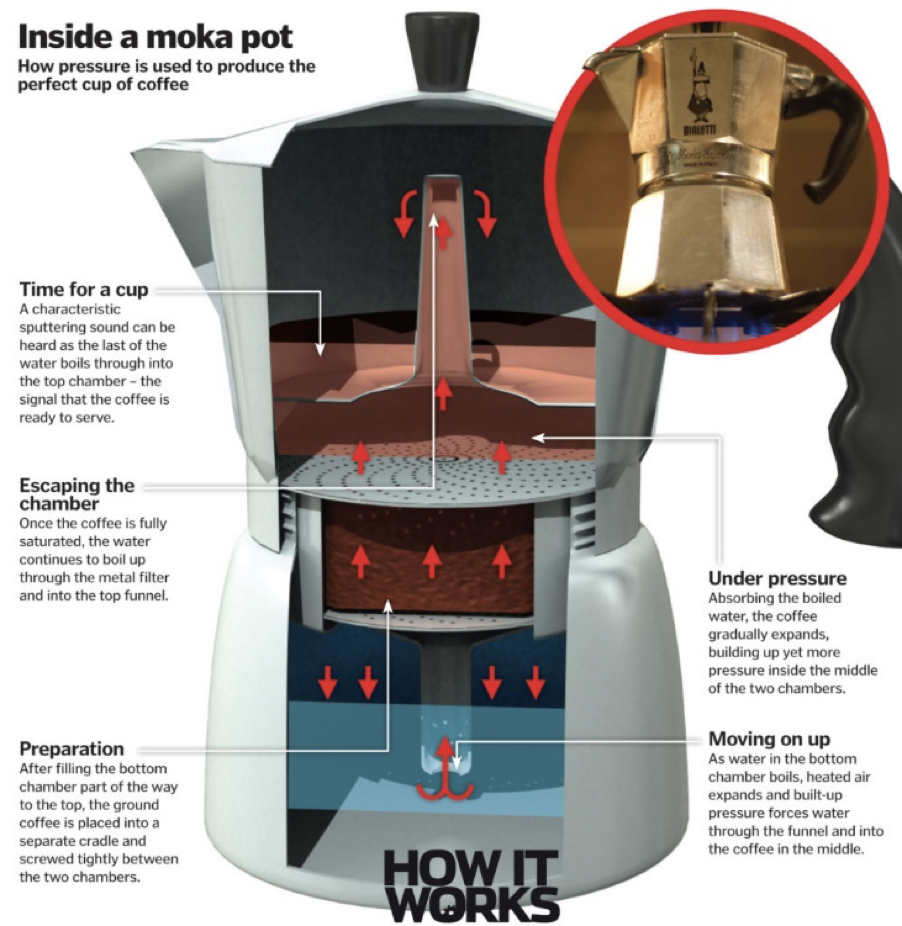
The simple Moka pot consists mainly of three parts: the lower chamber for water, the coffee filter basket for grounds, and the upper chamber for the extracted strong coffee. When we heat the pot, the water in the lower chamber heats first and turns to steam, creating pressure that pushes upward from the bottom. As the hot water meets the coffee grounds, the steadily increasing pressure pushes the extracted coffee liquid into the upper chamber, giving us the rich cup we are after.
The Difference Between Moka Pot Coffee and Espresso
It is worth noting here that although the coffee from a Moka pot tastes relatively strong, it still differs from the espresso we commonly see. Espresso today is extracted with more than 9 atmospheres of pressure, producing a rich, thick, high-quality, delicate and complex liquid. A Moka pot, however, reaches a maximum of only 2 atmospheres, far below the pressure of a commercial espresso machine. The resulting coffee is relatively thin, and its flavour and texture are not as rich and mellow as espresso. But if you want a rich, mellow cup quickly at home, FrontStreet Coffee thinks the Moka pot is an excellent choice.
Using a Moka Pot to Extract Coffee
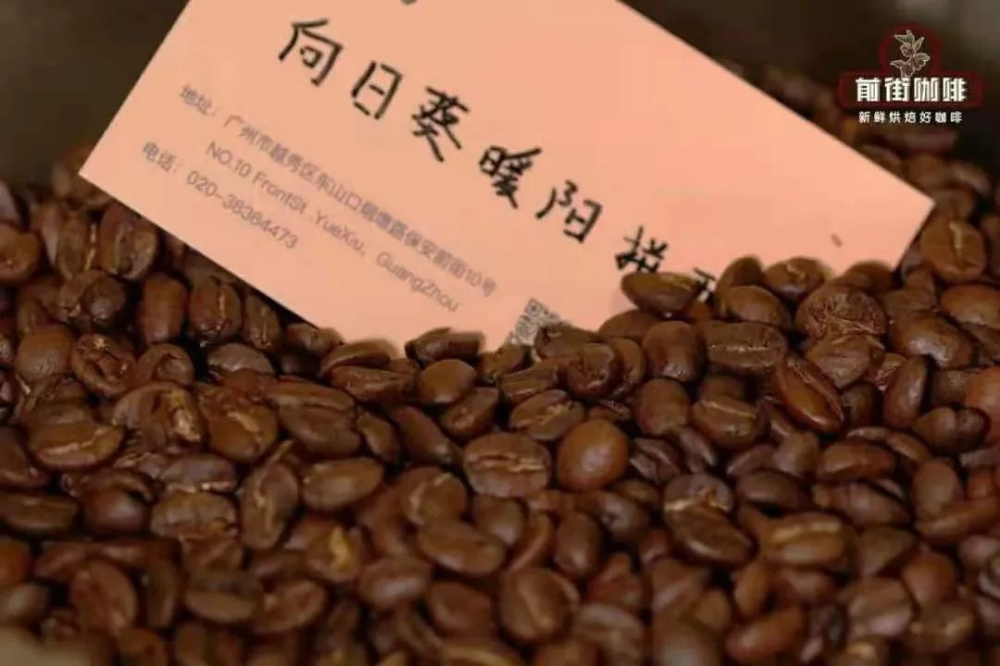
Operating a Moka pot is not complicated. You only need coffee beans, a grinder, and a gas stove (or induction cooker) for heating. For beans, FrontStreet Coffee chooses FrontStreet Coffee's Sunflower Warm Sunshine Blend Coffee Beans, blended in a 7:3 ratio from FrontStreet Coffee's Honduras Sherry and FrontStreet Coffee's Natural Yirgacheffe Red Cherry.
First, remove the base of the Moka pot and add water to the lower chamber (hot water shortens the brewing time and keeps the grounds from heating too quickly, which easily brings out scorched bitterness). Keep the water level below the pressure relief valve line — FrontStreet Coffee adds 130ml here.
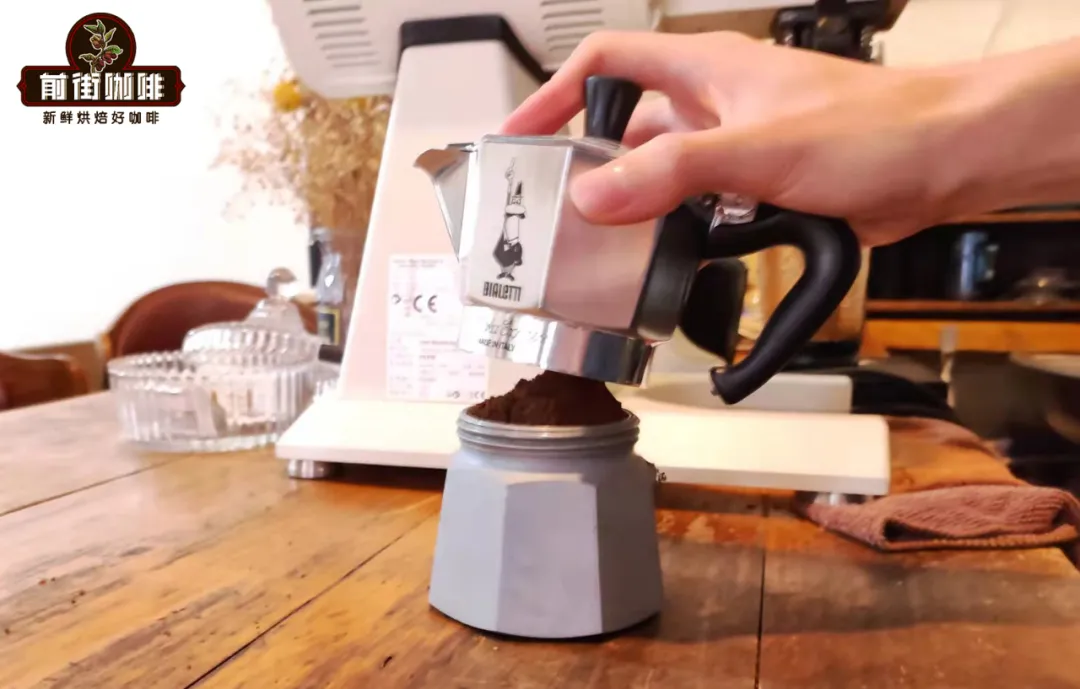
Pour coffee grounds ground to EK-43s #3-3.5 fineness into the filter basket, fill to nine-tenths full, level with your finger, and place it in the base. There is no need to press firmly — an over-compacted coffee layer easily blocks the water flowing up and affects extraction.
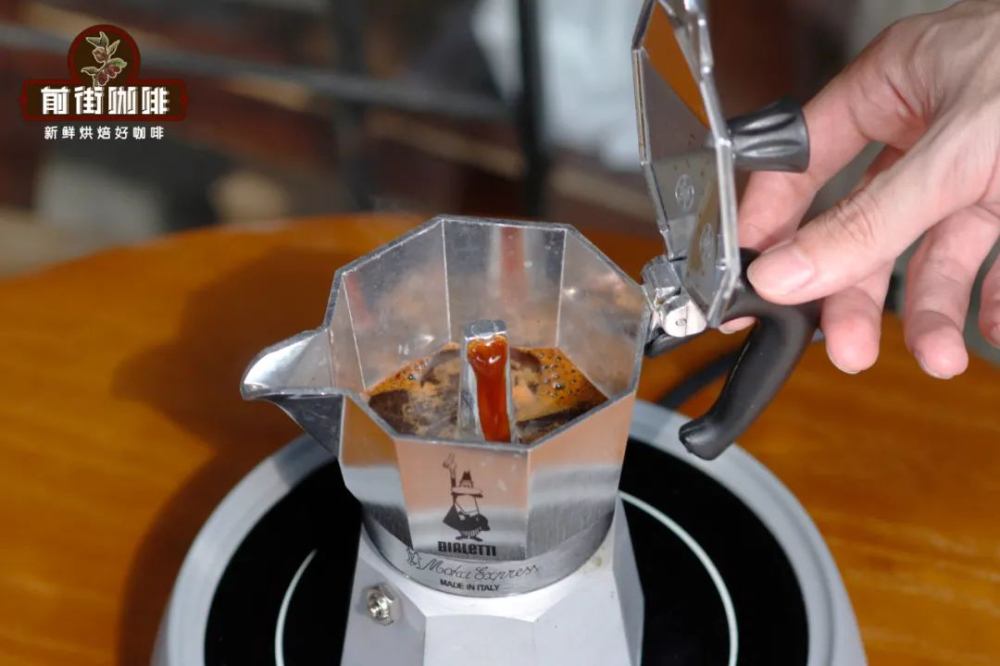
Next, screw the upper and lower chambers together tightly and place the pot on a gas stove or induction cooker. With an open flame, try to keep the flame within the base of the pot. Wait for the pot to heat up. When you hear a hissing sound, turn to low heat, and the coffee and crema will slowly flow out. Once the upper chamber is half full, you can turn off the heat and move the pot to the table, letting the residual temperature and pressure extract the remaining coffee. Note that the Moka pot uses metal components, so at high temperatures try not to touch the body and risk a burn.

Finally, pour the extracted coffee into a cup and drink it straight. On entry there is a rich whiskey aroma, vanilla, cream, and berry sweetness and acidity, with roasted nut fragrance. Mixed with a certain proportion of hot water, it shows fresh fruit sweetness and acidity, and paired with milk it takes on chocolate sweetness.
Because pressure extraction and drip coffee differ so much, the beans used should vary with the method. With the same light-roasted single-origin beans, pour-over presents floral and fruit sweetness and fragrance, while pressure extraction may be less aromatic and can turn out with a sharp, strong acidity. FrontStreet Coffee therefore suggests medium to dark roasted beans for Moka pot extraction, which keeps the flavour more stable.
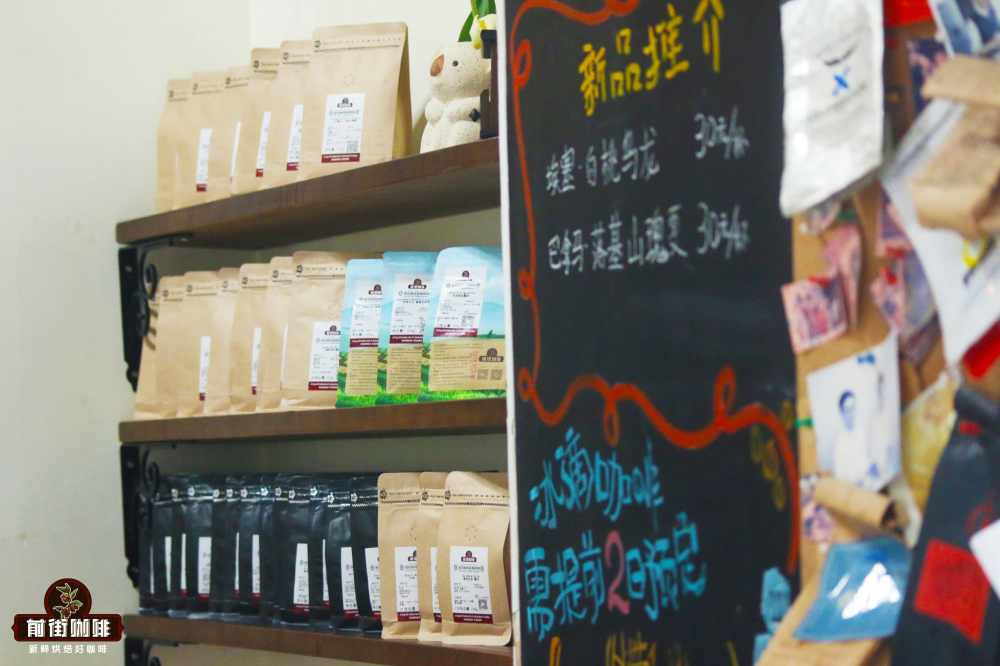
Whichever extraction method you use, freshly roasted beans matter. Coffee beans need a 4-7 day degassing period after roasting, then enter the optimal tasting window with a stable flavour. As time goes on, the aroma gradually fades; beans roasted more than two months ago may have lost it, making the original flavours hard to reproduce. FrontStreet Coffee wants every customer to drink coffee at its best, so we ship beans freshly roasted within 5 days.
FrontStreet Coffee Recommendation
For the Moka pot, a blended bean usually behaves best. FrontStreet Coffee's Classic Blend is designed for espresso and Moka pot work, and its strongest point is crema: even a beginner on a modest home machine can pull a thick, fine layer, and it tastes mellow and rounded thanks to the traditional Mamba recipe. If you want something more affordable, FrontStreet Coffee's Black Cocoa Blend is 100% Arabica with a rich body and plenty of crema, tasting of nut, brown sugar, chocolate and citrus. For a warmer, sweeter profile, FrontStreet Coffee's Autumn Chestnut Blend brings roasted chestnut, caramel and dark chocolate over a smooth, rounded body.
Important Notice :
FrontStreet Coffee is a long-established specialty coffee roaster in Guangzhou China, selling freshly roasted beans from its own farm in Yunnan as well as dozens of carefully selected single-origin beans from around the world for both pour-over and espresso. The products deliver consistently excellent quality and great value, with shipping within 24 hours. Guangzhou's FrontStreet Coffee shop is recommended by many coffee lovers, and the beans are now available online at the Tmall 。
FrontStreet Coffee has moved to a new address:
FrontStreet Coffee Address: 315,Donghua East Road,GuangZhou
Tel:020 38364473
 Scan and follow the En Gafei WeChat official account. Please indicate that the reprint comes from "En Gafei".