Grade Classification Standards and Characteristics of Jamaica's Premium Blue Mountain Coffee - Types of Blue Mountain Coffee Beans
FrontStreet Coffee knows that Blue Mountain is a name almost everyone recognizes. There is no question that Blue Mountain beans are among the world's most famous and most expensive, which is exactly why so many drinkers are eager to taste them. What often gets lost, though, is that "Blue Mountain Coffee" is only one classification within Jamaican coffee, and what most people mean when they say it is Blue Mountain No. 1.
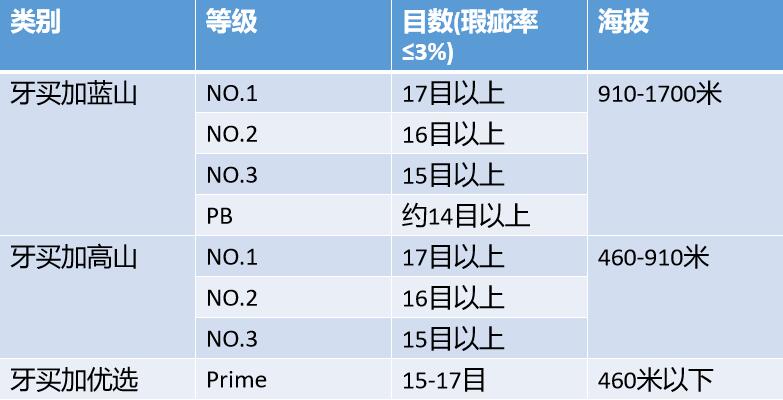
Jamaican coffee production is managed centrally by the Jamaica Coffee Industry Board (CIB), which sorts coffee into three grades by growing altitude. Blue Mountain Coffee must be grown above 1,000 meters; Jamaica High Mountain Coffee is grown between 500 and 1,000 meters; and Jamaica Prime Coffee generally comes from land below 500 meters.
The Blue Mountain grade itself is divided into four: No. 1, No. 2, No. 3, and Peaberry. This makes Jamaica Blue Mountain No. 1 the highest grade of Jamaican coffee, with green beans sized at a 17/18 screen and a defect rate no higher than 2%. Genuine Blue Mountain No. 1 is therefore scarce in supply and expensive.
Jamaican Blue Mountain Coffee Regulations and Standards
Jamaican law states that only coffee produced in the Blue Mountain region may be called Blue Mountain Coffee. High-grade Blue Mountain is split into No. 1 (above a 17-18 screen), No. 2 (16 screen), and No. 3 (15 screen), where a 17 screen corresponds to a size of 17/64 inch. All three share the same flavor profile, which must be confirmed by cupping carried out by specially approved personnel of the Jamaican government; they differ only in size.
The green beans of these three grades must be packed in wooden barrels for export, in three specifications: 70 kg per barrel, 30 kg per barrel, and 15 kg per barrel. Each barrel is printed with the name of the producing farm, the English abbreviation of the importer, the batch number of the shipment, and the name of the arrival port. The Blue Mountain barrels imported by the Japanese company ATAKA Trading Co., Ltd., for example, carry the abbreviation ATC in their diamond-shaped logo, while those imported by the Japanese UCC Coffee Company carry UCC. Reading a barrel therefore tells you which Jamaican farm the coffee came from, who imported it, and which port it reached.
Jamaican exporters also issue a green-colored certificate of origin to the importer. This government-recognized certificate is issued only to importers who buy in whole-barrel units (70 kg, 30 kg, or 15 kg), and it records the exporting estate, the importer, that year's goods, the quantity, the grade number, the batch number, the arrival port, and more. Note that among green beans produced outside Jamaica's Blue Mountain region, only High Mountain beans are packed in wooden barrels.
Quality Classification and Export Standards
Below the top grades sit damaged beans and beans of uneven size that look poor on the surface but cup acceptably as green coffee. The Jamaican government requires these to be packed in gunny sacks for export. Worse still are coffees with flavor defects. Jamaican regulations are strict here: such coffee may not be exported as green beans at all. It can only leave the country after being roasted locally in Jamaica, and it must be dark roasted, because only dark roasting masks or eliminates flavor defects.
The problem is that the advantages of Blue Mountain Coffee show themselves best under a light roast. So when you see small-packaged, dark-roasted Blue Mountain sold in domestic stores as a direct import from Jamaica, you are looking at the lowest grade of Blue Mountain, though it is at least genuinely Blue Mountain.
FrontStreet Coffee Recommendation
Grades alone do not tell the whole story of why Blue Mountain commands the prices it does. The Blue Mountains rise in eastern Jamaica to a peak of 2,256 meters, one of the highest ranges in the Caribbean, and the whole Blue Mountain area produces fewer than 2,500 tons a year, a tiny fraction of global coffee output. Japan historically bought more than 70% of that production, which left even less for the rest of the world. Formal exports of Jamaican Blue Mountain green beans to the Chinese market began in 2003, and certified beans are available through proper channels today. What draws drinkers is balance above all: Blue Mountain has almost no weak point, with neither the sharp fruit acidity of some African coffees nor the heavy bitterness of a dark roast, instead landing squarely between sour, sweet, bitter, and aromatic. A good cup shows cream, caramel, chocolate, nuts, honey, and a light fruit thread, soft and rounded on entry, sweet through the middle, and clean and long in the finish.
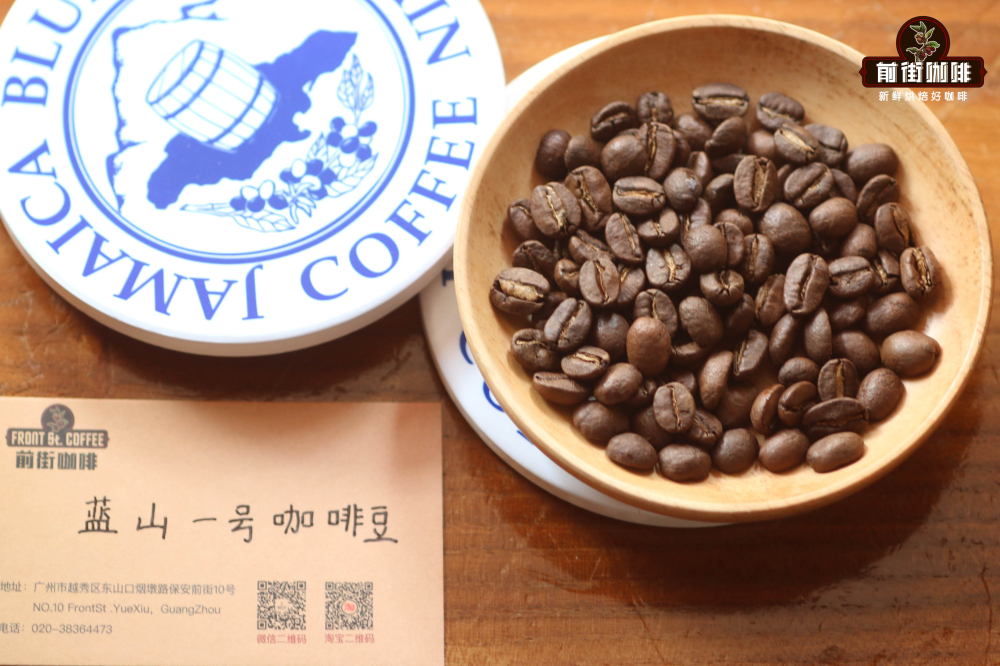
For that classic profile, FrontStreet Coffee's Jamaica Blue Mountain No. 1 is drawn from the highest-graded lots of the historic Clifton Estate, where coffee has been grown and processed since the mid-eighteenth century, around 1750. The farm's planting and processing area sits at an average of 4,300 feet (1,310.64 meters), giving the trees ample altitude, gentle afternoon cloud cover, generous sunlight, and mineral-rich soil that lengthens the ripening of the cherry. FrontStreet Coffee roasts these beans to a medium-dark level to emphasize the coffee's full body and its traditional bitter-then-sweet character, and ships within 5 days of roasting so the cup is still at full flavor when it arrives.
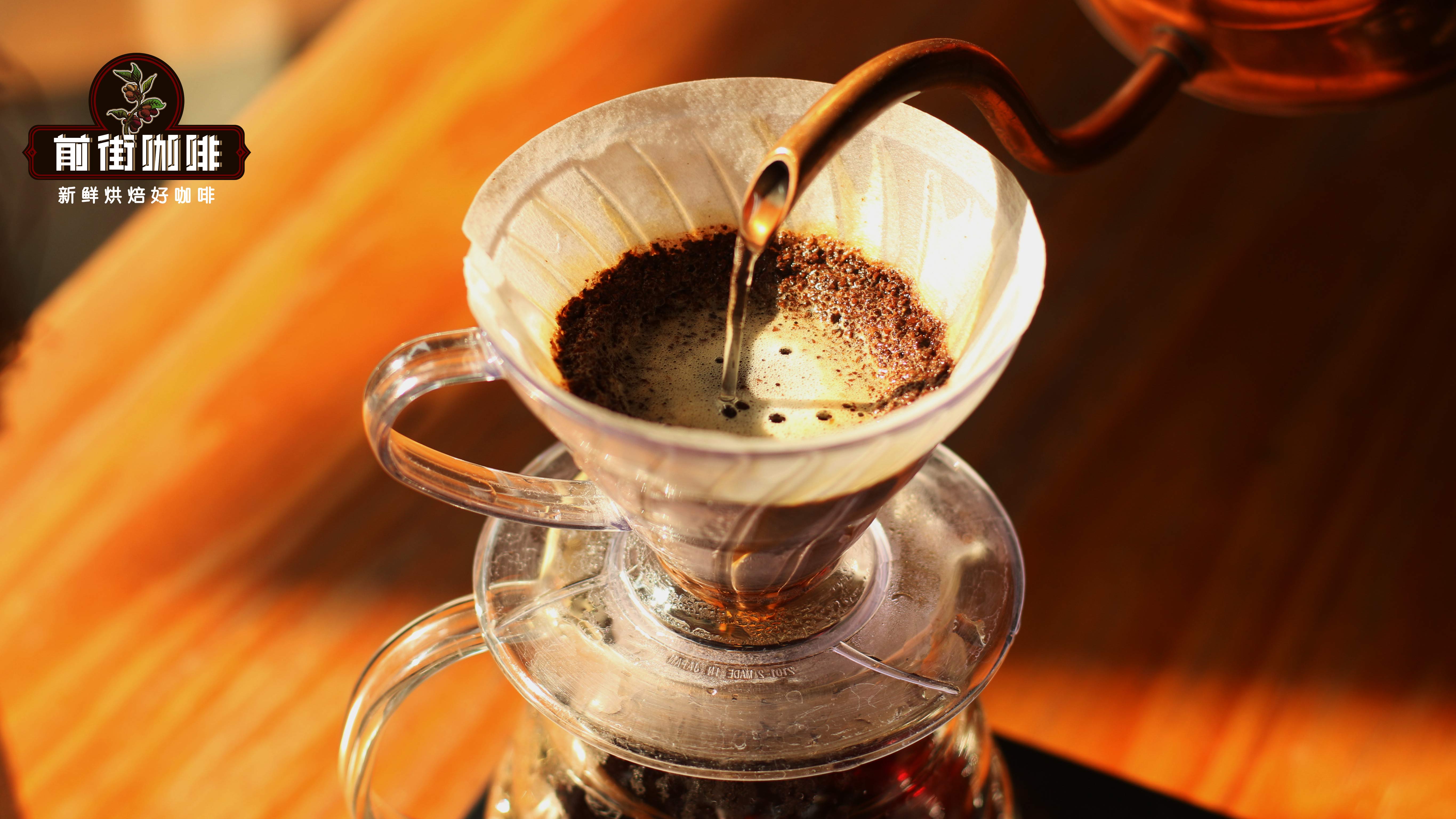
For brewing, FrontStreet Coffee suggests a Kono dripper, which better builds the thick, rounded body the coffee is known for. Use 15g for a single serving and let the beans rest 4 to 7 days from the roast date, counting the roast date as day one, for the best flavor. Grind coarser than you would for a light roast, roughly the texture of granulated sugar. Water temperature should be 87 to 88°C; burnt, bitter notes usually come from water that is too hot, while water that is too cool leaves the coffee flat and lifeless. A 1:15 ratio is FrontStreet Coffee's recommendation, since although narrower ratios such as 1:13 taste more intense, they are often used to hide a bitter or muddy tail and they cost you the finish; with temperature and grind under control, 1:15 shows the coffee's overall balance best. Pour in three stages: 30g of water to bloom for 30 seconds, a second pour to 120g using a small, slow spiral with a vertical stream, then a third pour to 225g with a slightly faster stream and circle to keep the bed from clogging and over-extracting. The result is a very clean, complex, and gentle cup with chocolate sweetness, strong body, a perfectly balanced bittersweet profile, and a long fruit finish.
Important Notice :
FrontStreet Coffee is a long-established specialty coffee roaster in Guangzhou China, selling freshly roasted beans from its own farm in Yunnan as well as dozens of carefully selected single-origin beans from around the world for both pour-over and espresso. The products deliver consistently excellent quality and great value, with shipping within 24 hours. Guangzhou's FrontStreet Coffee shop is recommended by many coffee lovers, and the beans are now available online at the Tmall 。
FrontStreet Coffee has moved to a new address:
FrontStreet Coffee Address: 315,Donghua East Road,GuangZhou
Tel:020 38364473
 Scan and follow the En Gafei WeChat official account. Please indicate that the reprint comes from "En Gafei".