
What are the Benefits of Flannel Filter Coffee? Why Pour-Over Coffee Flannel Filter Methods Have Been Phased Out
The Coffee Oils Controversy
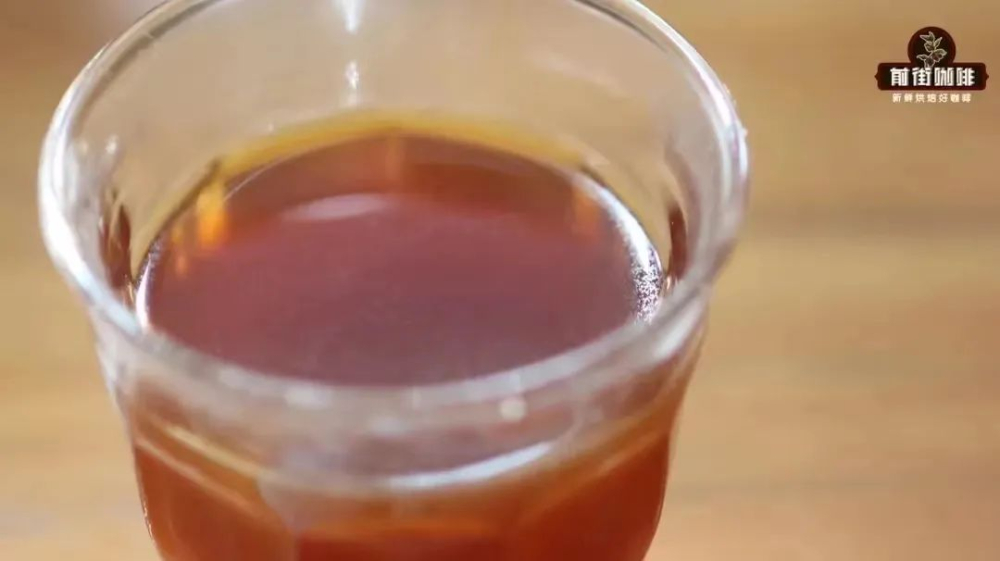
Recently a customer was enjoying a cup of Mandheling coffee and remarked, "This Mandheling is so clean, and it lacks the oil. The mouthfeel is a little thin." He then recalled the Mandheling he had tasted while traveling in Japan, with its reflective layer of oil on the surface and such a rich mouthfeel.
Filter Materials and Coffee Oils
In reality, whether you can extract coffee oils has little to do with technique and is mainly related to the filter material. Pour-over coffee today typically uses paper filters, which have extremely strong filtering ability and can remove all solid particles and most oils. Coffee brewed with paper therefore comes out exceptionally clean.

If you want to retain the coffee oils, you need a material with less filtering power, such as flannel or metal mesh. Metal mesh has larger gaps, so not only oils but some fine grounds pass through, which is why relatively few people prefer it as a filter material.
Flannel, by contrast, has fiber gaps that are just right. Flannel is a fabric with cotton on one side and fleece on the other. Its greatest characteristic as a filter cloth is that it can filter out all the solid coffee grounds while allowing the oils to pass through. Brewing with a flannel filter therefore preserves the coffee's oils effectively, and that layer of oil makes the coffee smoother, fuller and more mellow in the mouth.

The History of Flannel Filtering
Filtering coffee with flannel dates back to 18th century Europe. At the time, boiled coffee was popular, which meant putting grounds into a pot and boiling them with water; after brewing, flannel filter cloth was used to strain out the grounds. Later, with the emergence of pour-over coffee, the method was introduced to Japan.
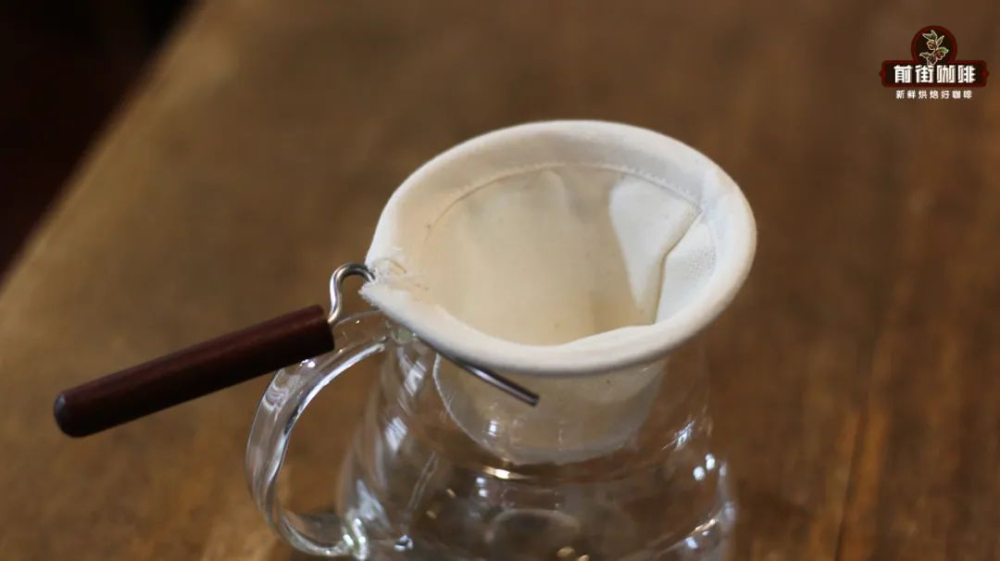
The Japanese discovered that flannel produced cleaner coffee with a richer mouthfeel than the paper filters available at the time. It could also be cleaned and reused, bringing the cost per cup down. For a time, flannel coffee was popular throughout East Asia, and even today many coffee shops in Japan still insist on it. Nowadays flannel has been almost entirely replaced by paper filters, with very few shops brewing with it, which brings us to its limitations.
Flannel's Limits with Light Roasts
Flannel is not very suitable for brewing light roast coffee. Compared with paper, flannel's gaps are much larger, so its flow rate is significantly faster, and the cloth lets coffee liquid pass through from all sides, meaning the higher the water level, the faster the flow.
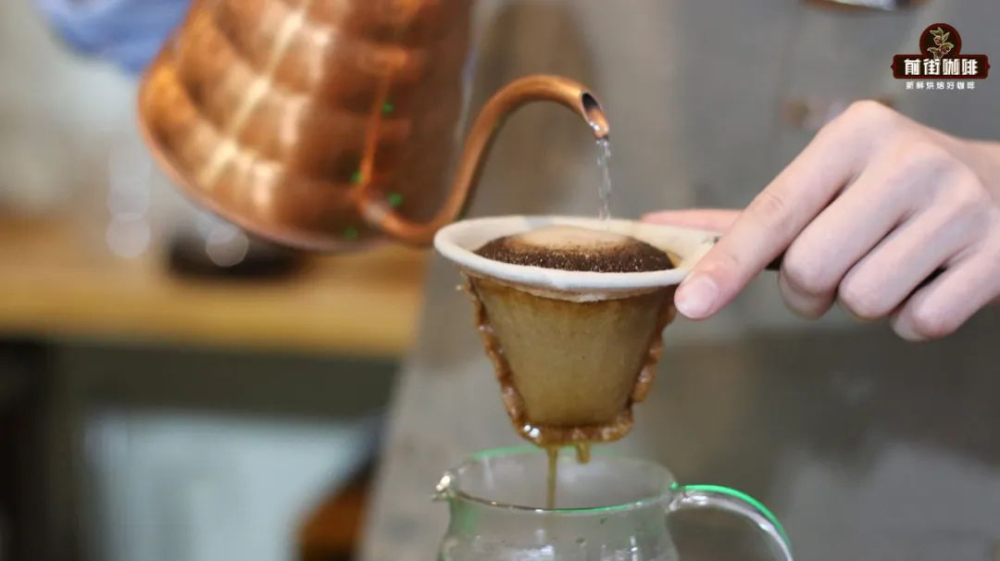
Baristas who brew with flannel therefore usually use a full dose of grounds, first moistening them with drops or a small stream of water, then pouring with a small stream in a centered circle to keep water from running off at the sides.
The biggest difference between paper and flannel is that paper lets water remain longer, creating immersion extraction. Flannel, with its weaker water retention, relies entirely on continuous filtration extraction. When brewing dark roast coffee, a slow, long extraction dissolves more complete flavors from the coffee, resulting in rich sweetness and bitterness.

When brewing light roast coffee with flannel, if you still use a slow, long extraction, the coffee may extract fully, but it will suppress the bright acidity of the light roast, creating heavy, thick flavors like black tea or brown sugar.
Even if you adjust the grind to slow the flow and use the same method as with paper, the final profile will still lean toward tea-like, dull acidity and poor clarity. In the wave of light roast popularity, flannel's advantages are hard to demonstrate, and its weaknesses are exposed instead.

Additional Challenges with Flannel
Different Brewing Techniques
Following the previous point, flannel brewing methods differ significantly from paper and cone methods. To brew well with flannel you generally need to relearn and understand its proper use. Flannel brewing is quite experience-dependent and hard to quantify with data, which for most baristas who learn in a data-driven way undoubtedly lengthens the learning curve.
Storage Difficulties
Although flannel filters are relatively expensive, they can be reused with proper storage. Storing flannel properly, however, is quite challenging. First, flannel cannot be dried, because wetting and then drying damages the fiber structure.
So after use, a flannel cloth needs to be thoroughly cleaned, then placed in clean water, sealed and refrigerated to prevent bacterial growth.
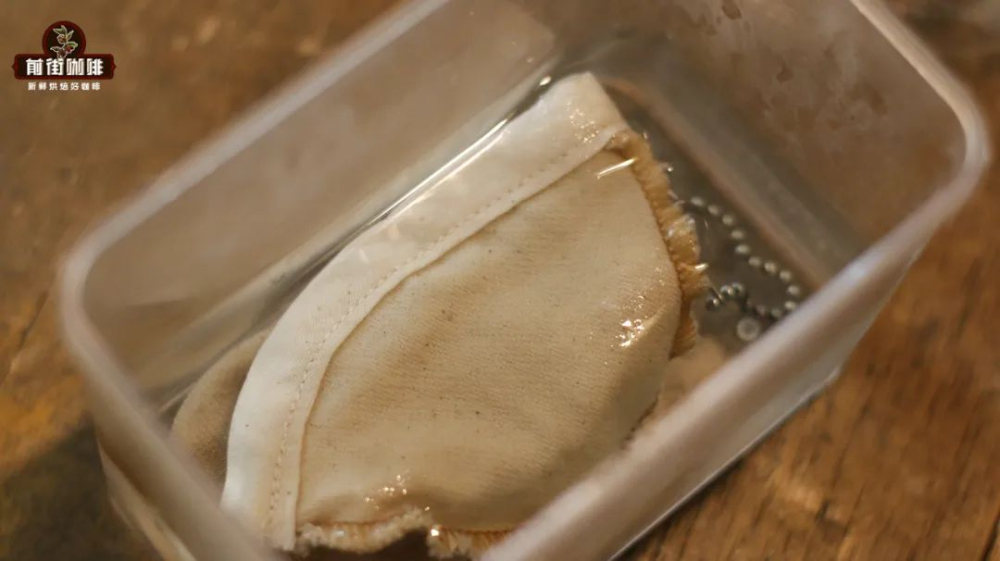
As the number of uses increases, typically starting from the third use, the filter accumulates coffee stains and gradually turns yellow and darker. As a result, hygiene and flavor cross-contamination issues can easily arise in later use.
FrontStreet Coffee Recommendation
The oils that flannel preserves are exactly what a full-bodied coffee like Mandheling is built for. Sumatra is the largest source of both Arabica and Robusta in Indonesia, accounting for more than 60 percent of production, and people habitually call the Arabica grown there Mandheling, mainly from the Aceh special region in the northwest and North Sumatra to its southeast. The traditional Mandheling region sits around Lake Toba in the Lintong area, where diverse plant life, a suitable altitude, the special wet-hulled process and local microbial fermentation produce the classic Mandheling profile: intense aroma, a generous body and a powerful taste.
FrontStreet Lindong Mandheling and FrontStreet PWN Golden Mandheling come respectively from the Lintong region and the Aceh region of Sumatra, both medium-dark roasted to bring out dark chocolate and caramel while keeping Mandheling's wild herbal character. FrontStreet Golden Mandheling comes from Indonesia's PWN company, which applies extremely strict standards: only beans of 18 screen size or larger, with fewer than 3 defective beans per 300 grams of green sample to meet the top G1 grade, then three rounds of hand sorting to remove defects entirely, raising the cup's cleanliness and the intensity of its sweetness.
Because Sumatra's rainy season overlaps with ripening, sun drying is impractical, so the region developed its own wet-hulled method: after the skin and pulp are removed and the beans lightly washed and dried, workers strip the parchment while the bean is still half dry, exposing the green bean to the air to speed drying and absorb microbes from it, which is what gives Mandheling its wild flavor. For a pour-over that shows it best, FrontStreet suggests 87-88°C water, 15g of coffee, a 1:15 ratio, a coarse-sugar grind, and a three-pour method: 30ml to bloom and degas, 100ml to bring out the golden foam and lift the bed, then a gentle 95ml centered pour to lift sweetness, for a thick body with caramel, chocolate and nut flavors.
Important Notice :
FrontStreet Coffee is a long-established specialty coffee roaster in Guangzhou China, selling freshly roasted beans from its own farm in Yunnan as well as dozens of carefully selected single-origin beans from around the world for both pour-over and espresso. The products deliver consistently excellent quality and great value, with shipping within 24 hours. Guangzhou's FrontStreet Coffee shop is recommended by many coffee lovers, and the beans are now available online at the Tmall 。
FrontStreet Coffee has moved to a new address:
FrontStreet Coffee Address: 315,Donghua East Road,GuangZhou
Tel:020 38364473
 Scan and follow the En Gafei WeChat official account. Please indicate that the reprint comes from "En Gafei".

