
How to Judge Coffee Grounds Quality by Shape: What Causes Coffee Bed Fractures After Pouring
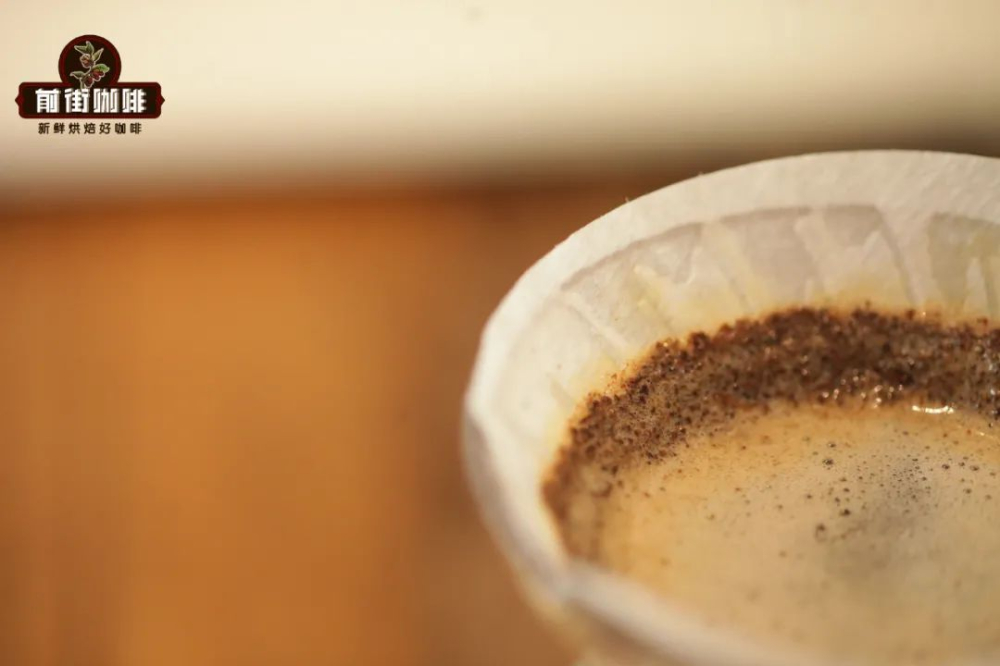
Reading the Coffee Bed Crater
Most pour-over brewers have the habit of peering into the filter after the last drip. A crater with complete, evenly thick walls feels like a job well done; anything "off" sends us mentally replaying the brew to find where it went wrong. FrontStreet Coffee has seen this often when trading brews with friends: the crater never builds a proper wall, most of the grounds settle flat at the bottom, and once the liquid drains, the exposed bed and the low rim create a stark two-tier look — what we call layer separation.
Cause No. 1: Pouring in Too Small a Circle
A crater with layer separation is the signature of the "overly cautious" brewer. Terrified of doing damage, they keep the flow tiny from start to finish and confine the stream to a small circle in the center until the scale hits the target weight. The result of all that careful control is often a cup with concentrated, muted flavors and a flat mouthfeel.
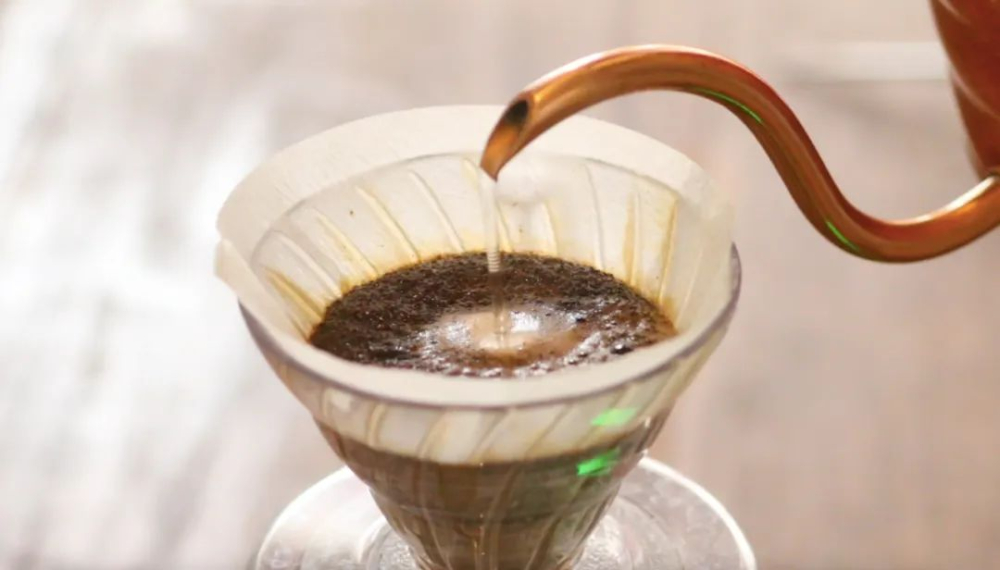
Because the stream hammers the same small patch at the center of the cone, the grounds there tumble continuously and their contact with water multiplies. Meanwhile the grounds at the periphery never get scoured at all; they cling to the filter paper and build up into thick walls. The extraction becomes badly skewed — high in the center, low around the edges.
Cause No. 2: Dumping Water in the Center at the End
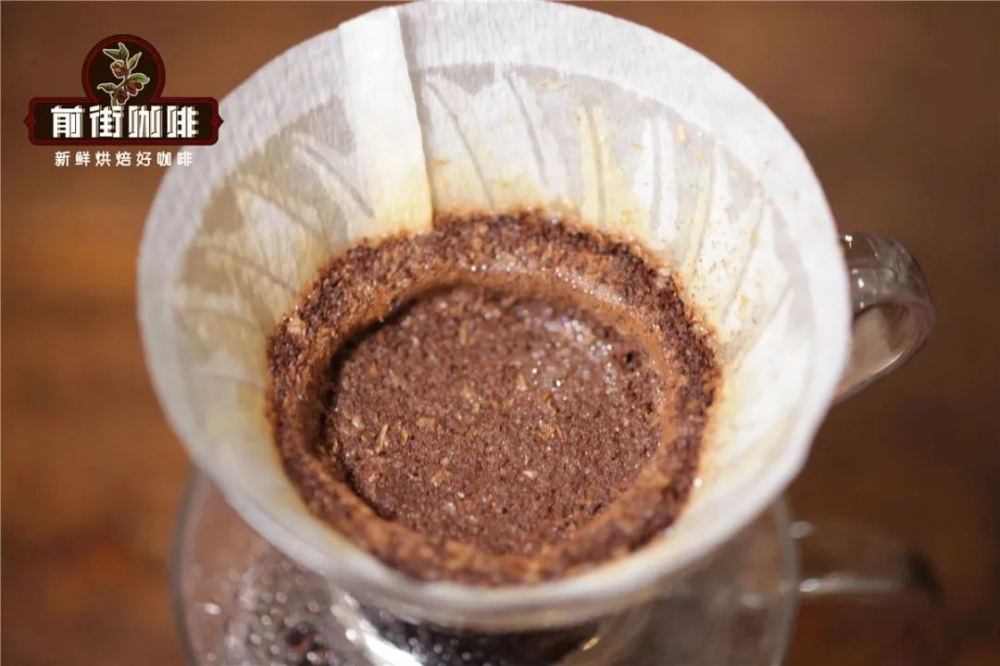
The opposite brewer causes the other classic wall collapse. They brew "on feel," loosely circling the cone and stopping whenever it looks right — then glance at the scale, realize the target weight hasn't been reached, and pour the shortfall straight into the middle.

By that point the earlier agitation has already settled the grounds into an even bed. The final center pour blasts the particles back into suspension; the walls submerged under the waterline collapse and sink, leaving the two-tier profile. This late top-up usually happens after the minute-and-a-half mark, when the heavier particles have already packed the bottom and choked the flow. As the water level drops afterward, stagnation sets in, and the cup drifts bitter.
How to Avoid Layer Separation
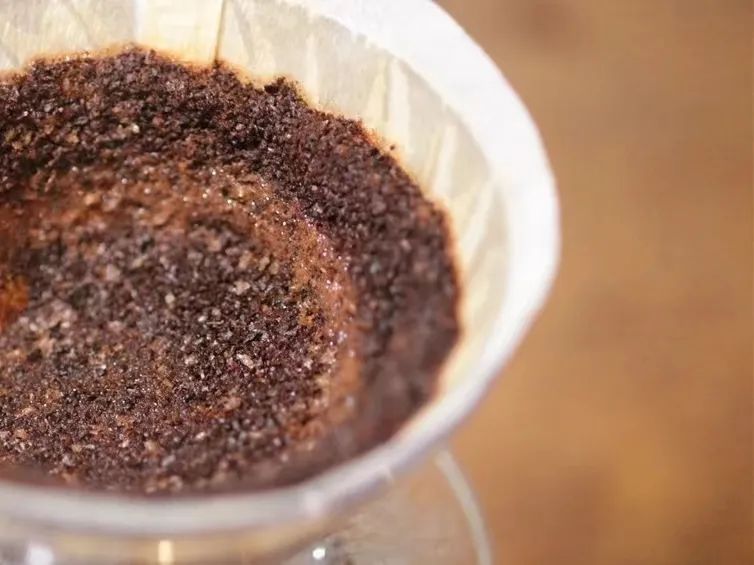
To extract flavor without sacrificing stability, FrontStreet Coffee recommends expanding the pour steadily outward from the center once the bloom ends. As the water level rises, use the stream to scour every patch of grounds so extraction stays even. With the level high, fewer grounds can cling to the paper; from there, simply pour concentric circles at about half the radius of the liquid surface.
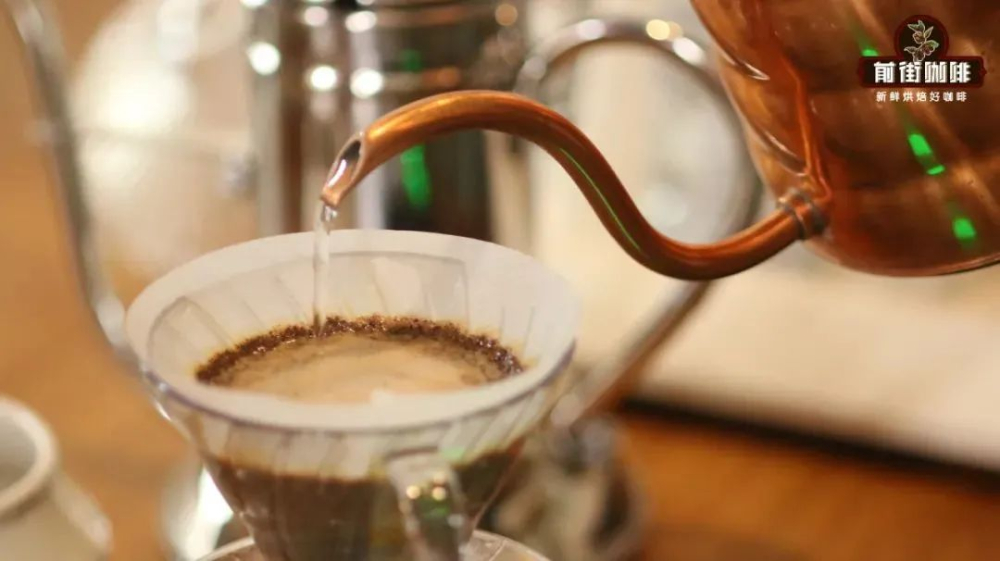
Stream height matters as well: the higher the pour, the deeper it penetrates and the more violently it agitates the bed; the lower the pour, the gentler the disturbance. FrontStreet Coffee typically holds the spout 3-4cm above the bed — not because that height tastes best, but because at that height nothing goes wrong. It's easy to control, and it minimizes the human error that destabilizes extraction.
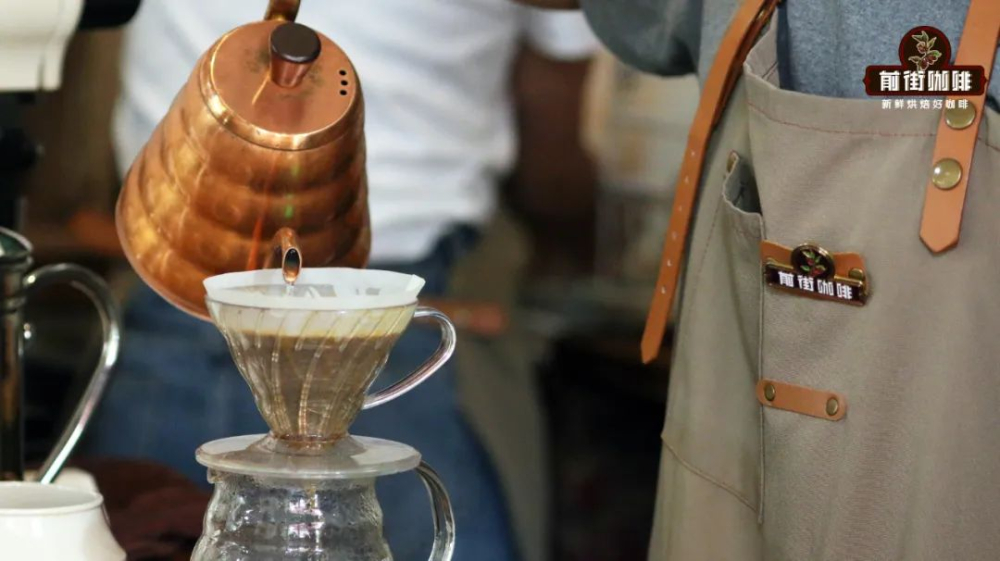
Work inside a predetermined brewing framework: follow the plan, and adjust variables deliberately. If every parameter drifts a little, the compounds pulled from the grounds will differ from the plan, and the cup will taste noticeably different from what you intended.
FrontStreet Coffee Recommendation
Great technique deserves great beans. If you brew light roasts on a V60, start with FrontStreet Coffee's Ethiopia Yirgacheffe Guodingding — crisp citrus, berry, and floral notes with a green-tea-like sweetness, its acidity soft and luminous rather than harsh — or the celebrated Natural Huakui, bursting with strawberry, passion fruit, jackfruit, and lychee, so juicy it's been dubbed "the least coffee-like coffee." For the ultimate treat, the Panama Esmeralda Red Label Geisha offers jasmine, citrus, bergamot, and black tea in a clean, layered cup, while Kenya fans can reach for the Kenya Cherry Tomato from Thika (1550-1750m, SL28 and SL34, 72-hour double-washed fermentation), whose cherry-tomato and damson-plum brightness hits like fresh juice.
For medium-dark roasts, the PWN Golden Mandheling stays low-acid and velvety with herbs, dark chocolate, and a whisper of earth; the Brazil Queen Estate balances nuts, cocoa, and caramel sweetness across pour-over, espresso, or moka pot; Jamaica Blue Mountain No.1 finds the near-perfect middle ground of cream, caramel, chocolate, nuts, and honey; the 2013 Yunnan Natural Typica layers citrus and caramel with nuts, chocolate, and brown sugar; and Papua New Guinea's Paradise Bird — Typica grown at 1600-1800m on volcanic soil, AA grade, triple washed — delivers a clean, sweet cup often nicknamed "Little Blue Mountain."
Important Notice :
FrontStreet Coffee is a long-established specialty coffee roaster in Guangzhou China, selling freshly roasted beans from its own farm in Yunnan as well as dozens of carefully selected single-origin beans from around the world for both pour-over and espresso. The products deliver consistently excellent quality and great value, with shipping within 24 hours. Guangzhou's FrontStreet Coffee shop is recommended by many coffee lovers, and the beans are now available online at the Tmall 。
FrontStreet Coffee has moved to a new address:
FrontStreet Coffee Address: 315,Donghua East Road,GuangZhou
Tel:020 38364473
 Scan and follow the En Gafei WeChat official account. Please indicate that the reprint comes from "En Gafei".

