
Can Soybeans Be Used to Make Coffee? The Difference Between Soybeans and Coffee Beans
Because both are called "beans," coffee is often jokingly described as "foreigners' soy milk." That leads many people to wonder: since they are both beans, can soybeans also be made into coffee?
As a writer, I had been curious about this for a long time. Taking advantage of the first day of the New Year yesterday, and following the Guangdong tradition of "take a stroll on the first day for good fortune through the year," I pulled out my hand-cranked roasting net and set my sights on a package of single-origin soybeans.

From the outside, the soybeans were uniformly full and plump, with an extremely hard texture, harder than SHB grade coffee beans. After a round of sorting out defective and incomplete beans, these 50g contenders entered the roasting stage.
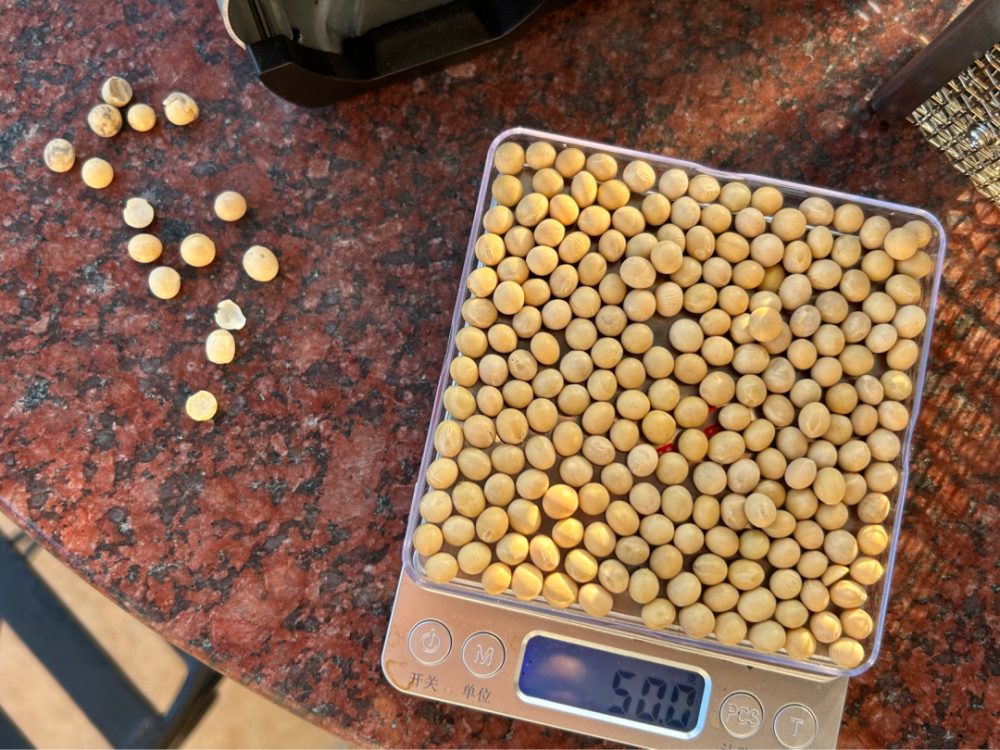
For the roasting method, I chose direct-fire roasting, using medium heat from a mini portable gas stove and a rotation speed of 60-65 revolutions per 60 seconds, one step closer to soybean coffee.
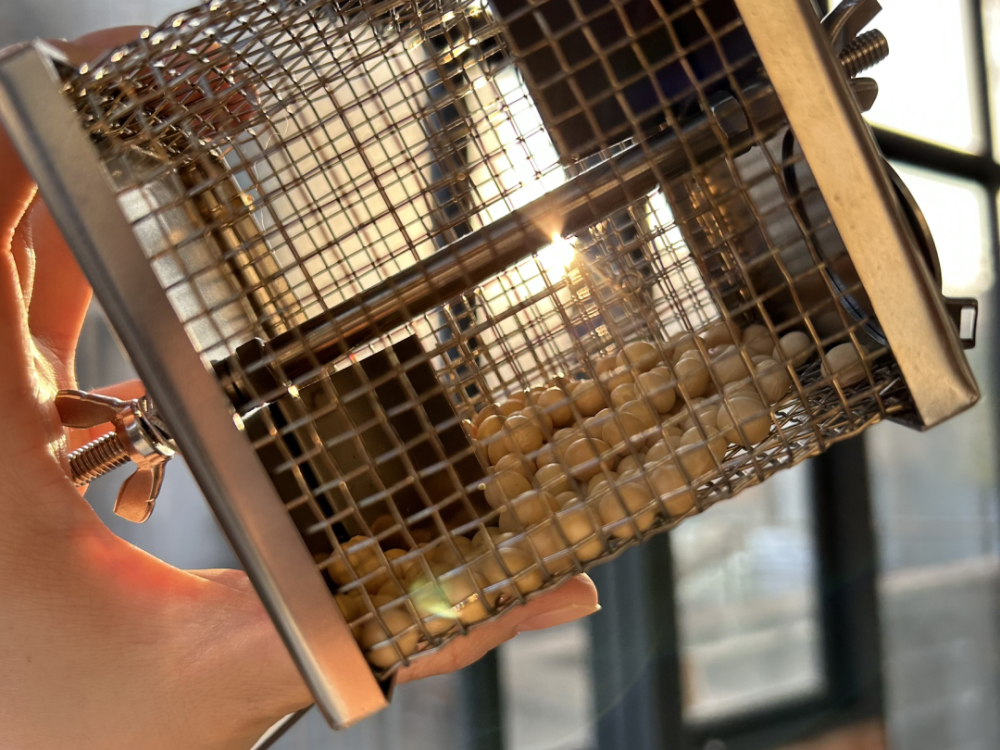
(Followed by 25 minutes of hand-cramping operation.)
Roasting Timeline
At 4'30", the soybeans began a dense cracking sound lasting 10 seconds, accompanied by the aroma of unsweetened popcorn, but no bean husks fell off.
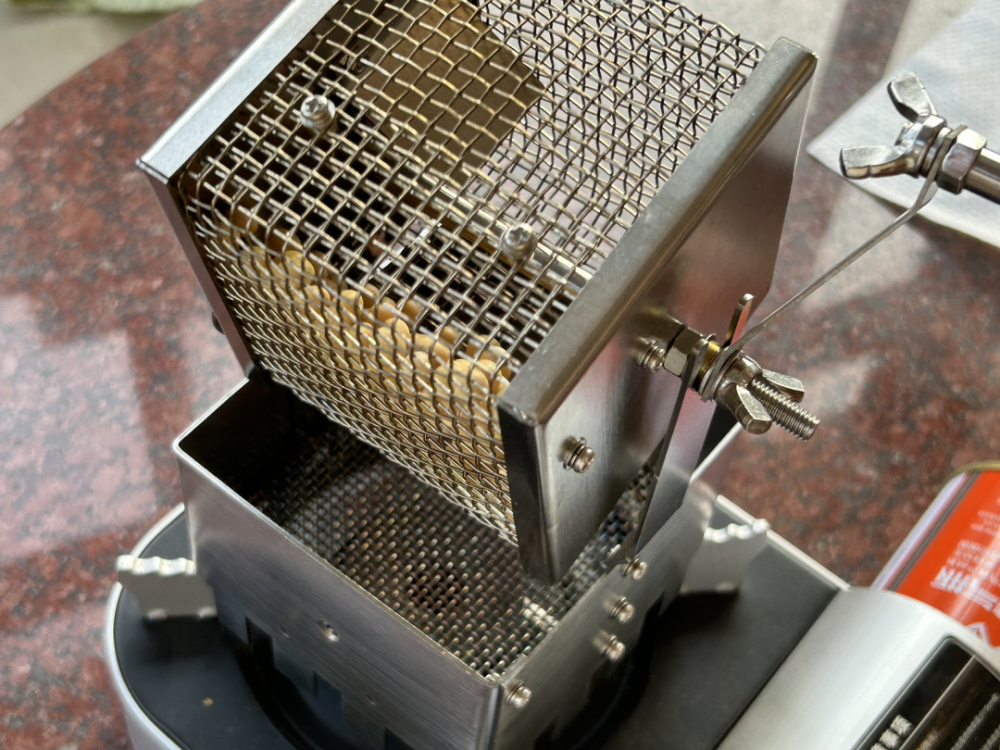
At 7'30", the soybeans began to emit a roasted peanut aroma.
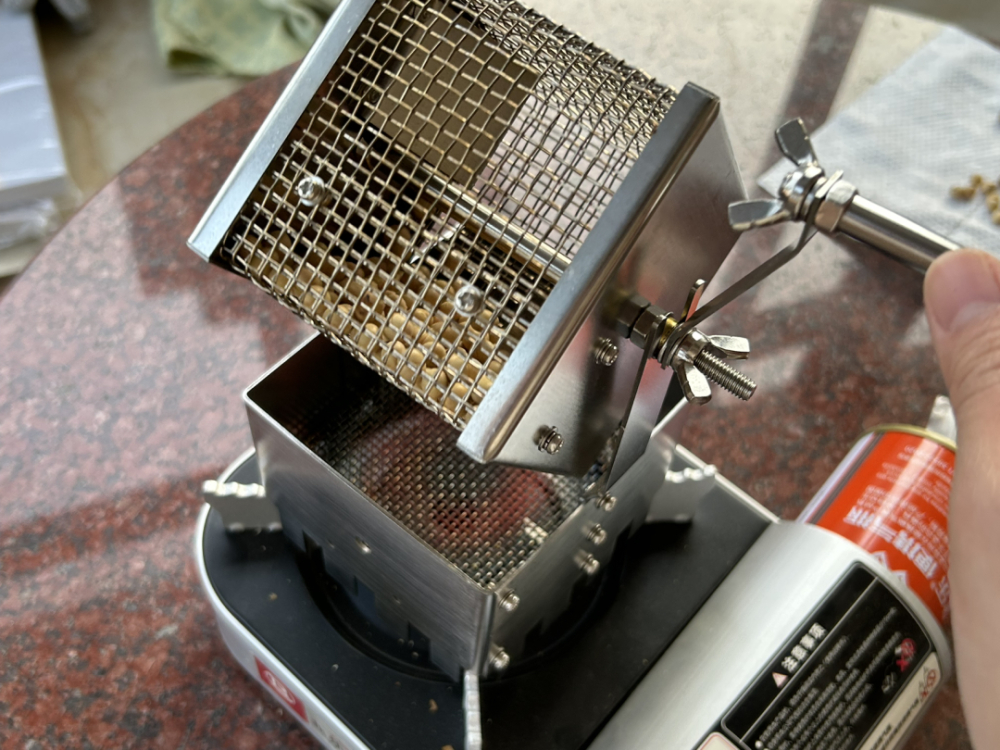
At 13'30", they began to smell of freshly pressed peanut oil.
At 15'30", the soybeans began to caramelize, with the surface starting to show a light coffee color.
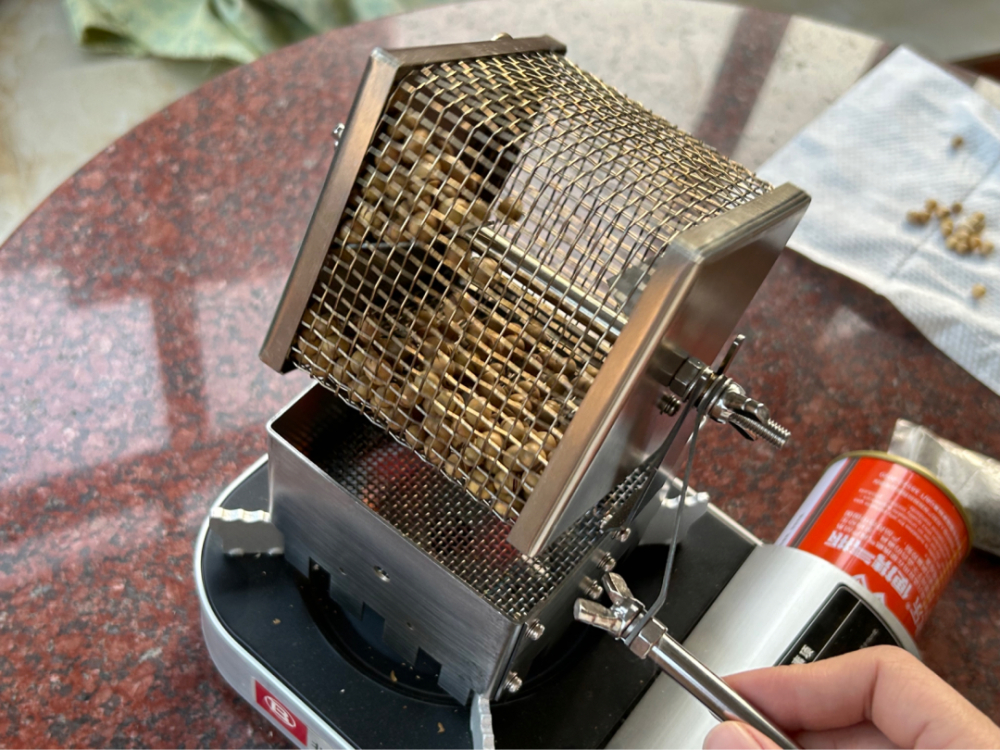
At 19'30", the soybean surface reached the color of medium-light roast coffee beans.

At 25'00", the surface reached the color of medium roast coffee beans and the roast was complete, after which I cooled the beans with a hairdryer.

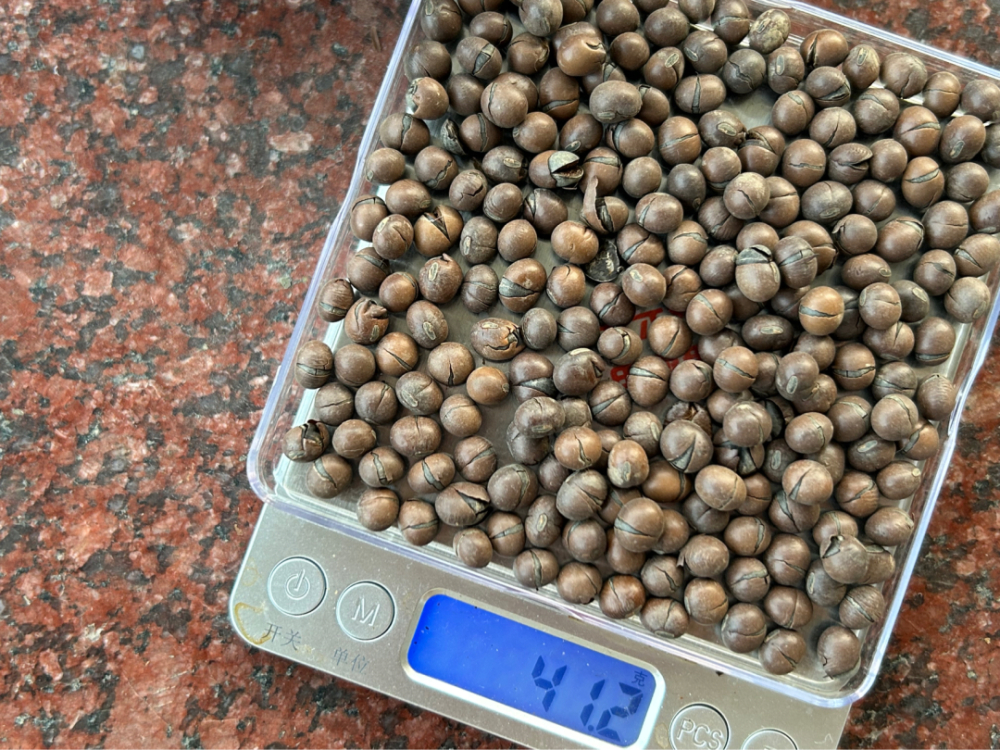
After cooling, I weighed the beans again to check the overall dehydration. Normally, coffee beans weigh about 80-85% of their pre-roast weight after roasting. The soybeans weighed 41.2g after roasting, so perhaps, possibly, they had reached the expected outcome.
Grinding and Brewing
After roasting, I found myself in a mental struggle. The process had a very obvious peanut oil smell, so it was easy to imagine how much oil these beans carried. Running them through a grinder would basically be another round of exhausting work. (There should have been a picture, but it was too messy and I forgot to take one.) I still accepted reality, picked up the grinder, closed my eyes, and ground 11g of soybeans into fairly fine particles. The result was as everyone expected: only 10g of roasted soybean powder came out. The other 1g was stuck to the inner wall of the grinder, and it was very difficult to clean. I sacrificed a grinder just to satisfy my own and everyone's curiosity. Since it was already ground, it was time to brew, but because I had forgotten to bring a filter cup and filter paper, I chose a stainless steel coffee filter this time.
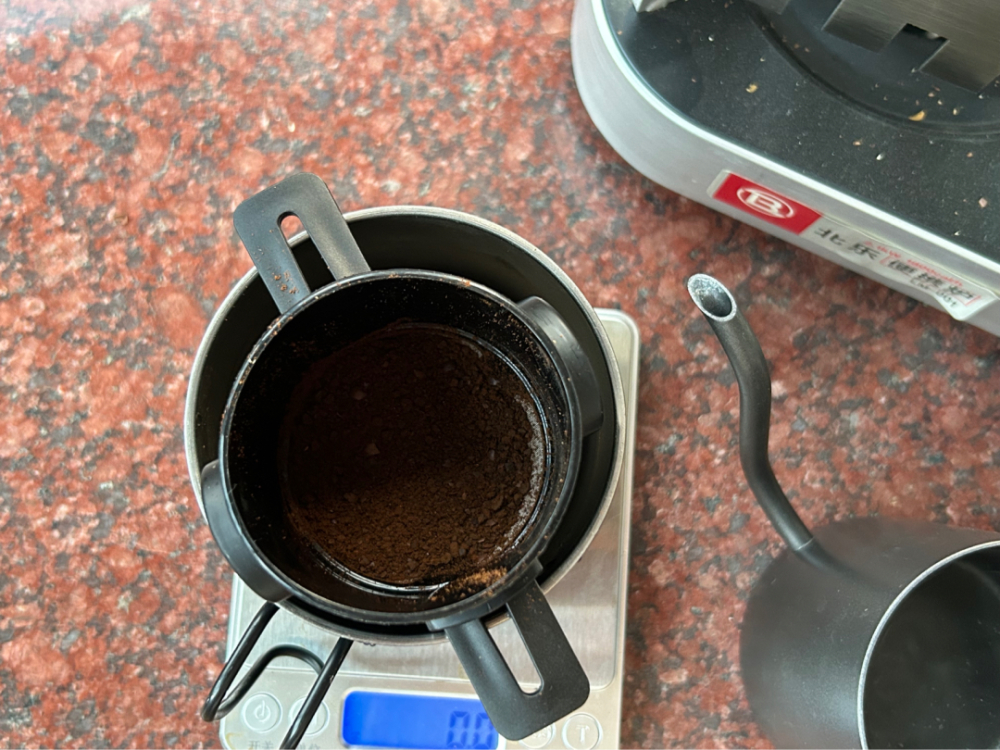
Full of anticipation, I assumed freshly roasted soybeans would bloom impressively during the bloom stage. They did not. The entire extraction was very slow, perhaps because I ground too finely. About 100g of hot water was poured through 10g of roasted soybean powder, with an extraction time of about 2 minutes.
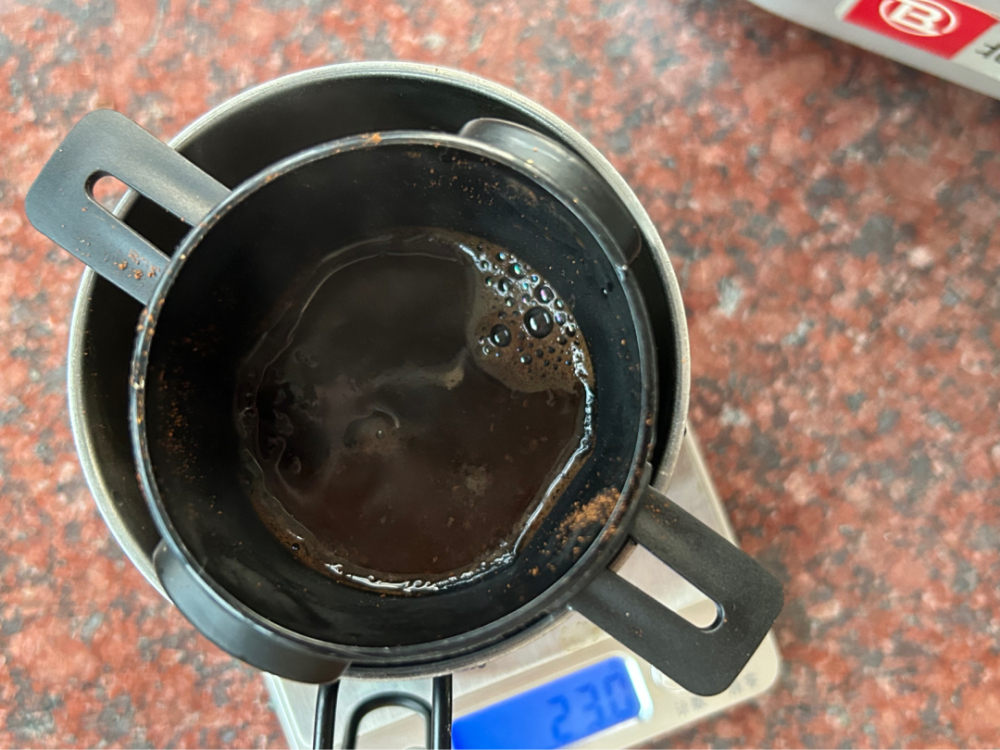
(Yes, this was the bloom.) The taste of the soybean liquid, though, truly surprised me: a rich roasted grain aroma, flavors of roasted peanuts and roasted nuts, and the richness of dark chocolate.
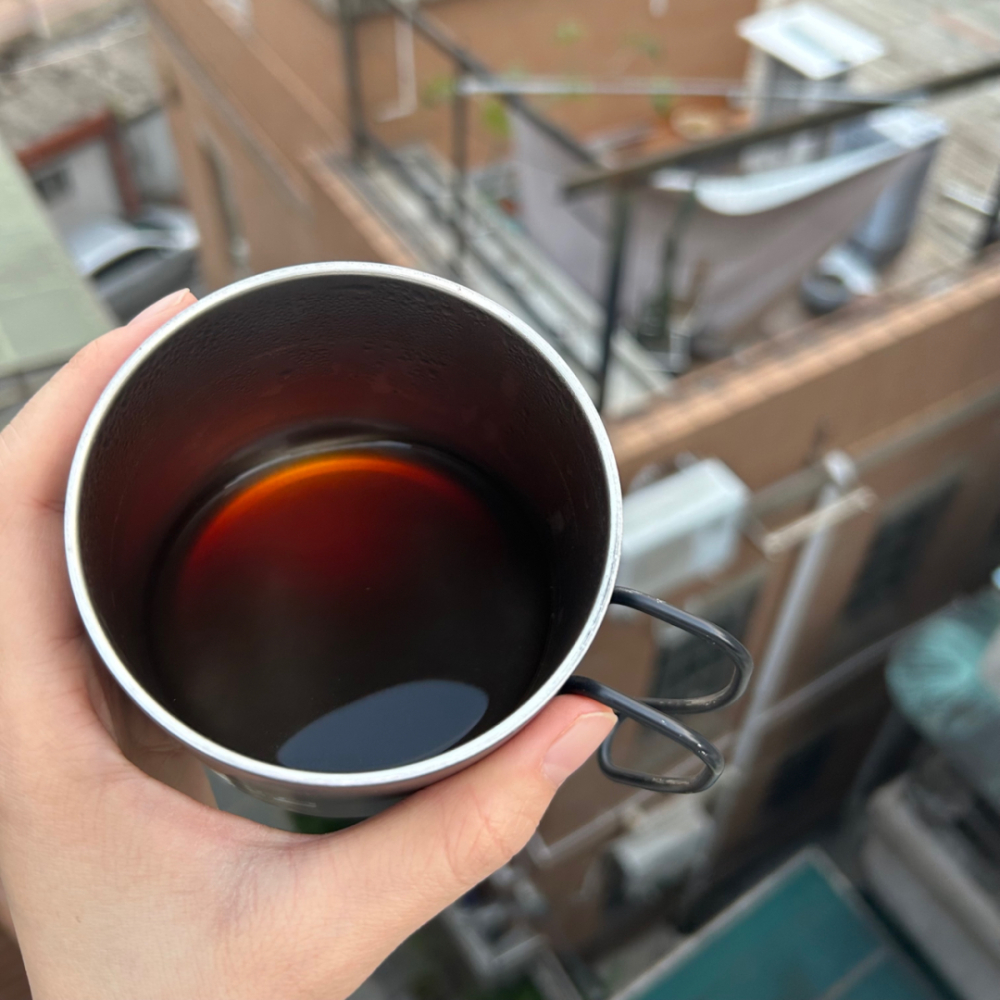
But it was not over. What followed were herbal, spicy, and oily notes, plus a distinct smoky sensation from being too fresh, having been drunk immediately after roasting.

It had the feel of medium-quality Mandheling coffee beans blended with Robusta coffee beans.
Conclusion
From this experiment, soybeans roasted toward a medium to medium-dark level, then ground fine and brewed with high-temperature water, can indeed produce a coffee-like taste, just without caffeine. It does not matter which coffee beans the flavor comes from, but if you do not tell anyone, you could really get away with it.
Although it is possible, I do not recommend everyone try it. After that grinder went through a thorough cleaning and aired out for a whole night, the oily smell was still quite overwhelming.

Finally, this writer wishes everyone a Happy New Year, good health, and may all your wishes come true.
FrontStreet Coffee Recommendation
If the soybean experiment left you craving the real thing, FrontStreet's medium-roast lineup is a good landing spot. FrontStreet Brazil Queen's Estate is the unique yellow bourbon from the world's largest coffee producer, clean and sweet, showing cream, peanut, chocolate, toasted bread, and sugarcane notes after a medium roast, and it works for pour-over, moka pot, and espresso machine alike. FrontStreet Strawberry Candy, a blend of Costa Rican honey-processed coffee and Panama Geisha, is roasted medium to bring out both orange-blossom sweetness and a rounded body, and suits cold brew, pour-over, and espresso.
For a homegrown option, FrontStreet 2013 Sun-Dried Typica carries the classic Yunnan small-bean character at a medium roast, with soft notes of nuts, brown sugar, black tea, and dried apricot. And FrontStreet Jamaica Blue Mountain No. 1, a Typica grown in Jamaica, is roasted medium to fuse its distinctive acidity, bitterness, sweetness, and body, opening with chocolate, roasted nuts, cream, and caramel.
Important Notice :
FrontStreet Coffee is a long-established specialty coffee roaster in Guangzhou China, selling freshly roasted beans from its own farm in Yunnan as well as dozens of carefully selected single-origin beans from around the world for both pour-over and espresso. The products deliver consistently excellent quality and great value, with shipping within 24 hours. Guangzhou's FrontStreet Coffee shop is recommended by many coffee lovers, and the beans are now available online at the Tmall 。
FrontStreet Coffee has moved to a new address:
FrontStreet Coffee Address: 315,Donghua East Road,GuangZhou
Tel:020 38364473
 Scan and follow the En Gafei WeChat official account. Please indicate that the reprint comes from "En Gafei".

