
Pour-Over Coffee Watering Techniques: How to Brew Single-Origin Coffee Beans for Perfect Flavor

When FrontStreet Coffee talks about brewing, we rarely dwell on "technique" — except when pouring methods come up — because in our view, technique is the single biggest source of uncertainty. If you don't understand the logic behind a technique, then the more tricks you learn, the less consistent your coffee becomes.
Why? We constantly meet people asking, "Will this bean taste better with this technique? What about that one?" It's part of the fast-food-culture problem: people find it hard to slow down and understand something properly, so knowledge arrives as bare conclusions stuffed into the brain. With techniques, that means skipping straight to "Technique A gives better sweetness, Technique B gives better mouthfeel..." When you memorize conclusions without the principles behind them, every new technique just adds confusion — an extremely unstable factor.

Is Technique Really a "Technology"?
Many newcomers treat pour-over as a craft, but the deeper you go, the clearer it becomes that it's really a subject of physics and chemistry. Technique, like ratio, water temperature, and grind size, is just one parameter in the whole brewing scheme — and these parameters only work when they coordinate with each other.
FrontStreet Coffee has run experiments on how different pouring styles affect flavor, comparing one-pour, three-stage, and three-pour methods. In our conclusions, we only described how the flavor expression differed — never which one "tastes best." Because our fixed parameters were originally calibrated for the three-stage method: the other two methods performed well, but with the corresponding parameters adjusted, they would taste even better.
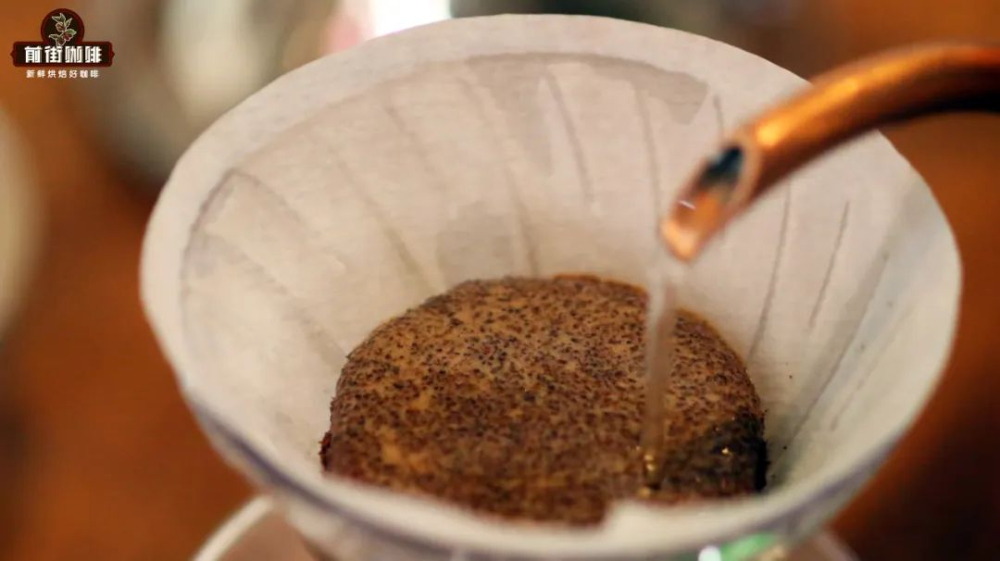
Deconstructing What Technique Actually Does
Brewing techniques — pouring methods — are really just combinations of water distribution, flow rate, and pouring path (circles, fixed-point, fancy moves...).
Rinsing vs. Soaking
While you pour, the water stream "rinses" the grounds, extracting mainly by rinsing; when you stop, the bed simply "soaks." Generally, rinsing extracts somewhat more efficiently.
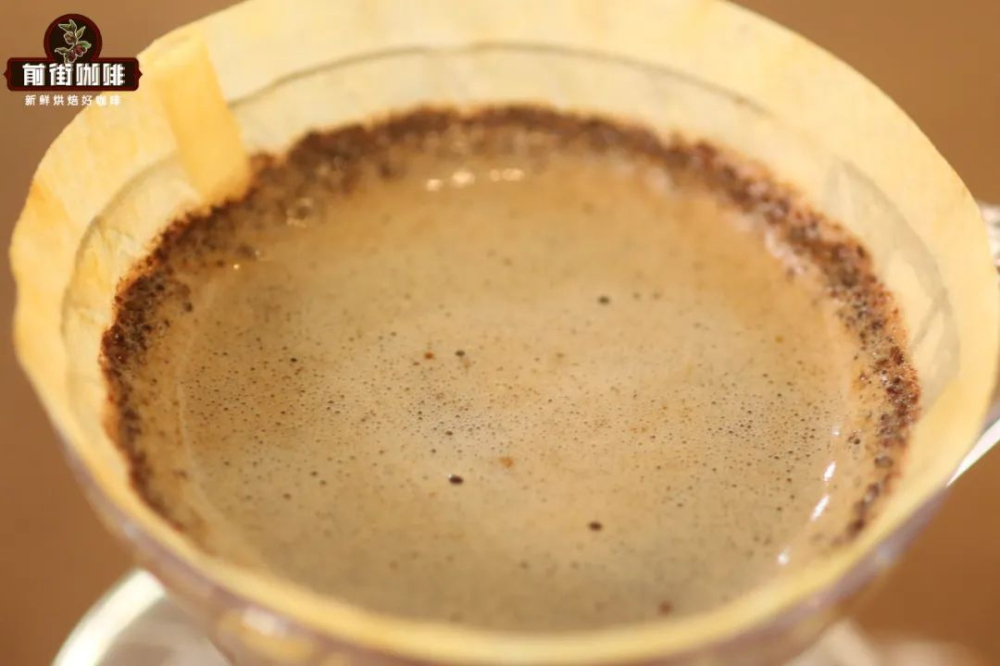
Segmenting a brew simply alternates these two phases. A one-pour brew rinses in the first half and soaks in the second; the three-stage method alternates rinse–soak–rinse–soak. Its middle stage runs at higher extraction efficiency, which is why its sweetness stands out more than a one-pour's.
The more segments you add, the more alternation occurs — and the longer total extraction time grows. With other parameters fixed, more segments means a higher extraction rate.

Flow Rate and Path
The stream you pour is, in effect, your stirring rod. A thin stream agitates the grounds gently; a thick stream agitates them hard. The more the grounds get stirred, the more easily compounds are extracted.
But the total water is fixed by the ratio: a bigger flow shortens the pour, a smaller one lengthens it. FrontStreet Coffee also insists the stream must fall vertically — an angled stream creates turbulence and uneven extraction.

As for paths, we usually mean circular pouring and center pouring. There are other, irregular paths too, but since FrontStreet Coffee can't explain their principles, we'll leave them aside.
Circular pouring, in our view, is an effective way to reduce turbulence while boosting rinsing. Think about dissolving a drink mix: isn't it easier to control dissolution by stirring steadily in one direction? The faster the circle, the stronger the stirring force and the more you extract — slower, and the opposite.

Center pouring does the opposite: it dials rinsing down. Some recipes start with circles and finish with center pouring precisely because they don't want to dissolve much more in the final segment — just top up the water with minimal agitation.
That's really all there is to technique. So-called pouring styles are just permutations of these elements. Some people choose high-difficulty, unconventional methods; others stick to steady, moderate, safe ones. FrontStreet Coffee's advice: pick the simplest pour with the fewest variables, and you'll reduce the number of things that can go wrong in the cup.
FrontStreet Coffee Recommendation
Beans that reward a clean, controlled pour-over: the FrontStreet Ethiopia Guodingding from Yirgacheffe, a washed lot with jasmine florals and bright citrus, easy to brew and easy to love; and the FrontStreet Ethiopia Huakui, whose strawberry, passion fruit, jackfruit, and lychee aromas shine when extraction stays even and gentle.
If you're still dialing in your technique, the FrontStreet Brazil Fazenda Rainha is a forgiving choice — low acidity, balanced nut and cocoa sweetness with caramel notes — steady and smooth even when your pour isn't perfect yet.
Important Notice :
FrontStreet Coffee is a long-established specialty coffee roaster in Guangzhou China, selling freshly roasted beans from its own farm in Yunnan as well as dozens of carefully selected single-origin beans from around the world for both pour-over and espresso. The products deliver consistently excellent quality and great value, with shipping within 24 hours. Guangzhou's FrontStreet Coffee shop is recommended by many coffee lovers, and the beans are now available online at the Tmall 。
FrontStreet Coffee has moved to a new address:
FrontStreet Coffee Address: 315,Donghua East Road,GuangZhou
Tel:020 38364473
 Scan and follow the En Gafei WeChat official account. Please indicate that the reprint comes from "En Gafei".

