The Specialty Coffee Circle Obsessed with Single-Origin Coffees: It's Changing!
The Rise of Single Origin Coffee
In the specialty coffee world, it is undeniable that people are paying more and more attention to sourcing high-quality, sustainable and traceable coffee, and a large part of that revolves around single-origin coffee. These coffees grow in one specific place, whether that is a single estate or a single region.
For many years single-origin coffees have been popular in specialty coffee shops around the world and at the World Coffee Championships (WCC), favoured by many coffee professionals for their complex, refined flavour profiles.
In the domestic market a single-origin trend has appeared too. From new-style tea shops chasing single-origin teas to chestnut shops introducing SOC (Single Origin Chestnut), more and more consumers now equate single origin with premium quality.
The Return to Coffee Blends
Back to coffee: is single-origin coffee necessarily specialty coffee? Over the past year the global specialty coffee market and world-class competitions have given a different answer, as attention turns to high-quality coffee blends.

That might seem strange. Why would a market that pursued single origin for years suddenly return to blends? Because the general consumer is what supports the industry, and general consumers need products with stable quality and balanced flavour.
Under the influence of recent trends, along with adverse climate and transport disruptions, the taste and quality of beans from different regions have been affected to varying degrees. At the same time, rising transport and other operating costs have pushed many coffee shops toward high-quality blends to keep product quality consistent.
More competitors at world-class coffee events have also begun researching blends, mainly to balance the flavour expression of new varieties. Some competitors say that in recent years new coffee varieties have performed well in cupping but always fall short of expectations, or seem to be missing something, after extraction. For a good cup, flavour balance after extraction is especially crucial.
The True Meaning of Specialty Coffee
From both sides, it is clear that specialty coffee pursues not single origin itself, but coffee with stable, balanced flavour. When the term was first proposed, it referred to beans cultivated under the unique microclimate and geography of a producing region, carrying that region's flavour characteristics.
But that does not mean every single-origin bean expresses regional flavour or is necessarily the best quality. The weakness of single origin is that it is affected every year by regional terroir and climate, so its flavour expression cannot stay stable over the long term.
Are blends necessarily poor quality? Clearly not. In the era when coffee quality drew little attention, blends may have had a poor reputation, but that is changing.
As demand for specialty coffee has grown in recent years, so has demand for high-quality blends. Like decaffeinated coffee, blends are not automatically low-quality, high-yield coffee, something both professionals and consumers have eventually come to accept.
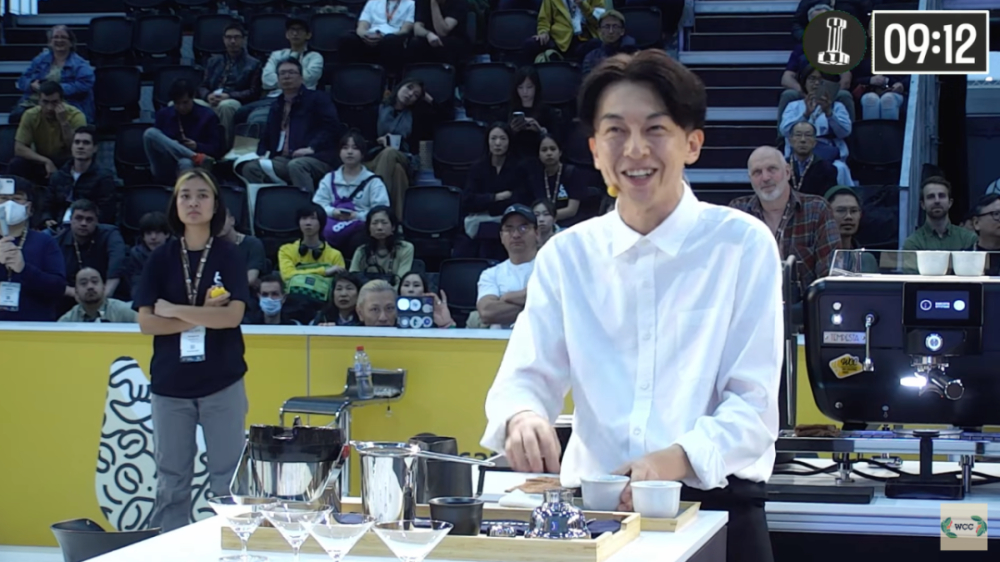
At this year's WBC (World Barista Championship), Japanese competitor Ishiya Takayuki used Vietnamese Robusta blended with Panama Geisha, making a strong impression on the audience and changing people's prejudice against the Robusta variety and blended coffee.
Although more people are now chasing acidity, many general coffee consumers still cannot accept a coffee with obvious acidity. Full-bodied, balanced coffees remain the mainstream. Robusta flavour may not be pleasant on its own, but a small amount can appropriately lift the coffee's mouthfeel and body.
The Art of Coffee Blending
Blending a bean with balanced flavour is not as easy as people assume; it is not a casual mix followed by dark roasting. Even from the same region, flavours vary between harvest seasons, and different roast levels change how substances dissolve during extraction.
Compared with single-origin beans, blends test the professionalism of the blender more. The blender must understand the characteristics of beans from different regions and harvest seasons, and also study roasting and extraction in depth, to build a bean that balances and stabilizes coffee flavour.
The Evolution of Coffee Culture
The "specialty" in specialty coffee is an important part of a whole chain of quality service, because it ensures the drinker receives coffee of guaranteed quality, and that this quality is systematically evaluated. Whether coffee tastes good, scores high or draws consumer attention, all of it requires professional interpretation and service.
Each coffee wave advances on the last, and a new wave does not make the old one worthless. The popularity of single-origin coffee reflects the development and progress of the specialty coffee market, but it cannot stand for the whole of specialty coffee.
When consumers recognize a coffee or a coffee shop and keep coming back, flavour stability is the most important factor, on top of professionalism across the entire production process.
Image source: Internet
FrontStreet Coffee Recommendation
If the argument for blends has convinced you, FrontStreet sells five different espresso blends and ships every bag within five days of roasting so the flavour arrives as complete as possible. FrontStreet Specialty Blend is aimed at homes, offices and specialty neighbourhood cafes: washed Colombian and semi-washed Brazilian beans give nuts, dark chocolate and caramel with a comfortable bittersweet balance, smooth in a latte, steady for latte art and layered in a Dirty.
FrontStreet Commercial Blend is built for all kinds of coffee shops. It takes the classic Brazilian and Colombian pairing and adds a small amount of Robusta, layering toasted bread, almond and walnut onto a low-acid, full body with good oil flow, and its price makes it the obvious choice for a shop. FrontStreet Classic Blend, meanwhile, is the beginner-friendly and premium-cafe option: three origins in a medium-dark espresso recipe inspired by the old Mamba combination of Mandheling and Brazil, with a touch of Robusta for aroma and crema, so even a newcomer can pull an espresso with a golden layer at home.
Important Notice :
FrontStreet Coffee is a long-established specialty coffee roaster in Guangzhou China, selling freshly roasted beans from its own farm in Yunnan as well as dozens of carefully selected single-origin beans from around the world for both pour-over and espresso. The products deliver consistently excellent quality and great value, with shipping within 24 hours. Guangzhou's FrontStreet Coffee shop is recommended by many coffee lovers, and the beans are now available online at the Tmall 。
FrontStreet Coffee has moved to a new address:
FrontStreet Coffee Address: 315,Donghua East Road,GuangZhou
Tel:020 38364473
 Scan and follow the En Gafei WeChat official account. Please indicate that the reprint comes from "En Gafei".