
The Origin of Coffee - Qatar's Traditional Arabic Peninsula Coffee: Flavor Profile, Taste Characteristics, Brewing Methods, and Tasting Techniques
Alcohol is strictly off-limits at the World Cup in Qatar, yet football fans have been deeply touched by the warm hospitality of the Qataris after every match. Fans have been posting on social media about how locals prepare all kinds of traditional snacks, dates, and coffee for them once the final whistle blows - with comments like "I absolutely love it!!!"

In response to these fan posts, local netizens explained that this reflects a beautiful culture of sharing, giving, and treating guests with kindness - the warm hospitality of Qataris is simply second nature in this region.
The Culture of Coffee in the Gulf
In Gulf countries like Qatar, a generous host is often described as one whose "pot never leaves the fire." Here, coffee stands for generosity and welcome, and holds an important place in the region's cultural heritage. Training centers have even sprung up to teach the next generation how to prepare coffee and serve it properly to guests.
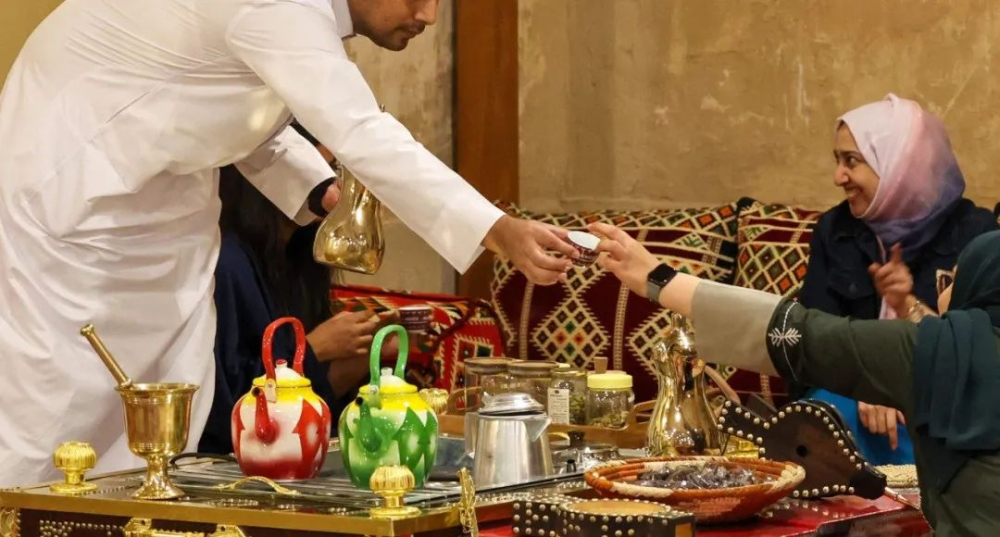
How coffee is served and drunk is anything but casual - it's heritage handed down through generations. Among the key points: the host holds the coffee pot in the left hand, passes the cup to the guest with the right, and then pours the coffee into the guest's cup in a fine, gentle stream.
Visit a Qatari home and you will certainly be served coffee that's been freshly roasted, ground, and brewed. Refills keep coming cup after cup, until the guest gently shakes their finjan - the traditional Arabic coffee cup - to signal they've had enough.
Traditional Qatari Coffee Preparation
Traditional coffee in Qatar is all about freshness! After the guests arrive, the host begins roasting the raw beans until they turn yellow - the moment they start releasing a corn-like sweetness - then crushes them into coarse particles using the most primitive of methods.
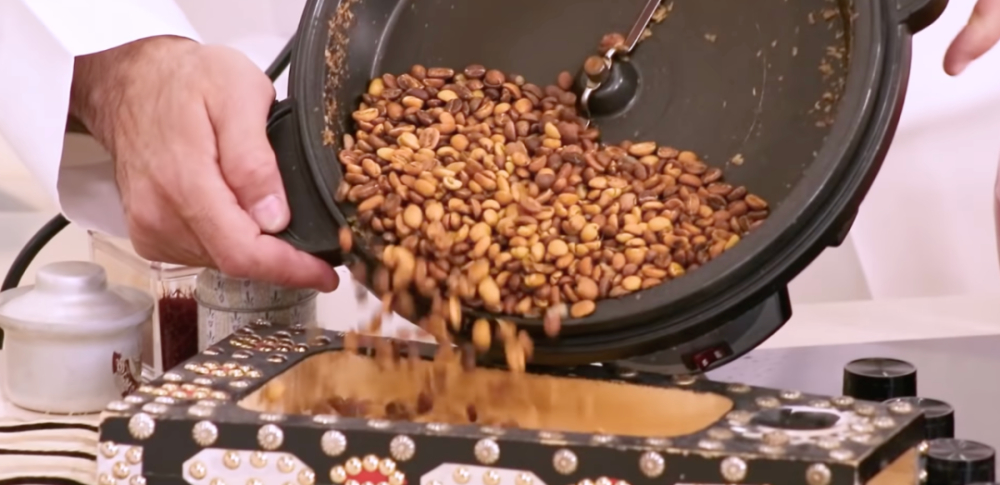
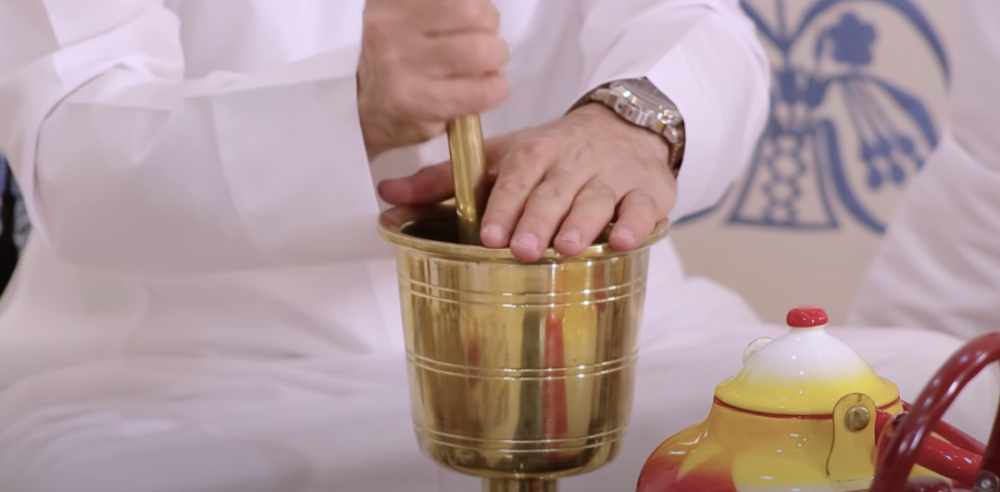
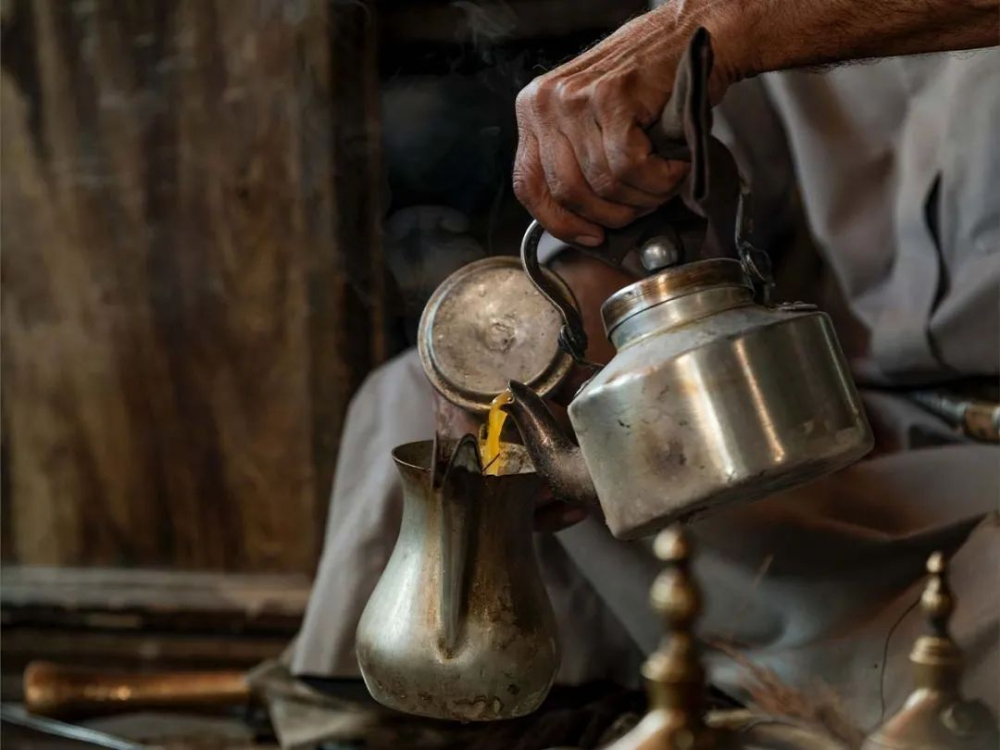
Next, the grounds and water go into an Arabic coffee pot (these pots are metal - stainless steel, brass, gold-plated, sometimes even pure gold... very Qatari), along with crushed cardamom, saffron, cloves, rose water, and other spices, all brewed together. Finally, a wooden-fiber filter is fitted into the pot's spout to strain out the grounds.
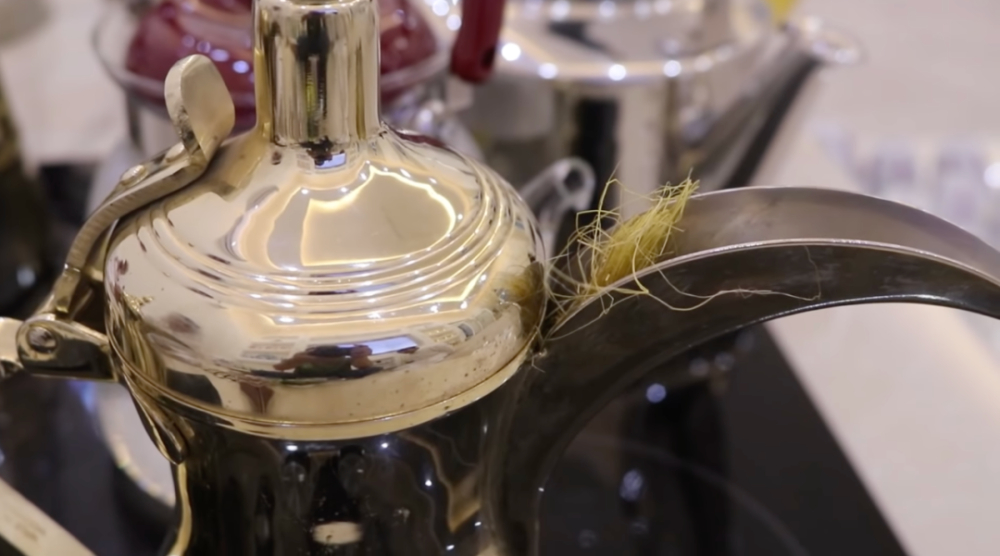
The coffee must be poured with the left hand, and the pot held high so the stream falls with a crisp sound into the cup - that sound announces the coffee is ready. The cup is then handed to the guest with the right hand.
Guests, in turn, must hold the cup with their right hand. Leaving coffee untouched in your hand is considered an insult to the host. And when you've had enough, shake the cup back and forth; otherwise the host will simply keep refilling it.
From the way Qataris prepare coffee, dates, and traditional sweets for football fans, it's clear how sincerely they welcome every visitor. The brewing method may not be as refined as modern coffee, but it carries the locals' warmest blessings for each guest.
The History of Arabic Coffee
The word "coffee" traces back to the Arabic "Gahwa." In medieval Arabic, Gahwa referred to something addictive that suppressed the appetite - in practice, alcoholic drinks, since too much alcohol dulls the desire to eat. After 1400 AD, the term was borrowed for coffee: drinking too much coffee would keep you sleepless just as too much alcohol would dull your appetite - two undesirable outcomes, so the word carried a note of caution.
When coffee first spread from its Ethiopian homeland to the Arabian Peninsula (around the 9th-10th centuries AD), it was used medicinally. The earliest documented reference to coffee dates from the 9th century, in the "Comprehensive Book of Medicine" by the renowned Persian physician Al-Razi. He described a liquid called "bunchum," brewed from "bunn," that refreshed and stimulated the mind, relieved headaches, and caused sleeplessness when drunk to excess. "Bunn" referred specifically to coffee cherries.
Between 1400 and 1500 AD, a hot drink called "Qishr" became popular in the Yemeni ports of Mocha and Aden. Ripe coffee cherries were sun-dried, and only the fruit pulp was used - the seeds, the coffee beans themselves, were discarded. The pulp was lightly roasted, crushed over gentle heat, spiced with ginger and cinnamon, and brewed with hot water to be drunk while warm.
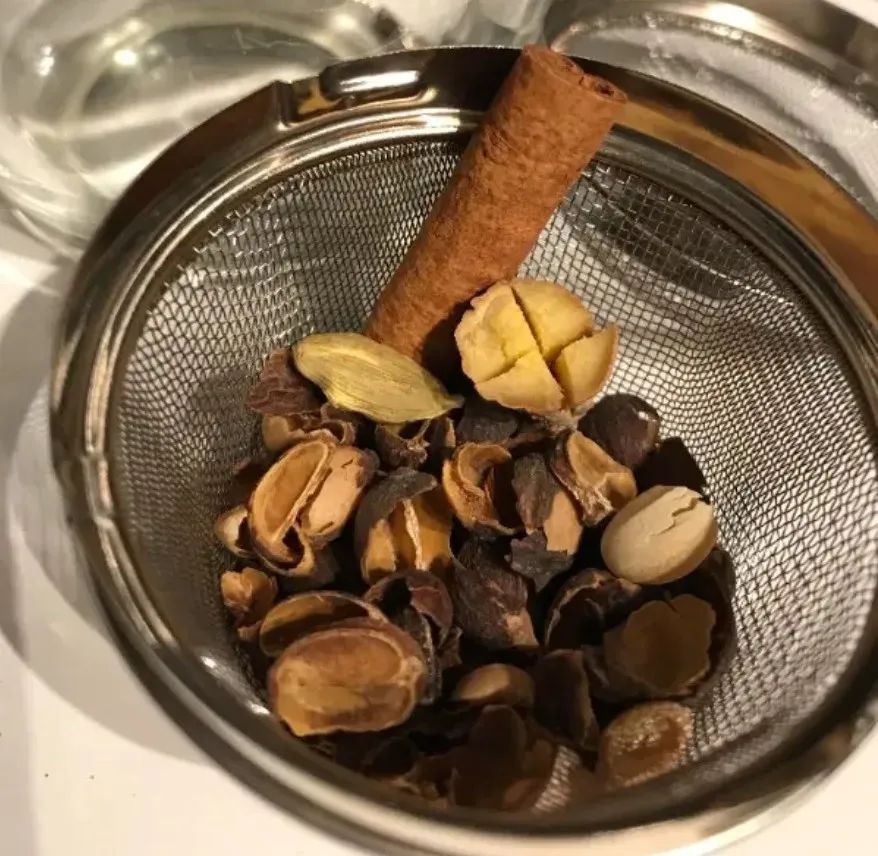
The pulp still contains about 1% caffeine and has a stimulating effect, with a flavor far sweeter and more palatable than chewing coffee cherries directly. The practice spread quickly across the Arabian Peninsula. The seeds were likely discarded because raw coffee beans are too hard and bitter to be appealing.
It wasn't until after 1450 AD that someone discovered that roasting the seeds longer and brewing them together with the pulp made the drink far more fragrant and rich - while doubling its stimulating effect! To set it apart from "Qishr," this new drink made with roasted coffee seeds became known as "Gahwa."

This is the ancestor of the coffee we drink today. Words for coffee around the world all descend from "Gahwa," and "Coffee" first appeared in an English dictionary in 1599.
Interestingly, "Gahwa" sounds much like "Kaffa" in southern Ethiopia. The earliest Ethiopians used a similar-sounding word for the wine they made from coffee cherries, and wine vessels excavated in Ethiopia some 2,000 years old bear characters of similar pronunciation. Religious communities in the Arabian region, forbidden to drink alcohol, embraced "Gahwa" as a wine substitute to satisfy the craving.
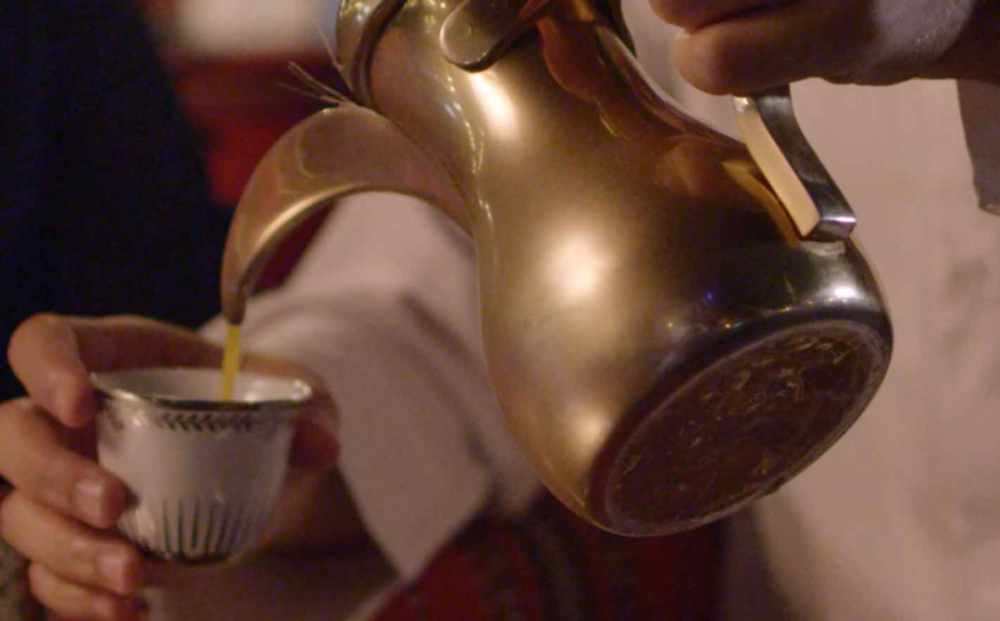
Image source: Internet, YT-Mr.Q
FrontStreet Coffee Recommendation
Traditional Arabic coffee is roasted only until the beans turn yellow and sweet - a remarkably light touch. If that story inspires you to explore roasts on the gentler side, the balanced middle path is a great place to start: medium roasts preserve a coffee's acidity and sweetness while building body. A fine example is FrontStreet Coffee's Brazil Queen Estate, a Yellow Bourbon from the world's largest coffee-producing country, medium-roasted to reveal creamy peanut, chocolate, toasted bread, and sugarcane sweetness - equally at home in a pour-over, a moka pot, or an espresso machine.
For a fruitier medium roast, FrontStreet Coffee's Strawberry Candy Geisha blend pairs Costa Rica honey-processed coffee with Panama washed Geisha. Medium roasting brings out orange-blossom honeyed sweetness and a rounded, juicy cup - lovely as a pour-over, cold brew, or even espresso. And if you want the classic benchmark of balance, FrontStreet Coffee's Jamaica Blue Mountain No. 1, a medium-roast Typica, blends chocolate, roasted nuts, cream, and caramel into a smooth, elegant cup that acid, bitter, sweet, and body all in perfect harmony.
Important Notice :
FrontStreet Coffee is a long-established specialty coffee roaster in Guangzhou China, selling freshly roasted beans from its own farm in Yunnan as well as dozens of carefully selected single-origin beans from around the world for both pour-over and espresso. The products deliver consistently excellent quality and great value, with shipping within 24 hours. Guangzhou's FrontStreet Coffee shop is recommended by many coffee lovers, and the beans are now available online at the Tmall 。
FrontStreet Coffee has moved to a new address:
FrontStreet Coffee Address: 315,Donghua East Road,GuangZhou
Tel:020 38364473
 Scan and follow the En Gafei WeChat official account. Please indicate that the reprint comes from "En Gafei".

