
French Press Coffee: Grind Size, Water Temperature, Steps, Process, Characteristics - How Does French Press Coffee Taste?
Making Coffee at Home: FrontStreet Coffee's French Press Method
Like plenty of people, the FrontStreet Coffee team has been working from home for the past few days. The switch came so suddenly that I never got around to packing the right brewing gear in advance. But a coffee lover can't go a day without coffee, so after digging through every cupboard, I turned up some long-forgotten equipment.
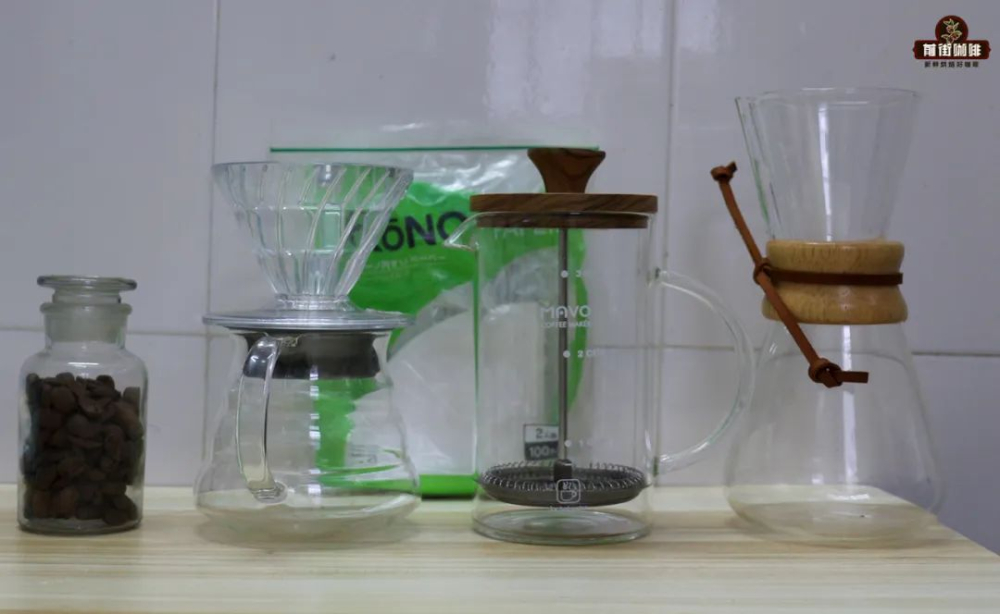
"A Chemex, but no matching filter papers. A V60, with papers on hand, but no pour-over kettle, no scale, no thermometer. A French press, which looks like it might actually work."
Finding the Right Equipment
Back in the shop, surrounded by every professional tool a barista could want, FrontStreet Coffee rarely shared methods for brewing under such basic conditions. This stretch at home is the perfect chance to explain how FrontStreet Coffee handles it.
Of the three devices on hand, the Chemex without its dedicated filter papers can only serve as a vase. The filter cup and papers would just about cover a pour-over, but without the steady stream of a gooseneck kettle and with the uneven grind of an ordinary grinder, even reaching 70% of the shop's quality would be a real challenge.
That leaves the French press as the only viable option. FrontStreet Coffee has always described the French press as a very simple, straightforward device for brewing good coffee, though it still demands the right water temperature, ratio, timing, and a few technical details.
Solving the Ratio Problem Without Equipment
Without a scale or a thermometer, nailing the ratio and the water temperature is hard. But hard does not mean there is no workaround.
The French press has one built-in advantage: measurement markings on its body. FrontStreet Coffee's press, for example, is marked "1CUP, 2CUP, 3CUP." According to the manual, 1CUP equals 200ml and 2CUP equals 400ml. That solves half of the ratio problem.
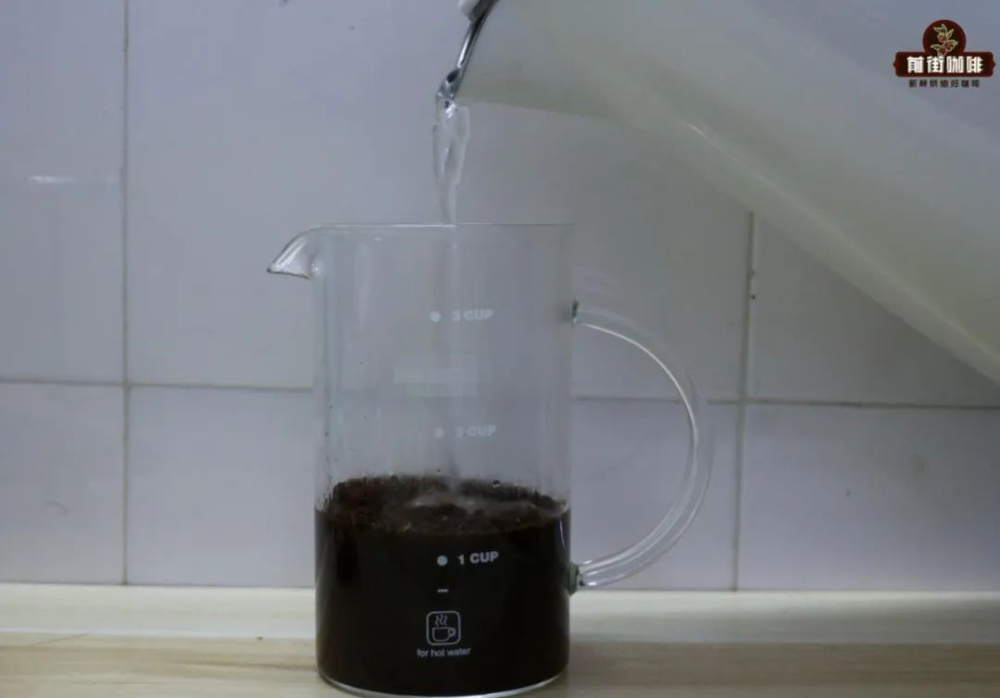
The other half is weighing out the coffee beans. Without a scale, other objects can stand in, such as a measuring spoon. A V60 filter cup usually comes with one, and that spoon holds about 12g of level coffee powder.
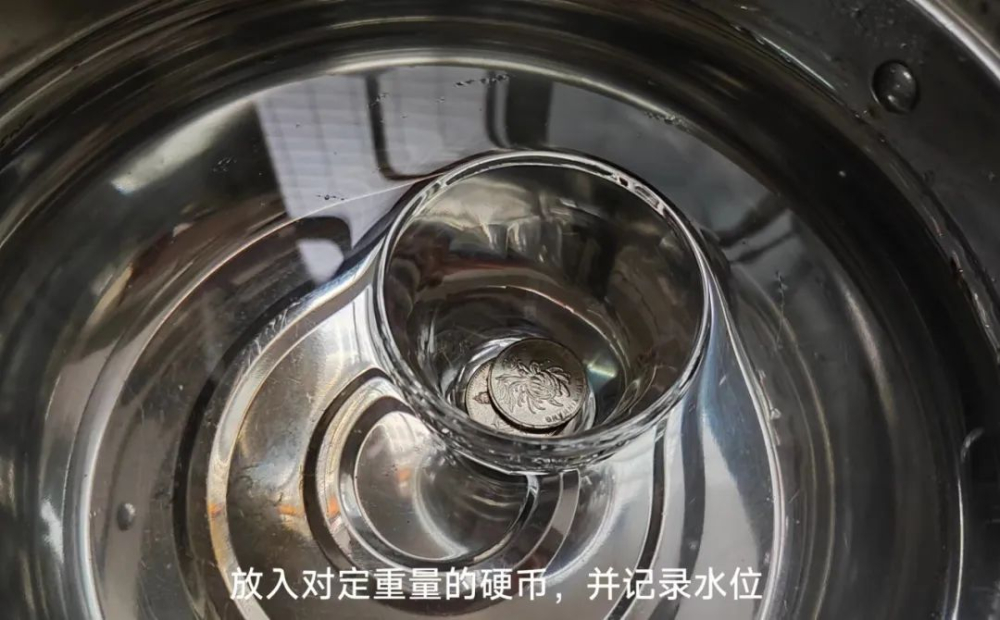
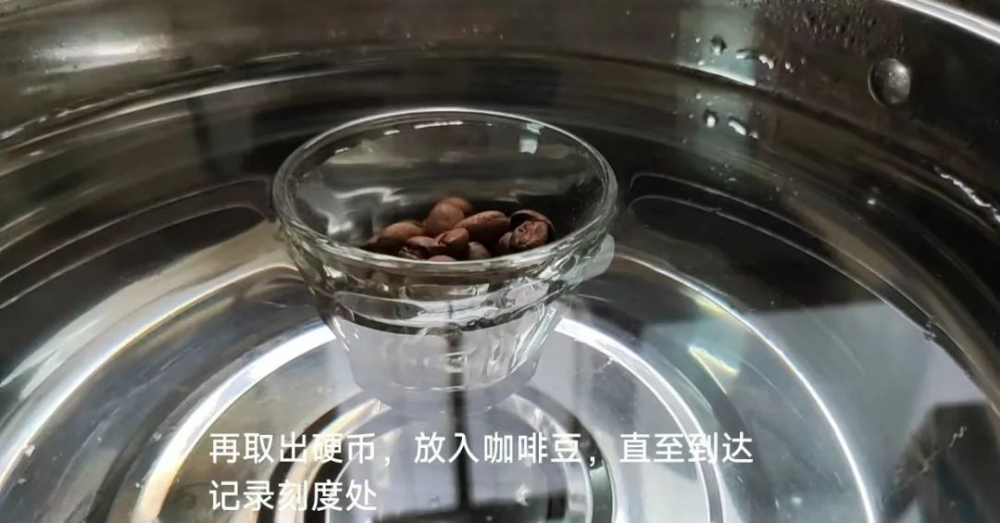
What if you have none of these tools? FrontStreet Coffee has another trick, borrowed from the story "Cao Chong Weighing the Elephant" from a second-grade Chinese textbook. In the story, Cao Chong used displacement to weigh an elephant. We simply reverse the idea: use objects of a known fixed weight to displace a certain volume of water, then add coffee beans until they reach the same displacement level, which gives you a fixed weight of beans.
A useful bit of trivia: a Chinese one-yuan coin weighs about 6g, a 50-cent coin about 3.8g, and a 10-cent coin about 3.2g. From these you can build the common coffee doses, 12g, 15.2g, 18g, 20g, 22.2g, and so on. That solves the ratio problem.
Managing Water Temperature and Brewing Parameters
Next comes water temperature. Since we cannot control it precisely, every other parameter needs to be as rigorous as possible so the brew tolerates a wider temperature range. Earlier this year, FrontStreet Coffee published an article on water temperature that included an experiment: steeping coffee cupping-style with water at 100°C, 94°C, and 80°C. The results showed that coffee at 100°C only developed unpleasant bitterness and off-flavors after 20 minutes, while 94°C took 30 minutes to show slight faults, and 80°C needed more than 10 minutes to show obvious flavor, though the result was balanced but bland.
That tells us cupping parameters maximize tolerance for large differences in water temperature. So FrontStreet Coffee uses a coffee-to-water ratio of 1:18, and with 2CUP (400ml) of water, that works out to exactly 22.2g of grounds. The grinder on hand is an 800-yuan hand grinder, which is decent quality. Next to an EK grinder there is still a clear gap in grind quality, so the grind should be slightly coarser to avoid the risk of fine particles.
As for water temperature, FrontStreet Coffee's approach is to bring the water to a boil, open the kettle lid, and let it stand for one minute before pouring. If you can measure it, 93-94°C would be ideal.
The Brewing Process
Once the parameters are set on paper, the practical side is very simple. Pour the ground coffee into the pot, then add hot water up to the measurement line.
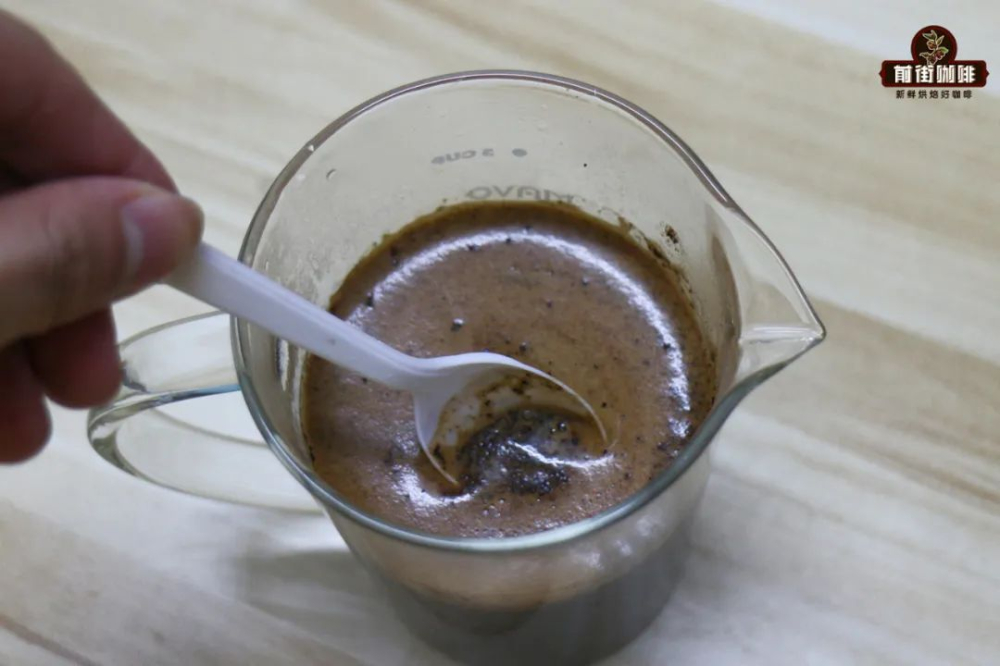
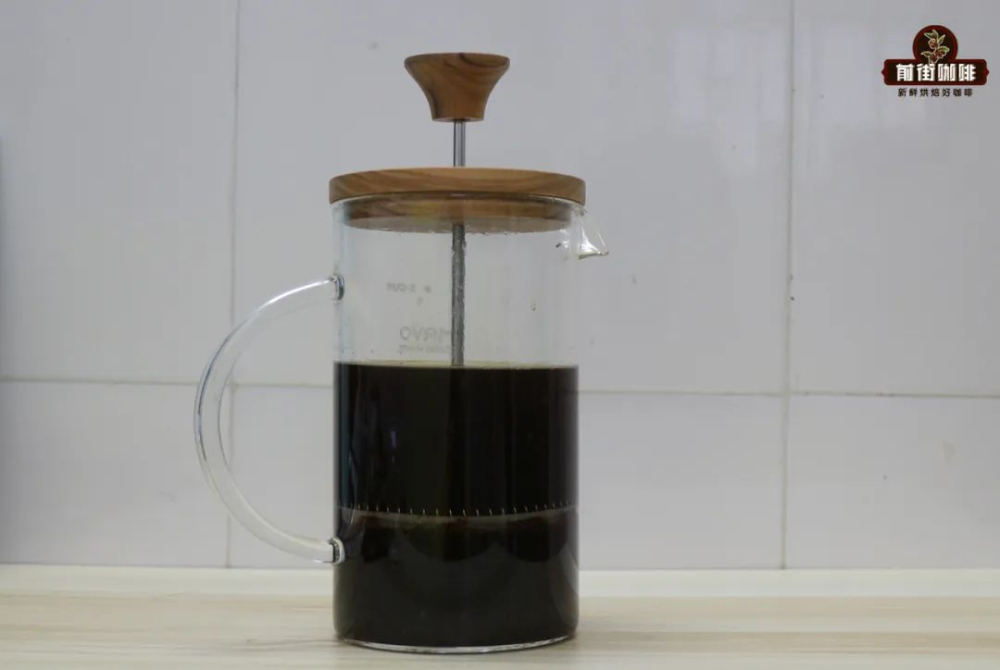
Wait 4 minutes, then gently stir the grounds floating on the surface with a spoon, much like "breaking the crust" in cupping. At the 5-minute mark, press the plunger down gently. You do not need to push it all the way, just about halfway or slightly lower. Pour off the coffee liquid and you are done.
Conclusion
This time the only coffee equipment used was a French press and a hand grinder. Everyone's minimalist setup will look different, but as long as you think creatively, there is always a solution.
FrontStreet Coffee Recommendation
Because a French press is a full-immersion brewer, the grounds stay in contact with hot water for a long time, so medium or dark roasts tend to work better than light ones: a light roast will pull out high acidity and bury the floral, fruity layers you paid for, while a medium or dark roast brings sweetness and caramel notes forward. If you like a clean, aromatic cup, try FrontStreet Strawberry Candy. This Gesha blend is built from a honey-processed Costa Rican coffee and a washed Panamanian Gesha, and brewed in a French press it releases rose, citrus, grape, and dried blueberry aromas, with a strawberry-gummy character when you add milk.
For a low-acid, full-bodied black coffee, FrontStreet PWN Golden Mandheling is the first pick. One of Asia's best-known specialty coffees, it goes through three rounds of hand sorting plus one pass of machine sorting, leaving uniform, translucent beans. After a medium-dark roast the beans are large and carry rich aromas of spice, caramel, cedar, and dark chocolate, and a French press extraction gives you a full body with good oils. Keep the grind coarse, roughly the texture of raw sugar, and the coffee will stay clean in the cup instead of leaving sediment behind.
Important Notice :
FrontStreet Coffee is a long-established specialty coffee roaster in Guangzhou China, selling freshly roasted beans from its own farm in Yunnan as well as dozens of carefully selected single-origin beans from around the world for both pour-over and espresso. The products deliver consistently excellent quality and great value, with shipping within 24 hours. Guangzhou's FrontStreet Coffee shop is recommended by many coffee lovers, and the beans are now available online at the Tmall 。
FrontStreet Coffee has moved to a new address:
FrontStreet Coffee Address: 315,Donghua East Road,GuangZhou
Tel:020 38364473
 Scan and follow the En Gafei WeChat official account. Please indicate that the reprint comes from "En Gafei".

