
Brazilian Coffee Beans Production Sharply Declines! Coffee Bean Prices Expected to Rise Again in 2023
Brazil Coffee Production Decline Due to La Niña Phenomenon
Recently, according to CCTV News reports, coffee production in Brazil—the world's largest coffee-producing country—has fallen sharply. Right now is a critical growth period for crops in the Southern Hemisphere, and the La Niña phenomenon lingering over the Pacific has now persisted for three years.
Market expectations suggest it isn't only coffee: Brazil's staple crops such as beans and corn are also likely to see reduced yields this year.
La Niña refers to the sustained abnormal cooling of sea surface temperatures across the eastern and central equatorial Pacific. It disrupts temperature and precipitation patterns, deepening droughts in some regions and flooding in others. The current La Niña began around September 2019 and has stayed mostly mild to moderate since then, but it began intensifying steadily this past April.
Brazilian agricultural meteorologist Dos Santos stated: "Whenever La Niña occurs, the entire country of Brazil is affected, with reduced rainfall in the south and flooding in the north. During the 2021-2022 summer and autumn harvest seasons, the central-southern region of Brazil experienced severe drought, while the north suffered devastating rainstorms."

Impact on Caconde: Brazil's Largest Coffee-Producing Region
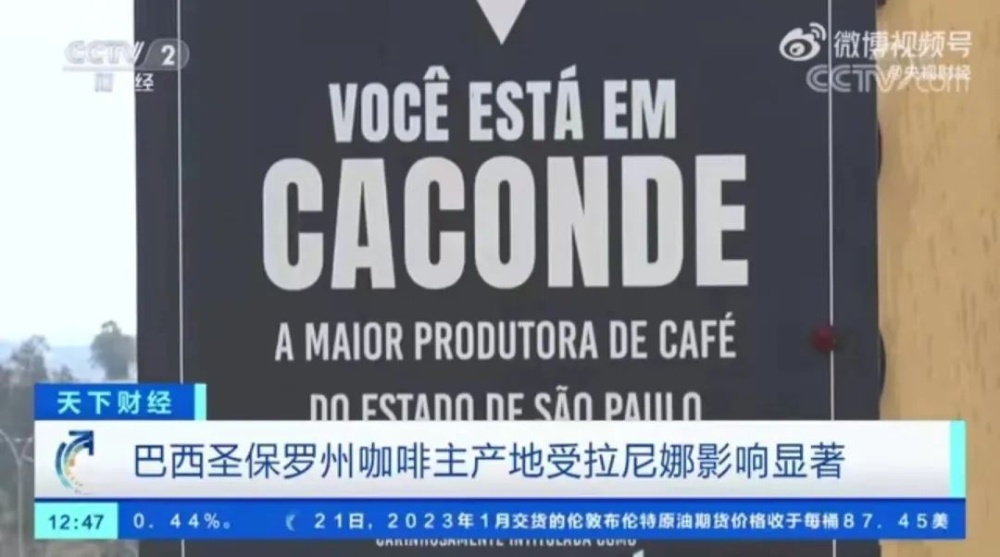
Caconde, in São Paulo state in southern Brazil, is the country's largest coffee-producing municipality, with 85% of its total annual income coming from coffee bean sales. In good harvest years, annual production in the area approaches 14,000 tons. But after more than three consecutive years of La Niña, local market participants expect that by the May 2023 harvest season, the area's total coffee bean output may drop dramatically to no more than 10,000 tons.
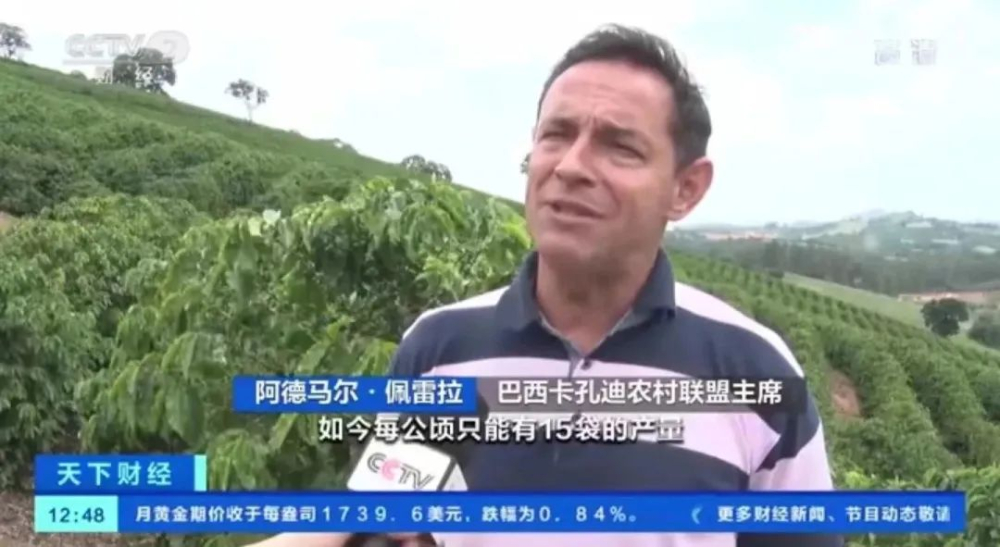
Ademar Pereira, President of the Caconde Rural Union in Brazil, said that three years ago the region could yield 50 bags of coffee per hectare; now it produces only 15 bags per hectare. The area has been hit by hail, frost, water shortages, and high temperatures. Consecutive years of bad weather have slashed production, making weather the single most common worry among Brazilian coffee growers.
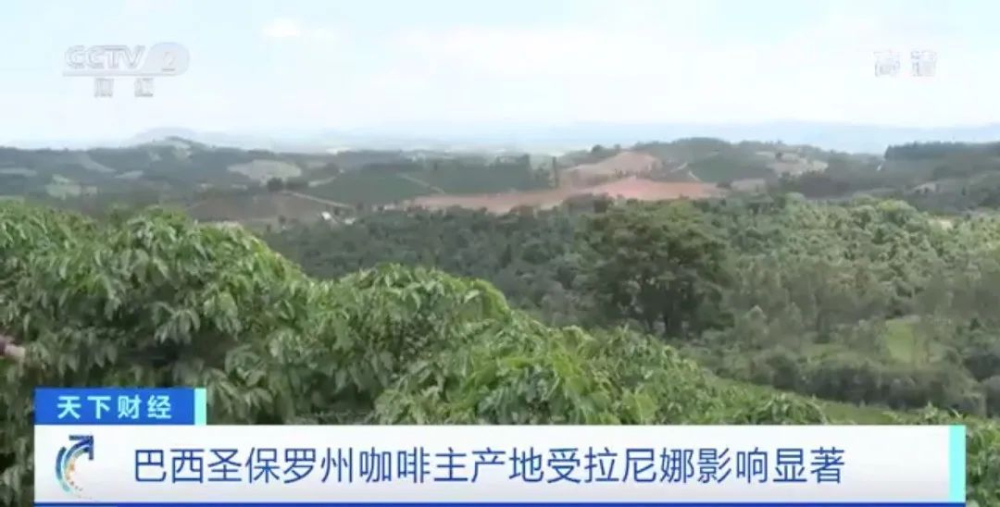
Right now, coffee trees are setting fruit and need large amounts of water. With La Niña holding precipitation below previous-year levels, both the yield and the quality of Brazil's coffee beans next year will take a serious hit.
Global Market Impact of Reduced Brazilian Coffee Production
Brazil is the world's largest coffee producer and exporter, accounting for one-third of global production—a position of enormous weight in the entire coffee trading market. Reduced Brazilian output will tighten overall market supply, drive global coffee bean prices significantly higher, and keep coffee futures elevated. Domestic traders are stockpiling spot goods to secure supply for the home market.
Impact on Other Coffee-Producing Regions
Brazil isn't alone in suffering adverse weather. Uganda, Africa's largest coffee exporter, saw its coffee exports fall to roughly 503,000 bags last month—a 14% drop compared to the same period last year, according to Xinhua News Agency. The Uganda Coffee Development Authority said drought has reduced coffee production across most of the country, and that the harvest season in central and eastern Uganda has shortened, which is the main reason for the export decline.
Global Coffee Production and Consumption Outlook
According to International Coffee Organization data, global coffee production for the 2021-2022 coffee year came to 167.2 million bags (60kg per bag), down 2.1% from the previous year's 170.83 million bags, while global consumption rose 3.3% to 170.3 million bags. Just as global consumption is recovering from the pandemic-induced downturn, concerns about supply from Brazil and Africa are mounting—coinciding with shrinking reserves and poor harvest prospects in the largest producing countries.
Image source: Internet
FrontStreet Coffee Recommendation
With prices climbing, it pays to know which Brazilian beans are worth your money. FrontStreet Coffee's picks:
As the world's largest coffee producer, Brazil grows an enormous variety of coffees. Brazilian beans carry moderate acidity, and the balance of sweetness, bitterness, and body is excellent—ideally suited to a medium roast, which brings out heady nut aromas and a mellow, gently tart cup, whether as a single origin or in a blend.
FrontStreet Brazil Cerrado Red Bourbon — for a first taste of Brazil, this pulp-natural lot from the renowned Cerrado region is a classic. A medium roast reveals rich aromas of cream, peanut, toasted bread, caramel, and hazelnut, with a rounded, non-acidic body and just a trace of bitterness. It brews beautifully as pour-over, and also suits moka pot, espresso SOE, siphon, and French press.
FrontStreet Brazil Queen Estate Yellow Bourbon — from Mogiana, near southern Minas, where fertile red volcanic soil feeds the cherries into full, rich aromatics. The rare Yellow Bourbon—a mutation of Red Bourbon—shows a cleaner fruit character, and through pour-over, moka pot, or a home espresso machine delivers the sugarcane sweetness that sets it apart from any other origin, alongside fruit and chocolate notes.
FrontStreet espresso blends — Brazil's low acidity, balance, and friendly price make it the backbone of many espresso recipes. FrontStreet's crema-rich Classic Blend, nutty Premium Blend, well-rounded Dark Cocoa Blend, and shop-focused Commercial Blend all contain Brazilian beans, which contribute chocolate and cream aromas along with gentle sweet-sour-bitter harmony—and that balanced character also makes extraction more stable.
Important Notice :
FrontStreet Coffee is a long-established specialty coffee roaster in Guangzhou China, selling freshly roasted beans from its own farm in Yunnan as well as dozens of carefully selected single-origin beans from around the world for both pour-over and espresso. The products deliver consistently excellent quality and great value, with shipping within 24 hours. Guangzhou's FrontStreet Coffee shop is recommended by many coffee lovers, and the beans are now available online at the Tmall 。
FrontStreet Coffee has moved to a new address:
FrontStreet Coffee Address: 315,Donghua East Road,GuangZhou
Tel:020 38364473
 Scan and follow the En Gafei WeChat official account. Please indicate that the reprint comes from "En Gafei".

