
Can Coffee Beans Be Re-Grinded If the Grind Isn't Fine Enough? The Principles and Effects of Double Grinding Coffee Beans
A friend once shared an interesting technique with FrontStreet Coffee: "Sometimes I forget to adjust the grind and the grounds come out too coarse. I don't want to waste them, so I dial the grinder to the right setting and run the grounds through again." FrontStreet Coffee laughed and replied: "Which new grinder have you been eyeing lately?"
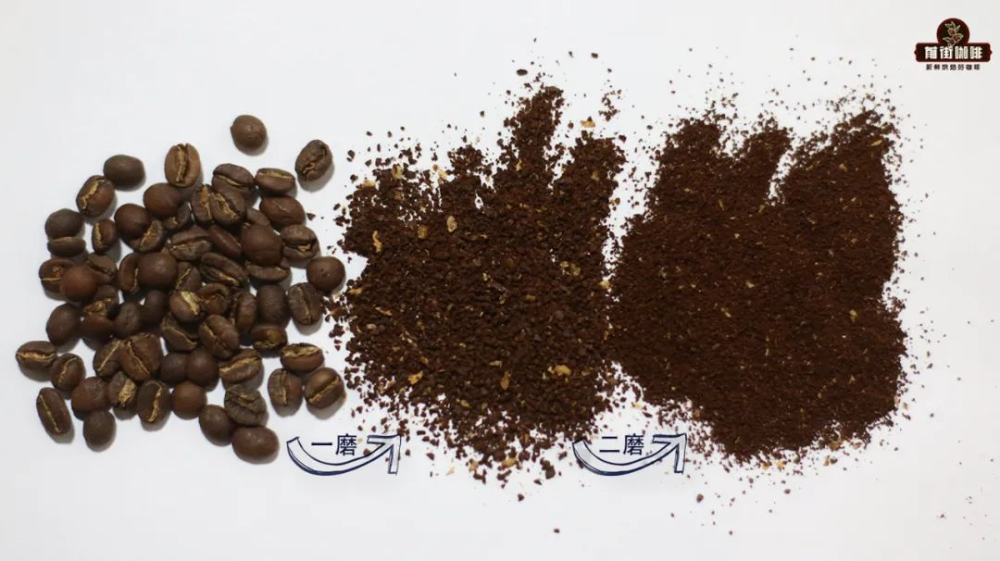
Is the approach feasible? Some people think of grinders as machines that simply break large particles into smaller ones. Coffee beans are relatively large particles, and they can be ground to powder — so grounds coarser than desired should, in theory, come out finer on a second pass. The plan sounds workable.
In practice, it's not that simple. Surely everyone has heard of "retention" in grinders: grind 20g of beans and you might collect less than 20g of grounds, with the missing portion stuck inside the grinder. This happens when coffee oils secreted from the beans glue grounds to the burrs, or when static electricity attracts grounds onto the burrs.

Grind already-ground coffee a second time and the static and oil adhesion get even worse. In severe cases, dense grounds packing into the burrs (the grinding area) can cause blockages and even machine failure. FrontStreet Coffee's previous grinder broke down and became unusable precisely because the burrs were clogged with excess fine grounds. So don't save a few grounds at the expense of your grinder.
Secondary Grinding
For the sake of everyone's grinders, FrontStreet Coffee doesn't recommend casually re-grinding grounds twice. That said, we can learn from how professionals use secondary grinding.
At the 2017 World Barista Championship (WBC), Japanese competitor Suzuki Itsuki used a secondary grinding method for her espresso beans. She first cooled the beans with liquid nitrogen, ground them at a coarse setting, then cooled the coarse grounds with liquid nitrogen again before grinding them to espresso fineness.
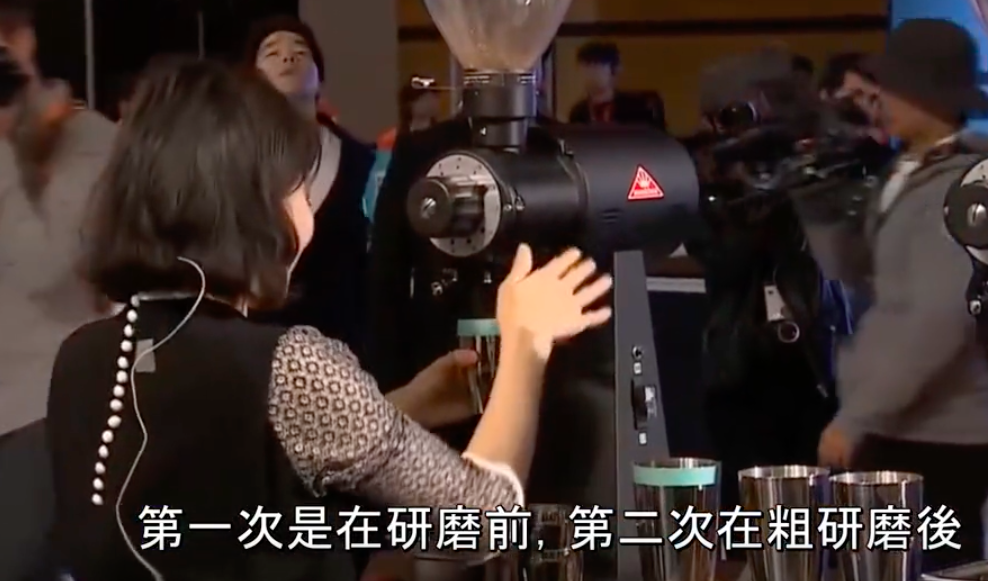
By her explanation, the liquid nitrogen freezing helped reduce the loss of aromatic flavors during grinding. Secondary grinding was used because, at the same grind setting, twice-ground particles have more surface area than once-ground particles — fewer coarse particles in the distribution, and more concentrated, uniform particle sizes overall.
At the 2019 World Brewers Cup (WBrC), Chinese competitor Du Jianing also used secondary grinding to achieve her desired grind quality. She first ground the beans at a relatively coarse setting, removed the silver skin from the coarse particles to improve the coffee's clarity, then ground them again to the required fineness. Particles from secondary grinding come out slightly more uniform than from a single grind.
The point of secondary grinding is the pursuit of ultimate grind uniformity. But pay closer attention to the equipment they used. Suzuki Itsuki used an EK grinder, whose large burrs resist clogging — and it was provided by the event organizers. Du Jianing used a C40 hand grinder, easy to maintain though tiring to operate. Consider your own grinder and wallet before deciding.
FrontStreet Coffee Recommendation
Once your grinder is sorted, it deserves beans worth grinding carefully. A versatile favorite is FrontStreet Coffee's Fazenda Rainha Yellow Bourbon from Brazil: a premium estate bean with outstanding sweetness, roasted medium to show nuts, cream, sugarcane, and gentle fruit acidity — equally at home in a hand grinder's hopper for pour-over, French press, moka pot, or espresso.
If you prefer something fruit-forward, FrontStreet Coffee's Natural Red Cherry from Yirgacheffe is a classic: one of the earliest beans to champion all-red-cherry natural processing, roasted medium-light to deliver ripe fruit aromas, clear fermentation and berry sweetness on entry, citrus acidity and creamy smoothness as it cools, and a finish of ripe grape juiciness — a rewarding grind, every time.
Important Notice :
FrontStreet Coffee is a long-established specialty coffee roaster in Guangzhou China, selling freshly roasted beans from its own farm in Yunnan as well as dozens of carefully selected single-origin beans from around the world for both pour-over and espresso. The products deliver consistently excellent quality and great value, with shipping within 24 hours. Guangzhou's FrontStreet Coffee shop is recommended by many coffee lovers, and the beans are now available online at the Tmall 。
FrontStreet Coffee has moved to a new address:
FrontStreet Coffee Address: 315,Donghua East Road,GuangZhou
Tel:020 38364473
 Scan and follow the En Gafei WeChat official account. Please indicate that the reprint comes from "En Gafei".

