
What is the optimal brewing time for pour-over coffee? Causes and solutions for slow drip rates
In pour-over coffee, extraction time is not a parameter you can actively control with precision. It functions more as an indicator, confirming whether the rest of your parameters are reasonable. Put another way, if you can keep extraction time within a narrow window, your parameters are appropriate and your technique is stable.
The Impact of Extraction Time on Coffee Flavor
Assuming the brewing parameters stay constant, extraction time has a positive correlation with extraction rate. Shorter times produce lower extraction rates, longer times higher ones. As we know, there is a range of extraction rates widely considered to yield the best flavor, generally accepted to be between 18-22%. Coffee extracted below or above that range will not taste as good. Reflected in extraction time, this also creates a specific window, but the window is not numerically fixed; it is determined by the brewing parameters, meaning the method you use.
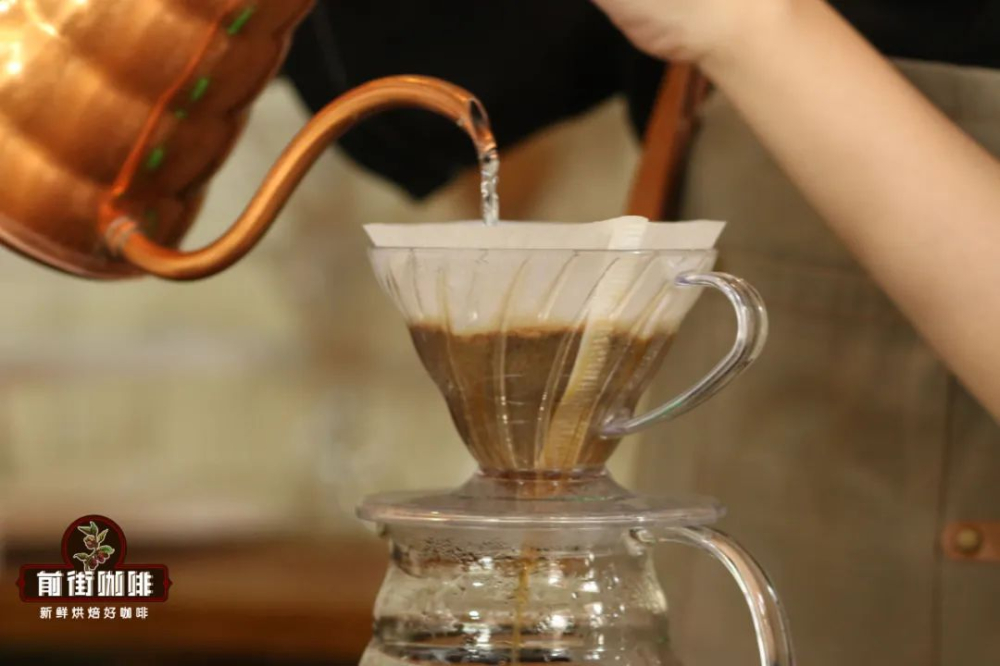
Take the parameters FrontStreet Coffee uses for light roast coffee: 15g of grounds, a 1:15 ratio, 91°C water, an 80% pass-through rate on a #20 sieve, and a three-stage pouring method. The ideal extraction time should land between 1 minute 50 seconds and 2 minutes 10 seconds.
Naturally, change the brewing parameters and the optimal extraction window shifts too. With a single-pour method, for instance, extraction time should be kept around 1 minute 30 seconds.
Why Extraction Time Varies Even with Consistent Parameters
Many coffee enthusiasts wonder why their extraction times differ even when the parameters appear identical. The problem usually lies in misjudging grind size or in individual pouring habits.
When we share brewing parameters, we typically include dose, ratio, water temperature, grind size, and pouring method (filter cup). Of these, dose, ratio, and water temperature can be controlled precisely. Grind size and pouring method, however, are very prone to variation.
A common grind error stems from poor grinding uniformity, leading to misjudgment. Simply put, a high-quality grinder produces grounds with a tighter particle-size distribution and minimal variation in coarseness, while a lower-quality grinder produces a wider spread with significant variation. FrontStreet Coffee recommends calibrating with a #20 sieve. At the same 80% pass-through rate, a lower-quality grinder produces both more fine and more coarse particles, resulting in uneven extraction and a longer extraction time because of the excess of fines.
FrontStreet Coffee once heard from a friend who could not keep his extraction time under 2 minutes 10 seconds despite using FrontStreet Coffee's brewing parameters. Watching him brew, FrontStreet Coffee noticed that he habitually poured with a very small stream. That stretched out his overall pouring time, and the small stream failed to raise the water level enough, which also impeded drainage and further extended the total brewing time.
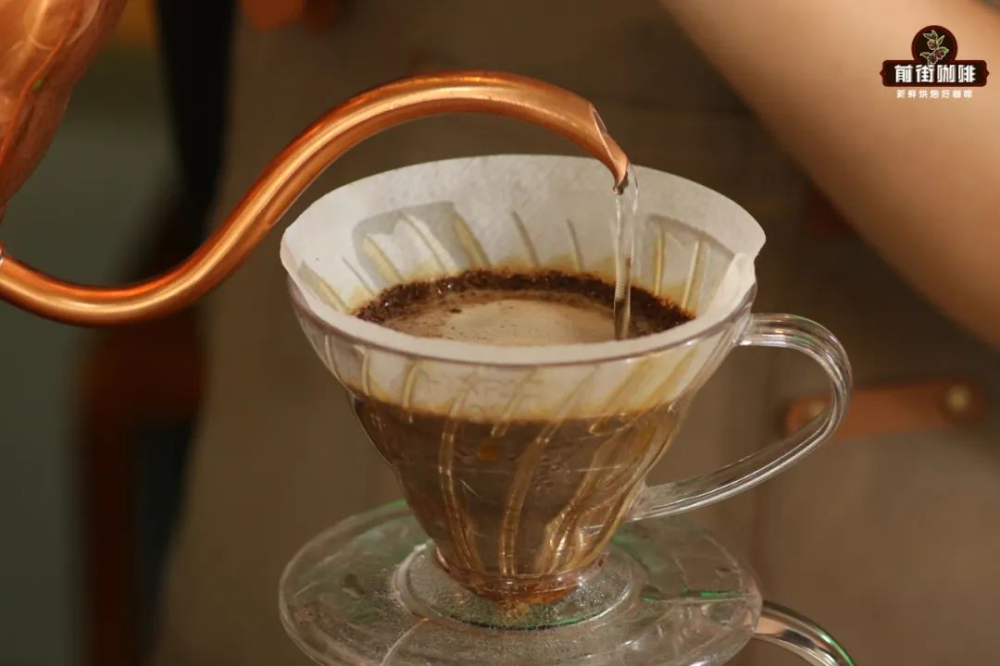
FrontStreet Coffee suggests pouring at a flow rate of 5ml/s, raising the liquid level to half the height of the V60's short ribs during the second pour, and reaching that same height again when the final pour is complete.
Including Extraction Time as a Controllable Parameter
Most brewing methods treat extraction time as a passive parameter, used to verify whether the brewing parameters or process have run into trouble. Some methods, however, use time as an active control variable, such as the four-six brewing method shared by Mr. Tetsu Kasuya.
The four-six method involves five pours in total, with each interval fixed at 45 seconds when using 20g of coffee grounds. Its advantage is that the brewer no longer has to decide when to keep pouring; you simply follow the procedure and pour when the time comes. As a result, the final extraction time can be controlled very well.
FrontStreet Coffee Recommendation
Getting repeatable extraction times depends as much on the bean as on technique, since a bean with a clear, consistent flavor profile makes it obvious when your timing drifts. On a V60, FrontStreet's Ethiopia Gedingding is a dependable benchmark: bright citrus, berry, and jasmine over a green-tea sweetness, forgiving enough that beginners can taste when they have over- or under-extracted. The Ethiopia Huakui pushes in a juicier direction with strawberry, passionfruit, and jackfruit.
If you want a cup that really rewards careful timing, the Panama Esmeralda Red Label Geisha is the one, with its jasmine, bergamot, and black-tea layering and long, clean finish. For a bright, structured alternative, FrontStreet's Kenya Cherry Tomato, grown at 1550-1750 meters from SL28 and SL34 with a 72-hour double wash and given a light roast to preserve its vivid, juice-like acidity, is a Kenyan that makes small parameter changes immediately audible.
Important Notice :
FrontStreet Coffee is a long-established specialty coffee roaster in Guangzhou China, selling freshly roasted beans from its own farm in Yunnan as well as dozens of carefully selected single-origin beans from around the world for both pour-over and espresso. The products deliver consistently excellent quality and great value, with shipping within 24 hours. Guangzhou's FrontStreet Coffee shop is recommended by many coffee lovers, and the beans are now available online at the Tmall 。
FrontStreet Coffee has moved to a new address:
FrontStreet Coffee Address: 315,Donghua East Road,GuangZhou
Tel:020 38364473
 Scan and follow the En Gafei WeChat official account. Please indicate that the reprint comes from "En Gafei".

