
Unbelievable! Turns Out Drinking Coffee is Like Using a Credit Card - It Can Be Overdrawn?!
"Drinking coffee is like using a credit card — you borrow against your body's energy quota in advance, and eventually you hit overdraft."
People love coffee for its taste, sure — but also for the way the chemical compounds in coffee act on the nervous system, delivering a physiological jolt and a hit of sensory pleasure that briefly shifts your state of wakefulness in a world that demands constant mental performance.

Caffeine is, by social convention, a permitted recreational drug in today's society, with no age restrictions. But perhaps one day it will be locked behind the counter like alcohol and prescription drugs, off-limits to minors.
A recent consumer survey report from South Korea shows that more and more younger students are buying caffeinated beverages (coffee, energy drinks, and the like) in their after-school hours — and the higher the caffeine content, the more popular the drink. Yet we also know that excessive caffeine intake harms minors' development, and there is currently no law anywhere in the world prohibiting minors from buying caffeinated products.

- Dialogue screenshot from the TV series "Extraordinary Attorney Woo"
Why Minors Should Avoid Caffeine
There are two main reasons minors should not consume caffeine. First, caffeine activates the sympathetic nervous system, raising blood pressure in the short term and increasing the risk of hypertension — bad news for a child's developing cardiovascular system. Second, caffeine stimulates osteoclast activity, and prolonged intake interferes with calcium deposition in bone, working against healthy bone development.
And it isn't just minors who should avoid long-term, heavy caffeine use — the same logic applies to adults. The latest research suggests that coffee may not actually provide energy at all but rather deplete it: drink too much caffeine for too long and, instead of feeling refreshed, you feel progressively more tired.
Like a credit card, every dose of caffeine spends your body's quota in advance. Keep "swiping" without ever "paying it back," and eventually you max out the limit and the card stops working.
Andrew Huberman, the neuroscientist and Stanford professor, calls this "sleep hunger." The longer the condition persists, the closer you get to the point where coffee stops working no matter how much you drink — caffeine burnout.
How Caffeine Works
"Isn't caffeine supposed to wake you up? How could it make me sleepier?"
First, a quick look at how caffeine creates that temporary feeling of alertness.
We feel sleepy because the brain secretes a substance called adenosine, an inhibitory neurotransmitter. When adenosine binds with a specific receptor in the brain, drowsiness sets in. The more adenosine binds to receptors, the sleepier you become.

After you take a sip of coffee, the situation in your brain looks roughly like this...
(The pink cushion is the receptor, the cow cat is caffeine, and the orange cat is adenosine.)
Caffeine isn't a substance that makes the two sway along together; what it does is reach the receptor first and temporarily block adenosine from binding. But adenosine failing to bind doesn't mean the brain stops producing it — the body needs adenosine to help reduce inflammation, regulate heart rate, aid digestion, and more.
The human body likes regular sleep, so the brain releases adenosine on a 24-hour circadian rhythm. Force yourself to stay up late and you'll feel even drowsier, because the brain releases more adenosine than usual to help you fall asleep at your normal time.

The same applies to coffee! The more caffeine you consume, the more adenosine accumulates, leaving your body feeling hollowed out. Your consciousness stays alert, but it's like a soulless shell — the body itself is exhausted. Adding more caffeine at that point accomplishes nothing, and this state is what we call caffeine burnout.
If the condition drags on, the body eventually develops a kind of "resistance": caffeine can no longer stimulate the nervous system, and all you feel is increasingly tired and sleepy.
How to Avoid Caffeine Burnout
"So how do I avoid caffeine burnout? I still need it to survive!!"
Adjusting your rest schedule, your caffeine frequency, and your intake amount is absolutely essential!
Caffeine has a half-life of five hours, and it takes ten hours to clear completely. That means a cup of coffee five hours before bed is equivalent to drinking half a cup right at bedtime. So avoid caffeinated foods (coffee, cola, tea, chocolate, energy drinks, and so on) within 5 hours of bedtime — ideally 10 — and your sleep quality will improve noticeably.
Normally, adenosine needs time to dissipate in the early morning, so drinking coffee immediately upon waking doesn't actually refresh you — it stimulates the production of even more adenosine, leaving you stuck in a state of never quite waking up. The best time for coffee is 90 minutes after waking. That gives your adenosine time to clear, and only once it has mostly subsided can coffee deliver its full effect.
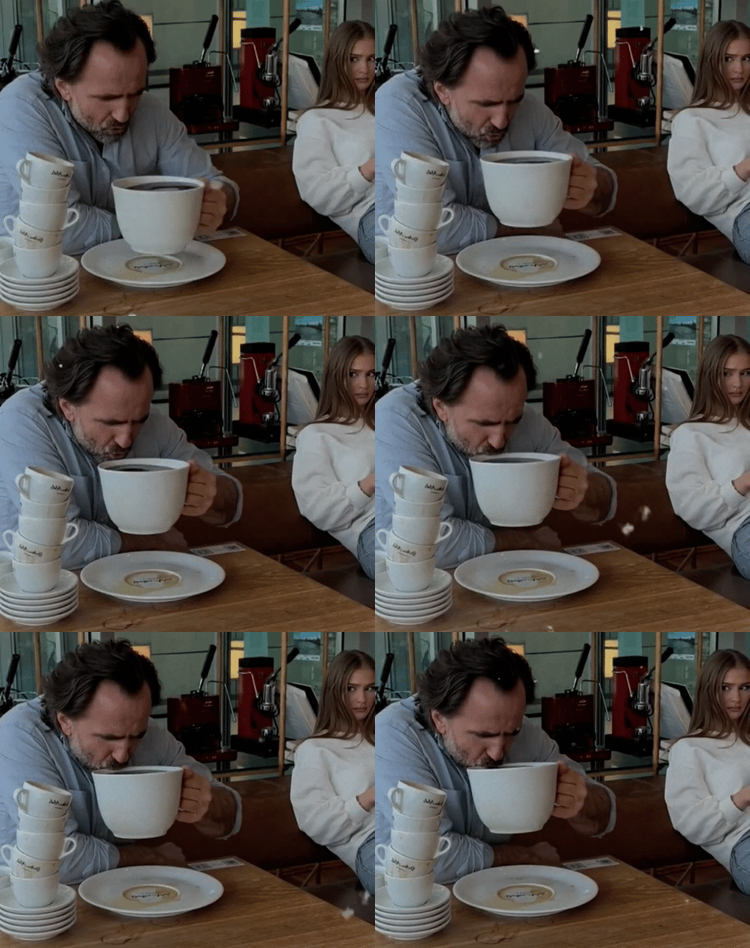
While coffee makes you focused and energized, it also raises your stress load. So when you're already feeling stressed, don't reach for caffeine! It only pushes your brain to produce more adenosine to regulate your heart rate and calm your emotions.
Coffee is no magic potion. When your body is tired, what it needs is proper rest — not the self-deception of jolting your central nervous system and overdrawing your reserves.
As the classic line from Hong Kong's old gangster films goes: "What goes around comes around!" Everything you overdraw eventually has to be repaid.
Good health is what matters most!
Image source: Internet
FrontStreet Coffee Recommendation
Since coffee spends your energy on credit, it helps to spend it on a cup worth savoring slowly rather than gulping down for survival. For a rich, classic cup, FrontStreet Coffee's Brazil Queen Estate beans are a gentle, balanced choice: pronounced nut, cocoa, and caramel aromas in a rounded, silky profile with low acidity and standout sweetness. They hold remarkably steady across pour-over, moka pot, or espresso, and with Brazil's naturally good crema they remain a long-time daily favorite for home brewers who love traditional coffee flavor.
For something more distinguished, the FrontStreet Jamaica Blue Mountain No. 1 comes from the certified Clifton Estate in Jamaica's Blue Mountains, where high-altitude mist, volcanic soil, and a mild climate let the cherries mature slowly into a famously harmonious cup — acidity, sweetness, bitterness, and aroma in perfect accord, with cream, caramel, chocolate, nuts, and honey unfolding over a clean, lingering finish. Roasted medium-dark and fully certified from origin, it's a classic, dependable choice for unhurried mornings — the kind of coffee that rewards rest, not adrenaline.
Important Notice :
FrontStreet Coffee is a long-established specialty coffee roaster in Guangzhou China, selling freshly roasted beans from its own farm in Yunnan as well as dozens of carefully selected single-origin beans from around the world for both pour-over and espresso. The products deliver consistently excellent quality and great value, with shipping within 24 hours. Guangzhou's FrontStreet Coffee shop is recommended by many coffee lovers, and the beans are now available online at the Tmall 。
FrontStreet Coffee has moved to a new address:
FrontStreet Coffee Address: 315,Donghua East Road,GuangZhou
Tel:020 38364473
 Scan and follow the En Gafei WeChat official account. Please indicate that the reprint comes from "En Gafei".

