
Intense Competition in the Coffee Industry! Another Round of Price Increases Coming!
Professional Coffee Knowledge Exchange
South Korea's Coffee Market Faces Price Hikes Amid Currency Weakness
On October 5, according to media reports, South Koreans drink an average of 352 cups of coffee per year—nearly three times the global per capita level. But South Korea imports every single one of its coffee beans. With rising prices and the won's continued weakness, South Korean coffee companies are struggling to absorb the pressure and are preparing a new round of price increases.
According to reports, as the won keeps depreciating and costs climb, some South Korean coffee chains have already raised prices on certain beverages by about 10%. Coffee prices in South Korea had already collectively risen once in the first half of this year, so this new hike has drawn intense public attention.
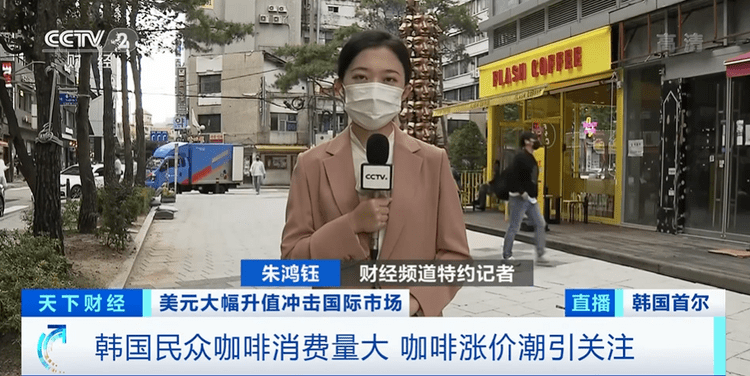
The price-rise wave reached South Korea early in the year. As Asia's highest per capita coffee consumption market, South Korea experienced its most expensive moment for coffee: international coffee bean prices hit a 10-year high, and even Starbucks South Korea—which hadn't raised prices in 8 years—couldn't hold back. Multiple coffee brands led by Starbucks adjusted prices in the South Korean market, with individual items at some Starbucks stores going up by about 2 yuan. Now that another wave is forming, how should South Korea respond?
Factors Driving Coffee Price Increases
First, reduced raw material supply: the drop in Brazilian coffee production directly pushed coffee prices higher. Droughts and frosts dealt serious damage to production, and the bean shortage began spreading globally. Then came rising global supply chain costs amid nationwide inflation, along with climbing labor and rent costs. More and more coffee companies found themselves under heavy market pressure, ultimately producing an industry-wide price-increase trend.
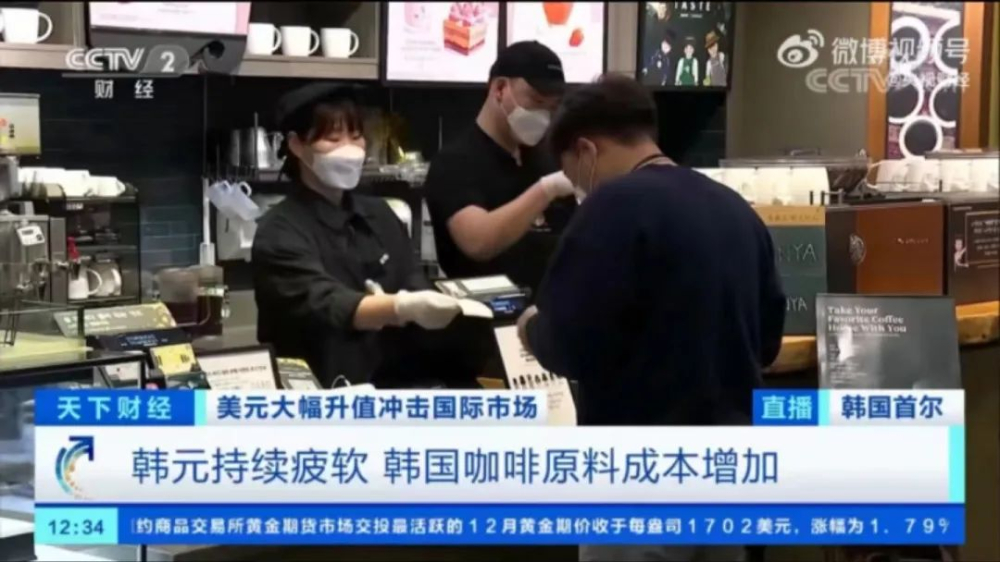
The stacking of these three pressures steadily intensified pricing pressure across the entire coffee market. Early this year, coffee companies such as Starbucks and Tims could no longer withstand the pressure and began raising prices one after another.
The continued rise in international coffee bean prices, combined with the won's sustained weakness against the US dollar, has deepened the cost pressure on South Korean coffee companies. In Seoul's foreign exchange market, the won-to-dollar rate has hovered around 1,430 won per dollar, still fluctuating at low levels. The South Korean coffee industry warns that if the rate reaches 1,500 won per dollar, cost expenditures would rise by roughly 10%.
South Korea's Saturated Coffee Market
Since the pandemic began, with people's increased need for stress relief and a surge in delivery demand, the number of coffee shops in South Korea has grown rapidly. As of June this year, there were over 90,000 coffee beverage shops in South Korea, up 16% year-on-year—nearly twice the nationwide count of convenience stores, with Seoul alone hosting more than 25,000.
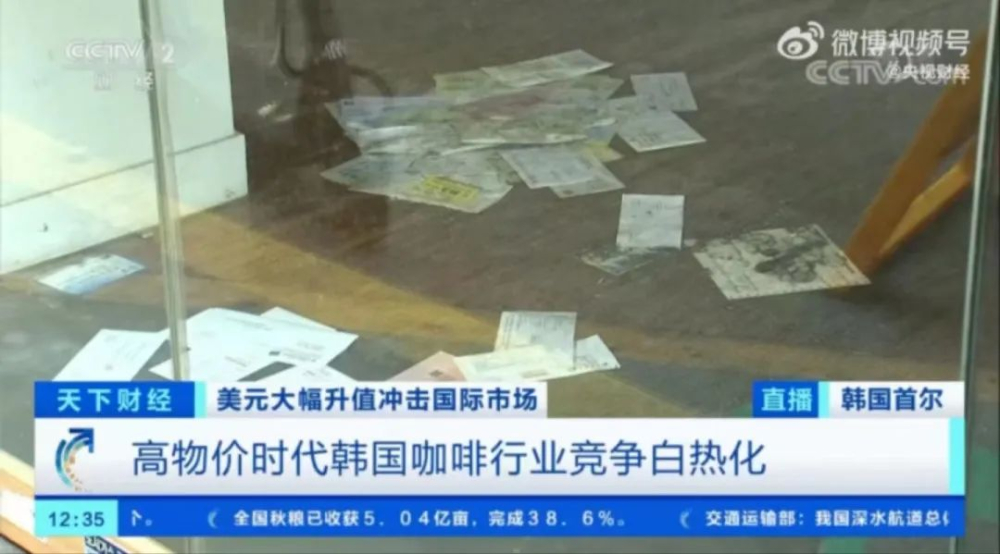
In South Korea's restaurant industry, coffee shops carry low barriers to entry, which means cutthroat competition and high closure rates. A Seoul survey showed that in the second quarter of this year, the closure rate of coffee shops exceeded that of the entire restaurant industry, with fewer than 40% of stores surviving beyond five years. Given South Korea's high cost of living, budget coffee at around 5 yuan in convenience stores is hugely popular. Coffee shops, already squeezed by raw-material and labor costs, are seeing their survival space shrink further, accelerating industry consolidation.
Future Challenges for South Korea's Coffee Industry
Against this backdrop, price increases look like an unavoidable choice—but will consumers keep paying? How to carve out a unique path in an era of high prices has become a question the whole South Korean coffee industry must reflect on.
Image source: Internet
FrontStreet Coffee Recommendation
FrontStreet Classic Blend (Top Pick)
Designed specifically for espresso machines and moka pots, the FrontStreet Classic Blend's standout advantage is exceptional crema. Even beginners on non-professional home machines can easily pull dense, fine crema, and extraction is remarkably stable. Its traditional "Mamba" recipe gives a mellow, warm body that both veterans and newcomers embrace—an essential, dependable home coffee.
FrontStreet Specialty Blend (House Classic)
Another medium-dark espresso bean for lovers of rich, nutty flavor. The FrontStreet Specialty Blend pairs washed Colombian beans with pulped natural Brazilian beans, yielding nuts, dark chocolate, and caramel in espresso and smooth cream, almond, and cocoa aromas in milk drinks—with crema every bit as good as café output. Perfect for practicing latte art at home or preparing to open a shop.
FrontStreet Commercial Blend
If the Specialty and Classic Blends are made for newcomers, the FrontStreet Commercial Blend is cut to measure for those about to open a café. Built on the Specialty Blend with a small addition of Robusta, this traditional espresso formula adds deeper brown, more delicate crema and a heavier body. Americanos, lattes, and mochas all come through with nuts, cocoa, and caramel—and latte art becomes effortless.
Important Notice :
FrontStreet Coffee is a long-established specialty coffee roaster in Guangzhou China, selling freshly roasted beans from its own farm in Yunnan as well as dozens of carefully selected single-origin beans from around the world for both pour-over and espresso. The products deliver consistently excellent quality and great value, with shipping within 24 hours. Guangzhou's FrontStreet Coffee shop is recommended by many coffee lovers, and the beans are now available online at the Tmall 。
FrontStreet Coffee has moved to a new address:
FrontStreet Coffee Address: 315,Donghua East Road,GuangZhou
Tel:020 38364473
 Scan and follow the En Gafei WeChat official account. Please indicate that the reprint comes from "En Gafei".

