
Coffee Golden Cup Extraction Theory: How to Calculate Pour-Over Coffee Extraction Rate and Concentration - Pour-Over Coffee Powder-to-Water Ratio Recommendations
For professional coffee knowledge exchange and more coffee bean information, please follow Coffee Workshop (WeChat public account: cafe_style)
For more specialty coffee beans, please add FrontStreet Coffee on WeChat: qjcoffeex
The Case of the TDS Meter Incident
Recently, in a barista's venting post, one incident stood out as perfectly absurd:
"I'd like a pour-over Guodingding coffee."
(The barista finished the extraction. The customer, without tasting a drop, whipped out a TDS concentration meter and scooped a sample straight from the cup.)
"Your coffee's concentration is 1.37%! It's already exceeded the 1.15%–1.35% range in SCA's Golden Cup extraction standards!"
"I'm sorry — why don't you take a sip first? If it tastes off, I'll happily make you another cup."
"No need! You're just unprofessional! Take this cup away, I'm not coming back!"
"……………………………………………………………………………………"

The Evolution of Golden Cup Standards
Most of us have absorbed the same soundbite about Golden Cup extraction: the ideal concentration for a cup of coffee is 1.15%–1.35%, with an ideal extraction rate of 18%–22%. The catch: those figures are not SCA's ideal concentration. They belong to the SCAA (Specialty Coffee Association of America).
While the ideal extraction rate of 18%–22% is agreed upon worldwide, the American and European coffee associations have always disagreed on concentration. SCAA's ideal range is 1.15%–1.35%; SCAE's (Specialty Coffee Association of Europe) is 1.2%–1.45%; NCA's (National Coffee Association of America) is 1.3%–1.55%.
All of these ranges trace back to the research of Dr. Lockhart in the 1950s–60s, who established Total Dissolved Solids (TDS) and extraction rate as the quantitative yardsticks of coffee quality. Working with several research institutions, he produced the coffee brewing control chart that served as the textbook for coffee extraction and Golden Cup theory for the following decades.
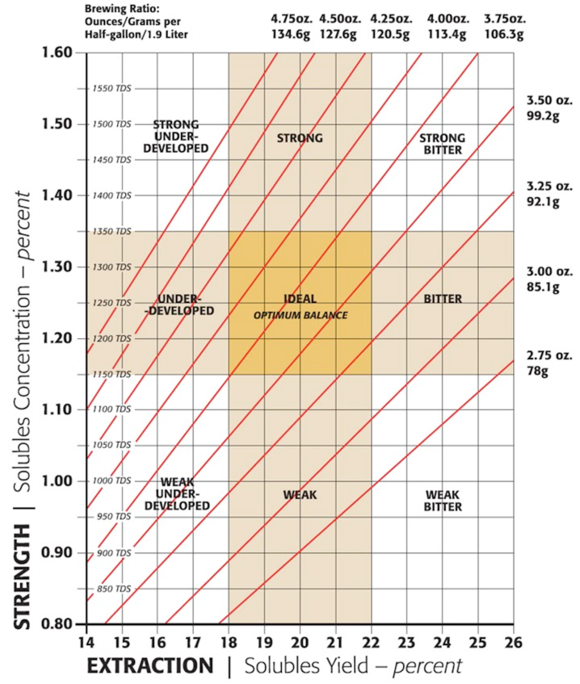
The Revised Golden Cup Standards
Coffee, however, did not stand still. With shifting quality standards, roasting preferences, and everything else, parts of the original Golden Cup theory couldn't keep pace with modern equipment, diverse extraction techniques, and our evolving understanding of flavor perception. So after SCAA and SCAE merged to form the SCA in 2017, the new body partnered with the Coffee Center at the University of California, Davis to adjust the brewing control chart, releasing a revised version in 2019.
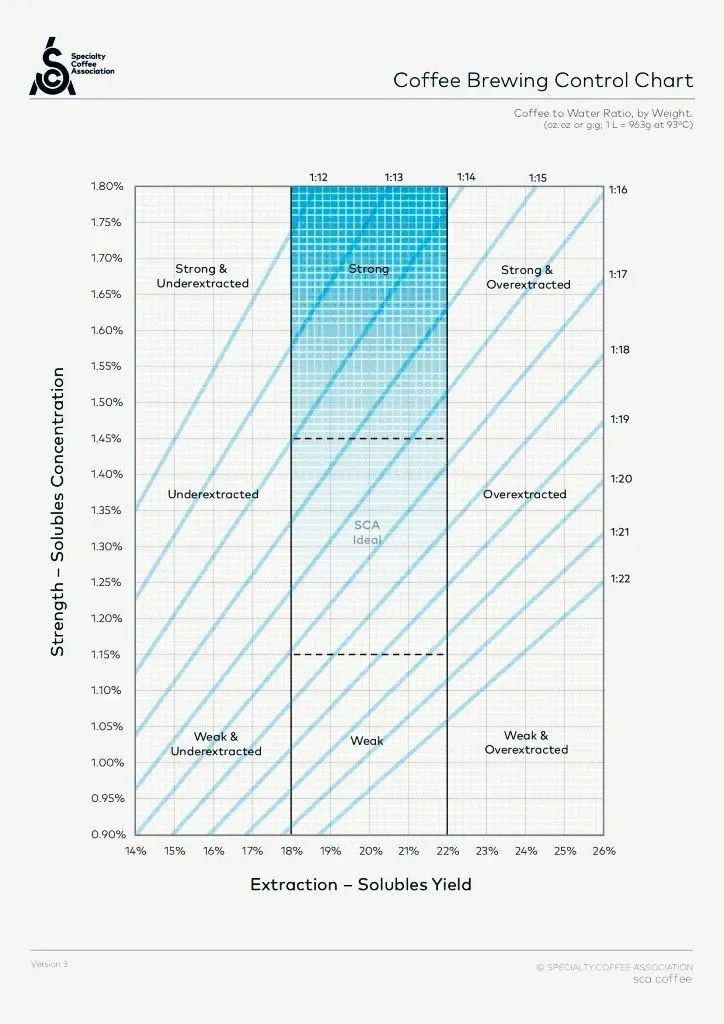
The single biggest change between the two charts is philosophical: coffee sitting outside the old ideal values might actually taste good! Under the revision, the upper limit of ideal concentration was expanded from 1.35% to 1.45%; the recommended brewing ratio widened from 1:15–1:20 to 1:14–1:20; the tolerable upper concentration limit rose from 1.6% to 1.8%; and the old label of "bitterness" was replaced with "over-extraction."
The point of the revision is to stop confusing sensory description with consumer preference. The old chart's treatment of concentration was frankly dogmatic. Taste a coffee with noticeable bitterness — whether or not the drinker actually objects to it — and if concentration exceeded the ideal band, it was declared unpleasantly bitter, full stop.
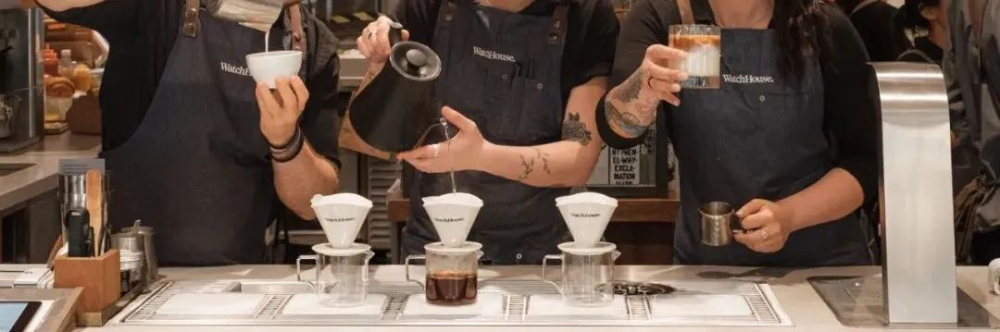
Then there's the situation that opened this article: the difference between 1.35% and 1.37%. Can human senses really detect that gap? Under the published chart, even when our senses detect nothing, the coffee gets stamped as having non-ideal, or poor, concentration — dismissing what the palate actually reports. That's an unfair way to judge any coffee.
Beyond Simple Measurements
Even after the revision, some habits die hard. When people discuss whether a coffee tastes good, they tend to cite concentration while ignoring extraction rate ("it's too strong!"), or cite extraction rate while ignoring concentration ("it's over-extracted!").
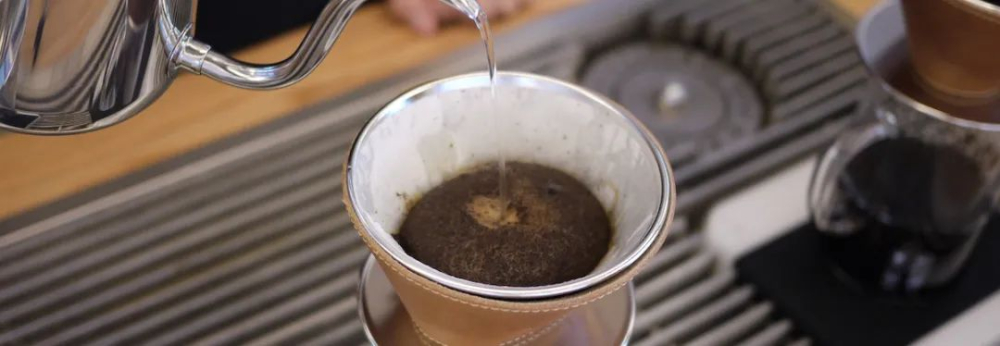
Subsequent SCA research found something more interesting: different flavor expressions actually require deviating from the ideal ranges to show up at all. Today's coffee flavors are wonderfully diverse, and brewing strictly inside the ideal extraction rate and concentration does not necessarily produce the best flavor expression.
Per the joint analysis by the UC Davis Coffee Center and the SCA, the unique flavors of differently roasted beans often need extraction rates and concentrations below or above the ideal ranges to be properly expressed.
Sourness, citrus, and dried fruit flavors tend to appear under high concentration and low extraction. The intensity of sourness and citrus usually rises with concentration but falls with extraction rate; appropriately high concentration with low extraction enhances pleasant acidity, while pushing it too far yields unpleasantly sharp acidity. Tea-like, floral, and chocolate flavors tend to emerge under low concentration and high extraction, while sweetness often appears under low concentration and low extraction.
But in both the original and revised charts, one convention never changes: high concentration means "strong" and low concentration means "weak." Some delightful flavors are best expressed at low concentrations — yet the chart brands them all as weak. This is why the tea master Han Huaizong argued in "Fourth Wave Coffee Science" that both charts can be misleading.
The Purpose of Coffee
The Golden Cup extraction standards are, at bottom, reference values the specialty coffee industry created to reduce arguments caused by individual differences in judging concentration. They are not a 100% requirement that coffee must fall within the standard values to taste good — nor proof that anything above or below the TDS band tastes bad.

The whole point of drinking coffee is to feel happy, pleasant, and comfortable. If you like it, that's what matters. Even if the TDS meter reads outside the Golden Cup ideal range, if it tastes good to you, it is good. Don't turn drinking coffee into a chemistry class — nobody needs to chase decimal points to enjoy a cup.
Image source: Internet
FrontStreet Coffee Recommendation
Beans That Reward the Pursuit of the Perfect Cup
If the brewing control chart is your kind of fun, you'll want beans with enough clarity and structure to make the measurements worthwhile. For the V60 — Hario's Tokyo-born, 2004-redesigned classic with its 60-degree cone and single large outlet — FrontStreet Coffee recommends its floral-fruity lots: the FrontStreet Yirgacheffe Guodingding, a washed Ethiopian daily-drinker with jasmine florals, lemon acidity, and berry tones plus a green-tea finish, whose gentle, fruit-like brightness makes it a favorite first pour-over for beginners.
The natural-processed FrontStreet Guizi pushes the tropical side hard — strawberry, passion fruit, jackfruit, even lychee, with pronounced sweetness, minimal bitterness, and a juice-like smoothness that has earned it the nickname "the coffee for people who don't like coffee." The FrontStreet Kenya Cherry Tomato, grown at 1,550–1,750 meters in Thika on SL28 and SL34 with a 72-hour double-washed fermentation, offers bright, solid acidity like fresh-squeezed juice — cherry tomato, dried dark plum, snow pear, black plum — finishing with yellow sugar and a whisper of green tea. And the FrontStreet Strawberry Candy blends Panama's washed Geisha with Costa Rican honey-processed coffee for rose, orange, grape, dried blueberry, and strawberry-candy sweetness — as satisfying to measure as it is to drink.
For the darker end of the chart, the deep-roasted FrontStreet PWN Golden Mandheling keeps acidity very low with a mellow, long body of herbs, dark chocolate, and a faint earthiness, while the balanced FrontStreet Brazil Queen Estate (low acidity, nutty and cocoa-rich, clear caramel sweetness) and FrontStreet Jamaica Blue Mountain No.1 — prized for its near-perfect balance of acidity, sweetness, bitterness, and aroma, with cream, caramel, chocolate, nuts, and honey — remain the benchmarks that most people find easiest to love.
Important Notice :
FrontStreet Coffee is a long-established specialty coffee roaster in Guangzhou China, selling freshly roasted beans from its own farm in Yunnan as well as dozens of carefully selected single-origin beans from around the world for both pour-over and espresso. The products deliver consistently excellent quality and great value, with shipping within 24 hours. Guangzhou's FrontStreet Coffee shop is recommended by many coffee lovers, and the beans are now available online at the Tmall 。
FrontStreet Coffee has moved to a new address:
FrontStreet Coffee Address: 315,Donghua East Road,GuangZhou
Tel:020 38364473
 Scan and follow the En Gafei WeChat official account. Please indicate that the reprint comes from "En Gafei".

