Flavor Profile of Kenya Nyeri Thimu Coffee Beans

Nyeri
Nyeri, in the central part of Kenya's coffee-growing areas, is also the country's most renowned coffee-producing region.
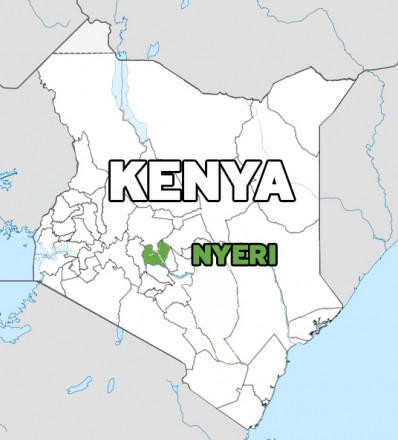
This is the Mount Kenya extinct volcanic region, where the highest altitude reaches 2,300 meters and the soil is rich in nutrients. Kenya's important agricultural crops are grown here, and the coffee produced is of superior quality. The mountains see a large day-night temperature swing, with the lowest temperature at 13 degrees Celsius and the highest reaching 27-28 degrees Celsius. Coffee cherries absorb more nutrients in this environment.
Kenyan coffee cultivation is mostly smallholder farming, with small production volumes. Cooperatives formed by farmers are more common than large estates. Most processing plants use washed processing, with a small portion adopting specialty natural processing.
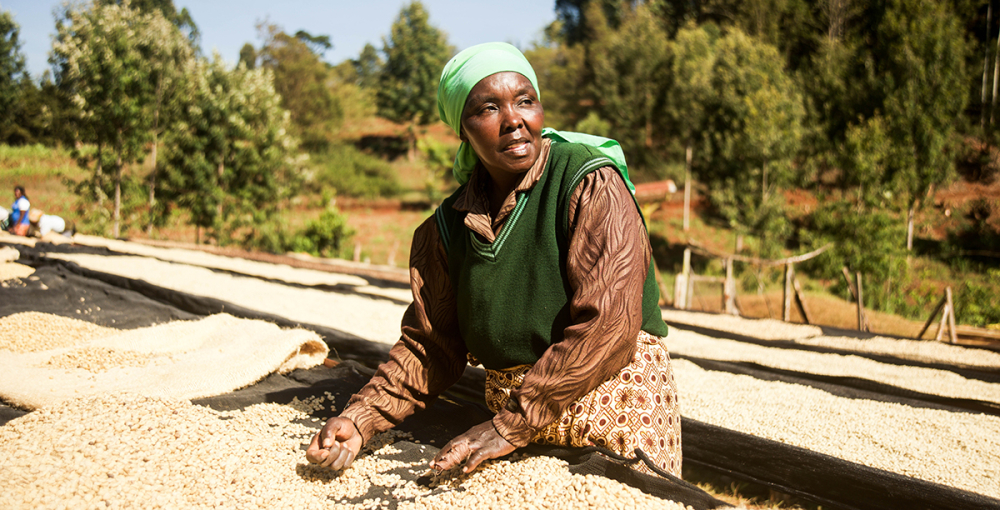
RUMUKIA Cooperative
The RUMUKIA Cooperative has 8,500 smallholder farmers locally and can produce 4 million kilograms of green coffee beans annually. It owns eight green bean processing plants, including Kagunyu, Gatura, Thunguri, Maganjo, Kiaawamururu, Gailundo, Ndiani, and Tambaya. The cooperative has obtained fair trade certification, ensuring farmers' income, while also conducting regular agricultural technical training to improve coffee quality on multiple fronts.
Processing Method
The Thimu coffee that FrontStreet Coffee acquired uses Kenya's traditional double-washed processing method.
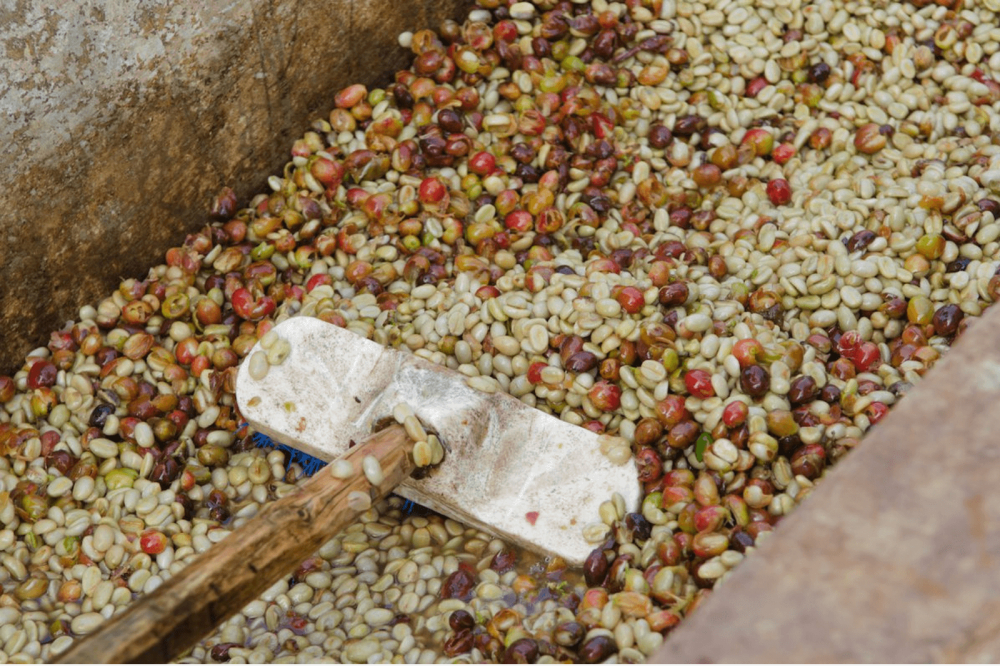
Farmers first screen the harvested ripe red cherries by hand to remove defective beans, completely eliminating fruit with damaged skin. The cherries are then poured into water tanks for a second screening to remove floating unripe beans. The outer skin of the fruit is removed by machine, and the beans are placed in pools to ferment for 12-24 hours, then introduced into flowing channels for washing, followed by a second fermentation for 48 hours. After that, they are rinsed once more with clean water until all the mucilage on the surface of the green beans is gone. Finally, the parchment coffee beans are spread flat to dry until they reach the appropriate moisture content, then packaged and placed in warehouses. The drying process takes approximately 12 days.
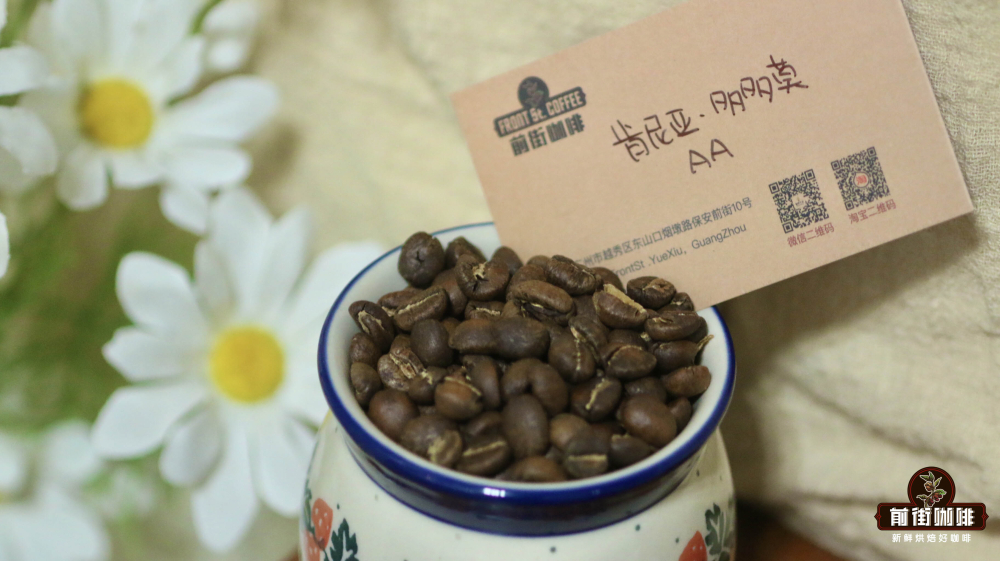
FrontStreet Coffee: Kenya Thimu Coffee Beans
Region: Kenya Nyeri RUMUKIA Cooperative
Altitude: 1550-2300 meters
Variety: SL28 Ruiru11
Grade: AA
Processing: Washed
Flavor: Cherry tomato, citrus, dark plum, berries
Brewing Reference
The Thimu coffee beans processed through double washing have a flavor profile dominated by acidity. FrontStreet Coffee uses a light roast to preserve the coffee's fruity sweetness. Cupping the Kenyan Thimu beans, FrontStreet Coffee finds the dry aroma is berry-like, with green apple, grape, and plum acidity on sipping, accompanied by nutty and honey sweetness.
Dripper: V60
Water Temperature: 90-91ºC
Dose: 15g
Coffee-to-Water Ratio: 1:15
Grind Size: Fine sugar size (80% passes through a #20 sieve)
Segmented Extraction: Use 30g of water for a 30-second bloom, continue pouring in small circular motions to 124g for the first segment, and when the water level drops and is about to expose the coffee bed, continue pouring to 228g and stop. When the water level again drops and is about to expose the coffee bed, remove the dripper (timing starts from the bloom). Extraction time is 1'55".
Ground Thimu coffee has aromas of preserved fruit and citrus. When tasted, it reveals the bright acidity of cherry tomato, citrus, and sour plum, with a tea-like aftertaste.
FrontStreet Coffee Recommendation
If you enjoy the crisp, clean character of washed East African coffee, FrontStreet's Kenya Tomato is an easy recommendation. It comes from Kenya's Thika region, grown at 1,550 to 1,750 meters from the classic SL28 and SL34 varieties and reaching the high AA TOP grade, then processed with Kenya's distinctive 72-hour double washed fermentation. A light roast keeps its lively acidity and layered fruit, with cherry tomato and smoked plum up front, a full juice-like body, snow pear and black plum in the middle, and a clean finish of brown sugar and green tea.
For a softer but equally clean washed cup, try FrontStreet's Gutingding cooperative coffee. Many people know Yirgacheffe without realizing that small local harvests are delivered to cooperatives for shared processing, and Gutingding is one of the finest examples. Its washed processing brings out jasmine florals and bright citrus acidity, with a delicate, transparent cup that suits pour-over, cold brew, or espresso.
Important Notice :
FrontStreet Coffee is a long-established specialty coffee roaster in Guangzhou China, selling freshly roasted beans from its own farm in Yunnan as well as dozens of carefully selected single-origin beans from around the world for both pour-over and espresso. The products deliver consistently excellent quality and great value, with shipping within 24 hours. Guangzhou's FrontStreet Coffee shop is recommended by many coffee lovers, and the beans are now available online at the Tmall 。
FrontStreet Coffee has moved to a new address:
FrontStreet Coffee Address: 315,Donghua East Road,GuangZhou
Tel:020 38364473
 Scan and follow the En Gafei WeChat official account. Please indicate that the reprint comes from "En Gafei".