
Pour-Over Coffee Dripper Selection Guide: Understanding Different Dripper Characteristics and How to Choose?
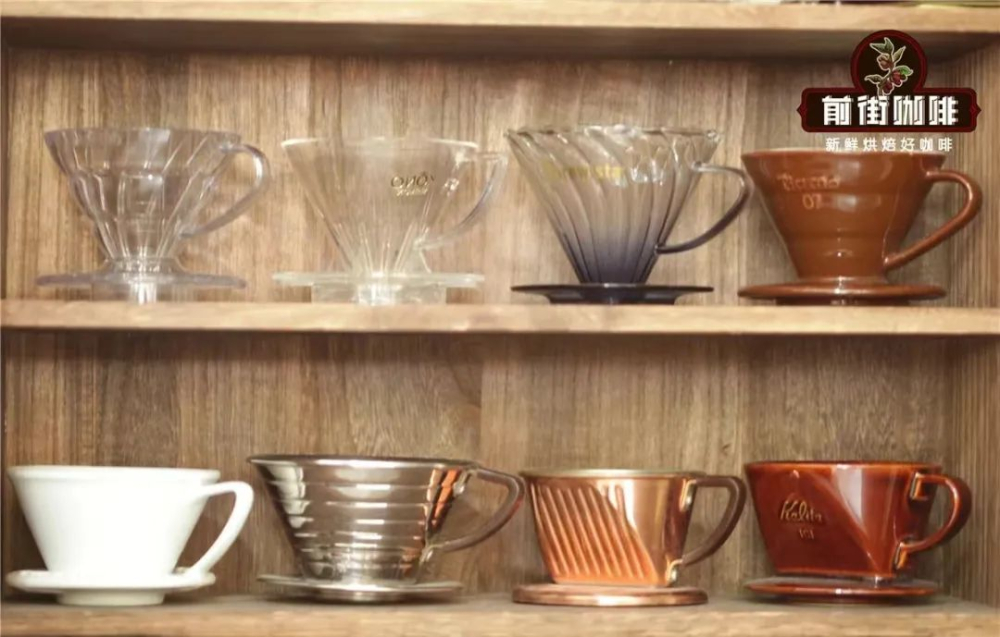
With the popularity of pour-over coffee, the accompanying filter cup industry has become intensely competitive. In the early years, filter cups didn't require much choosing because there weren't many design options available - buying one of each shape, conical, fan-shaped, and flat-bottomed, would cost less than 300 yuan. Today, searching for "coffee filter cup" on a shopping platform can yield numerous unique designs within a single page.
Flow Guide Design
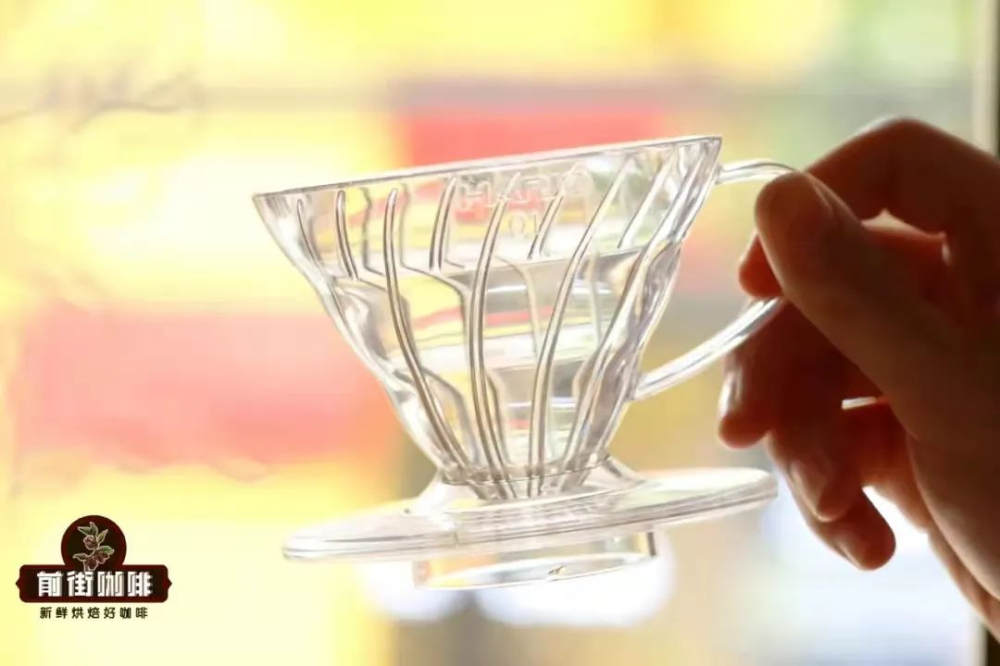
The flow guide design is an important structure that helps with extraction. Without flow guides (ribs), a filter would function like a funnel, with the filter paper clinging completely to smooth walls and making it difficult for water to pass - similar to the Chemex coffee pot. After conical filters became widely adopted, manufacturers began designing various flow guides on that platform. (The conical shape was primarily chosen because it facilitates more even extraction and is compatible with filter papers.)
Hario added alternating long and short spiral guide ribs to their conical filter. These spiral ribs transform the water flow from being purely gravity-driven into following the direction of the ribs, resulting in more even extraction and faster drainage that is less prone to clogging. This filter cup is called the V60, named simply because the cup's angle is 60 degrees.
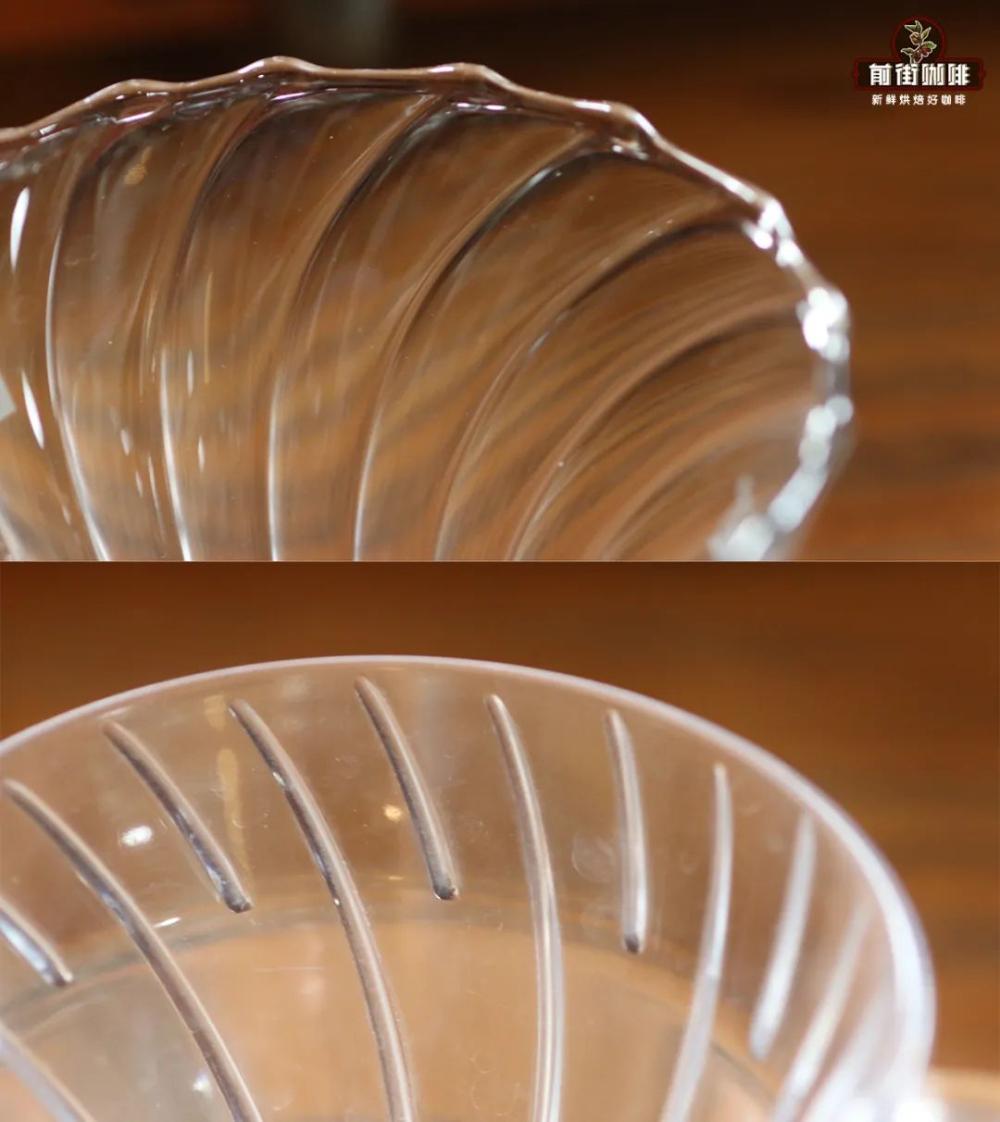
Later, other manufacturers introduced spiral-patterned conical filters also called V60s. Although these look similar, they have slight design differences. The one FrontStreet Coffee uses, for example, has spiral ribs running in the opposite direction to Hario's, and all ribs are of the long variety.
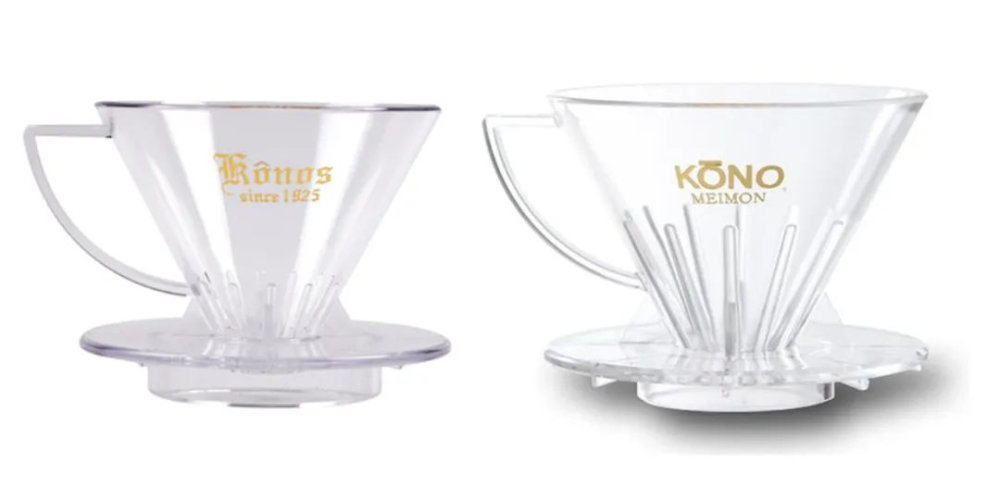
There are also more straightforward vertical guide ribs, designed with the simple purpose of accelerating water flow. We can imagine that without ribs, the filter paper would fit tightly against the filter cup, making it hard for water to pass. If something props the paper up so it no longer adheres completely, water can flow through the gaps. That means the more and longer the ribs, the larger the gaps and the faster the flow. This is why the differences between various Kono filter cup versions lie in the length of their ribs, which affects drainage speed.
The Kalita Wave filter cup, known for its fast flow rate, features densely distributed alternating long and short vertical ribs.
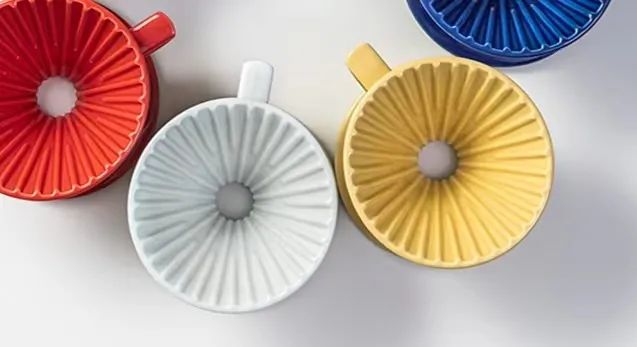
Of course, besides outward-projecting ribs, there are also inward-concave flow guides that serve the same purpose of creating gaps to accelerate water flow.
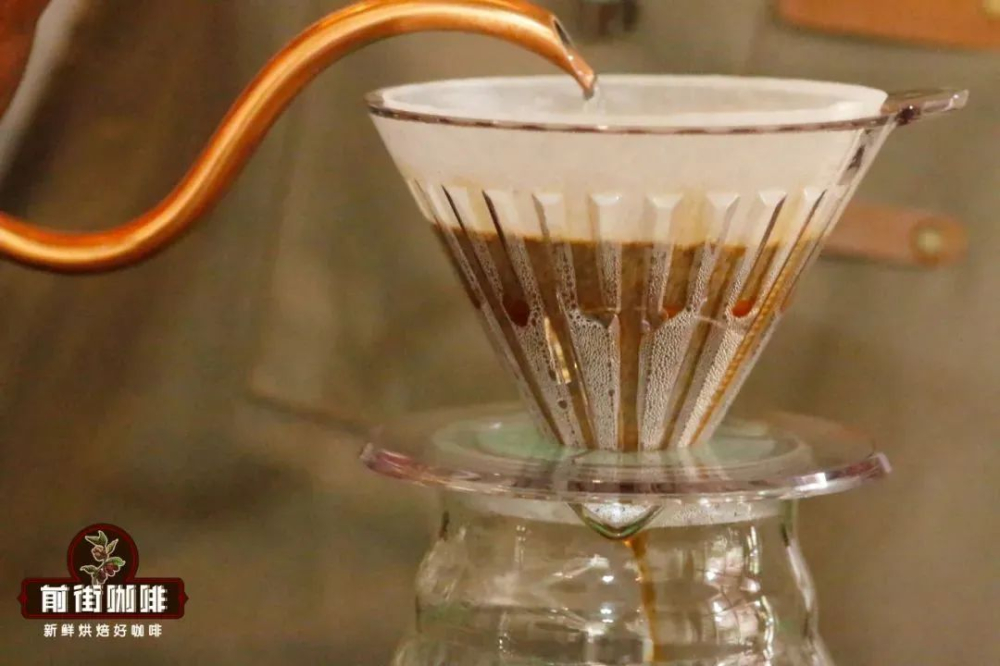
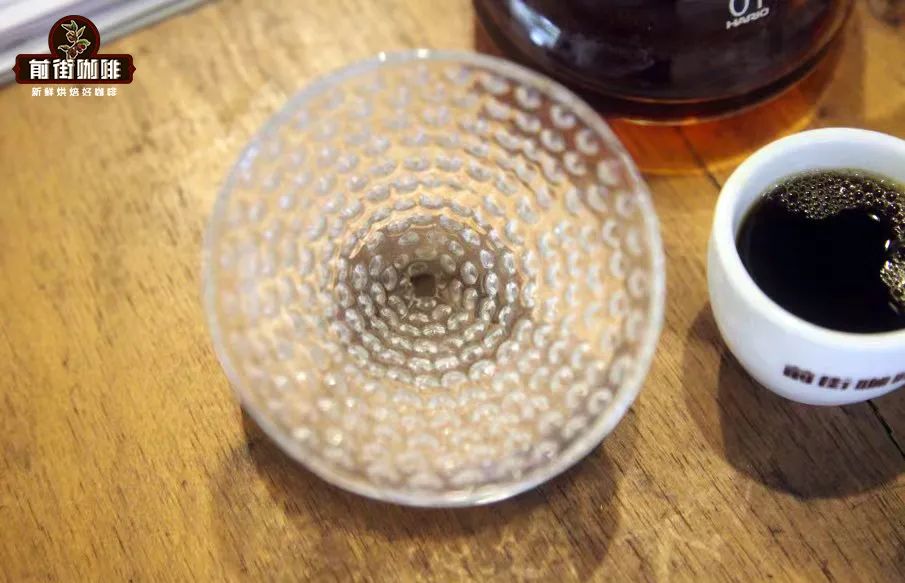
Beyond these conventional flow guide ribs (grooves), some filter cups take unconventional approaches, such as the Strawberry and Diamond filters. The Strawberry filter's support points are not strip-like but are densely arranged small protrusions that resemble the exterior of a strawberry. Although the filter appears to have many support points that would theoretically allow fast drainage, its actual flow rate is quite slow due to its extremely small water holes.
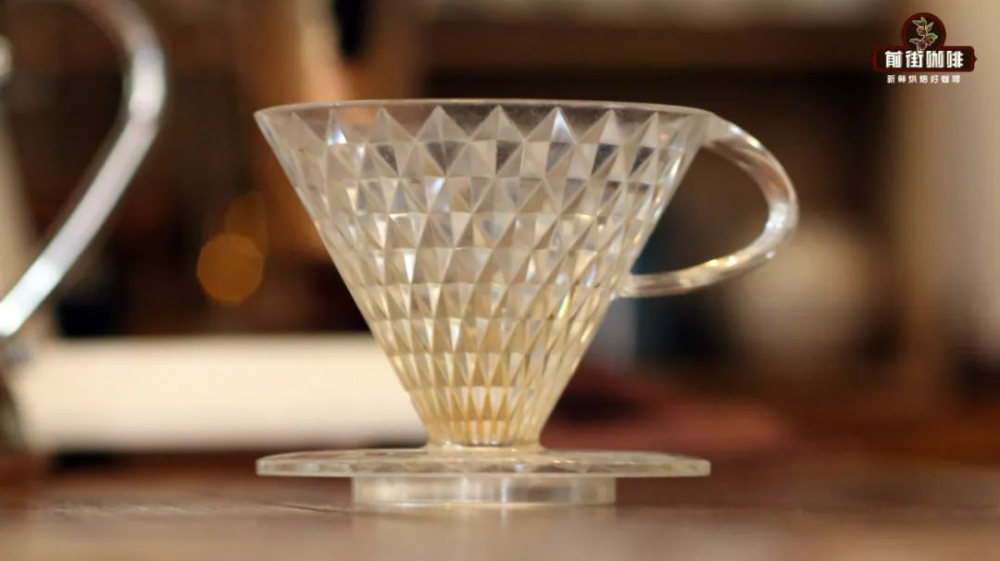
The Diamond filter cup gets its name from its diamond-shaped flow guides that resemble sparkling diamonds. Its drainage speed is comparable to the V60.
FrontStreet Coffee believes functionality is the most important factor when choosing a filter cup. The best filter cup is one that suits your brewing style. As for these flow guide (groove) designs, we only need to consider their flow rate characteristics.
Filter Cup Materials
Common materials for filter cups include resin, glass, ceramic, and metal. In terms of materials there hasn't been much intense competition beyond some that have entered the realm of handicrafts, such as a bamboo-woven example.
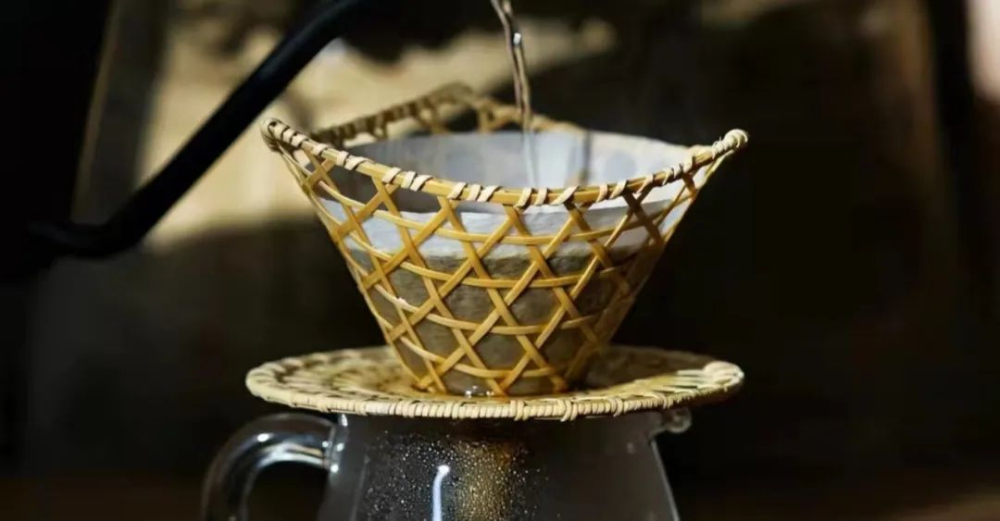
For practical use, FrontStreet Coffee recommends resin, primarily because it is affordable and not heartbreaking if broken. Well, that is a secondary reason. The main consideration is that resin offers higher manufacturing precision than other materials.
If you need both practicality and aesthetics, choose ceramic. In manufacturing precision, glass and ceramic are evenly matched, but ceramic offers significantly more aesthetic versatility. In heat retention, ceramic performs better than glass when both are preheated.
Functional Features
Many new filter cups now come with special features. Hario, for example, introduced a valve version of the V60, which adds a function to control water drainage on top of the V60 design, similar to the function of a Clever Dripper. This design is more beginner-friendly while also increasing the playability for enthusiasts.
Filter Cup Aesthetics
Beyond competing in practical structure, appearance has become another key battleground in the filter cup industry. When functionality is similar, appearance and price become the main considerations for consumers. In aesthetics, vibrant colors have long been standard among major manufacturers. To stand out among numerous filter cups, it is essential to create distinctive, memorable features.
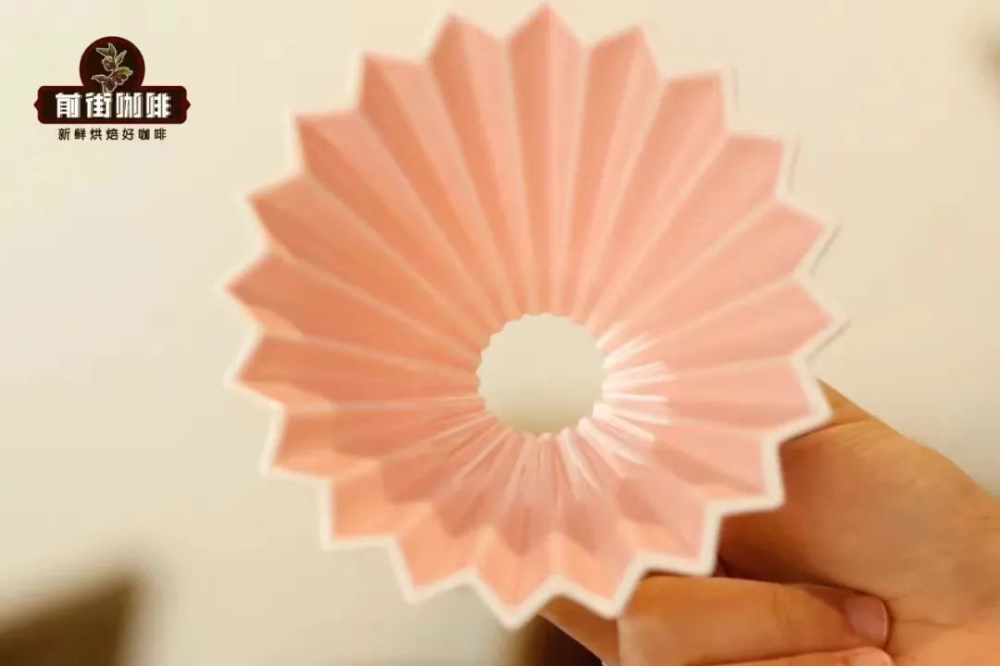
The previously popular Origami filter cup, for example, gained significant traction largely thanks to its simple yet angular appearance, paired with vibrant but not garish color schemes that perfectly captured consumer interest.
Similarly, the ZhiZaoSu Rose and Azalea filter cups, and COFIL's Mount Fuji filter cup, make one exclaim in amazement - who knew filter cups could look like this?
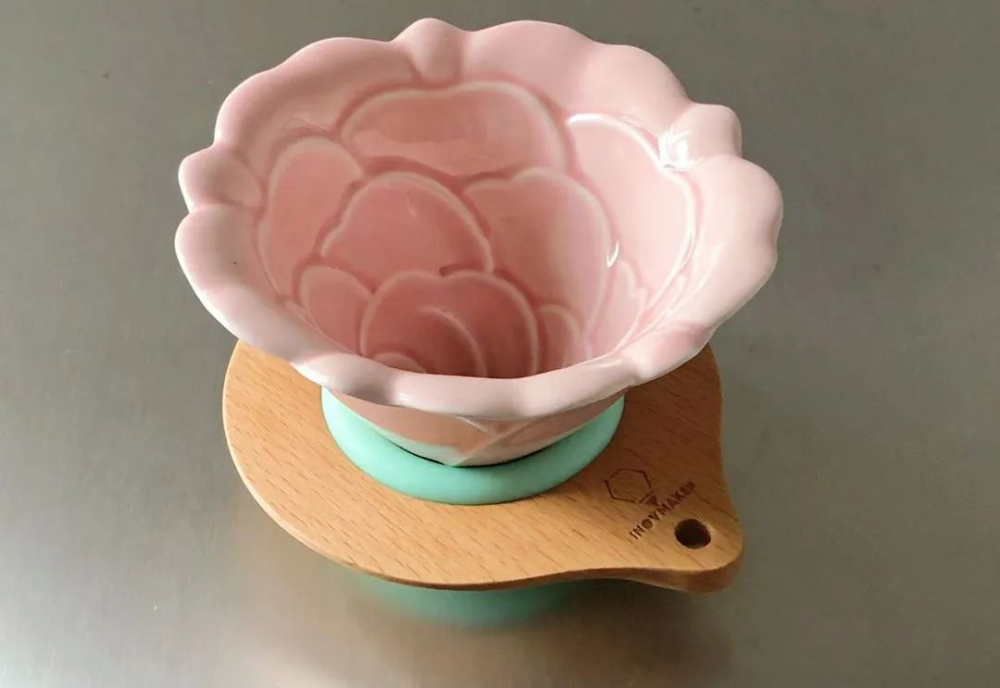
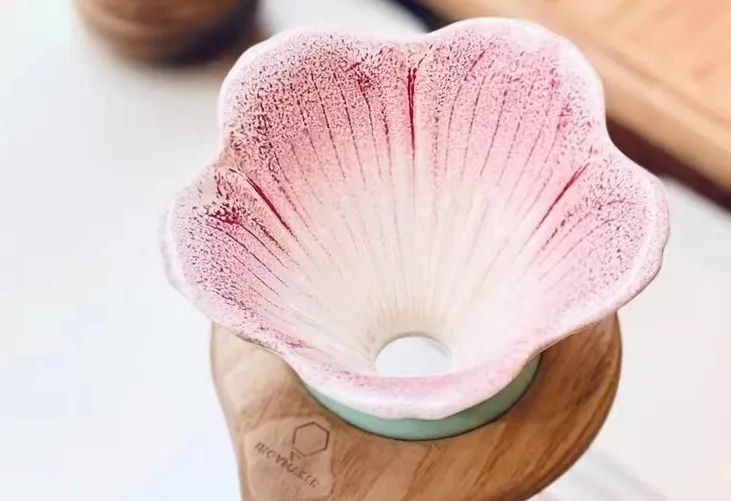
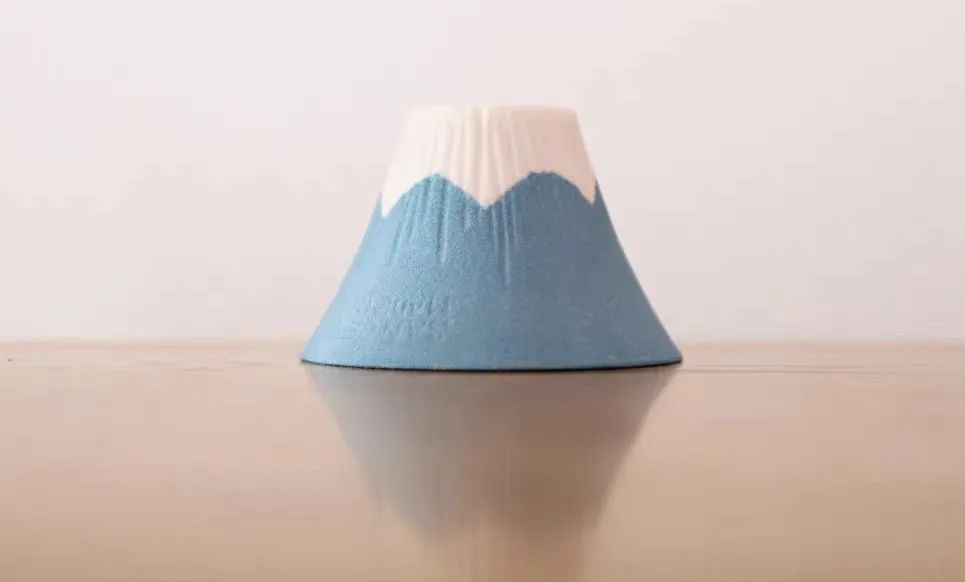
Images from the internet
At that point it is no longer about whether the filter cup works well, but whether its beauty can capture your heart. And then you look at the price... oh! It turns out poverty has limited my imagination.
FrontStreet Coffee Recommendation
A dripper only performs as well as the beans you put in it. For a bright, floral cup that suits most conical and flat-bottom drippers, FrontStreet Coffee suggests FrontStreet Washed Yirgacheffe Gunding. As a first stop into specialty coffee for many enthusiasts, Yirgacheffe brings vivid citrus, berry, and floral notes with a green-tea-like aftertaste, and its acidity is soft and bright rather than sharp.
For a fruit-forward pour-over, FrontStreet Ethiopia Huakui is one of the most successful specialty coffees of recent years, with an extremely prominent tropical aroma of strawberry, passion fruit, jackfruit, and even lychee, clear sweetness, and very low bitterness.
For a juicy, complex option, FrontStreet Kenya Cherry Tomato comes from Kenya's Thika region at 1,550-1,750 meters, uses the region's classic SL28 and SL34 varieties with a 72-hour double washed fermentation, and is lightly roasted - showing cherry tomato, smoked plum, snow pear, and black plum notes with bright, solid acidity and a clean, long finish.
Important Notice :
FrontStreet Coffee is a long-established specialty coffee roaster in Guangzhou China, selling freshly roasted beans from its own farm in Yunnan as well as dozens of carefully selected single-origin beans from around the world for both pour-over and espresso. The products deliver consistently excellent quality and great value, with shipping within 24 hours. Guangzhou's FrontStreet Coffee shop is recommended by many coffee lovers, and the beans are now available online at the Tmall 。
FrontStreet Coffee has moved to a new address:
FrontStreet Coffee Address: 315,Donghua East Road,GuangZhou
Tel:020 38364473
 Scan and follow the En Gafei WeChat official account. Please indicate that the reprint comes from "En Gafei".

