
What are the Symptoms of Channeling in Pour-Over Coffee? Solutions for When Channeling Occurs
Channeling is a phenomenon FrontStreet Coffee talks about often in relation to espresso extraction. But channeling does not happen only in espresso. It occurs in pour-over coffee too, you just may not have noticed it.
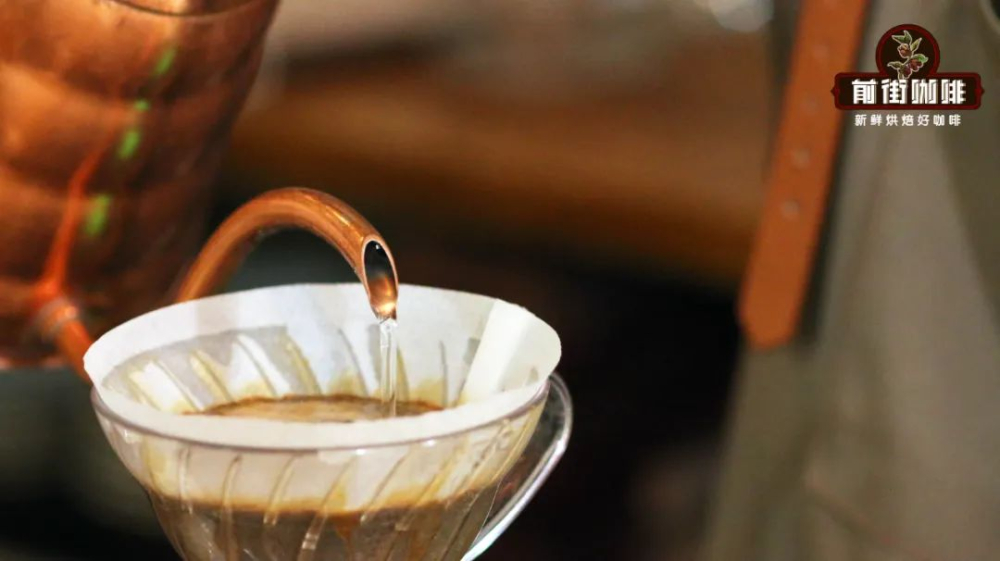
What is Channeling?
As usual, let's start with what "channeling" actually is. In the ideal model of coffee extraction, water passes completely through the coffee grounds and extracts coffee substances, ideally without wasting a single drop. Water, however, has one trait: it is lazy and always takes the path of least resistance.
Take espresso as an example. When we distribute and tamp the grounds properly, the puck blocks all the easy paths, forcing water to pass through the coffee obediently. Nothing escapes.
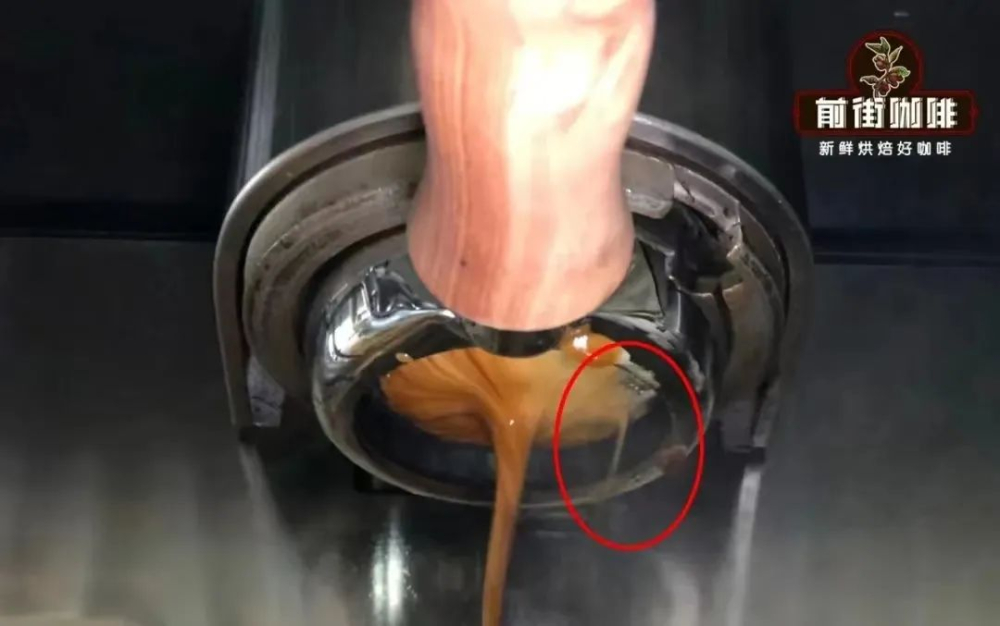
But if the distribution is uneven and the puck density is inconsistent, water will find it easier to break through the sparse areas during extraction, forming perforated channels. Subsequent water then flows through those channels, resulting in under-extracted coffee. As the red-circled parts of the image show, channeling sends large amounts of water spraying out from the perforations, and the resulting coffee liquid comes out lighter in color than normal.
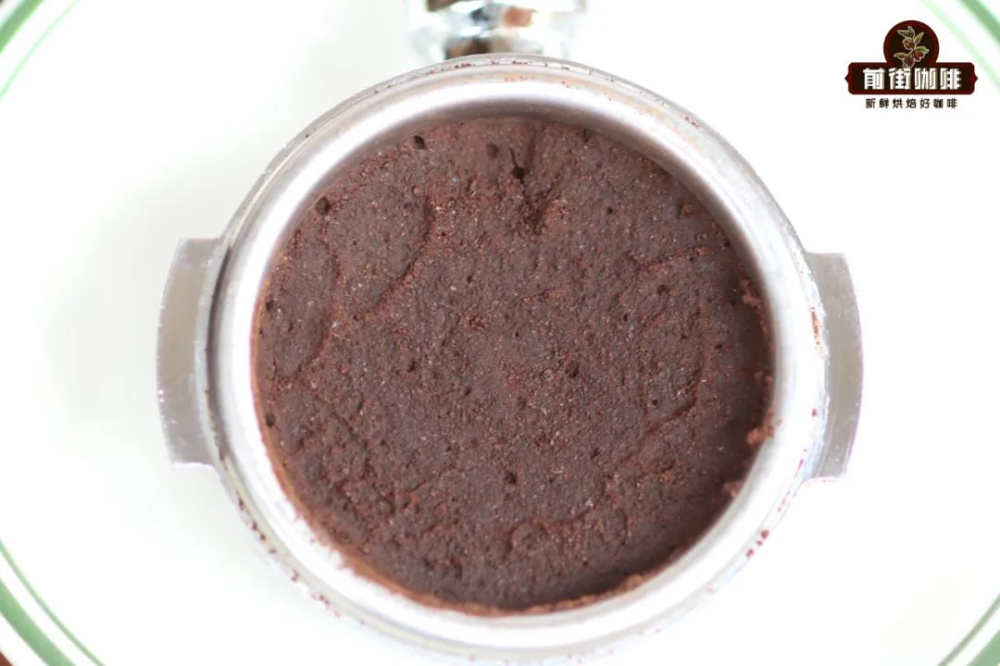
Severe channeling will leave perforation marks on the coffee puck.
Does Channeling Occur in Pour-Over Coffee?
In fact, every filter-based extraction method carries the risk of channeling. FrontStreet Coffee discusses it more in espresso because channeling has a significant impact on the flavor and mouthfeel of espresso. In pour-over coffee it does affect flavor and mouthfeel too, but far less severely.
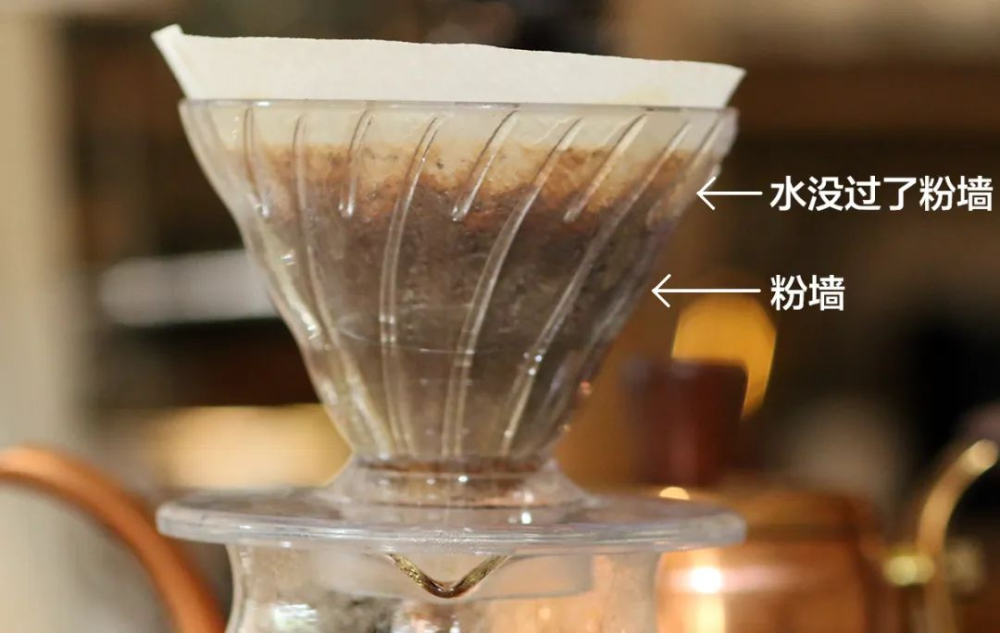
If you observe an incomplete coffee bed wall after brewing, that indicates channeling was quite severe. Take the V60 as an example. The V60 dripper's spiral ribs lift the filter paper to prevent over-extraction from prolonged soaking. The lifting has a drawback, though: water can easily flow along those ribs. But if a layer of coffee grounds adheres to the filter paper edge, then even when water flows along the ribs, it still has to pass through that coffee layer to reach the bottom.

If you find the coffee bed wall is incomplete, it means some of the water never passed through the coffee grounds but ran straight down from the edge of the dripper. That is channeling.
More severe channeling happens when the water stream hits the filter paper during pouring and breaks through the existing coffee bed wall.
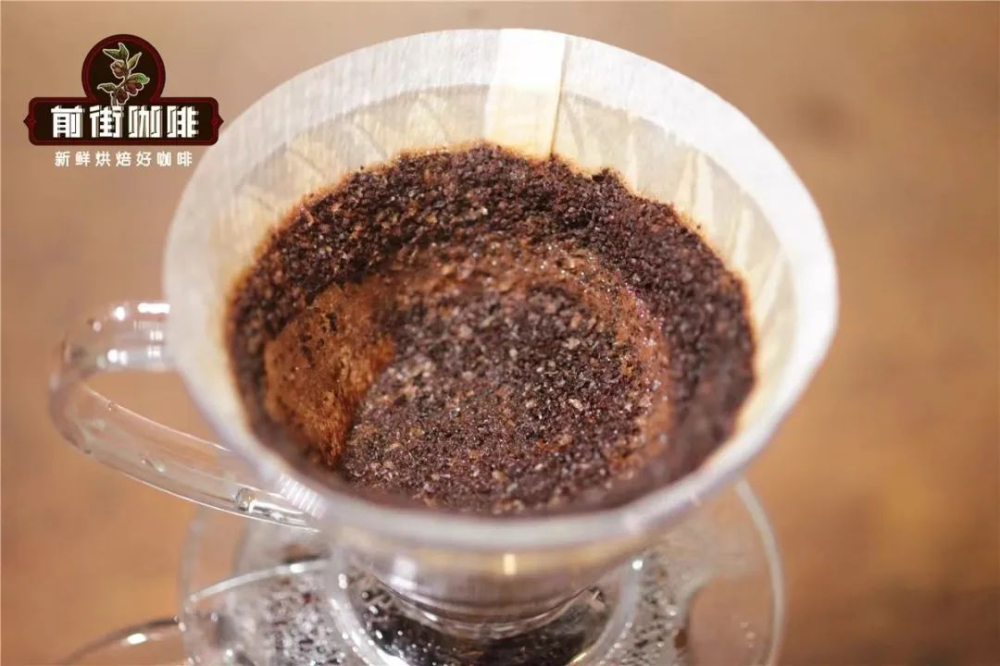
The situation above occurs because the water stream carried an arc during pouring. Although the surface coffee bed wall was not broken during the pour, the arc caused the lower part of the bed wall to break, and large amounts of water then flow away from there, producing coffee that is weak, astringent, and full of harsh flavors.
Even when the coffee bed wall survives the brew intact, that does not necessarily mean channeling did not occur. If you pour continuously in large circles, the impact of the water stream can still cause channeling. But when the coffee level drops later, the surface grounds adhere to and cover the perforations at the edge, making it look undamaged.
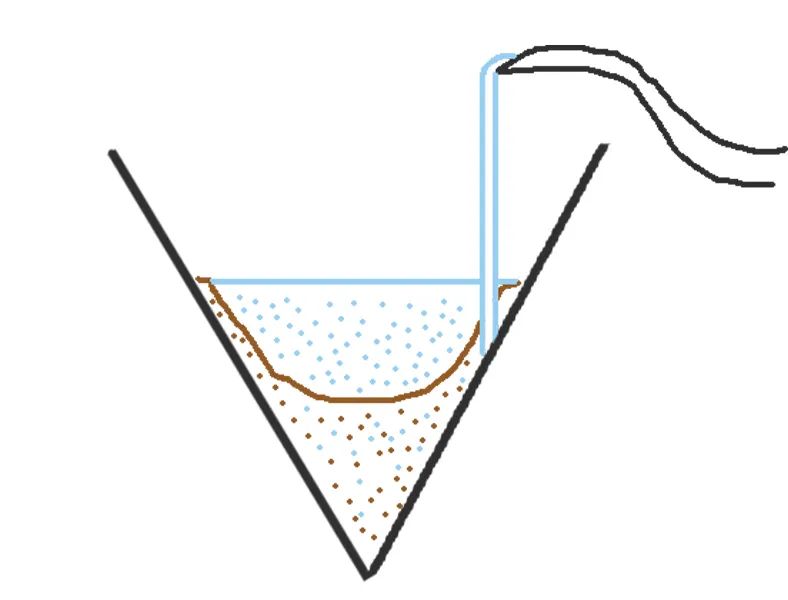
Another Type of Channeling
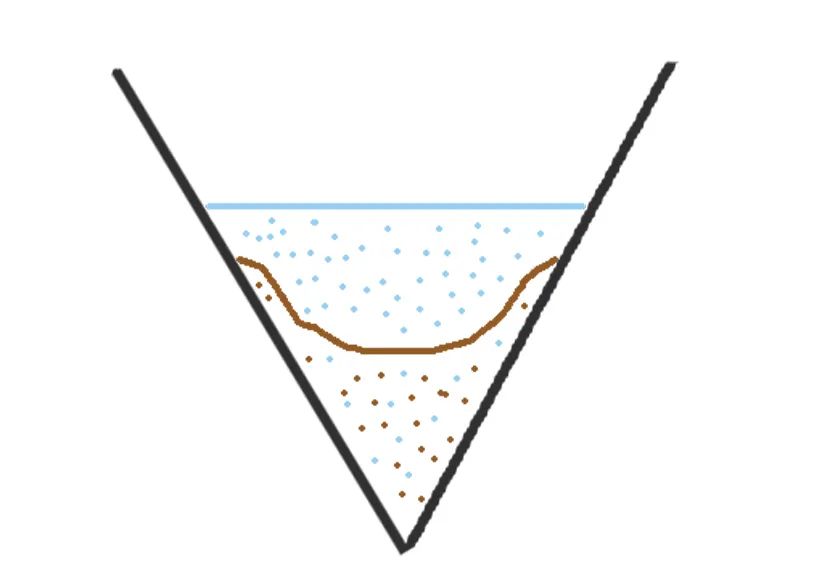
Another, slightly milder form of channeling is when water flows over the coffee bed wall. This often happens with light-roasted beans. Light roasts have denser fibers and fewer particles floating on the surface, so when the liquid level rises past a certain point there are not enough grounds to form the bed wall, leaving voids. This only affects the uppermost layer of water, though, and as long as the level stays below that area there is no problem. The lost water, unfortunately, is like youth gone by: it cannot be recovered.
FrontStreet Coffee Recommendation
Sniffing out channeling is easier when a coffee has a clean, clearly defined flavor profile, because flaws and uneven extraction show up immediately. On a V60, FrontStreet's Ethiopia Gedingding is a good reference point, with citrus, berry, and jasmine over a green-tea sweetness that stays soft and bright rather than harsh. The Ethiopia Huakui is fruitier still, full of strawberry, passionfruit, and jackfruit with almost no bitterness.
If you want to push your technique against a demanding bean, FrontStreet's Kenya Cherry Tomato is a strong test. From the Sika region at 1550-1750 meters and made from the classic SL28 and SL34 varieties, it undergoes a 72-hour double wash and a light roast to preserve its vivid acidity. It shows cherry tomato and dark plum with a full, juice-like body, prominent mid-palate sweetness, and a clean, lingering finish, so any astringency or weakness caused by channeling is immediately obvious in the cup.
Important Notice :
FrontStreet Coffee is a long-established specialty coffee roaster in Guangzhou China, selling freshly roasted beans from its own farm in Yunnan as well as dozens of carefully selected single-origin beans from around the world for both pour-over and espresso. The products deliver consistently excellent quality and great value, with shipping within 24 hours. Guangzhou's FrontStreet Coffee shop is recommended by many coffee lovers, and the beans are now available online at the Tmall 。
FrontStreet Coffee has moved to a new address:
FrontStreet Coffee Address: 315,Donghua East Road,GuangZhou
Tel:020 38364473
 Scan and follow the En Gafei WeChat official account. Please indicate that the reprint comes from "En Gafei".

