
Coffee Beans Too Expensive?! Coffee Exchange Prepares to Sell 2-Year-Old Coffee Beans!
For professional coffee knowledge exchange and more coffee bean information, please follow Coffee Workshop (WeChat public account: cafe_style).
For more premium coffee beans, please add FrontStreet Coffee's private WeChat, ID: qjcoffeex.
Brazil's Coffee Production Challenges
Brazil, the world's largest coffee-producing country, has been battered by extreme weather — droughts and frosts alike — since last year, leaving the 2022/23 harvest in poor shape. Last month, Brazil's Procafe Foundation added that drought conditions in the country's coffee regions this year are worse than during the same period last year.
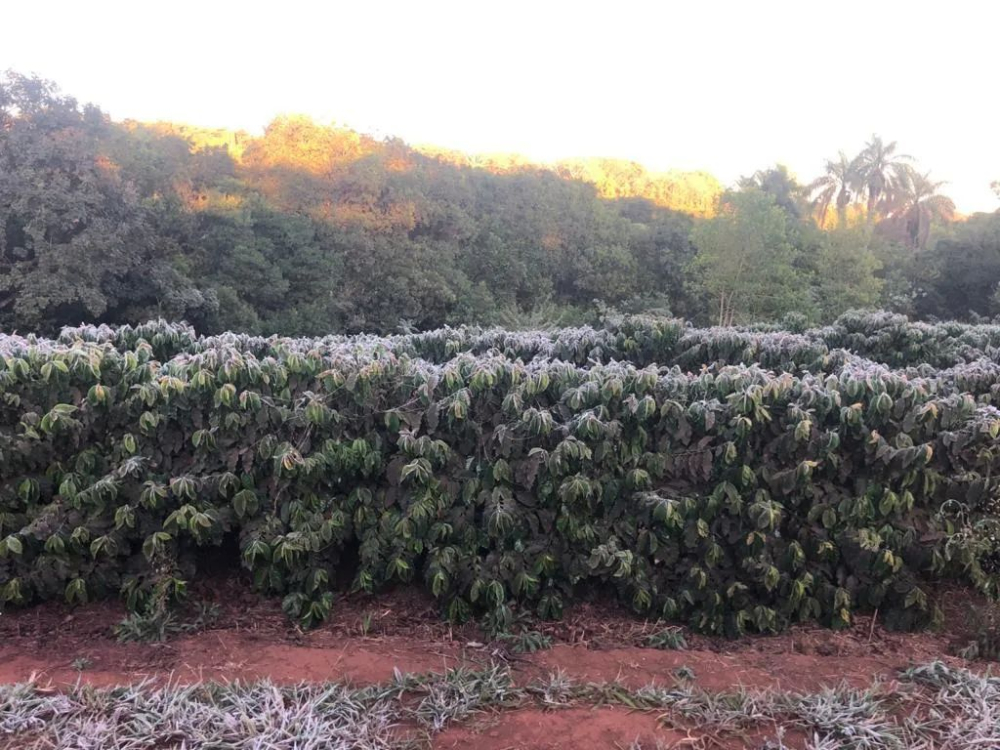
The damage reaches far beyond the farm. These conditions cast uncertainty over Brazil's Arabica output for this year and the next, weigh on ICE exchange coffee inventories, and keep pushing coffee futures prices upward.
The United States Department of Agriculture (USDA) stated in its Brazil coffee annual report published in June that Brazil's total coffee bean production for the 2022/23 season (including Robusta) was expected to reach 64.3 million bags (60kg per bag) — but the reality on the ground may fall far short of that forecast.

Preliminary forecasts from Brazil's National Supply Company (Conab) in May put the 2022/23 season's total production at 53.4 million bags (60kg per bag), of which Arabica accounts for roughly 35.7 million bags (60kg per bag). Local coffee farmers add that this year's Arabica harvest is less than half of a typical bumper year.
Market Impact and Price Fluctuations
Mother Nature wasn't done. In early May, the U.S. National Oceanic and Atmospheric Administration predicted three days of frost in late May across Brazil's southern regions, where Arabica is grown. Frost threatens not only the already-formed and mature fruits but the coffee trees themselves, damaging subsequent flowering and fruiting. On that news, from mid-May, ICE Arabica coffee futures surged 7.47% to 219.2 cents per pound.
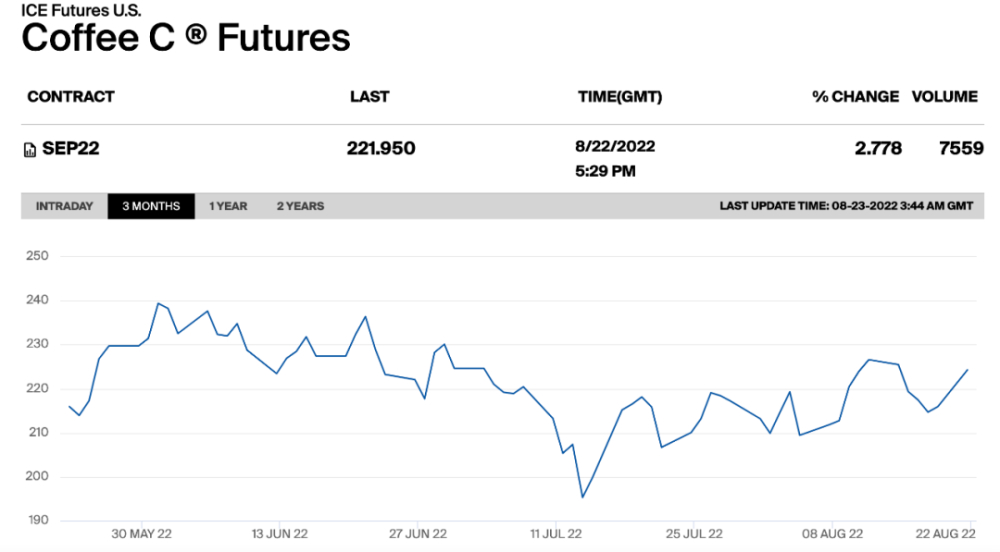
In the event, the frost did less damage than feared. Futures retreated — dropping below 200 cents per pound on July 14, while Brazil's domestic coffee spot prices even hit nine-month lows in July — but the poor-harvest outlook soon drove prices higher again.
Inventory Management Solutions
Faced with the shortage, the U.S. ICE exchange has a plan: re-evaluate and certify a batch of Brazilian Arabica coffee beans — 270,000 bags at 60kg each — for external trading, in order to replenish the exchange's dwindling certified coffee inventories.
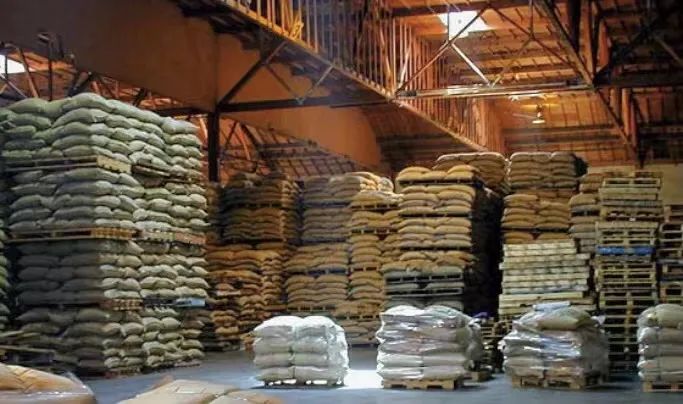
According to Reuters, this batch of re-certified Arabica consists of deliveries Brazil made to the ICE exchange between November 2020 and May 2021. For various reasons, those beans were never added to the exchange's certified inventory — even though certified stocks were already on a declining trend at the time.
The paperwork is moving. Starting August 8th of this year, ICE's daily reports have shown thousands of bags of coffee awaiting grading for inclusion in the certified inventory. By August 16th, that figure stood at 263,259 bags (60kg per bag). Notably, ICE's reports did not specify whether the beans pending grading had been previously certified.
Market Concerns and Trading Strategies
Once certified, these aged beans can relieve the inventory crunch and help temper persistently high futures prices. The move doesn't break any rules — ICE sets requirements for certified coffee quality, not for harvest year — but it has raised eyebrows across the trade, with concerns that new-season and aged beans could get mixed together in trading.
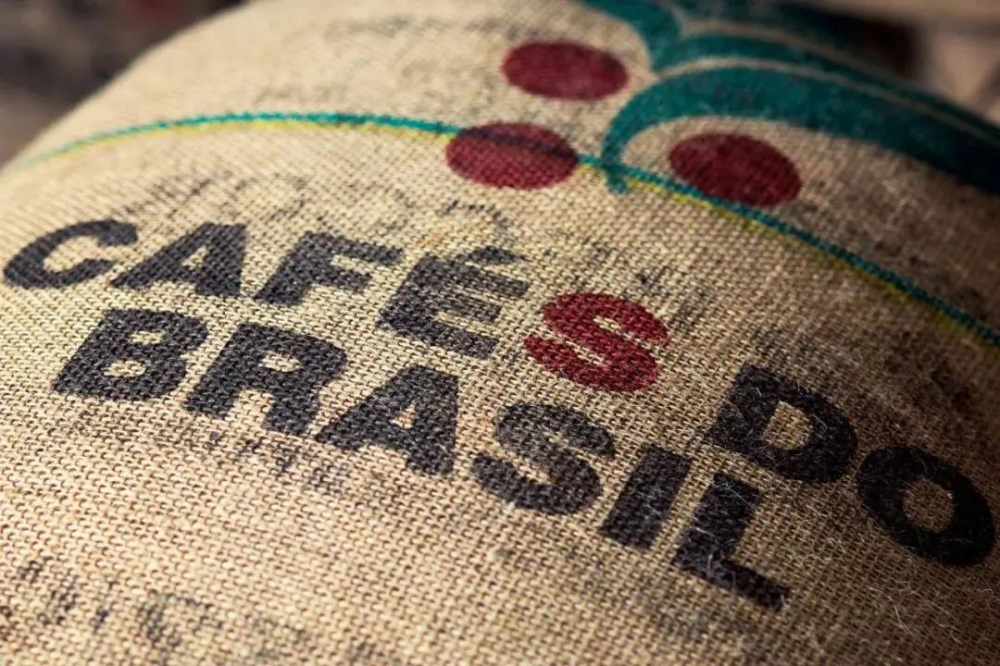
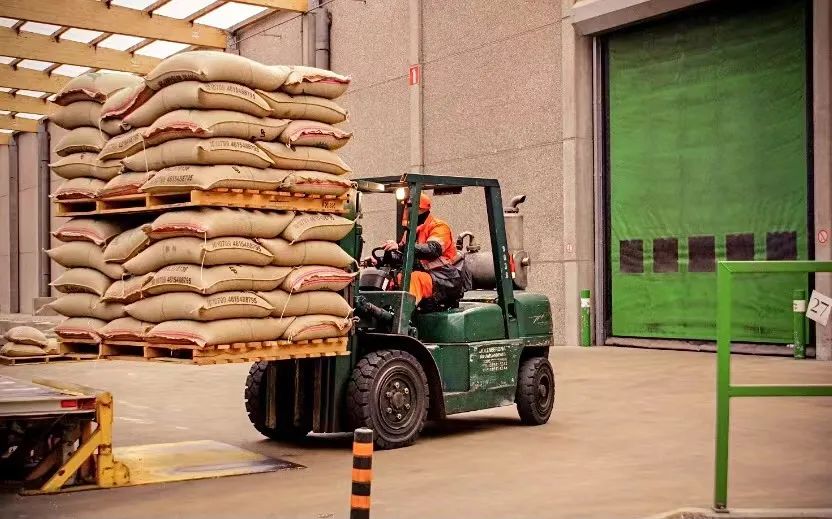
The economics explain the enthusiasm. Traders holding longer-stored beans typically sell them directly to roasters, but the profits are thin that way.
Get the beans ICE recertified and into the warehouses, though, and they not only top up the exchange's certified supply and ease futures prices — traders can also price them against futures, selling at varying discounts according to storage duration and earning more than a direct-to-roaster sale ever would.
Market Outlook
Not everyone is convinced it will work. Some market analysts argue that even if traders push these beans onto the market, a shortage of buyers will eventually send them back to the exchange.
There's a deeper concern, too. Moves like this imply that the quality of beans underlying futures prices will decline going forward, making more traders wary of exchange-certified coffee. Trading volume would fall as a result — and, in that scenario, coffee futures prices would ultimately decline as well.
Image source: Internet
FrontStreet Coffee Recommendation
Why Brazil Stays a Bargain Worth Drinking
Whatever the futures market does, Brazil remains the world's largest coffee producer and one of its best values — the beans carry moderate acidity, and the balance of sweetness, bitterness, and body is excellent. Medium roasting suits them perfectly, coaxing out prominent nut aromas, a mellow mouthfeel, and a faint acidity that works both as a single origin and in blends.
FrontStreet's Brazilian lineup shows the range. The pulped-natural Cerrado Red Bourbon is the classic pick for a first taste of Brazil: grown in the region famous for quality, medium roasted to reveal rich cream-and-peanut, toasted bread, caramel, and hazelnut aromas, with a round, non-acidic body and only a light bitterness — at home in pour-over, moka pot, espresso SOE, siphon, or French press. The Queen Estate Yellow Bourbon, grown in Mogiana near southern Minas on fertile red volcanic soil, is the rarer mutation of Red Bourbon with a cleaner fruit character; brewed by hand drip, moka pot, or home espresso machine, it delivers a sugarcane sweetness you won't find elsewhere, alongside fruit and chocolate notes.
Because of its low acidity, balance, and friendly price, Brazilian coffee is also the backbone of many espresso blends. FrontStreet's espresso series — the crema-rich Classic Blend, the nutty Premium Blend, the balanced Black Cocoa Blend recommended by many baristas, and the shop-oriented Commercial Blend — all contain Brazilian components, contributing chocolate and cream aromas, a gentle balance of acidity, sweetness, and bitterness, and a stability that makes extraction forgiving. Two-year-old exchange beans or not, fresh Brazilian coffee remains one of the best deals in the cup.
Important Notice :
FrontStreet Coffee is a long-established specialty coffee roaster in Guangzhou China, selling freshly roasted beans from its own farm in Yunnan as well as dozens of carefully selected single-origin beans from around the world for both pour-over and espresso. The products deliver consistently excellent quality and great value, with shipping within 24 hours. Guangzhou's FrontStreet Coffee shop is recommended by many coffee lovers, and the beans are now available online at the Tmall 。
FrontStreet Coffee has moved to a new address:
FrontStreet Coffee Address: 315,Donghua East Road,GuangZhou
Tel:020 38364473
 Scan and follow the En Gafei WeChat official account. Please indicate that the reprint comes from "En Gafei".

