
What Coffee Varieties Are Produced in Indonesia? Flavor Characteristics of Indonesia's Three Major Coffee Varieties
The day before yesterday, a friend reached out to FrontStreet Coffee with some pour-over questions. FrontStreet Coffee has written plenty of coffee knowledge articles over the years, so a few were selected and sent to her, covering pour-over parameters, brewing methods and steps, and solutions to common pitfalls.
A day later she got in touch again, saying the coffee brewed with those methods did not taste quite right. After some back and forth, FrontStreet Coffee finally understood: she cannot drink much coffee in a day, so her standard serving is 7 grams of grounds, meaning 7 grams is her brewing benchmark.
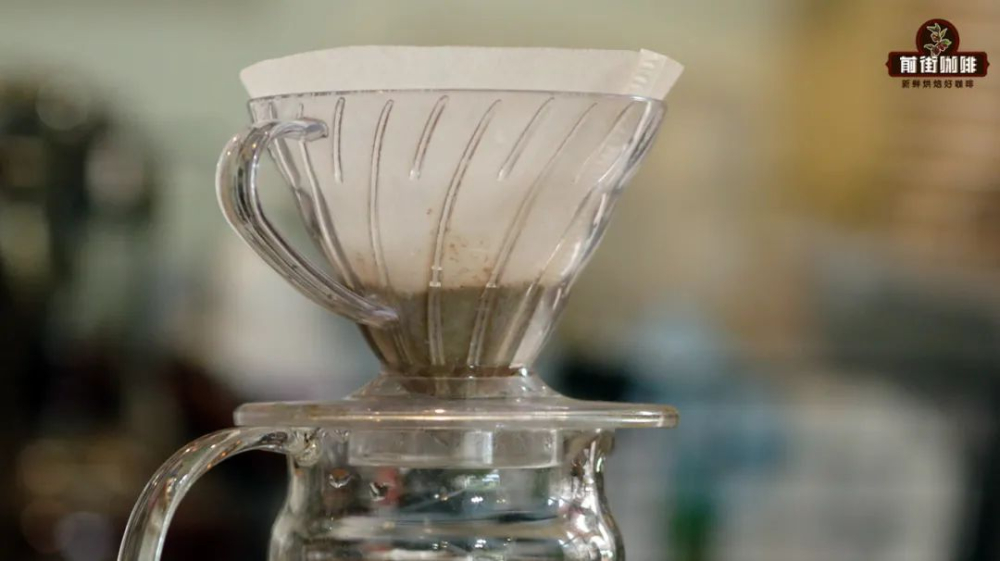
A bag of coffee beans, though, can never be consumed with perfect precision. Most of the time you end up with an amount too small for a full brew. It is a shame to waste it, but brewing it may not give you a delicious cup either. So today FrontStreet Coffee will look at how to brew coffee with smaller amounts of grounds.
What's the Difference Between Small and Normal Coffee Amounts?
What counts as a "small amount" depends on the dripper you are using. Hario's V60 dripper, for instance, comes in two models, the 01 and the 02. The difference is size, with the 02 holding more coffee grounds.
FrontStreet Coffee typically uses 15 grams. For a 01 dripper, that is just right, a normal amount. For the 02 dripper, it counts as a small amount, and therefore becomes more challenging to brew well.
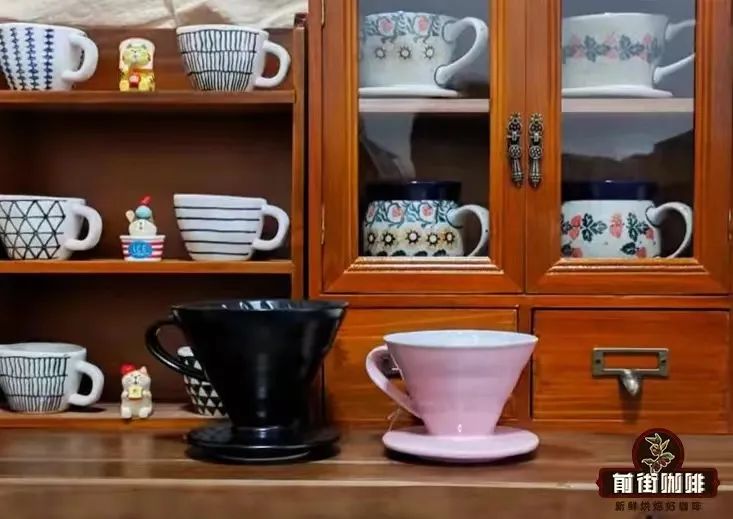
With a 01 dripper, brewing with 15 grams, 13 grams, 18 grams, or even 20 grams of grounds should not cause problems, since all of these fall within the dripper's reasonable capacity and the coffee bed barely changes. Once you go below 13 grams or above 20 grams, however, the brewing behaves noticeably differently from usual.
A smaller amount of grounds means less total water is needed, which demands greater water-flow control from the pourer. It also produces a thinner coffee bed, letting water pass through more easily. So if you keep using normal-amount parameters with too little coffee, you will likely end up with a thin cup lacking in flavor.
How to Adjust Pour-Over Methods for Small Coffee Amounts?
There are really only two core problems with small amounts. First, water passes through too quickly, ending extraction before the coffee flavor has fully developed. Second, pouring becomes harder. With more grounds, the total water volume is greater, which spreads the risk more evenly. If your pouring is unstable and you accidentally hit the filter paper, then for the same single mistake with both 10 grams and 20 grams of grounds, the negative flavor impact will be far more pronounced in the 10-gram cup.
On top of that, because of how conical drippers work, fewer grounds mean the surface area of the coffee bed shrinks, making it easier to pour onto the filter paper edges.

FrontStreet Coffee therefore suggests two approaches. The first is for those confident in their water control. You only need to change one parameter: grind size. Testing with a V60 01 dripper, FrontStreet Coffee found that 7 grams is the "limit" for this dripper; any less would make it very difficult to brew with the original flavor profile. So FrontStreet Coffee will demonstrate with 7 grams. The grind should be slightly finer than for the normal 15-gram amount. If the normal 15-gram dose uses a grind setting of 10 on an EK-43s, the 7-gram dose should use a setting of 9.5, which converts to approximately 85% retention on a #20 sieve. All other parameters stay the same: water temperature at 91°C and a ratio of 1:15.
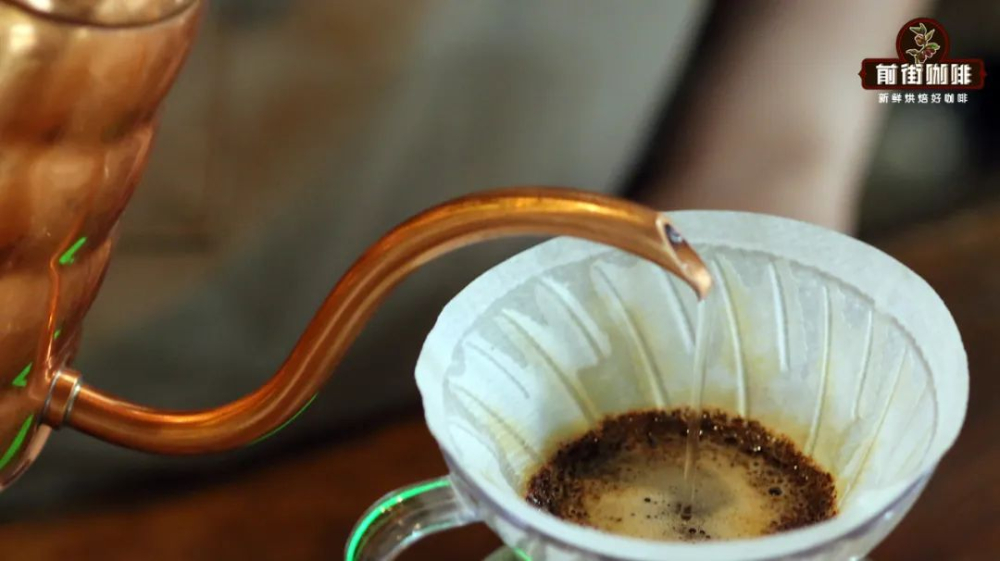
When pouring, still use the three-stage method. For the first stage, bloom with 15ml of water for 25 seconds, keeping the stream fine. For the second stage, pour 45ml in a circular motion, finishing at the 40-second mark. At 60 seconds, pour the remaining 45ml, finishing at 1 minute 15 seconds. The coffee should finish dripping into the lower pot at 1 minute 45 seconds.
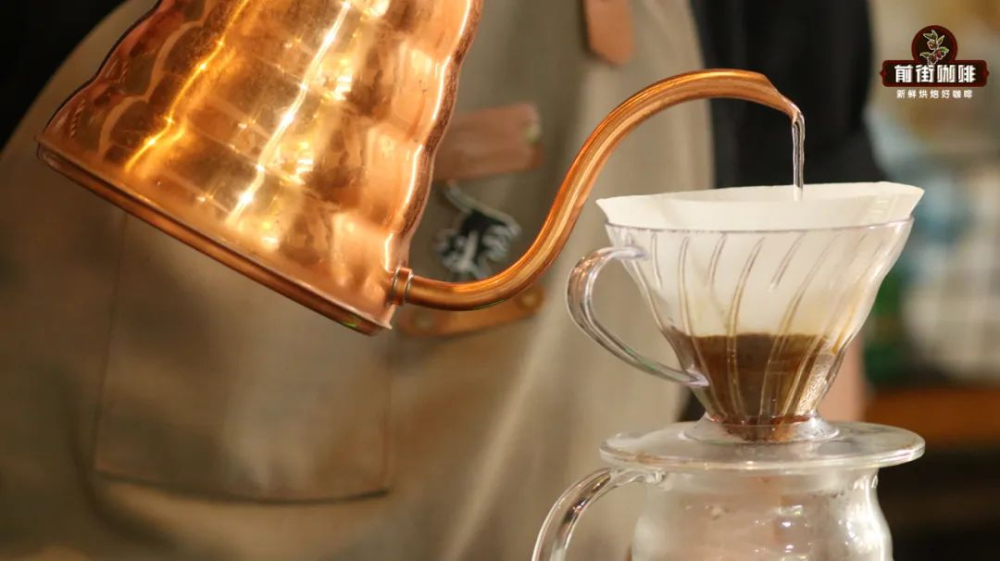
If you are not confident in your water control, adopt the second approach, with parameters identical to the first method. When pouring, first bloom with 20ml of water for 30 seconds. Then, using a larger stream in a small circular pattern, pour 30ml and raise the water level to half the height of the dripper.
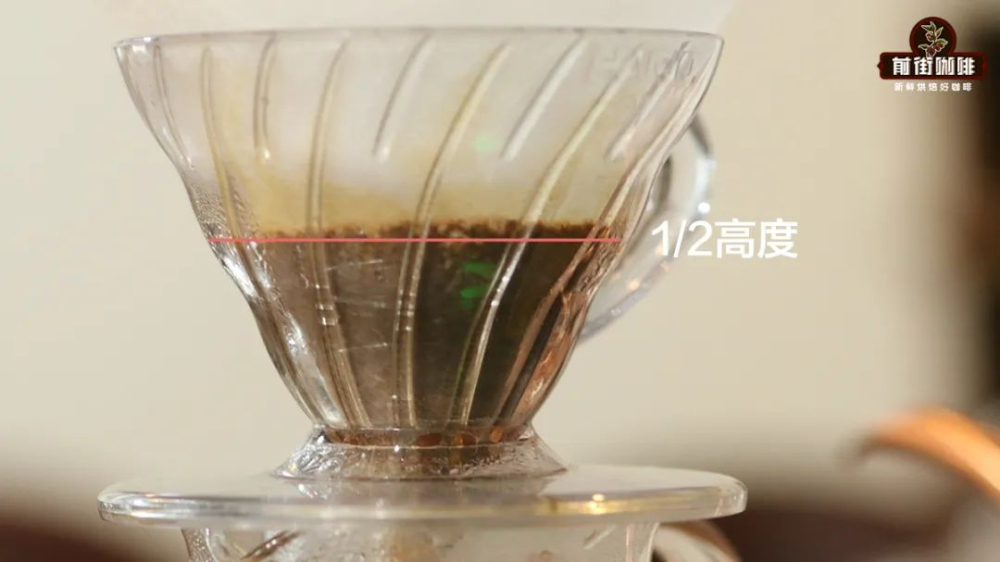
This stage should finish around the 40-second mark. For the remaining water, watch the level: whenever it drops slightly, pour water into the center to bring it back to its original height. The number of pours depends on the situation, and FrontStreet Coffee typically adds 3-4 pours during brewing. The only requirement for center pouring is that the stream stays vertical. Continue until you reach 105ml of total water. The final extraction time should fall between 1 minute 30 seconds and 1 minute 50 seconds.
FrontStreet Coffee Recommendation
Small doses reward a bean that is dense and forgiving, and Indonesia's classic varieties fit that description well. FrontStreet's wet-hulled Mandheling comes from the Toba Lake area of the Lindong region in Sumatra, and to deliver the classic Mandheling profile it is roasted medium-dark, giving a low-acid, full-bodied cup with caramel, dark chocolate, and toasted bread notes and a long, sweet finish.
For a step up, FrontStreet's PWN Golden Mandheling comes from PWN, a trading house that buys only premium Mandheling lots and makes Golden Mandheling its signature. It is graded strictly for density, screen size, shape, and color, and undergoes one machine sort plus several rounds of hand sorting to remove defects, so the beans are large, even, and clean, with the earthy, grassy edge reduced.
If you want an espresso-style option with the same Indonesian depth, FrontStreet's Classic Blend was built for espresso and moka pot use. Inspired by the old Mamba pairing of Mandheling and Brazil, it adds a small amount of Robusta and a deep roast to push the dark chocolate, nut, and caramel aromas to their fullest, and even a beginner can coax a proper Mandheling character out of it.
Important Notice :
FrontStreet Coffee is a long-established specialty coffee roaster in Guangzhou China, selling freshly roasted beans from its own farm in Yunnan as well as dozens of carefully selected single-origin beans from around the world for both pour-over and espresso. The products deliver consistently excellent quality and great value, with shipping within 24 hours. Guangzhou's FrontStreet Coffee shop is recommended by many coffee lovers, and the beans are now available online at the Tmall 。
FrontStreet Coffee has moved to a new address:
FrontStreet Coffee Address: 315,Donghua East Road,GuangZhou
Tel:020 38364473
 Scan and follow the En Gafei WeChat official account. Please indicate that the reprint comes from "En Gafei".

