The Barista's Life: Moments of Effort and Perseverance, All for a Single Guest!
Hello everyone! I'm someone who lurks in multiple coffee groups and scrolls through every social platform — always the first to witness the interesting stories. As a barista who also writes, I've made a habit of opening my chat apps after work each day to see what my fellow baristas have endured during their shifts.
Over the past few years I've watched consumers travel from total unfamiliarity with coffee to expectations that climb ever higher. For the industry, that's genuinely worth celebrating. But every era produces its own soul-crushing customer requests — the kind that leave baristas blinking back tears...
Shock Level: 🌟
"Why don't you add milk to your Americano coffee?"
"Americano is black coffee! No milk, no sugar."
"The Americanos I usually drink have milk!"
"Which coffee shop did you have it at?"
"At home! I make my own Americanos with milk!"
- When this happens, the smartest move is to simply make the customer's Americano the way they want it. Keep explaining that Americanos don't come with milk, keep insisting they're sugar-free and milk-free, and you're inviting a pointless argument. The Americano exists precisely because people have different preferences for coffee strength — water is added to dilute a higher-concentration coffee to taste.
There's even a variant called the "White Americano," made by adding a small amount of heated milk to the diluted coffee. So, truthfully, the Americano has no single standard preparation to this day — the standard is whatever taste the person drinking it wants.
Shock Level: 🌟🌟
"I'd like a Kenya coffee!"
(After a full, professional brewing process...)
"Wow! Why is your coffee so sour? Have the beans gone bad?"
(Internal screaming: You ordered Kenya!)
"Because the soil in the Kenya region is high in phosphorus, the coffee grown there tends toward pronounced acidity."
"Don't give me the complicated explanations. The coffee I usually drink isn't sour! And why isn't your coffee made with a coffee machine, yet you're selling it for 40!"
"May I ask whether you usually drink Americano?"
"Yes! I just don't like the name 'Americano,' so I ordered something different."
- In moments like these: stay calm, don't get angry, and absolutely do not roll your eyes in front of the customer. Explain gently that each coffee category has its corresponding products — and that when customers specifically request a bean by region or name, baristas typically brew it as a pour-over.
Coffee is, after all, an acidic beverage. How pronounced that acidity is depends on the bean variety and the roast level: the longer the roast, the lower the acidity and the darker the bean. Pull out a few beans for comparison and let the customer see the difference with their own eyes.
It's also a golden opportunity to introduce pour-over coffee — to show how different extraction methods bring out different, interesting sides of the bean. For anyone who dislikes acidity, suggest a dark roast next time.
Shock Level: 🌟🌟🌟
"Are your single-origin coffees good?"
"All our single-origin coffees are quite good — and we have lots of options!"
(Customer produces a cupping spoon and a cupping bowl.)
"Really? Then I need to cup them first. Otherwise, how would I know if they're truly good?"
"...I'm sorry, but we don't offer cupping services here."
"You don't even have confidence in your own coffee. This service is unacceptable!"
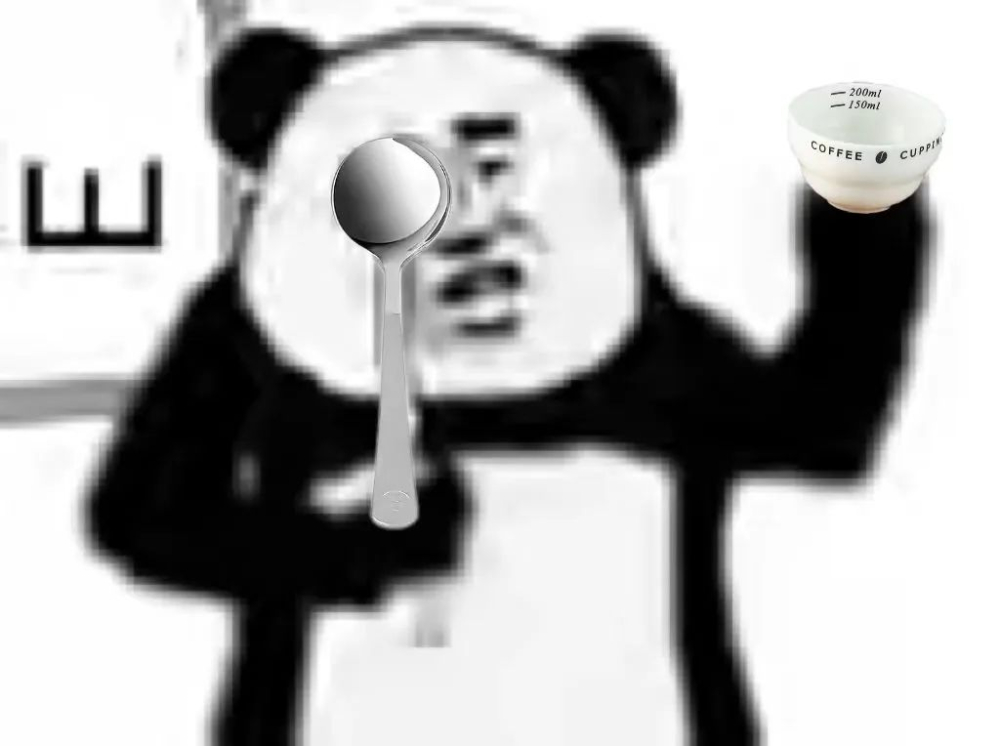
- Customers who travel with cupping spoons and bowls are not ordinary customers. At first I assumed this had to be a joke — but I have since witnessed, with my own eyes, a customer bringing their own cupping spoon and demanding a free cupping session before deciding whether to buy beans. In such moments, all you can do is state clearly that the shop doesn't offer that service. And if they insist other places do it? Ask for the address so you can go learn something.
The request probably exists because some coffee shops do prepare sample brews in advance, letting customers taste before committing to a bean or an extraction method — but that service comes after paying for a cup of coffee.
Shock Level: 🌟🌟🌟🌟
"I'd like a washed Yirgacheffe pour-over coffee."
(Extraction finished, customer takes a sip.)
"Your coffee has an astringent aftertaste. It must be the water quality! Fill a cup with the water you just used for the pour-over."
(The barista obediently fills a cup of filtered water...)
(The customer pulls out a water quality test pen and dips it in...)
"99ppm... Your water has too many impurities! No wonder there's astringency! You should be using purified water. Do you even know what you're doing!"
"..."

- Once again: customers carrying these tools are not ordinary. Do water impurities affect coffee extraction? Absolutely! But water at 99ppm is actually well suited for pour-over coffee — the TDS for pour-over water generally falls between 75ppm and 250ppm, and appropriate levels of calcium and magnesium ions aid extraction. Too much calcium can amplify astringency; too much magnesium can amplify bitterness.
A water quality test pen measures the total concentration of dissolved substances — it cannot tell you what those substances are. If a coffee tastes astringent, the likelier culprits are brewing technique, temperature, or grind settings. And if the water itself is acidic, that will raise the coffee's perceived acidity too.
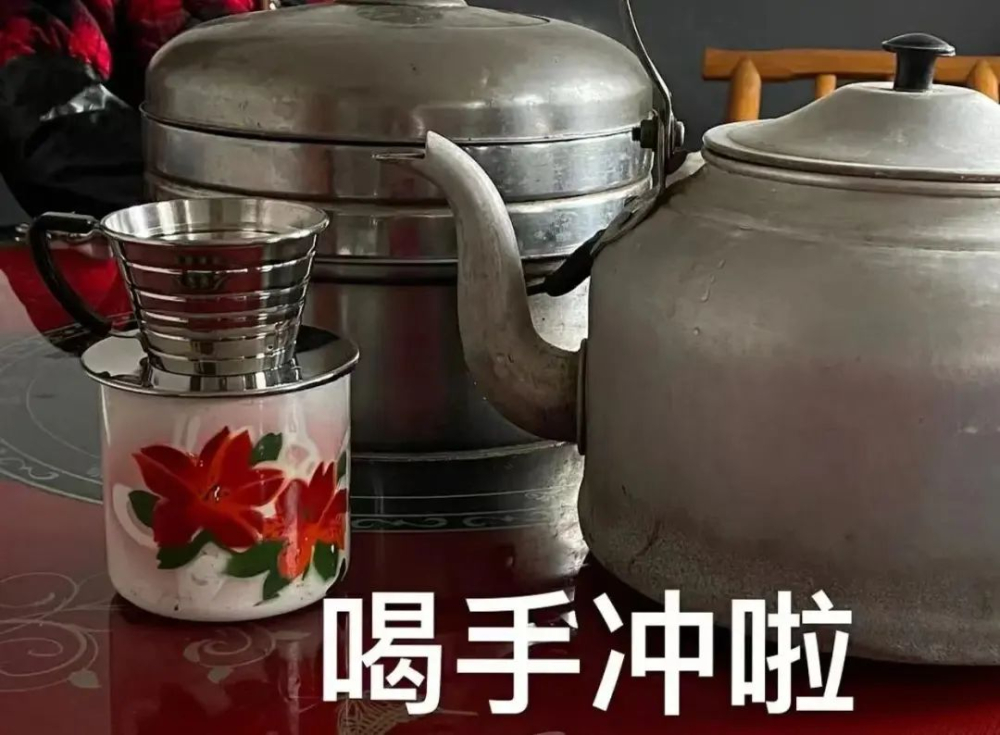
One thing is certain, though: brewing with purified water is a bad idea. At 0ppm it is too pure to extract the coffee's flavor compounds effectively. Perhaps this customer simply prefers a lighter taste — but purified water is not a sensible brewing water for any coffee shop.
Shock Level: 🌟🌟🌟🌟🌟
"I'd like a Guoding Ding pour-over coffee."
(Extraction finished. The customer produces a TDS concentration meter, doesn't drink a drop, and scoops a small sample straight from the cup.)
"Your coffee's concentration is 1.37%! This exceeds the SCA Gold Cup extraction standard of 1.15%–1.35%."
"I'm sorry — why don't you take a sip first? If it tastes wrong, I'll brew another cup for you."
"No need! You're just unprofessional! Take this cup away. I'm not coming back!"
"..."
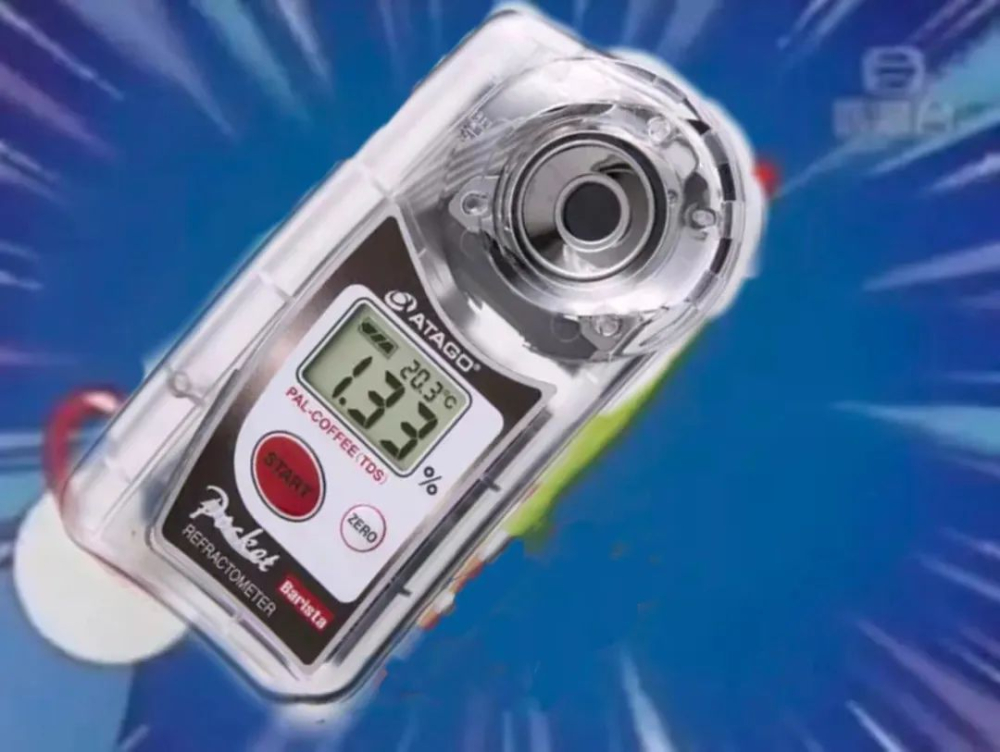
- I am exhausted from saying it: customers who bring out these instruments are not ordinary! The honest truth is that no explanation will help here — nothing you say will convince this customer. Is a coffee that exceeds 1.35% by a whisker necessarily bad-tasting? Obviously not.
The Gold Cup extraction standard is merely a reference range created by the specialty coffee industry to reduce disputes caused by individual differences in judging concentration. It is not a 100% requirement that coffee fall within the band to taste good, nor does falling outside it automatically mean bad coffee.
Customers today do expect more from coffee — the result of the collective effort of everyone in this industry. But some people inevitably develop misconceptions about coffee knowledge and theoretical data. When that happens, a barista who treats every question as a challenge to their professionalism will read innocent curiosity as an attack on their expertise — and unpleasant incidents follow.

We can't demand that everyone understand coffee before drinking it, and we can't stop the people who do know coffee from weaponizing data and theory in ways that shock the rest of us. "Ignorance is not a crime" — frustrating as it may be, problems still need solutions. What we can control is our own composure: stay calm when these moments arrive, and do our best to convey better information in language everyone can understand.
If you meet a 3-to-5-star situation, fight fire with fire: hold your professional ground, don't rush, and answer with professionalism. If the customer needs to save face, take a step back — the view is wider from there. Getting angry yourself helps no one. As the saying goes: as long as you're not embarrassed, the embarrassed ones are others.

Every day brings all kinds of customers — some unpleasant, many wonderful. The reason we all keep going is surely the recognition our work receives. Believe in your professionalism, believe that through us more people will come to love coffee, and the industry will keep getting better.
Image source: Internet
For professional coffee knowledge exchange and more coffee bean information, please follow Coffee Workshop (WeChat public account: cafe_style)
For more specialty coffee beans, please add FrontStreet Coffee on WeChat: qjcoffeex
FrontStreet Coffee Recommendation
Americano Beans for Every Skill Level
After a day of difficult customers, the Americano remains every barista's refuge — and its quality depends entirely on the beans. For inexperienced newcomers making Americanos at home on a machine, FrontStreet's Classic Blend is the answer: a traditional Italian-style recipe built from Indonesian Mandheling, Brazilian Red Bourbon, and washed Vietnamese coffee. It carries the low acidity, mellow body, and herbal-woody tones of Asian coffee alongside the balanced smoothness and creaminess of the Americas, extracting with aromas of butter, nuts, spices, and dark chocolate. Americano or latte, its wild character and abundant crema are the blend's signature.
If value is the priority, the FrontStreet Black Cocoa Base Blend pairs Yunnan Small Beans with Brazilian Cerrado — nutty, chocolatey, creamy, with a soft ripe-plum acidity and a gentle overall palate at a friendly price; its versatility makes it a favorite first bean for opening a café. When dark-roast espresso fatigue sets in, try the medium-roasted FrontStreet Strawberry Candy Espresso Blend: unlike traditional blends, it unites washed, natural, and honey-processed Arabica from three world-famous origins — Colombia, Costa Rica, and Ethiopia — producing a rose perfume, low bitterness, slight acidity, and flavors of grape, dried blueberry, sweet orange, and fruit candy, with an almond note in the finish.
For single-origin fans, the FrontStreet Ethiopia Guizi SOE — a natural lot from Buku Abel in the Hamberla (Sidamo) region, famous for its cream-strawberry, guava, dried mango, black tea, and citrus notes — makes an Americano with zero bitterness, refreshing sweetness and acidity, and lush tropical fruit aroma. And the FrontStreet Gerana Estate Geisha SOE, grown under original rainforest canopy, offers yellow florals and bright bergamot on entry, fresh strawberry sweetness in the finish, and — as an Americano — a crisp lime character with fermented black grape sweetness at medium body.
Important Notice :
FrontStreet Coffee is a long-established specialty coffee roaster in Guangzhou China, selling freshly roasted beans from its own farm in Yunnan as well as dozens of carefully selected single-origin beans from around the world for both pour-over and espresso. The products deliver consistently excellent quality and great value, with shipping within 24 hours. Guangzhou's FrontStreet Coffee shop is recommended by many coffee lovers, and the beans are now available online at the Tmall 。
FrontStreet Coffee has moved to a new address:
FrontStreet Coffee Address: 315,Donghua East Road,GuangZhou
Tel:020 38364473
 Scan and follow the En Gafei WeChat official account. Please indicate that the reprint comes from "En Gafei".