
How Does Coffee Grind Size Affect Taste? What's the Ideal Grind Size for Pour-Over Coffee?
Some friends have complained to FrontStreet Coffee that they can never seem to find the right grind size — their coffee turns out either too sour or too bitter. Because grind size involves so many variables, beginners often feel they're exploring blind. So FrontStreet Coffee wants to help you understand grind size by connecting it to something you can actually measure: extraction time.
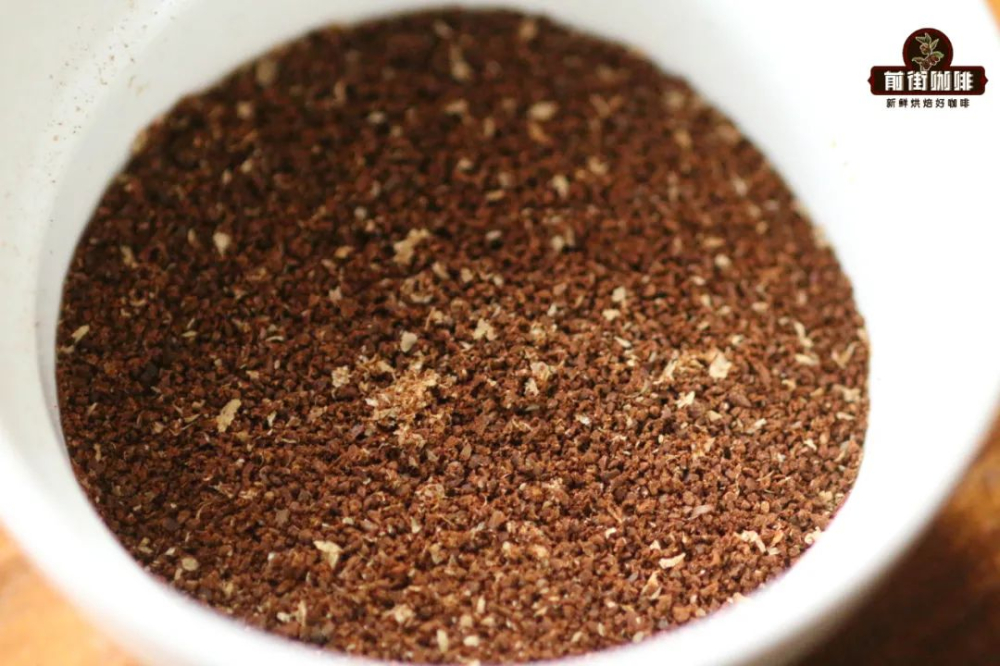
You probably already know the basics: grind finer and coffee turns bitter; grind coarser and the flavor gets weak and thin. But why? There are two underlying reasons.
First, finely ground coffee has a much larger total surface area, and each particle's interior is closer to its surface. Water can penetrate the particles more easily and extract their compounds. Coarser grounds, by contrast, present less surface area with a longer path from surface to core, so water needs more time to get in, and extraction efficiency suffers. (There's one exception: at a flour-like fineness, particles clump together, and the clumped portions actually extract relatively poorly.)
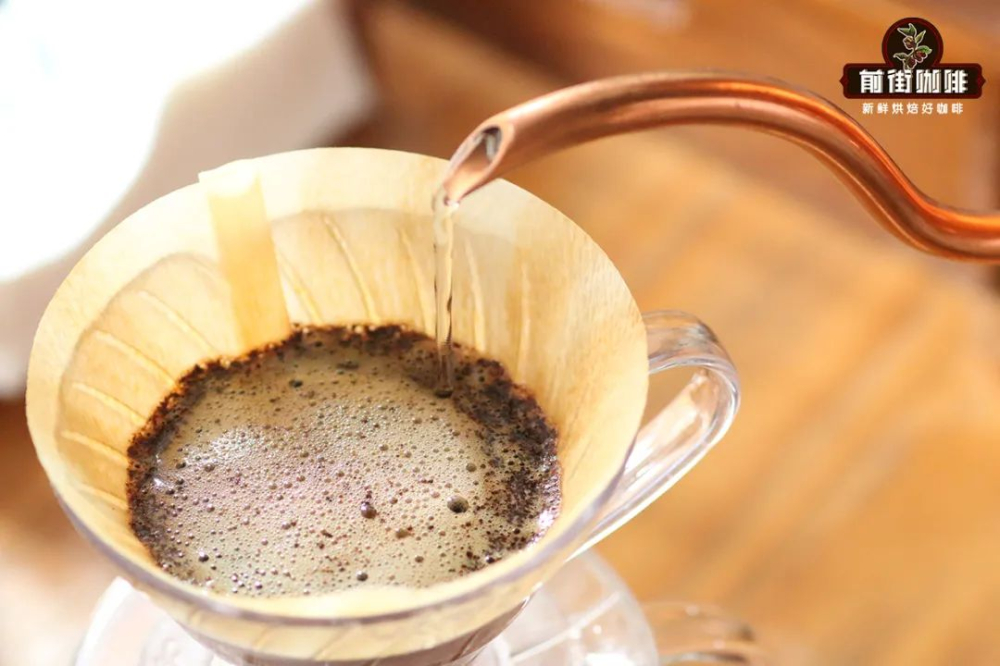
The second reason is specific to drip brewing: the coffee bed also acts as a barrier that slows the flow of water. Even what we loosely call espresso from pressure machines is more precisely pressure-filtered coffee — water is forced through the coffee bed and out through fine holes in the portafilter.
Regular readers of FrontStreet Coffee know that the method taught for dialing in grind size uses time as the primary benchmark. The logic: coarser grounds leave larger gaps between particles, so the bed restrains water less and the brew finishes sooner. Finer grounds shrink those gaps, water struggles through, and the brew takes longer.
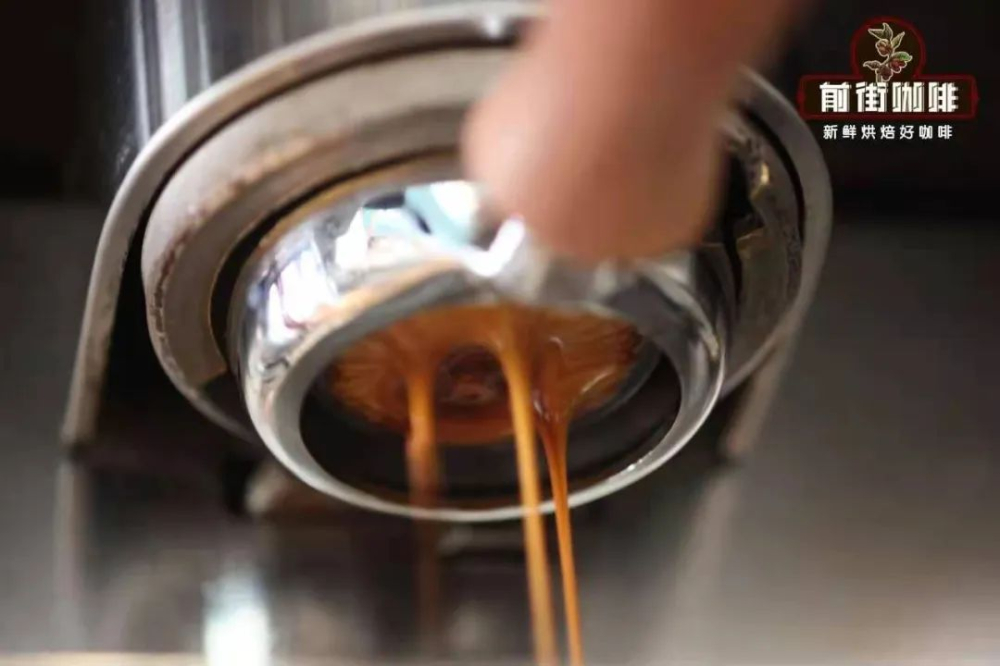
The same applies to pour-over. Grind finer, and water not only penetrates the particles more easily but also has to fight its way through a denser bed — contact time stretches, and the cup often turns bitter. Grind coarser, and water passes through the bigger gaps with less contact, sometimes rushing through the bed without fully extracting the coffee's compounds — leaving the cup thin and hollow.
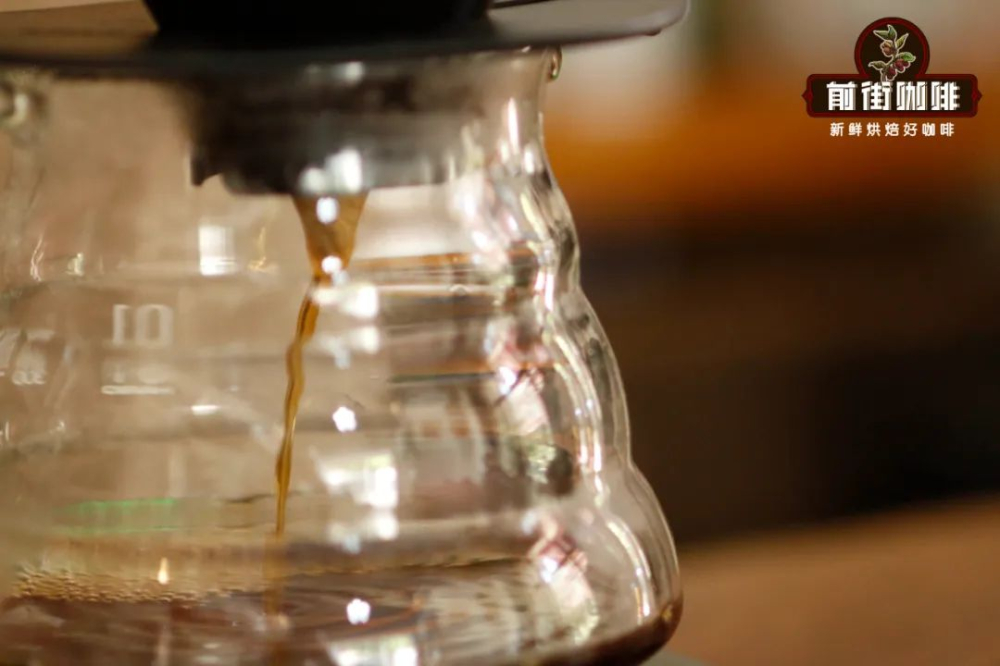
Using Extraction Time to Validate Grind Size
You can validate and adjust your pour-over grind through one indirectly controlled variable: time. Here's an example from FrontStreet Coffee:
When testing the relationship between grind and time, hold everything else fixed — dose (15g), coffee-to-water ratio (1:15), pouring technique (three-stage pour), and filter (V60) — since changes in any of these also affect extraction time. FrontStreet Coffee calibrates its recommended grind for light-roast beans using a #20 sieve at an 80% pass rate, which we call a medium-fine grind for pour-over. Extraction time should land roughly between 1 minute 50 seconds and 2 minutes 10 seconds.
In other words, if you follow these parameters — same dose, ratio, technique, and grind — your extraction time should theoretically match: 1:50 to 2:10. If it doesn't, the grind size is probably off. The other parameters are easy to verify; grind is the hard one.
"But my grind can't be wrong — I calibrated with a #20 sieve at 80% too!" Two things could be going wrong here. The first is incorrect use of the sieve.
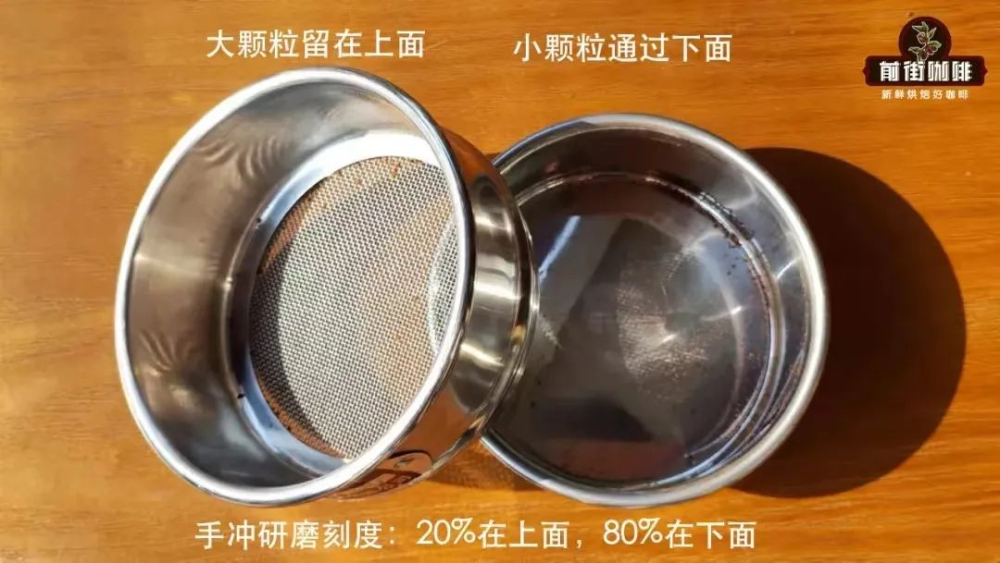
FrontStreet Coffee recommends this calibration method: weigh out 10 grams of coffee beans (or a multiple of 10 — more coffee gives more precise data). Choose a grind setting, grind, pour the grounds into the sieve, and shake horizontally until no more particles fall through noticeably (typically 3-5 minutes). Then weigh what passed through and divide by the total to get the pass rate. If 5g passes out of 10g, that's 50%. To hit 80%, adjust finer and re-measure until you get there.
The second issue is the inherent limitation of the #20 sieve combined with your grinder's particle quality. The #20 sieve has a mesh size of 0.85mm, so it can only tell you which particles are larger or smaller than 0.85mm — it cannot reveal the extremes. With a high-quality grinder, the particle size distribution is tightly concentrated, with few ultra-fines or boulders, so this doesn't matter. But a poor grinder produces grounds of wildly varying sizes — too many fines and too many boulders at once — and even at an 80% pass rate you can still end up with long, uneven extraction times.
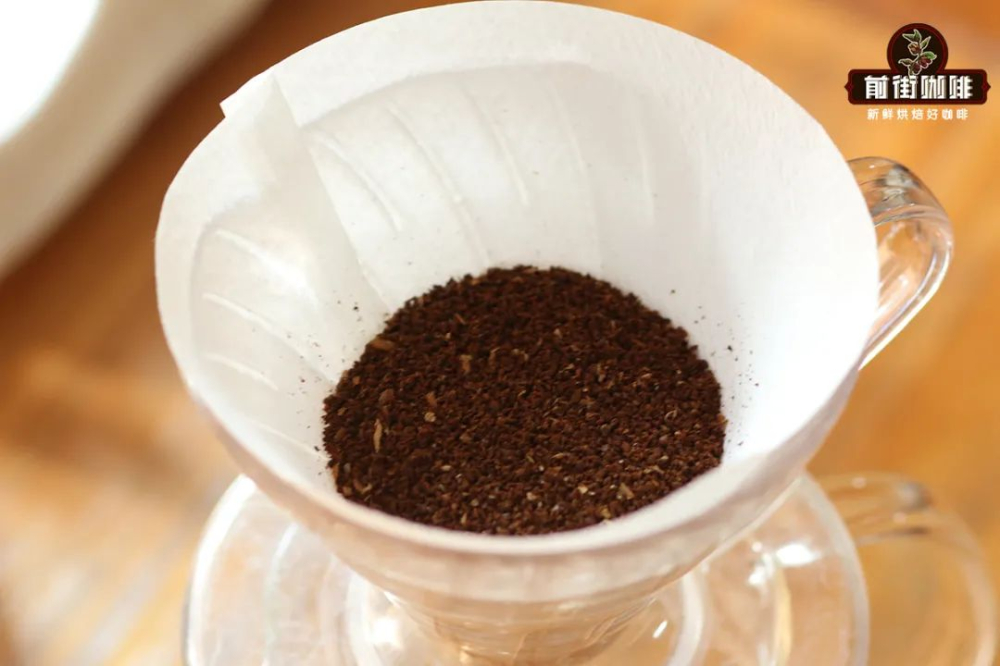
So use extraction time as your reality check. If your brew runs noticeably longer than expected, taste the coffee first. If it genuinely needs improving, adjust the grind slightly coarser — say, to a 75% pass rate — and see whether the flavor improves.
Final Thoughts from FrontStreet Coffee
Whenever FrontStreet Coffee talks brewing, it emphasizes that data is static — you can never copy someone else's numbers and perfectly recreate their flavor. The principles, however, are universal. Understand the theory behind the numbers, adapt them to your own equipment and situation, and dial in data that suits you — that's how you brew genuinely delicious coffee.
FrontStreet Coffee Recommendation
Dialing in grind size is more fun with beans worth dialing in. For V60 pour-over, FrontStreet Coffee especially loves floral-and-fruit-forward lots. The washed Ethiopia Guji cooperative lot is a classic starting point — jasmine, lemon, and berry notes with a green-tea-like finish, easy to enjoy even if your extraction isn't perfect yet.
For a more expressive cup, try the Ethiopia Sidamo Huakui natural, whose strawberry and tropical-fruit character shines with V60's fast, aromatic extraction, or the FrontStreet Strawberry Sugar blend, whose raisin-honey-sweet profile and bright florals suit light roasts beautifully. Any of the three will reward the 1:50-2:10 extraction window with a lively, clean cup.
Important Notice :
FrontStreet Coffee is a long-established specialty coffee roaster in Guangzhou China, selling freshly roasted beans from its own farm in Yunnan as well as dozens of carefully selected single-origin beans from around the world for both pour-over and espresso. The products deliver consistently excellent quality and great value, with shipping within 24 hours. Guangzhou's FrontStreet Coffee shop is recommended by many coffee lovers, and the beans are now available online at the Tmall 。
FrontStreet Coffee has moved to a new address:
FrontStreet Coffee Address: 315,Donghua East Road,GuangZhou
Tel:020 38364473
 Scan and follow the En Gafei WeChat official account. Please indicate that the reprint comes from "En Gafei".

