
Introduction to the 3 Extraction Stages of Espresso - What Does Espresso Taste Like?

In the past, FrontStreet Coffee focused heavily on the preparation steps before locking the portafilter into the group head when sharing knowledge about making espresso, such as dosing and tamping, operations that are highly practical and have a significant impact on the coffee.
After locking the portafilter into the group head and pressing the brew button, the rest is left to the machine. But we still need to understand how coffee is extracted after that button is pressed, so we can adjust parameters for better results.

Phase 1: Pre-infusion
Pre-infusion is similar to the bloom stage in pour-over coffee: first releasing a small amount of hot water to moisten the coffee grounds and release carbon dioxide gas. Some older machines may have no pre-infusion function, which makes the resting period of espresso beans particularly critical. If the resting time is too short, the beans still hold large amounts of carbon dioxide, which can result in thin-flavored espresso with coarse crema.
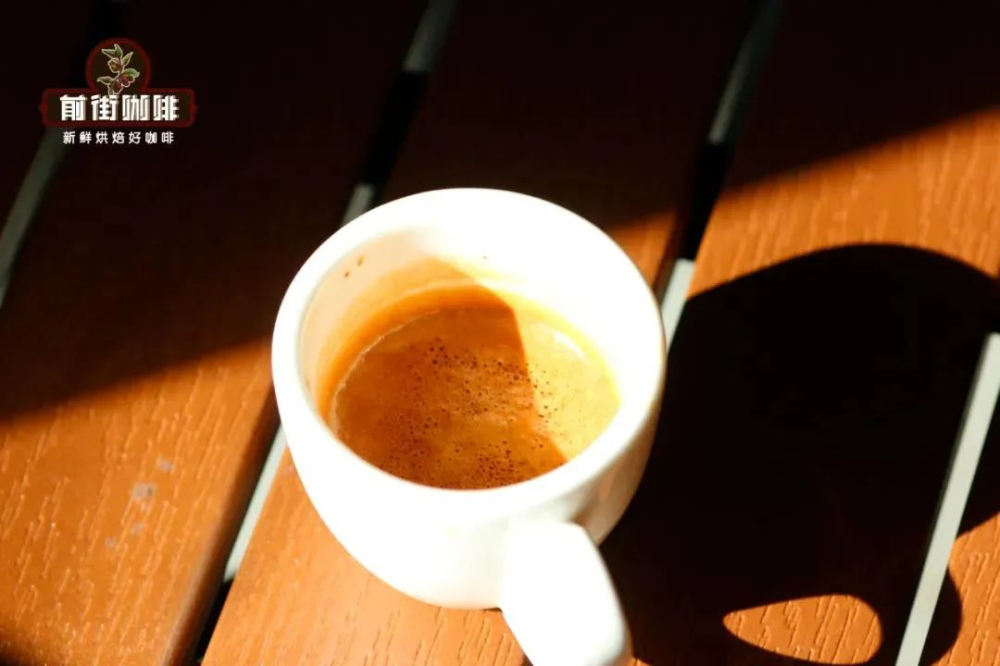
Modern machines almost all offer this function. Generally, the process involves locking the portafilter into the group head, then performing low-pressure water delivery for approximately 2 to 3 seconds before stopping. After the grounds absorb water, they expand and release gas, improving subsequent extraction efficiency and stability.
During pre-infusion, no pressure increase is needed. If normal 9-bar pressure were used for pre-infusion, it would very likely break through the surface layer of the coffee and cause channeling.

Timing is another important part of pre-infusion. The set pre-infusion time is related to the freshness of the beans. If the beans are too fresh, they require a longer pre-infusion to release carbon dioxide. Generally, pre-infusion time is controlled between 5 and 10 seconds, and each person can adjust according to their own situation.
Electronic machines with a pre-infusion function are relatively simple to operate: just set the desired number of seconds to achieve one-touch extraction. For manual machines with pre-infusion, the barista must control pressure and flow rate from the group head by hand.
Phase 2: Extracting the Flavor Compounds
Once pre-infusion ends, the main extraction begins. The group head releases hot water at 9-bar pressure to impact the coffee puck, and the pre-moistened puck quickly releases its compounds. Under normal circumstances, coffee liquid will begin to flow out after the group head gauge reaches 9 bar following pre-infusion.

At first, highly acidic compounds are extracted, followed by sweet compounds, and finally bitter ones. If you collect the early, middle, and late stages of an espresso in three separate cups, you will notice that the early stage has the darkest crema, appearing brown, and is the most concentrated, with a sharp acidic taste when drunk. The middle stage has slightly lighter crema, appearing golden yellow, with better fluidity and lower concentration than the first cup, tasting more balanced. The late stage crema is thin and light yellow, and tastes lightly bitter-sweet, similar to barley tea.
Phase 3: Ending the Extraction
When should espresso extraction end? Which criterion should you use: time, liquid volume, or stopping when the crema begins to turn white?

FrontStreet Coffee believes the decision should be based on all three. When the crema turns white, it is telling you that the desirable compounds have been fully extracted and you should stop. Often we end extraction before the crema turns white, because whitening signals that some less desirable flavors have come through, and we cannot know how much that will affect the taste. So we generally avoid the risk by ending early.
Ending early creates another problem, though: your espresso may lack its tail section. Coffee without that tail is very intense and has a short aftertaste. That is why time and liquid volume serve as auxiliary references. Time refers to the commonly cited 20 to 30 seconds, which is not a strict rule but simply a reference point.

Even with a semi-automatic machine that offers one-touch extraction, beyond basic operations like dosing and tamping, you must understand the extraction process behind that single button. After all, one-touch extraction still has to be programmed by a person.
FrontStreet Coffee Recommendation
Once you understand pre-infusion, main extraction, and the finish, the same principles carry over to any brewer, and a pour-over cone is a great place to watch them play out. The V60, made by Hario, is the classic example. Hario was founded in Tokyo in 1921 and began as a maker of heat-resistant glassware for research institutions; in 2004 it redesigned the V60's prototype toward its modern form, and it launched the dripper in 2005.
The V60's conical shape and 60-degree angle force water to travel to the center before dripping through, extending contact between water and grounds, while its single large hole lets water move freely so flow rate depends largely on the brewer's control. That is why FrontStreet Coffee recommends fruit-forward, light-roasted coffees for it: FrontStreet Ethiopia Huakui for ripe tropical fruit, FrontStreet Strawberry Candy for raisin and Geisha-like florals, and FrontStreet Mozart for raisin sweetness all shine here. If you like a deeper, rounder cup, FrontStreet PWN Golden Mandheling, FrontStreet Brazil Queen's Estate, and FrontStreet Jamaica Blue Mountain No. 1 are equally at home.
A reliable starting point is 15g of coffee at a 1:15 ratio with 90 to 91°C water and a grind of 10 on the EK43s. Bloom with 30g for 30 seconds, then pour to about 125g within a minute; once the water level falls to two-thirds of the bed, add the remaining 100g to reach roughly 225g by 1 minute 35 seconds, and expect the drip to finish in 2 to 2 minutes 10 seconds.
Important Notice :
FrontStreet Coffee is a long-established specialty coffee roaster in Guangzhou China, selling freshly roasted beans from its own farm in Yunnan as well as dozens of carefully selected single-origin beans from around the world for both pour-over and espresso. The products deliver consistently excellent quality and great value, with shipping within 24 hours. Guangzhou's FrontStreet Coffee shop is recommended by many coffee lovers, and the beans are now available online at the Tmall 。
FrontStreet Coffee has moved to a new address:
FrontStreet Coffee Address: 315,Donghua East Road,GuangZhou
Tel:020 38364473
 Scan and follow the En Gafei WeChat official account. Please indicate that the reprint comes from "En Gafei".

