
What's the Ideal Water Temperature for Pour-Over Coffee? How Brewing Temperature Affects Coffee Flavor and Taste

Is water temperature important for extraction? FrontStreet Coffee's answer: important, but not decisive. Think of it as a dial for adjusting extraction speed — hotter water dissolves soluble compounds more readily. But since overly hot water rushes bitter flavors out of the coffee, a conservative range is wise. Generally, most beans on the market brew well at 86–93°C.
Based on FrontStreet Coffee's pour-over experience, high-altitude light-to-medium roasts can use 91–93°C — think Ethiopia's Guji, Panama Geisha, Kenya AA. Darker roasts do better at 86–88°C — Golden Mandheling, Blue Mountain No. 1, Brazil Fazenda Rainha, and the like. Coffees with both acidity and bitterness can be brewed straight at 90°C, landing between over- and under-extraction.

Precisely because temperature is easy to control and its effects are well understood, many people fall into a trap: believing 1°C matters. One customer bought a bag of Sidra beans and brewed them at FrontStreet Coffee's recommended 91°C, finding weak aroma and prominent bitterness. He blamed the water temperature, dropped it 2°C — and the cup didn't change. After some discussion, the real culprit emerged: the grind was too fine.
FrontStreet Coffee's own experiments show that coffee brewed at 91°C and 93°C has nearly identical flavor profiles — subtle mouthfeel differences, but indistinguishable without a side-by-side. So if your coffee tastes clearly wrong and your temperature is within the recommended range, look elsewhere: the problem is almost certainly another parameter.

The Rise of Variable Temperature Brewing
In recent years, competition brewers have frequently used variable temperature brewing — hotter water in the first half, cooler in the second. What's the secret?
FrontStreet Coffee recalls that variable temperature isn't a new idea. Years ago, Mr. Wu Zelin invented the "Three-Temperature" brewing method, one of the classic variable-temperature approaches. Here's how it worked:

Using 16 grams of grounds, he divided the pour into four sections totaling 240ml — 40, 80, 80, and 40ml. The first two sections used 94°C water, the third 90°C, the final one 80°C — a stepped, variable-temperature extraction.
In the 2021 WBrC finals, champion Matt Winton also used variable temperature: 20 grams of grounds, five pours totaling 300ml — 60, 80, 60, 60, and 40ml. The first three sections at 93°C, the last two at 88°C.

Both concepts share the same logic: hotter water for roughly the first 2/3 of the water volume, cooler for the remaining 1/3. FrontStreet Coffee therefore ran a similar comparison of variable versus constant temperature.
FrontStreet Coffee's Variable Temperature Experiment
FrontStreet Coffee used 15 grams of grounds, three pours totaling 240ml — 30, 120, and 90ml — with a medium-fine grind (80% pass-through on a #20 sieve).

The variable temperature group used 94°C for the first two pours and 88°C for the last. The constant temperature group used a starting temperature of 91°C. Attentive readers will recognize those constant-temperature parameters — they're exactly what FrontStreet Coffee normally uses! That's deliberate: this comparison wasn't about proving which method is better, but about identifying what variable temperature changes in flavor. The variable settings were 91°C ±3°C so the differences would be easy to observe.
The beans were Panama Maracatã. After brewing, FrontStreet Coffee first measured the concentration of both groups to confirm comparable extraction rates. If they'd differed greatly, the variable group would need adjusting. Fortunately, the variable group measured 1.34% concentration versus 1.31% for the constant group — close enough to compare.
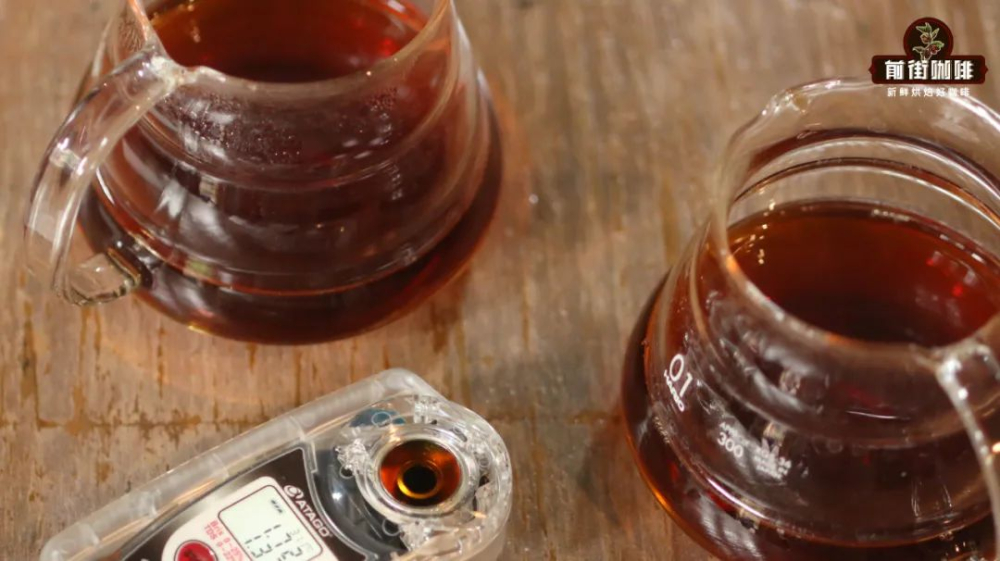
The constant temperature group: gentle berry and honey flavors with an oolong tea aftertaste — smooth and very pleasant overall.
The variable temperature group was more intense: on the first sip the berry sweet-sour sensation jumped out, the acidity brighter, the honey sweetness relatively softer, and the aftertaste leaned toward green tea.
Understanding Variable Temperature Flavor Changes
Two key points make these changes easy to understand.

First: even the "constant" group experiences temperature drift. Brewing temperature refers to the initial temperature at the start of the pour; kettle water cools over time. Split that initial 91°C into the first two sections and the last, and by the final pour the water would be roughly 89.5–90°C (measured at 1 minute 20 seconds).
Second: hotter water extracts more coffee substances — with the risk of over-extraction and bitterness. Since flavor compounds extract in order — acids first, then sweets, finally bitters — we can split the brew into a hot first half and a cooler second half.
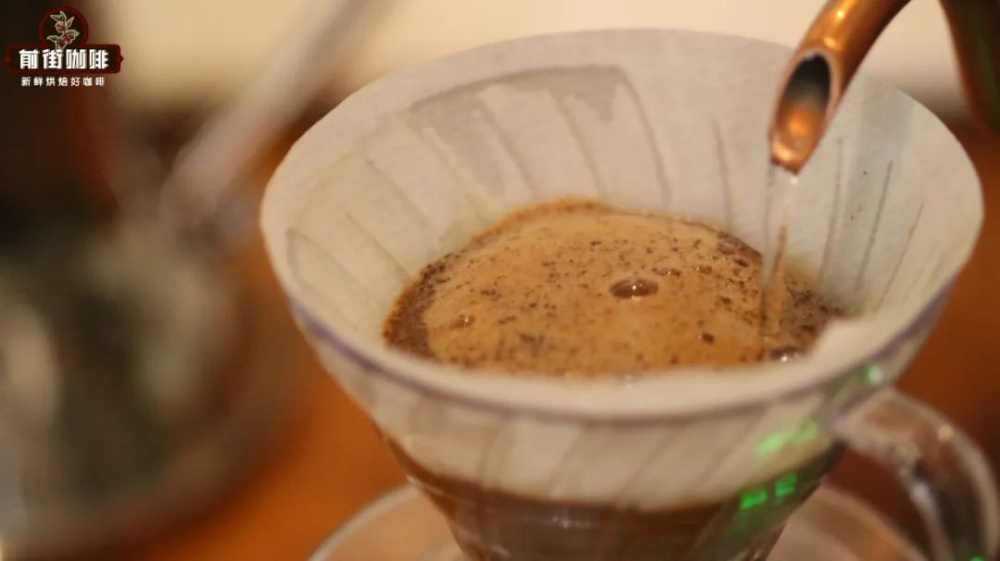
The hot first half pulls out more sweet and sour compounds; the cooler second half dials down their release. The result: a more intense flavor expression.
In other words, variable temperature extraction artificially widens the temperature gap during brewing. The principle is simple; finding the right high and low temperatures and water distribution takes extensive testing. Admittedly, FrontStreet Coffee's parameters here weren't perfectly matched — and in overall sensory evaluation, the constant temperature group still performed better.
FrontStreet Coffee Recommendation
For those 86–88°C dark-roast brews, few beans reward patience like a well-graded Mandheling. FrontStreet Coffee recommends:
- FrontStreet PWN Golden Mandheling — the benchmark of premium Mandheling, from Sumatra's PWN company: beans selected at 18+ mesh, fewer than 3 defects per 300g sample (top G1 grade), plus three rounds of hand sorting for exceptional cleanliness and sweetness. Medium-dark roasted: black chocolate and caramel over a wild herbal character, with a thick, full body and low acidity — perfect for acid-averse drinkers. Brew pour-over with 87–88°C water, 15g of coffee at 1:15, coarse-sugar grind, in three pours to highlight the caramel sweetness and chocolate-nut depth.
- FrontStreet Lintong Mandheling — from the traditional Lintong region around Lake Toba: strong, intense, and bittersweet with clove, wood, and spice notes, plus a lasting, thick sweetness from the region's signature wet-hulled character.
- FrontStreet Classic Blend — for espresso lovers: Brazil's creamy nuttiness layered with medium-dark Mandheling (butter, roasted chestnut, caramel, sandalwood, and spice) plus a touch of Robusta for rich crema — effortless for latte art or a Dirty.
Important Notice :
FrontStreet Coffee is a long-established specialty coffee roaster in Guangzhou China, selling freshly roasted beans from its own farm in Yunnan as well as dozens of carefully selected single-origin beans from around the world for both pour-over and espresso. The products deliver consistently excellent quality and great value, with shipping within 24 hours. Guangzhou's FrontStreet Coffee shop is recommended by many coffee lovers, and the beans are now available online at the Tmall 。
FrontStreet Coffee has moved to a new address:
FrontStreet Coffee Address: 315,Donghua East Road,GuangZhou
Tel:020 38364473
 Scan and follow the En Gafei WeChat official account. Please indicate that the reprint comes from "En Gafei".

