
"Red Label Geisha" and "Geisha Coffee" have become private trademarks?!
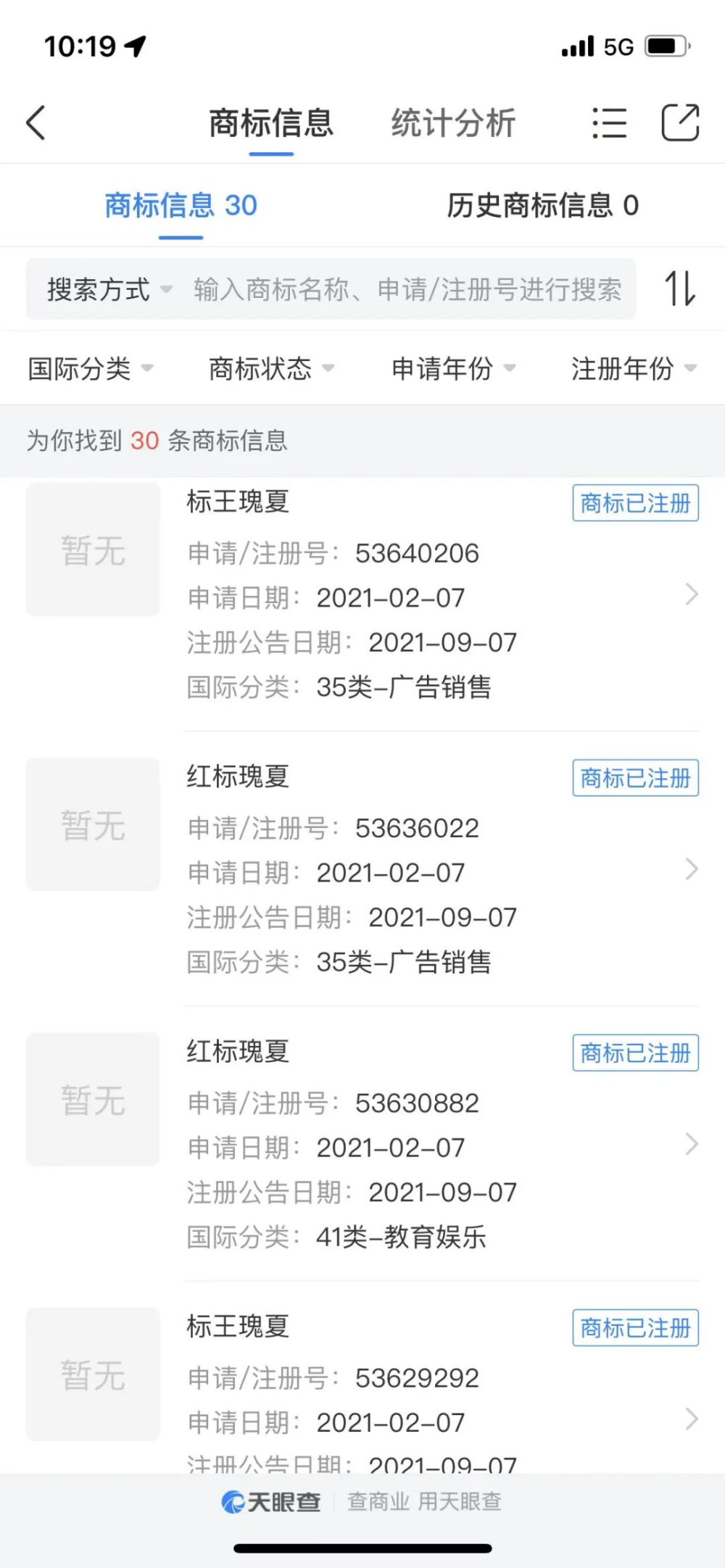
Coffee enthusiasts are likely familiar with names like "Red Label Geisha" and "Geisha Coffee." Recently, however, searches of the national trademark office website revealed that some merchants are registering these generic names as their own product trademarks, and some of those trademarks have already passed the office's review.
Geisha coffee beans originate from the Kaffa forest of Geisha Mountain in Ethiopia. In 1931, a British collector gathered coffee beans from the forests around Geisha Mountain in southwestern Ethiopia and exported the batch to Kenya in 1932. In 1936, the variety reached Uganda and Tanzania, and then Costa Rica in 1953. Panama received it in the 1970s, when Mr. Francisco Serracin of the Tumba Seven Estate brought the Geisha variety from CATIE in Costa Rica and shared it with other farms for cultivation.
Geisha's rise to fame owes much to Daniel Peterson, owner of Hacienda La Esmeralda, who recognized its potential. The most commonly told story of the variety's discovery goes like this: "In 2003, Daniel Peterson, owner of Panama's Hacienda La Esmeralda, faintly detected a captivating floral aroma among some processed coffee beans and traced it back to this batch from the windbreak forest."

Daniel Peterson's Presentation at the GRAND CRU Event
Responding to such rumors, Daniel Peterson shared the history of his Geisha discovery at an event hosted by the renowned green coffee merchant Grand Cru, stating that the "windbreak forest" claim is completely unfounded.
Daniel explained that the discovery of the Geisha variety was the product of years of comparison and testing, with the variety finally identified in 2003. Two weeks before the 2003 BOP competition, while selecting competition batches on the internal cupping table, he found that the Geisha variety carried outstanding flavors of jasmine, citrus, peach, blueberry, bergamot, and sugarcane. These flavors differed from what coffee professionals favored at the time, but Daniel still chose to enter the Geisha variety in the competition, and it won first place.
The winning batch from Hacienda La Esmeralda was originally labeled "Geisha." When it was introduced to Japan, the name was transliterated as "Gesha." In Japanese, Gesha sounds similar to geisha, written with the characters for "geisha," which translates to "performing artist" in Chinese. Later, when the variety reached Taiwan, local coffee professionals used the Chinese transliteration to name it. In mainland China, around 2006, Mr. Yuan, the Chinese head of Kalu Dream Coffee, brought Geisha from Panama to the mainland and named it "Gui Xia" through direct phonetic translation. For more than a decade, the Chinese terms for Geisha Coffee and Gui Xia have served as generic names for the variety and its beans.
After Hacienda La Esmeralda rose to prominence through Geisha in 2004, the estate began classifying the Geisha it produced. Before the 2021 harvest season, Hacienda La Esmeralda divided its Geisha into three grades, using red, green, and blue label backgrounds to tell them apart. In China, to help consumers remember each grade, people used the shorthand Red Label, Green Label, and Blue Label. "Red Label Geisha," "Green Label Geisha," and "Blue Label Geisha" thus became generic names representing the grades of Hacienda La Esmeralda's Geisha.
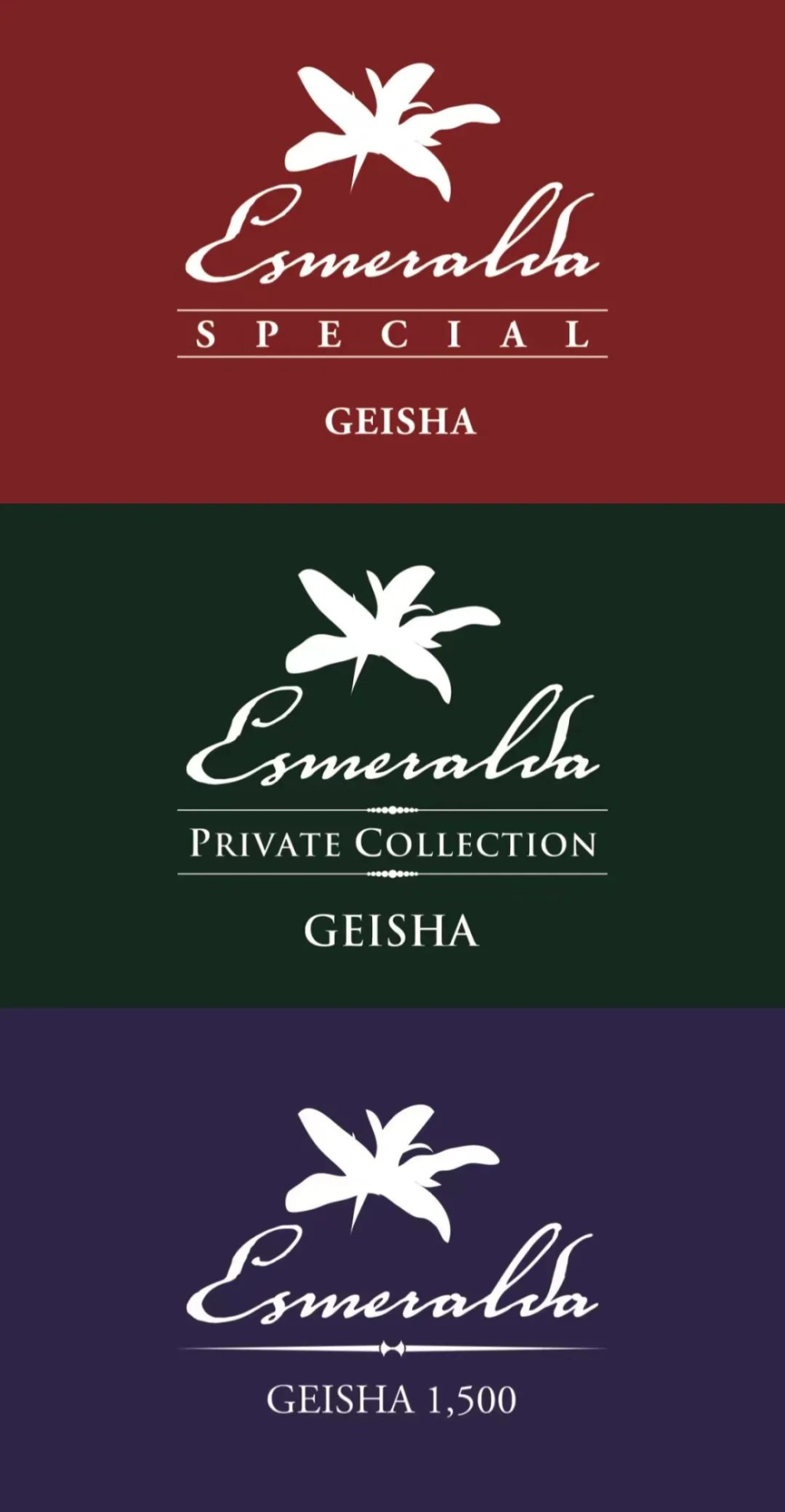
Starting with the 2021 harvest season, Geisha grown at 1,500 meters (originally the Blue Label) was sold entirely to one green coffee company, which launched a brand called "Las Rocas," translated into Chinese as "Volcanic Rock Geisha."
"Esmeralda Special" corresponds to the red label color, hence Red Label Geisha. The Esmeralda Special series represents the highest-quality Geisha sold by Hacienda La Esmeralda, grown in specific plots at elevations between 1,600-1,800 meters, with every batch cupping above 90 points. Typically, this series comes from the Jaramillo and Cañas Verdes sub-estates (the Velo de Novia estate has also produced Red Label lots, though that plot mainly serves as exploration for commercial viability and grows many coffee varieties).
Another characteristic of Esmeralda Special batches is that each carries an independent number, and every bean in a batch comes from a single small plot, letting buyers select suitable lots based on subtle flavor preferences. (The buyers here are those who trade directly with Hacienda La Esmeralda.)
It's worth noting that each year, Hacienda La Esmeralda selects different batches of Esmeralda Special from various plots to enter international specialty green coffee auctions. Those batches are clearly marked as auction lots. Not every Esmeralda Special batch is auctioned, though; the ones that don't compete are non-auction lots.
Auction batches of Esmeralda Special enter the annual Best of Panama (BOP) green coffee competition, battling among "kings" against other coffees grown in Panama. Through cupping, a selection of "kings of kings" is chosen before the auction phase begins.
During the auction, buyers bid continuously to purchase the beans they want. The highest auction price is referred to by Chinese coffee professionals as "Biao Wang" (Champion of Bids). When Geisha beans achieve the highest auction price, they're called "Champion Bids Geisha." So "Champion Bids Geisha" has become a generic name for the highest-priced Geisha variety in the BOP auction.
The greatest significance of trademark registration lies in the exclusive rights it grants registrants, protected by law, preventing others from imitation and otherwise allowing legal action for infringement and economic compensation. Recently, though, many rights-protection incidents have appeared online, where some merchants claim that certain names used in others' products are their registered trademarks, demanding product removal and economic compensation.
Trademark protection is meant to safeguard the exclusive rights of registrants, but it now poses significant potential risks to various industries. Every industry has generic names, but trademark examiners aren't familiar with the generic names of every industry. So although Article 11 of China's Trademark Law stipulates that generic names cannot be registered as trademarks, it's impossible to completely prevent the registration of some generic names that aren't widely recognized by the public.
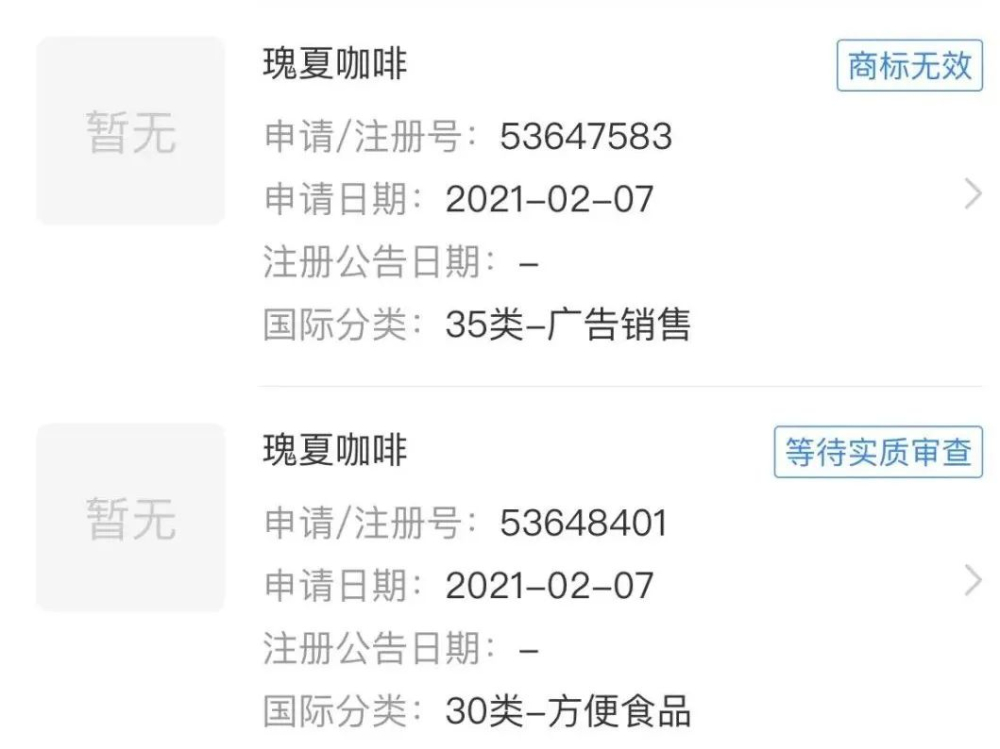
Currently, the company's registration of "Red Label Geisha" and "Champion Bids Geisha" has passed the advertising and sales trademark review, and the company has also applied for the "Geisha Coffee" trademark. The trademark office rejected that application; otherwise, it might have caused more merchants to fall into the same trap.
"Red Label Geisha" is a generic term in China referring to Hacienda La Esmeralda's Esmeralda Special, and a specific designation. It would be more appropriate if Hacienda La Esmeralda were the trademark holder.
Generic names refer to the names of certain goods or services that are legally established or commonly used within a certain scope. Turning "Red Label Geisha" and "Geisha Coffee," sold for many years, into private trademarks for a single company, while the intention remains unclear, seems to pose significant risks to cafés selling Red Label Geisha beans across the industry, and warrants the industry's attention.
In the coffee industry, "Golden Mandheling" is a registered trademark of PWN Green Coffee Company. Although it has been registered as a trademark protected by local law in Japan, no one did the same in China for many years. Coffee professionals know that "Golden Mandheling" belongs to PWN's registered trademark, so no one has attempted to claim it, and it's treated as a generic name.
Image source: Internet
FrontStreet Coffee Recommendation
Names and labels aside, the best way to understand Geisha is to taste it across its range. FrontStreet Coffee's Emerald Estate Red Label Geisha represents the top of the Panama pyramid, grown at 1600-1800m with lots cupping above 90 points, showing jasmine florals, citrus, bergamot, and a delicate tea-like finish. For a more accessible introduction, FrontStreet Coffee's Boquete Geisha delivers the iconic orange-blossom-honey character and fine fruit acidity of a quality Panama Geisha at a friendly price.
Geisha also expresses a brighter side in its Ethiopian homeland. FrontStreet Coffee's Grana Estate Geisha, lightly roasted, keeps the variety's pleasant white florals while highlighting orange, guava, and citrus. And for a versatile everyday option, FrontStreet Coffee's Strawberry Candy Blend combines Costa Rican honey-process coffee with Panama Geisha to deliver both fine florals and sweet fruit, working in a pour-over, moka pot, espresso machine, or cold brew.
Important Notice :
FrontStreet Coffee is a long-established specialty coffee roaster in Guangzhou China, selling freshly roasted beans from its own farm in Yunnan as well as dozens of carefully selected single-origin beans from around the world for both pour-over and espresso. The products deliver consistently excellent quality and great value, with shipping within 24 hours. Guangzhou's FrontStreet Coffee shop is recommended by many coffee lovers, and the beans are now available online at the Tmall 。
FrontStreet Coffee has moved to a new address:
FrontStreet Coffee Address: 315,Donghua East Road,GuangZhou
Tel:020 38364473
 Scan and follow the En Gafei WeChat official account. Please indicate that the reprint comes from "En Gafei".

